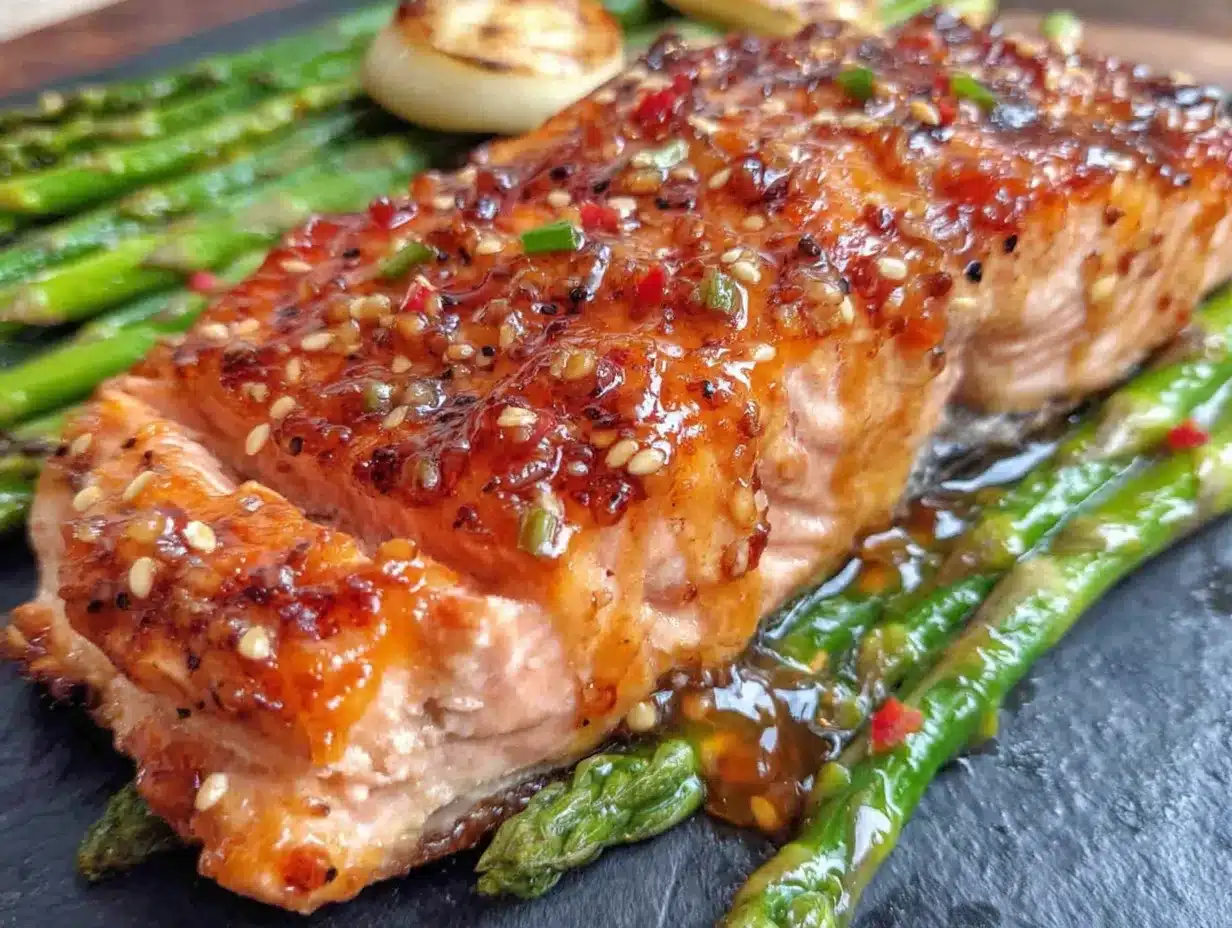
The pan was still sizzling when my husband walked into the kitchen and asked, “What smells that good?” I just pointed at the plate — honey garlic salmon with bright green asparagus, all glossy and caramelized. He grabbed a fork, stole a piece right off the pan, and just stood there chewing. No words. Just that look. You know the one.
I hadn’t planned on making anything special that night. It was a Tuesday. I was tired. The fridge had a piece of salmon I’d grabbed on sale and a bunch of asparagus that was starting to look a little sad. Honestly, I almost ordered pizza. But I’d been craving something sticky and savory, and I remembered a honey garlic sauce I’d messed around with a few months back. So I threw it together in a bowl, poured it over the salmon, and tossed the asparagus in the same pan. Dinner was done before I could even think about takeout.
That first bite kind of surprised me. The salmon was flaky and tender, the skin was crispy on the edges, and the sauce had this perfect balance of sweet and savory with just a hint of garlic warmth. The asparagus soaked up the extra glaze and came out tender-crisp, not mushy. It felt like something you’d order at a nice restaurant, but it came together in one pan in under twenty minutes.
I’ve made this easy honey garlic salmon and asparagus at least a dozen times since then. It’s become my go-to when I need a win on a busy night — the kind of meal that makes you feel like you’ve got it together, even when you’re running on fumes. That’s the thing about this recipe. It doesn’t ask for much. But it gives you everything.
Why You’ll Love This Recipe
Let me be honest with you. I’ve tested a lot of salmon recipes in my kitchen, and most of them fall into one of two camps: they’re either super fancy and take forever, or they’re so basic they’re boring. This one sits right in the sweet spot. It’s simple enough for a Tuesday night but impressive enough for company.
- Quick & Easy : From start to finish, this meal is on the table in under 20 minutes. No marinating, no complicated steps, no waiting around. Just mix, pour, and cook.
- Simple Ingredients : You probably have most of these in your pantry right now. Honey, soy sauce, garlic, butter — that’s the backbone of the sauce. No weird grocery store hunts.
- One Pan Wonder : The salmon and asparagus cook together in a single skillet. Less cleanup, more time to actually enjoy your evening.
- Perfect for Busy Weeknights : Whether you’re feeding a family or just yourself after a long day, this recipe delivers real food without the stress.
- Crowd-Pleaser : I’ve served this to picky eaters, seafood skeptics, and veggie-haters. Everyone cleans their plate. The glaze is that good.
- Healthy Without Trying : Salmon is packed with omega-3s, asparagus is full of fiber and vitamins, and the sauce uses natural sweetness from honey. It feels indulgent but it’s actually pretty good for you.
What makes this recipe different from every other salmon recipe out there? It’s the balance. The honey garlic sauce isn’t too sweet or too salty. It clings to the salmon without being sticky or gloppy. And cooking everything in the same pan means the asparagus picks up all those caramelized bits of sauce. Every bite is cohesive, like the dish was meant to be this way.
I’ve made this for dinner parties, for quiet nights alone, and for those nights when you just need something that works. It never disappoints. Honestly, it’s the kind of recipe that makes you look like a rockstar in the kitchen without breaking a sweat.
What Ingredients You Will Need
This recipe relies on a short list of everyday ingredients that work together to create something bigger than the sum of their parts. Here’s what you’ll need and why each one matters.
For the Salmon
- 4 salmon fillets (6 oz each) – Look for fillets that are roughly the same thickness so they cook evenly. I prefer center-cut fillets with the skin on — the skin gets crispy and adds texture. Wild-caught salmon has a firmer texture, but farm-raised works great too and tends to be a bit more forgiving.
- Salt and black pepper – Keep it simple. Season the salmon just before cooking so the salt doesn’t draw out too much moisture.
- 1 tablespoon olive oil – For searing the salmon. Avocado oil works too if you have it.
For the Honey Garlic Sauce
- 1/3 cup honey – Use a good-quality honey. The floral notes come through in the final dish. If your honey is crystallized, warm it up slightly so it mixes smoothly.
- 3 tablespoons soy sauce – Low-sodium is best here so you can control the salt level. Tamari or coconut aminos work for gluten-free options.
- 4 cloves garlic, minced – Fresh garlic is non-negotiable. Pre-minced stuff from a jar won’t give you the same punch. Trust me on this one.
- 1 tablespoon rice vinegar – This brightens up the sauce and cuts through the richness of the honey. Apple cider vinegar works in a pinch.
- 1 teaspoon sesame oil – Adds a nutty depth that makes the sauce taste complex. Don’t skip it.
- 1 teaspoon cornstarch mixed with 2 teaspoons water – This slurry thickens the sauce just enough so it clings to the salmon and asparagus without being gluey.
- 2 tablespoons unsalted butter – Added at the end for richness and shine. It emulsifies into the sauce and makes everything silky.
For the Asparagus
- 1 bunch asparagus (about 1 lb) – Look for spears that are bright green with firm tips. Thicker spears hold up better in the pan and don’t get mushy. Snap off the woody ends before cooking — they’ll naturally break where the tender part begins.
- 1 tablespoon olive oil – For tossing the asparagus before cooking.
- Pinch of salt and pepper – Simple seasoning that lets the asparagus shine.
For Garnish
- Sesame seeds – Toasted white or black sesame seeds add a nice visual pop and a subtle nutty crunch.
- Sliced green onions – For freshness and color.
- Lemon wedges – A squeeze of lemon right before serving brightens everything up.
Ingredient Tips from My Kitchen
I’ve made this recipe with different types of salmon and here’s what I’ve learned. Sockeye salmon has a stronger flavor and firmer texture, which holds up beautifully to the glaze. Atlantic salmon is milder and more tender. Both work, just adjust your cooking time slightly — sockeye cooks a minute or two faster.
For the honey, avoid anything labeled “honey flavored syrup.” Real honey makes a difference in both flavor and how the sauce caramelizes. I personally like using a local wildflower honey when I can find it.
If you’re out of rice vinegar, a splash of fresh lemon juice works surprisingly well. It adds the same acidity that balances the sweetness.
Equipment Needed
You don’t need a fancy kitchen to make this recipe. Here’s what you’ll actually use:
- Large skillet or frying pan – A 12-inch skillet is ideal. Non-stick works great for easy cleanup, but stainless steel or cast iron will give you better browning on the salmon skin. Just make sure it’s large enough to hold the salmon and asparagus without crowding.
- Small bowl – For whisking together the honey garlic sauce.
- Sharp knife – For mincing garlic and trimming the asparagus. A dull knife makes both jobs harder than they need to be.
- Cutting board – Any sturdy board works.
- Tongs – For flipping the salmon and turning the asparagus. Tongs give you more control than a spatula.
- Measuring spoons and cups – Accuracy matters with the sauce ingredients, especially the cornstarch slurry.
- Whisk or fork – For mixing the sauce until smooth.
Budget-Friendly Alternatives
Don’t have a 12-inch skillet? Use whatever large pan you have and cook the salmon in batches. Overcrowding the pan will steam the fish instead of searing it, and you’ll lose that beautiful golden crust. I’ve used a well-seasoned cast iron pan for years and it’s never let me down — you can find one at most thrift stores for under ten bucks.
If you don’t own tongs, a thin spatula works for flipping the salmon. Just be gentle so the fillets don’t break apart.
Preparation Method
Let’s get cooking. This entire dish comes together in about 20 minutes, so I recommend reading through the steps once before you start. Trust me, it moves fast.
Step 1: Prep Your Ingredients
Start by patting the salmon fillets dry with paper towels. This is crucial — dry salmon sears better and develops that golden crust. Season both sides generously with salt and pepper. Set them aside.
Trim the asparagus. Hold each spear near the bottom and bend it gently until it snaps. The tough woody end will break off naturally right where the tender part begins. Discard the ends. Toss the asparagus with 1 tablespoon olive oil and a pinch of salt and pepper.
Mince the garlic. I know it’s tempting to use pre-minced garlic, but fresh makes a real difference here. Take the extra 30 seconds.
Step 2: Make the Sauce
In a small bowl, whisk together the honey, soy sauce, minced garlic, rice vinegar, and sesame oil. In a separate tiny bowl, mix the cornstarch with the water to make a slurry. Set both aside.
Prep Note: Don’t add the cornstarch slurry to the sauce yet. You’ll add it later when the sauce is simmering. Adding it too early can make the sauce clumpy.
Step 3: Sear the Salmon
Heat 1 tablespoon olive oil in your large skillet over medium-high heat. When the oil is shimmering and just starting to smoke, carefully place the salmon fillets skin-side down. Listen for that satisfying sizzle — that’s what you want.
Cook the salmon for 4-5 minutes without moving it. Let the skin get crispy and golden. Use a spatula or tongs to gently flip each fillet. Cook for another 3-4 minutes on the second side, depending on thickness. The salmon should be opaque and flake easily with a fork when done. Internal temperature should reach 145°F.
Sensory Cue: The skin should look deep golden and crispy, not pale or soggy. If it’s not browning, your pan isn’t hot enough.
Step 4: Cook the Asparagus
Remove the salmon from the pan and set it on a plate. Don’t wipe the pan — all those browned bits are flavor gold. Add the asparagus to the same pan and cook for 3-4 minutes, turning occasionally with tongs. You want the asparagus to be tender-crisp with some charred spots. The natural sweetness of the asparagus will come through as it caramelizes.
Tip: If your asparagus is thick, cut the spears in half lengthwise so they cook faster and get more surface area for browning.
Step 5: Make the Glaze
Push the asparagus to one side of the pan. Pour the honey garlic sauce into the empty space. Let it bubble and simmer for about 1 minute. Give the cornstarch slurry a quick stir (it settles fast) and pour it into the simmering sauce. Stir constantly for 30-45 seconds until the sauce thickens and turns glossy.
Remove the pan from the heat. Stir in the 2 tablespoons of butter until it melts into the sauce. This gives the glaze that silky, restaurant-quality finish.
Step 6: Combine and Serve
Return the salmon fillets to the pan, nestling them among the asparagus. Spoon the glaze over the salmon and asparagus. Let everything warm through together for about 1 minute.
Transfer to serving plates. Sprinkle with sesame seeds and sliced green onions. Serve with lemon wedges on the side.
Total Time Breakdown: Prep takes about 10 minutes, cooking takes about 10-12 minutes. You’re done in under 20 minutes flat.
Cooking Tips & Techniques
I’ve made this easy honey garlic salmon and asparagus more times than I can count, and I’ve learned a few things the hard way. Here are the tips that make the biggest difference.
Don’t Overcook the Salmon
Salmon continues to cook even after you remove it from the heat. I always pull it off the pan when it’s just barely opaque in the center. A little carryover cooking finishes the job. Overcooked salmon is dry and mealy — nobody wants that.
Get the Pan Hot Enough
If your pan isn’t hot enough when you add the salmon, the skin will stick and won’t crisp up. Test the heat by flicking a drop of water into the pan — it should sizzle and evaporate immediately. That’s your signal.
Don’t Crowd the Pan
If you’re cooking more than 4 fillets, do it in batches. Overcrowding lowers the pan temperature and steams the fish instead of searing it. You’ll lose that golden crust. Same goes for the asparagus — give them room to breathe.
Watch the Garlic
Garlic burns fast, especially in a sauce with honey. That’s why I add the garlic to the sauce mixture rather than sautéing it directly in the pan. It cooks gently in the liquid and stays sweet and aromatic instead of turning bitter.
The Cornstarch Slurry Trick
I learned this the frustrating way. If you add cornstarch directly to the hot sauce, it clumps up instantly. Always mix it with cold water first to make a slurry. And give it a quick stir right before pouring — the cornstarch settles at the bottom of the cup almost immediately.
My Biggest Fail
The first time I made this, I skipped the step where you dry the salmon with paper towels. The fillets were wet, the pan wasn’t hot enough, and the skin turned out rubbery and pale. The sauce was great but the texture was off. Now I never skip the pat-dry step. It takes five seconds and makes all the difference.
Multitasking Strategy
Here’s how I time everything so it comes together at once. While the salmon is searing on the first side, I trim the asparagus and mix the sauce. While the salmon cooks on the second side, I toss the asparagus with oil and salt. By the time the salmon is done, everything else is ready to go. No wasted time.
Variations & Adaptations
One of the best things about this recipe is how flexible it is. I’ve tried several variations and they’ve all been winners. Here are some of my favorites.
Spicy Honey Garlic Salmon
Add 1 teaspoon of sriracha or red pepper flakes to the honey garlic sauce. The heat cuts through the sweetness beautifully. I like to add a little extra at the end too, sprinkled over the finished dish. If you’re serving this to a crowd, serve the heat on the side so everyone can adjust to their own tolerance.
Low-Carb / Keto Version
Swap the honey for a sugar-free honey alternative or use monk fruit sweetener with a few drops of honey extract. The sauce won’t caramelize quite the same way, but it’s still delicious. I’ve also used allulose which browns nicely and doesn’t have that weird aftertaste some sugar substitutes have.
Sheet Pan Version
For an even easier cleanup, make this on a sheet pan. Preheat your oven to 400°F. Line a baking sheet with parchment paper. Place the salmon and asparagus on the sheet, brush everything with the sauce, and bake for 12-15 minutes. No stovetop needed. This version is great for feeding a crowd or when you want to minimize active cooking time.
Garlic Butter Version
If you’re not a fan of honey, swap it for extra butter and a splash of lemon juice. The sauce becomes a rich garlic butter that coats the salmon and asparagus. It’s less sweet but equally satisfying. I made this version for a friend who doesn’t like sweet-savory combinations and she asked for the recipe twice.
Add More Veggies
This recipe works beautifully with other vegetables. Broccolini, snap peas, or halved brussels sprouts all cook well in the same pan. Just adjust the cooking time based on the vegetable’s density. Broccolini takes about the same time as asparagus, while brussels sprouts need a few extra minutes.
Grilled Version
In the summer, I take this recipe to the grill. Preheat your grill to medium-high. Oil the grates well. Grill the salmon skin-side down for 4 minutes, then flip and cook for 3 more minutes. Grill the asparagus directly on the grates for 4-5 minutes, turning once. Glaze everything with the sauce right before serving.
Serving & Storage Suggestions
This dish is best served hot, right after cooking. The salmon is flaky, the asparagus is tender-crisp, and the glaze is glossy and warm. Here’s how to get the most out of every serving.
Serving Temperature
Serve the salmon and asparagus immediately while they’re still hot. The glaze starts to set as it cools, so don’t let it sit around. If you’re making this for a dinner party, time the cooking so everything finishes right when your guests sit down.
What to Serve With It
This dish is pretty complete on its own, but it pairs beautifully with simple sides. Steamed jasmine rice or coconut rice soaks up the extra glaze. A light cucumber salad with rice vinegar and sesame seeds adds freshness. If you want something heartier, serve it with roasted potatoes or a crusty baguette to mop up the sauce.
For drinks, a crisp white wine like Sauvignon Blanc or a dry Riesling complements the honey garlic flavors. If you’re in the mood for something non-alcoholic, an iced green tea with a squeeze of lemon works beautifully.
Storage Instructions
Leftovers store well for up to 3 days in an airtight container in the refrigerator. Keep the salmon and asparagus together — they actually benefit from marinating in the leftover glaze overnight.
Reheating Tips: The best way to reheat is in a skillet over medium heat. Add a splash of water or chicken broth to loosen the glaze, then warm everything through for 2-3 minutes. The microwave works in a pinch but will make the salmon a bit drier and the asparagus softer. If you’re using the microwave, cover the dish with a damp paper towel to add moisture.
Freezer Instructions
I don’t recommend freezing the cooked salmon — the texture changes too much when thawed. The asparagus also gets mushy. But if you have extra sauce, freeze it separately in a small container for up to 3 months. It’s great to have on hand for quick meals.
How Flavors Develop
Honestly, this dish is best fresh. The salmon is at its peak right after cooking. Leftovers are still tasty, but the salmon loses some of its flaky texture and the asparagus softens. If you’re meal-prepping, I recommend cooking the components separately and combining them just before serving.
Nutritional Information & Benefits
This meal is as nourishing as it is delicious. Here’s a rough breakdown per serving (one salmon fillet with asparagus and glaze):
| Nutrient | Amount per Serving |
|---|---|
| Calories | 420-450 |
| Protein | 38g |
| Fat | 22g |
| Saturated Fat | 6g |
| Carbohydrates | 22g |
| Fiber | 3g |
| Sugar | 18g |
| Sodium | 680mg |
Health Benefits
Salmon is one of the best sources of omega-3 fatty acids, which support heart health and reduce inflammation. It’s also packed with high-quality protein and B vitamins. Asparagus is a nutritional powerhouse too — it’s rich in folate, vitamins A, C, and K, and fiber. The honey provides natural sweetness with antioxidants, while garlic has been shown to support immune function.
This recipe is naturally gluten-free if you use tamari or coconut aminos instead of soy sauce. It’s also dairy-free if you skip the butter or use a plant-based alternative. For a lower-sodium version, reduce the soy sauce to 2 tablespoons and add a splash of water to the sauce.
Dietary Considerations
This recipe contains fish and soy. If you have a soy allergy, use coconut aminos — they taste similar but are made from fermented coconut sap. The recipe is naturally dairy-free if you omit the butter or use a vegan butter substitute.
Conclusion
This easy honey garlic salmon and asparagus has become my secret weapon for busy nights. It’s the recipe I turn to when I want something that feels special but doesn’t demand a lot from me. The sauce is forgiving, the timing is flexible, and the results are consistently good.
What I love most about this dish is how it makes me feel. There’s something deeply satisfying about pulling together a restaurant-quality meal in under 20 minutes with ingredients I already have. It reminds me that cooking doesn’t have to be complicated to be good. Sometimes the simplest things — a piece of fish, a bunch of asparagus, a handful of pantry staples — come together to create something genuinely memorable.
I hope you make this recipe your own. Add more garlic if you’re a garlic lover. Throw in some red pepper flakes for heat. Serve it over rice or noodles or just eat it straight from the pan (I won’t judge). The beauty of this dish is that it works with you, not against you.
If you try this recipe, I’d love to hear how it goes. Drop a comment below and let me know what variations you tried, or tag me in your photos. And if you’re looking for more quick dinner inspiration, check out our recipe collection for more ideas. Happy cooking, friend.
Frequently Asked Questions
Can I use frozen salmon for this recipe?
Yes, but thaw it completely in the refrigerator first and pat it very dry with paper towels. Frozen salmon holds more water, so you need to remove that excess moisture to get a good sear. I don’t recommend cooking the salmon straight from frozen — it will steam instead of sear and the texture won’t be as good.
Can I make the honey garlic sauce ahead of time?
Absolutely. You can mix the sauce (without the cornstarch slurry and butter) up to 3 days in advance and store it in the refrigerator. Give it a good stir before using. Add the cornstarch slurry and butter fresh when you’re cooking — they don’t hold up well in the fridge.
What if I don’t have a skillet? Can I use a different pan?
Any large, heavy-bottomed pan will work. A cast iron skillet is ideal, but a stainless steel or non-stick pan works great too. Just make sure it’s large enough to hold the salmon and asparagus without crowding. If your pan is small, cook everything in batches.
How do I know when the salmon is fully cooked?
The easiest test is to gently press the top of the salmon with a fork. If it flakes easily and looks opaque all the way through, it’s done. For precise results, use an instant-read thermometer — salmon is perfectly cooked at 145°F in the thickest part. The flesh should look slightly translucent in the center when you pull it off the heat; carryover cooking will finish it.
Can I substitute the asparagus with another vegetable?
Yes, this recipe is very flexible with vegetables. Green beans, broccolini, snap peas, or zucchini all work beautifully. Adjust the cooking time based on the vegetable’s density. Softer vegetables like zucchini cook faster, while broccolini takes about the same time as asparagus. If you’re looking for more one-pan dinner ideas, you might enjoy our cherry chocolate brownies for dessert after this meal.
Pin This Recipe!
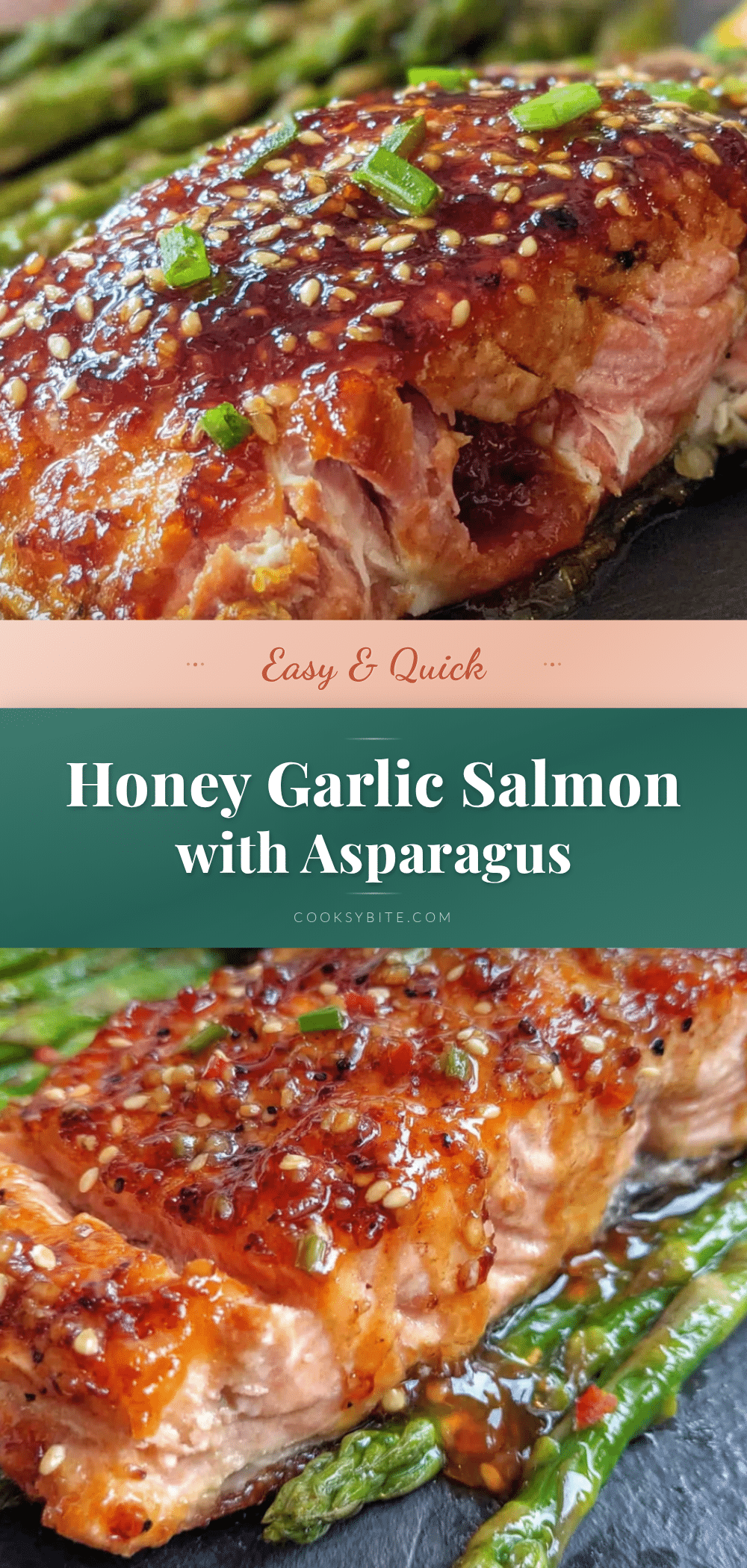
Easy Honey Garlic Salmon and Asparagus: Best 20-Minute Dinner
A quick and easy one-pan honey garlic salmon with tender-crisp asparagus, ready in under 20 minutes. Perfect for busy weeknights, this dish features a perfectly balanced sweet and savory glaze that clings to flaky salmon and caramelized asparagus.
- Prep Time: 10 minutes
- Cook Time: 10 minutes
- Total Time: 20 minutes
- Yield: 4 servings 1x
- Category: Main Course
- Cuisine: American
Ingredients
- 4 salmon fillets (6 oz each)
- Salt and black pepper, to taste
- 1 tablespoon olive oil
- 1/3 cup honey
- 3 tablespoons low-sodium soy sauce
- 4 cloves garlic, minced
- 1 tablespoon rice vinegar
- 1 teaspoon sesame oil
- 1 teaspoon cornstarch mixed with 2 teaspoons water
- 2 tablespoons unsalted butter
- 1 bunch asparagus (about 1 lb), woody ends trimmed
- 1 tablespoon olive oil
- Pinch of salt and pepper
- Sesame seeds, for garnish
- Sliced green onions, for garnish
- Lemon wedges, for serving
Instructions
- Pat the salmon fillets dry with paper towels. Season both sides generously with salt and pepper. Set aside.
- Trim the asparagus by bending each spear near the bottom until it snaps. Discard the woody ends. Toss the asparagus with 1 tablespoon olive oil and a pinch of salt and pepper.
- In a small bowl, whisk together the honey, soy sauce, minced garlic, rice vinegar, and sesame oil. In a separate tiny bowl, mix the cornstarch with water to make a slurry. Set both aside.
- Heat 1 tablespoon olive oil in a large skillet over medium-high heat. When the oil is shimmering, place the salmon fillets skin-side down. Cook for 4-5 minutes without moving, until the skin is crispy and golden. Flip and cook for another 3-4 minutes, until the salmon is opaque and flakes easily. Remove from the pan and set aside.
- Add the asparagus to the same pan. Cook for 3-4 minutes, turning occasionally, until tender-crisp with some charred spots.
- Push the asparagus to one side of the pan. Pour the honey garlic sauce into the empty space. Let it bubble and simmer for about 1 minute. Stir the cornstarch slurry, then pour it into the simmering sauce. Stir constantly for 30-45 seconds until the sauce thickens and turns glossy.
- Remove the pan from the heat. Stir in the butter until melted and the sauce is silky.
- Return the salmon to the pan, nestling it among the asparagus. Spoon the glaze over the salmon and asparagus. Warm through for about 1 minute.
- Transfer to serving plates. Sprinkle with sesame seeds and sliced green onions. Serve with lemon wedges.
Notes
Pat the salmon dry for a crispy skin. Don’t overcrowd the pan; cook in batches if needed. Add the cornstarch slurry just before serving to avoid clumps. For a spicy version, add sriracha or red pepper flakes. Leftovers keep for up to 3 days in the refrigerator; reheat in a skillet with a splash of water.
Nutrition
- Serving Size: 1 salmon fillet with
- Calories: 435
- Sugar: 18
- Sodium: 680
- Fat: 22
- Saturated Fat: 6
- Carbohydrates: 22
- Fiber: 3
- Protein: 38
Keywords: honey garlic salmon, salmon and asparagus, one-pan salmon, quick salmon recipe, weeknight dinner, healthy salmon, gluten-free salmon