I need a Halloween snack that looks impressive but doesn’t require me to actually cook anything. That’s the honest thought that started this whole board. I had a party to host, a kitchen that was already a disaster zone from baking a batch of cherry chocolate brownies, and zero energy left for another complicated recipe. The answer was hiding in my fridge—a pile of cheese, some salami, and a bag of olives. The problem was making it look festive without turning it into a cliché.
Then I saw the spiderweb. Not a real one, thankfully (I would have screamed). But the pattern—those concentric circles and that wavy, drippy line connecting them—it’s basically a charcuterie board blueprint. You just need the right ingredients to act as your “web” and a good eye for placement. This board isn’t about fancy cooking; it’s about clever arranging. It’s the kind of thing you can throw together while your kids are fighting over costumes or while you’re sneaking a glass of wine before guests arrive.
The best part? It actually works. People stop, stare, and then start grabbing. There’s something about the visual of a spiderweb made of meat and cheese that just screams Halloween without being over-the-top gory. It’s spooky but approachable. And honestly, it’s the only “recipe” I’ve ever made that got more compliments than my actual baked goods. That says a lot.
Why You’ll Love This Recipe
This isn’t just another snack board. It’s a conversation starter that takes ten minutes to assemble. As someone who has tested this at three different parties (and one very confused family dinner), I can tell you it works every single time.
- No Cooking Required : Seriously. Zero heat. No oven, no stove, no microwave. Just a cutting board and some patience.
- Customizable for Any Crowd : Whether you’re feeding kids who only want crackers or adults who appreciate a good aged gouda, this board adapts. Swap out ingredients based on what your guests actually eat.
- Visual Impact with Minimal Effort : The spiderweb pattern looks complicated. It’s not. Once you learn the trick of laying down your “web” lines, it takes thirty seconds. Your guests will think you spent an hour on it.
- Perfect for Halloween Parties : It fits the theme without being cheesy (pun intended). No plastic spiders required, though you can add them if you want.
- Great for Make-Ahead Hosting : Assemble the board up to two hours before guests arrive. Cover it with plastic wrap and keep it in the fridge. Pull it out ten minutes before serving to let the cheese come to room temperature.
I’ve made this board for adult Halloween parties, kid-friendly gatherings, and even a spooky movie night. It never fails. The key is treating it like a puzzle—each piece has a place, and the final picture is worth the effort.
What Ingredients You Will Need
The beauty of this board is flexibility. You don’t need exotic cheeses or specialty meats. Use what you like, what’s on sale, or what’s already in your fridge. Here’s what I use for the classic spiderweb look.
For the Spiderweb Structure
- Pepperoni slices (about 20-30 slices, regular size) — These form the outer rings of the web. They hold their shape well and have that deep red color that contrasts nicely with lighter cheeses.
- Provolone cheese slices (8-10 slices, cut into strips) — The white color works perfectly for the web lines. I prefer provolone because it’s mild and doesn’t overpower other flavors.
- Mozzarella pearls or string cheese (1 cup pearls or 4-5 sticks) — Use these for the center of the web or as filler. String cheese cut into thin strips also works for web lines.
- Black olives (1 can, drained) — These become your “spiders.” Place one or two right in the center of the web for maximum spooky effect.
For the Filler and Variety
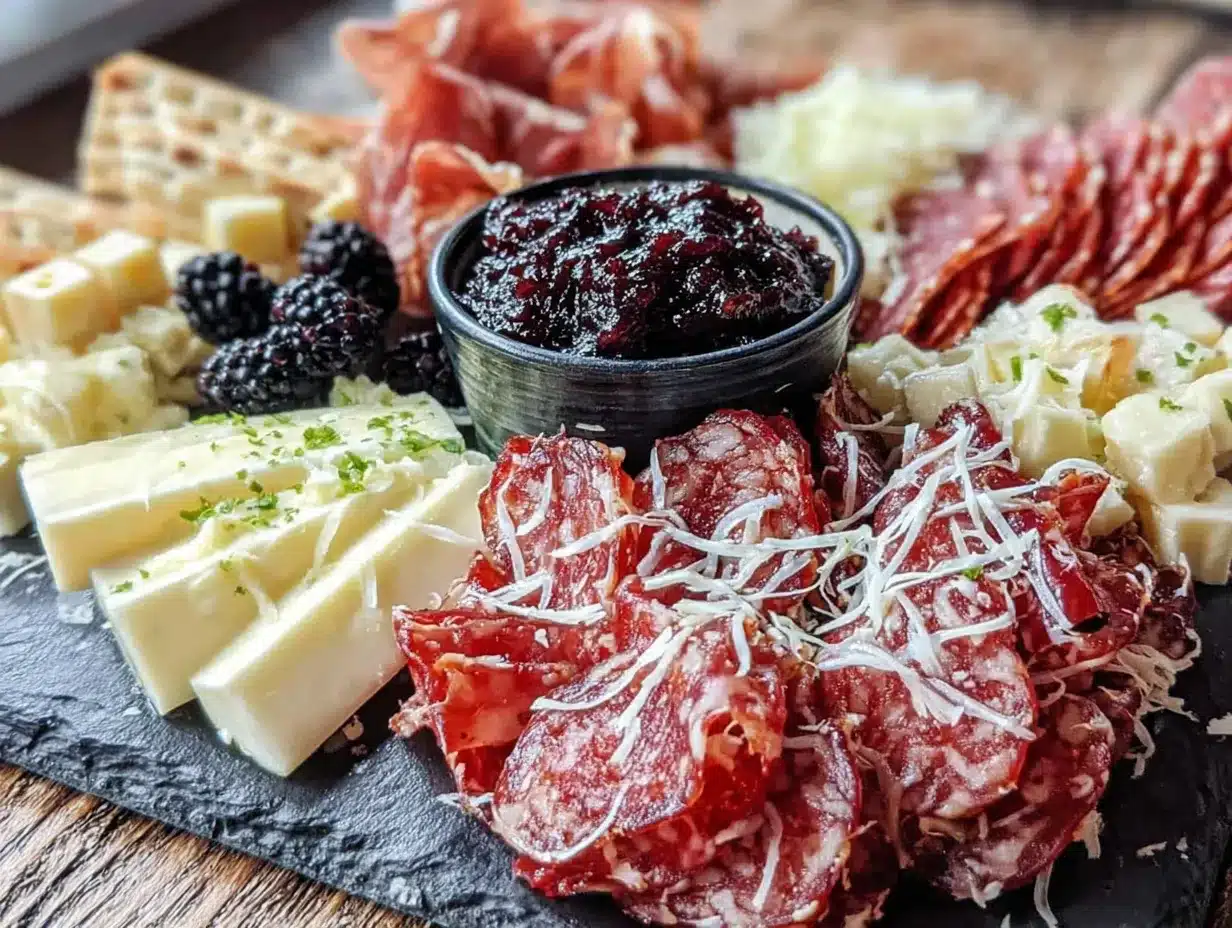
- Salami or soppressata (8-10 ounces, sliced thin) — Roll some into roses or fold into fans. Adds texture and savory depth.
- Cheddar cheese (8 ounces, cubed or sliced) — The orange color pops against the white provolone. I use sharp cheddar for flavor.
- Crackers (2-3 varieties, about 2 cups total) — Choose neutral crackers like water crackers or buttery rounds. Avoid heavily flavored ones that clash with the cheese.
- Grapes (1 cup, red or green) — Adds sweetness and a pop of color. They also help cleanse the palate between rich bites.
- Nuts (½ cup almonds or walnuts) — For crunch. I prefer smoked almonds for extra flavor.
- Dried apricots or figs (½ cup) — The sweetness balances the saltiness of the meats. Plus, they look like little orange jewels on the board.
Optional Additions
- Brie or camembert (1 small wheel) — Place it off to the side for a creamy option. Drizzle with honey for a sweet-savory combo.
- Pickles or cornichons (½ cup) — Adds acidity and crunch. I like the little gherkins for their size.
- Dark chocolate pieces (a handful) — Because Halloween is about candy too. Break a bar into chunks and scatter them around.
For the best results, use ingredients at room temperature. Cold cheese doesn’t have the same flavor. Take everything out of the fridge about 20 minutes before you start assembling. Trust me on this one—I learned the hard way when my provolone strips cracked because they were too cold.
Equipment Needed
You don’t need fancy tools for this board. A few basics will do the job.
- Large wooden cutting board or serving platter (at least 16 inches in diameter) — The bigger the better. You need room for the spiderweb pattern. A round board works best for the circular web design.
- Cheese knife or sharp paring knife — For cutting provolone into strips and cubing cheddar. A dull knife will just frustrate you.
- Small bowls or ramekins (2-3) — For olives, nuts, or dips. They also help anchor the center of the web if you’re using a dip like hummus or ranch.
- Parchment paper (optional) — If you’re using a wooden board that stains easily, line it with parchment. It also makes cleanup faster.
- Toothpicks or small skewers — For securing rolled salami roses or for guests to grab olives without touching everything.
I use a round wooden board I picked up at a thrift store for five dollars. It’s seasoned from years of use and adds a rustic look. If you don’t have a round board, a rectangular one works fine—just adjust the web pattern to fit the shape. The key is having enough surface area to spread everything out without overcrowding.
Preparation Method
This is where the magic happens. Follow these steps, and you’ll have a spiderweb that looks like it took hours.
- Prepare your ingredients. Take everything out of the fridge 20 minutes before starting. Slice the provolone into thin strips, about ¼ inch wide and 3-4 inches long. Cube the cheddar into bite-sized pieces. Roll a few salami slices into roses (fold each slice in half, then roll tightly from one end). Leave the pepperoni slices whole.
- Create the outer ring. Arrange the pepperoni slices in a large circle near the edge of your board. Overlap them slightly so they form a continuous ring. This is the outer boundary of your web. Leave about 2 inches of space between the pepperoni ring and the edge of the board for crackers and other fillers.
- Build the inner rings. Using the provolone strips, create concentric circles inside the pepperoni ring. Start with a circle about 2 inches inside the pepperoni. Then another circle 2 inches inside that one. Continue until you have 3-4 circles total, ending with a small empty space in the center—about the size of a golf ball.
- Add the web lines. This is the trick that makes it look like a spiderweb. Take a provolone strip and lay it from the center outward, crossing all the circles. Repeat this 6-8 times around the board, spacing the lines evenly. The provolone should connect the center to the outer pepperoni ring. You’ll end up with a pattern that looks like a bicycle wheel or a sunburst.
- Create the “drip” effect. Gently push each provolone line slightly off-center where it crosses each circle. This creates the classic spiderweb droop. Don’t overthink it—just a gentle nudge with your finger is enough. The lines should look like they’re sagging under their own weight.
- Place the spider. In the center of the web, place a black olive. If you want it to look like a spider, cut a second olive in half lengthwise and arrange the halves as legs around the center olive. Use four legs on each side for the full spider effect. It’s creepy and cute at the same time.
- Fill in the gaps. Around the outer edge of the board, arrange your crackers, cubed cheddar, salami roses, grapes, nuts, and dried fruit. Place them in small clusters so guests can grab what they want without disrupting the web. Keep the center pattern visible—don’t bury it in filler.
- Add finishing touches. Place small bowls of olives, pickles, or dip in the corners or off to the side. If you’re using a dip like hummus, you can put it in a small bowl right in the center of the web, with the spider perched on the edge. Scatter a few dark chocolate pieces around for a sweet surprise.
- Check your work. Step back and look at the board from above. Does the web pattern stand out? Are the lines visible? Adjust any provolone strips that have shifted. Add more pepperoni if the outer ring looks sparse. This is your moment to perfect it.
- Serve immediately or refrigerate. If you’re serving within two hours, leave it at room temperature. If you’re making it ahead, cover loosely with plastic wrap and refrigerate. Take it out 10 minutes before serving to let the cheese soften.
One thing I learned the hard way: don’t overcrowd the center. The web needs to be the star. If you pile too many crackers and grapes in the middle, the pattern disappears. Keep the center clean and let the web do the talking.
Cooking Tips & Techniques
After making this board more times than I can count, I’ve picked up a few tricks that make a big difference.
Use room temperature cheese. Cold provolone is brittle and cracks when you try to bend it into curves. Let it sit out for 20 minutes before cutting. The strips will be flexible and easy to shape into circles. I learned this after my first board looked like a broken spiderweb—not the good kind.
Cut provolone strips the same width. Consistency matters here. If some strips are thick and others are thin, the web looks uneven. Use a sharp knife and take your time. Aim for strips that are about ¼ inch wide. You can also use a pizza cutter for straight lines, but a knife gives you more control.
Don’t skip the “drip” effect. That slight sag in the provolone lines is what makes it look like a real spiderweb. If the lines are perfectly straight, it looks like a geometric pattern, not a web. Just a gentle push with your finger at each intersection point creates the illusion of weight and gravity.
Use the pepperoni as anchors. The pepperoni ring at the edge serves double duty—it defines the web boundary and holds the provolone lines in place. Tuck the ends of the provolone strips under the pepperoni slices so they don’t curl up. This keeps the pattern clean and prevents the web from falling apart when guests start grabbing food.
Prep ingredients in advance. Cut all your cheese, roll your salami roses, and portion out your nuts and fruit before you start assembling. Once you begin laying down the web, you don’t want to stop and cut more provolone. It breaks the flow and increases the chance of mistakes.
I once tried to make this board while distracted by a phone call. I ended up with a lopsided web and a pile of mismatched crackers. Don’t be me. Focus on the board, and it will reward you.
Variations & Adaptations
This board is endlessly customizable. Here are a few ways to switch it up.
Kid-Friendly Version : Replace the pepperoni with turkey slices and use mild cheddar or colby jack. Skip the olives (kids are divided on those) and use candy corn or gummy worms as the “spiders.” Add a bowl of ranch dressing for dipping. The web pattern still works, but the ingredients are more approachable for little ones.
Vegetarian Option : Skip the meat entirely. Use extra cheese varieties like brie, goat cheese, and aged gouda. Add roasted red peppers, artichoke hearts, and marinated mushrooms for savory depth. The web pattern works the same way—just use cheese strips for the lines and pepper rings made from sliced bell peppers or cucumber rounds.
Gluten-Free Adaptation : Choose gluten-free crackers or replace crackers with cucumber rounds, bell pepper slices, or endive leaves. Most cheeses and meats are naturally gluten-free, but double-check labels on processed meats. The web pattern itself doesn’t change—just the base you serve it on.
Sweet Version : Turn this into a dessert board. Use chocolate wafer cookies for the web lines, marshmallows for the circles, and candy corn for the outer ring. Place a chocolate-covered strawberry in the center as the spider. Add bowls of M&Ms, pretzels, and brownie bites around the edges. It’s a sugar overload, but for Halloween, that’s the point.
Spicy Twist : Use spicy salami, pepper jack cheese, and jalapeño-stuffed olives. Add a bowl of spicy honey or sriracha aioli for dipping. The heat contrasts nicely with the cool grapes and mild provolone. This version always gets rave reviews from my spice-loving friends.
I tried the sweet version last year for a Halloween movie night. It was a hit—the kids ate the web before the movie even started. Sometimes the best adaptations come from happy accidents.
Serving & Storage Suggestions
This board is best served at room temperature. The flavors of the cheese and meat really shine when they’re not cold. If you’ve refrigerated the board, take it out 15-20 minutes before serving. Let it sit on the counter while you greet guests or finish setting up.
Presentation Tips : Place the board on a table where guests can walk around it. This encourages grazing and prevents crowding. Add a few small spoons or toothpicks for easy grabbing. If you’re using a dip in the center, provide a small spreader or spoon. I like to scatter a few fake spider rings around the board for extra Halloween flair—just make sure guests know they’re not food.
Complementary Dishes : This board pairs beautifully with other party snacks. Serve it alongside a batch of pink champagne jello shots for a grown-up Halloween party. For a dessert option, add a plate of pink velvet bundt cake slices—the colors contrast nicely with the savory board. If you’re serving cocktails, try a dry red wine or a crisp cider. The saltiness of the cheese and meat balances the sweetness of the drinks.
Storage Instructions : If you have leftovers (unlikely, but possible), separate the components. Store cheese in an airtight container, meats in a zip-top bag, and crackers in a separate bag to prevent sogginess. The board itself can be wiped clean with a damp cloth. Leftover provolone strips can be used in sandwiches or salads the next day.
Reheating : You don’t need to reheat anything. Just let the cheese come to room temperature before serving again. If you’re serving the board over several hours, refresh it by adding more crackers and fruit as needed. The web pattern will start to shift as guests dig in, but that’s part of the fun.
I’ve found that the flavors actually improve after an hour or two at room temperature. The cheese softens, the meats release their oils, and everything melds together. It’s one of those rare dishes that gets better as it sits.
Nutritional Information & Benefits
This board is more of a snack spread than a full meal, but it does offer some nutritional benefits. Here’s a rough estimate per serving (assuming 8 servings).
| Nutrient | Amount Per Serving |
|---|---|
| Calories | 350-400 |
| Protein | 18-22g |
| Fat | 25-30g |
| Carbohydrates | 15-20g |
| Fiber | 2-3g |
| Sodium | 600-800mg |
Health Benefits : Cheese provides calcium and protein, which support bone health and muscle function. Nuts offer healthy fats and vitamin E. Grapes contain antioxidants and hydration. The variety of ingredients means you’re getting a range of nutrients in small amounts.
Dietary Considerations : This board can be adapted for gluten-free diets (use GF crackers), low-carb diets (skip the crackers and fruit), or vegetarian diets (omit the meat). It’s naturally high in protein and fat, which makes it satisfying for keto and paleo eaters. The main allergens are dairy (cheese) and tree nuts (almonds, walnuts).
Personal Note : I don’t pretend this is health food. It’s a party snack. But compared to processed Halloween candy, it’s a step up. The protein and fat will keep your guests fuller longer, which means less sugar crashing later. Balance is key—enjoy the board, but don’t make it your entire dinner.
Conclusion
This spiderweb charcuterie board is the kind of recipe that makes you look like a Halloween hero without breaking a sweat. It’s clever, it’s customizable, and it’s genuinely fun to make. I’ve served it at three different parties now, and every time, someone asks for the “recipe.” That’s when I smile and tell them it’s just cheese and meat arranged with a little creativity.
I love this board because it proves you don’t need complicated techniques or exotic ingredients to impress people. You just need a good idea and the willingness to try. The spiderweb pattern is forgiving—even if your lines aren’t perfect, it still looks intentional. And honestly, the imperfections make it look more like a real web.
So go ahead and give it a try. Customize it with your favorite cheeses and meats. Add a spider or two. Make it your own. And when your guests ooh and aah over your spooky creation, just nod knowingly. You’ve earned it.
If you make this board, I’d love to hear about it. Drop a comment below with your favorite variations or tag me in your photos. Happy Halloween, and happy snacking!
Frequently Asked Questions
Can I make this board ahead of time?
Yes, you can assemble the board up to two hours before serving. Cover it loosely with plastic wrap and refrigerate. Take it out 15-20 minutes before serving to let the cheese come to room temperature. The web pattern holds up well, though the provolone strips may soften slightly.
What if I don’t have provolone cheese?
Any mild, sliceable white cheese works. Try mozzarella, monterey jack, or even havarti. The key is that the cheese is soft enough to bend into curves without cracking. Avoid hard cheeses like parmesan—they won’t create the web effect properly.
How do I keep the web pattern from falling apart?
Tuck the ends of the provolone strips under the pepperoni slices at the outer edge. This anchors them in place. Also, avoid placing heavy items like bowls or large cheese cubes directly on the web lines. Keep the center of the web clear and let the pattern breathe.
Can I use a different shape board?
Absolutely. A round board is ideal for the circular web pattern, but a rectangular board works too. Just adjust the web to fit the shape—make it oval or elongated. The concentric circles become ovals, but the effect is still recognizable. Use the board’s natural shape as your guide.
What drinks pair well with this board?
A dry red wine like cabernet sauvignon or merlot complements the cheese and meat. For non-alcoholic options, try sparkling apple cider or a cranberry spritzer. Beer lovers will enjoy a pale ale or a stout. The saltiness of the board pairs well with anything bubbly or crisp.
Pin This Recipe!
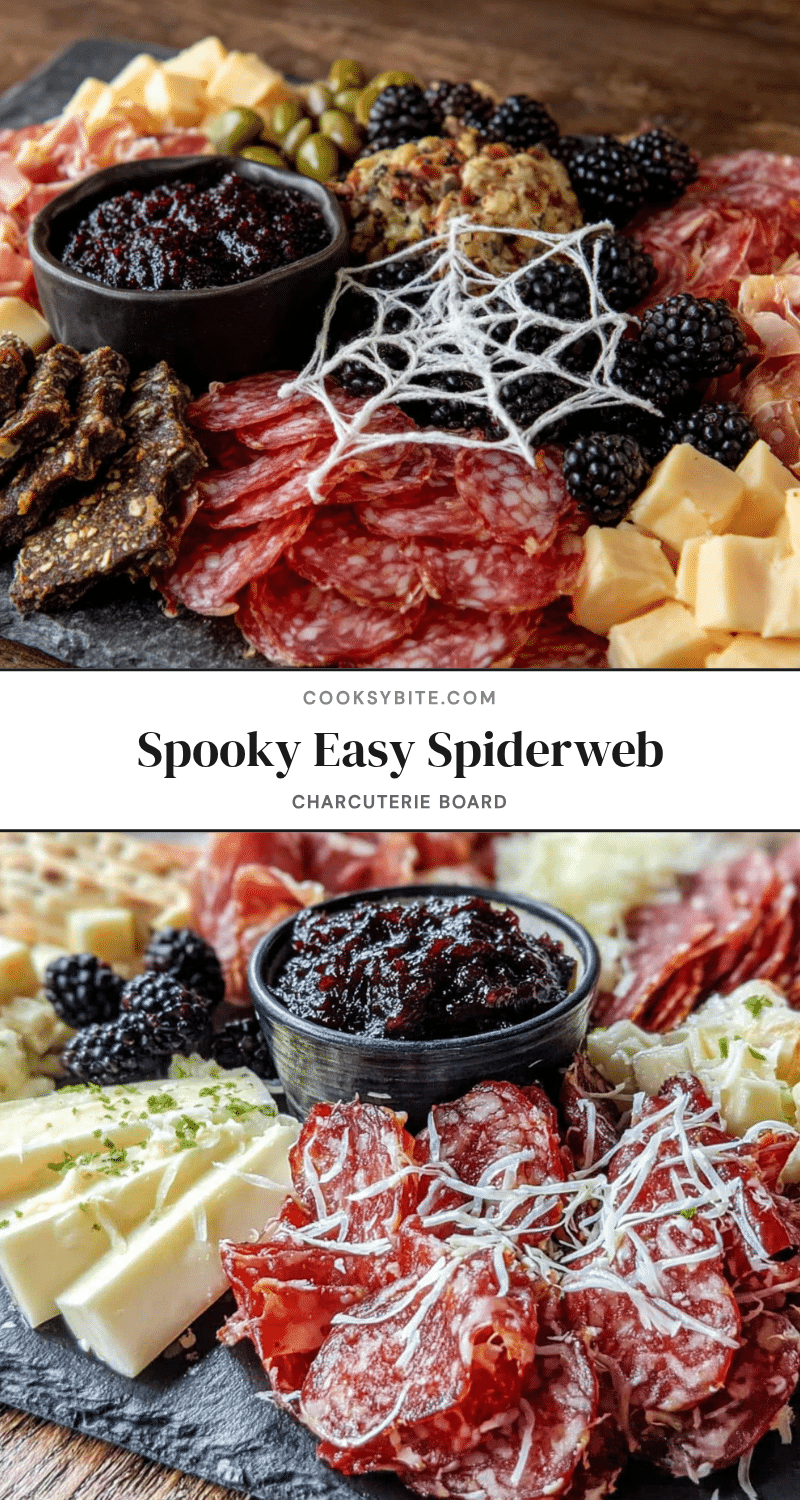
Halloween Charcuterie Board: Easy Spiderweb Snack Idea
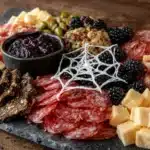
A visually stunning spiderweb-shaped charcuterie board that requires no cooking, perfect for Halloween parties. This easy-to-assemble snack uses pepperoni, provolone, and olives to create a spooky yet approachable centerpiece.
- Prep Time: 20 minutes
- Cook Time: 0 minutes
- Total Time: 20 minutes
- Yield: 8 servings 1x
- Category: Appetizer
- Cuisine: American
Ingredients
- 20–30 slices pepperoni
- 8–10 slices provolone cheese, cut into strips
- 1 cup mozzarella pearls or 4–5 string cheese sticks
- 1 can black olives, drained
- 8–10 ounces salami or soppressata, sliced thin
- 8 ounces cheddar cheese, cubed or sliced
- 2–3 varieties crackers (about 2 cups total)
- 1 cup red or green grapes
- ½ cup almonds or walnuts
- ½ cup dried apricots or figs
- Optional: 1 small wheel brie or camembert
- Optional: ½ cup pickles or cornichons
- Optional: a handful of dark chocolate pieces
Instructions
- Prepare your ingredients. Take everything out of the fridge 20 minutes before starting. Slice the provolone into thin strips, about ¼ inch wide and 3-4 inches long. Cube the cheddar into bite-sized pieces. Roll a few salami slices into roses (fold each slice in half, then roll tightly from one end). Leave the pepperoni slices whole.
- Create the outer ring. Arrange the pepperoni slices in a large circle near the edge of your board. Overlap them slightly so they form a continuous ring. This is the outer boundary of your web. Leave about 2 inches of space between the pepperoni ring and the edge of the board for crackers and other fillers.
- Build the inner rings. Using the provolone strips, create concentric circles inside the pepperoni ring. Start with a circle about 2 inches inside the pepperoni. Then another circle 2 inches inside that one. Continue until you have 3-4 circles total, ending with a small empty space in the center—about the size of a golf ball.
- Add the web lines. This is the trick that makes it look like a spiderweb. Take a provolone strip and lay it from the center outward, crossing all the circles. Repeat this 6-8 times around the board, spacing the lines evenly. The provolone should connect the center to the outer pepperoni ring. You’ll end up with a pattern that looks like a bicycle wheel or a sunburst.
- Create the ‘drip’ effect. Gently push each provolone line slightly off-center where it crosses each circle. This creates the classic spiderweb droop. Don’t overthink it—just a gentle nudge with your finger is enough. The lines should look like they’re sagging under their own weight.
- Place the spider. In the center of the web, place a black olive. If you want it to look like a spider, cut a second olive in half lengthwise and arrange the halves as legs around the center olive. Use four legs on each side for the full spider effect. It’s creepy and cute at the same time.
- Fill in the gaps. Around the outer edge of the board, arrange your crackers, cubed cheddar, salami roses, grapes, nuts, and dried fruit. Place them in small clusters so guests can grab what they want without disrupting the web. Keep the center pattern visible—don’t bury it in filler.
- Add finishing touches. Place small bowls of olives, pickles, or dip in the corners or off to the side. If you’re using a dip like hummus, you can put it in a small bowl right in the center of the web, with the spider perched on the edge. Scatter a few dark chocolate pieces around for a sweet surprise.
- Check your work. Step back and look at the board from above. Does the web pattern stand out? Are the lines visible? Adjust any provolone strips that have shifted. Add more pepperoni if the outer ring looks sparse. This is your moment to perfect it.
- Serve immediately or refrigerate. If you’re serving within two hours, leave it at room temperature. If you’re making it ahead, cover loosely with plastic wrap and refrigerate. Take it out 10 minutes before serving to let the cheese soften.
Notes
Use room temperature cheese for flexibility. Cut provolone strips the same width for consistency. Don’t skip the ‘drip’ effect for a realistic web. Use pepperoni as anchors for the provolone strips. Prep ingredients in advance to maintain flow. The board can be assembled up to 2 hours ahead and refrigerated; bring to room temperature before serving.
Nutrition
- Serving Size: 1 serving (approxima
- Calories: 375
- Sugar: 8
- Sodium: 700
- Fat: 28
- Saturated Fat: 12
- Carbohydrates: 18
- Fiber: 3
- Protein: 20
Keywords: Halloween charcuterie board, spiderweb snack, no-cook appetizer, party snack, Halloween party food, easy charcuterie board