The first weekend of October hit and I had promised friends we’d do an Oktoberfest thing — you know, the whole deal with pretzels, beer, maybe some lederhosen vibes. But then work ran late, the store was picked over by 5 PM, and I came home with exactly one package of bratwurst, a jar of sauerkraut, and some random mustard I found on clearance.
Not exactly the spread I had in mind.
So I stood there in the kitchen, staring at my mismatched haul, and thought — well, I can either order pizza or figure this out. The brats were good quality, the sauerkraut had that tangy bite I love, and there was an onion rolling around in the crisper drawer. I grabbed my biggest cast iron skillet — the one that’s seen better days but gets the job done — and started cooking on instinct. No recipe. No plan. Just the smell of browning sausage and sizzling onions filling up the house.
And honestly? That skillet turned out better than any fancy Oktoberfest spread I’ve ever put together.
This easy Oktoberfest bratwurst and sauerkraut skillet is now my go-to when I want something hearty but don’t have the energy for a full production. It’s the kind of meal that feels like you spent hours on it but comes together in under 30 minutes. One pan. Minimal cleanup. Maximum flavor. The brats get beautifully browned, the sauerkraut softens and soaks up all that savory juice, and the whole thing just works in a way that feels like a warm hug on a chilly evening.
Why You’ll Love This Recipe
This isn’t just another sausage recipe — it’s the one I’ve tested through trial and error, through burnt onions and undercooked brats, until I got it exactly right. Here’s why it’s become a staple in my kitchen:
- One-Pan Wonder : Everything cooks in a single skillet, which means less cleanup and more time actually enjoying your meal (or your beer).
- 30 Minutes Flat : From fridge to table in under half an hour. Perfect for those nights when you’re starving and patience is running thin.
- Simple Ingredients : You probably already have most of this stuff in your kitchen. No weird specialty items or expensive imports needed.
- Beer-Braised Goodness : The secret here is letting the brats simmer in a little beer before finishing them off — it adds this deep, malty flavor that plain water just can’t replicate.
- Crowd-Pleaser : I’ve served this to picky eaters, meat-and-potatoes types, and even my friend who claims she doesn’t like sauerkraut. She asked for seconds.
- Perfect for Oktoberfest at Home : Whether you’re hosting a party or just want to channel those cozy Bavarian vibes, this skillet delivers.
What makes this recipe different from all the other bratwurst recipes out there? It’s the way the sauerkraut gets caramelized just slightly in the pan juices, and how the beer reduces down into this almost syrupy glaze that coats every bite. It’s not mushy or watery — it’s rich, savory, and deeply satisfying. The first time I made this, I actually closed my eyes after the first bite. It’s that good.
What Ingredients You Will Need
This recipe uses simple, hearty ingredients that come together to create something genuinely special. Most of these are pantry staples or easy to find at any grocery store.
- 4 bratwurst sausages (about 1 lb total) — I prefer Johnsonville or a good quality brat from the butcher counter. Look for ones that are plump and evenly seasoned.
- 1 tablespoon olive oil — for browning the sausages. You can use avocado oil if that’s what you have.
- 1 large yellow onion, thinly sliced — this sweetens up beautifully as it cooks and forms the base of the dish.
- 2 cloves garlic, minced — adds that aromatic depth that makes everything better.
- 1 can or jar sauerkraut (about 14-16 oz), drained but not rinsed — I like Frank’s or Bubbies for the best tang. Don’t rinse it; you want that flavor.
- 1 cup beer — a light lager or Oktoberfest-style beer works great. I usually grab a Warsteiner or Spaten. Avoid dark stouts or IPAs here; they can get bitter.
- 1 teaspoon caraway seeds (optional but highly recommended) — this is that classic German flavor that pairs perfectly with sauerkraut.
- 1 tablespoon brown sugar — just a touch to balance the acidity of the sauerkraut and beer.
- ½ teaspoon black pepper — freshly ground if you can.
- Salt to taste — go easy here since the brats and sauerkraut are already salty.
- Fresh parsley, chopped (for garnish) — optional but adds a nice pop of color.
For serving (optional but recommended):
- Whole grain mustard
- Soft pretzel buns or crusty bread
- Extra beer for drinking alongside
Equipment Needed
One of the best things about this recipe is how little equipment it requires. Here’s what you’ll need:
- Large cast iron skillet or heavy-bottomed pan (12-inch) — this is my go-to for even browning and heat retention. If you don’t have cast iron, a stainless steel or non-stick skillet works fine too.
- Tongs — for flipping the brats without piercing them (piercing releases the juices, and we want to keep those in).
- Sharp knife and cutting board — for slicing the onion and mincing garlic.
- Wooden spoon or spatula — for stirring the sauerkraut and scraping up any browned bits from the pan.
- Measuring cups and spoons — for the beer, brown sugar, and seasonings.
I’ve made this in a cheap non-stick pan before and it worked fine, but the brats didn’t get that same beautiful crust you get from cast iron. If you’re shopping on a budget, a Lodge cast iron skillet is affordable and will last forever. Just make sure it’s well-seasoned.
Preparation Method

- Prep your ingredients first. Slice the onion into thin half-moons, mince the garlic, and drain the sauerkraut (but don’t rinse it). Having everything ready makes the cooking process smooth and stress-free.
- Brown the bratwurst. Heat your skillet over medium-high heat and add the olive oil. Once it’s shimmering, add the bratwurst sausages. Cook for about 4-5 minutes per side, until they’re nicely browned all over. Don’t crowd the pan — if your skillet is small, do this in two batches. The goal here is color, not cooking them through. Use your tongs to flip them gently. Pro tip: If the sausages stick, they’re not ready to flip yet. Let them release naturally.
- Set the brats aside. Once browned, transfer the sausages to a plate. Don’t worry if they’re not fully cooked — they’ll finish in the simmering liquid later.
- Cook the onions. Reduce the heat to medium and add the sliced onions to the same skillet. Scrape up any browned bits from the bottom — that’s pure flavor. Cook the onions for about 5-7 minutes, stirring occasionally, until they’re soft and starting to turn golden. If the pan looks dry, add a splash of beer or water.
- Add the garlic. Toss in the minced garlic and cook for another 30 seconds until fragrant. Don’t let it burn or it’ll get bitter.
- Add the sauerkraut and seasonings. Stir in the drained sauerkraut, caraway seeds (if using), brown sugar, and black pepper. Mix everything together and let it cook for about 2 minutes, allowing the flavors to start mingling.
- Pour in the beer. Add the beer to the skillet and stir to combine. Bring the mixture to a gentle simmer — not a rolling boil, just a nice steady bubble.
- Return the brats to the pan. Nestle the browned bratwurst back into the sauerkraut mixture. Spoon some of the liquid and sauerkraut over the tops of the sausages.
- Simmer. Reduce the heat to medium-low, cover the skillet, and let everything simmer together for about 10-12 minutes. The brats should be cooked through (internal temperature of 160°F if you want to check) and the flavors should be well blended.
- Finish and serve. Remove the lid and let it cook for another 2-3 minutes to reduce the liquid slightly. Taste and adjust seasoning if needed — you probably won’t need salt, but a little extra pepper is nice. Garnish with fresh parsley and serve hot with mustard and crusty bread.
Sensory cue: At this point, your kitchen should smell like a German beer hall — malty, savory, with that slight tang from the sauerkraut cutting through the richness. The brats should look plump and glistening, and the sauerkraut should be tender but not mushy.
Cooking Tips & Techniques
I’ve made this dish probably a dozen times now, and I’ve learned a few things the hard way so you don’t have to.
Don’t pierce the brats. I know it’s tempting to poke them with a fork to check if they’re done, but resist the urge. Piercing releases all those lovely juices and fats into the pan, leaving you with dry, sad sausages. Use tongs and handle them gently.
Brown them well. That deep golden-brown crust on the brats isn’t just for looks — it adds a ton of flavor through the Maillard reaction. Don’t rush this step. Let them sit in the hot pan and develop that crust before you flip them.
Choose the right beer. I once made the mistake of using an IPA because it was all I had in the fridge. The bitterness overpowered everything and the whole dish tasted off. Stick with a light lager, pilsner, or an Oktoberfest-style beer. The maltiness complements the brats and sauerkraut perfectly without competing.
Let it rest. After you take the skillet off the heat, let it sit for about 5 minutes before serving. This allows the juices to redistribute and the flavors to settle. I know you’ll be hungry, but trust me on this.
Scrape the pan. When you add the onions after browning the brats, make sure to scrape up all those browned bits from the bottom of the pan. That’s called the fond, and it’s concentrated flavor gold. The beer will help deglaze the pan naturally.
One time I forgot to buy caraway seeds and thought about skipping them. Don’t. They add that subtle anise-like note that makes sauerkraut taste authentic. If you really hate caraway, you can use a pinch of fennel seeds instead — it’s not the same, but it’s close.
Variations & Adaptations
Make it Low-Carb / Keto-Friendly: Skip the brown sugar (or use a sugar substitute like monk fruit sweetener) and serve the skillet on its own without bread. The brats and sauerkraut are naturally low in carbs, so this adaptation is super easy.
Add Apples for Sweetness: This is one of my favorite variations. Slice up one apple (Granny Smith or Honeycrisp work great) and add it to the skillet along with the onions. The apple softens and adds a subtle sweetness that balances the tangy sauerkraut beautifully. Perfect for fall.
Smoky Bacon Version: Cook 4 slices of chopped bacon in the skillet before browning the brats. Remove the bacon bits, brown the brats in the rendered fat, then add the bacon back in when you add the sauerkraut. Everything gets that smoky, savory depth that’s absolutely incredible.
Spicy Kick: Add ½ teaspoon of red pepper flakes along with the garlic, or use a spicy brown mustard for serving. The heat cuts through the richness nicely.
Vegetarian Option: Use good-quality plant-based sausages (I like Beyond or Field Roast) and vegetable broth instead of beer. The cooking time will be shorter since plant-based sausages cook faster, so keep an eye on them.
Slow Cooker Adaptation: Brown the brats and onions in a skillet first, then transfer everything to a slow cooker with the remaining ingredients. Cook on low for 4-6 hours. This version is great for parties or game day.
Serving & Storage Suggestions
This easy Oktoberfest bratwurst and sauerkraut skillet is best served hot, straight from the pan. I like to set the skillet right on the table with a side of whole grain mustard and some soft pretzel buns for making sandwiches. A pile of crusty bread works great too if you want to soak up all those juices.
What to serve with it:
- Soft pretzels with beer cheese
- German potato salad or simple roasted potatoes
- A crisp green salad with a tangy vinaigrette (to cut the richness)
- Extra beer — obviously
Storage: Leftovers keep well in an airtight container in the refrigerator for up to 4 days. The flavors actually meld together even more overnight, so it might taste even better the next day.
Reheating: The best way to reheat this is in a skillet over medium heat with a splash of water or beer to loosen things up. Microwave works in a pinch, but the texture of the brats won’t be as nice. If using the microwave, cover the dish and heat in 30-second bursts.
Freezing: You can freeze this dish for up to 3 months. Let it cool completely, then transfer to a freezer-safe container. Thaw overnight in the refrigerator and reheat as directed above. The sauerkraut might be a bit softer after freezing, but the flavor will still be great.
Nutritional Information & Benefits
Per serving (based on 4 servings, without bread):
- Calories: 420
- Protein: 22g
- Fat: 32g
- Carbohydrates: 12g
- Fiber: 4g
- Sugar: 6g
- Sodium: 980mg
Health highlights: Sauerkraut is a fermented food, which means it’s packed with probiotics that support gut health. It’s also a good source of vitamin C and fiber. The bratwurst provides protein and B vitamins, though it’s definitely a treat in moderation. The onions and garlic add antioxidants and anti-inflammatory compounds.
This isn’t a health food, but it’s a wholesome, satisfying meal made from real ingredients. I love that I can enjoy something this flavorful and still feel good about what I’m eating. If you’re watching your sodium, look for low-sodium sauerkraut and go easy on the salt.
Conclusion
This easy Oktoberfest bratwurst and sauerkraut skillet has become one of those recipes I turn to again and again — not because it’s fancy or complicated, but because it’s honest, satisfying food that brings people together. It’s the kind of meal that makes a regular Tuesday night feel like a celebration, and that’s exactly what cooking should be about.
I’d love to hear how yours turns out! Did you add apples? Go the bacon route? Serve it on pretzel buns? Drop a comment below and let me know your twist on this dish. And if you’re looking for more cozy, one-pan meals, check out my recipes page for more inspiration. Happy cooking, friends!
Frequently Asked Questions
Can I use chicken or turkey bratwurst instead?
Absolutely. Just keep in mind that leaner sausages can dry out more easily, so watch the cooking time closely. You might want to add an extra splash of beer to keep things moist.
What if I don’t drink beer? Can I use something else?
Yes! Use chicken or vegetable broth instead. You’ll lose a bit of that malty depth, but you can compensate by adding a splash of apple cider vinegar and a pinch of sugar to mimic the tang and sweetness of beer.
How do I prevent the sauerkraut from being too sour?
Rinse the sauerkraut briefly under cold water before draining if you prefer a milder flavor. You can also increase the brown sugar slightly to balance the acidity.
Can I make this ahead of time for a party?
Yes, and it actually gets better! Make it a day ahead, let it cool, and refrigerate. Reheat gently on the stovetop with a splash of beer or water. The flavors will be even more developed.
What’s the best way to serve this for a crowd?
Set up a “brat bar” with the skillet in the center, plus bowls of mustard, sliced pretzel buns, pickles, and extra sauerkraut. Let everyone build their own sandwiches. It’s interactive and fun, and people love customizing their plates.
Pin This Recipe!

Easy Oktoberfest Bratwurst and Sauerkraut Skillet
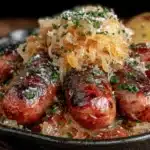
A hearty one-pan meal featuring browned bratwurst, tangy sauerkraut, and caramelized onions simmered in beer. Ready in under 30 minutes, it’s perfect for a cozy Oktoberfest celebration at home.
- Prep Time: 10 minutes
- Cook Time: 20 minutes
- Total Time: 30 minutes
- Yield: 4 servings 1x
- Category: Main Course
- Cuisine: German
Ingredients
- 4 bratwurst sausages (about 1 lb total)
- 1 tablespoon olive oil
- 1 large yellow onion, thinly sliced
- 2 cloves garlic, minced
- 1 can or jar sauerkraut (about 14–16 oz), drained but not rinsed
- 1 cup beer (light lager or Oktoberfest-style)
- 1 teaspoon caraway seeds (optional but highly recommended)
- 1 tablespoon brown sugar
- ½ teaspoon black pepper, freshly ground
- Salt to taste
- Fresh parsley, chopped (for garnish, optional)
- Whole grain mustard (for serving, optional)
- Soft pretzel buns or crusty bread (for serving, optional)
Instructions
- Prep your ingredients first. Slice the onion into thin half-moons, mince the garlic, and drain the sauerkraut (but don’t rinse it).
- Brown the bratwurst. Heat your skillet over medium-high heat and add the olive oil. Once shimmering, add the bratwurst sausages. Cook for about 4-5 minutes per side, until nicely browned all over. Use tongs to flip gently.
- Set the brats aside. Transfer the browned sausages to a plate.
- Cook the onions. Reduce heat to medium and add the sliced onions to the same skillet. Scrape up any browned bits from the bottom. Cook for about 5-7 minutes, stirring occasionally, until soft and starting to turn golden. Add a splash of beer or water if the pan looks dry.
- Add the garlic. Toss in the minced garlic and cook for another 30 seconds until fragrant.
- Add the sauerkraut and seasonings. Stir in the drained sauerkraut, caraway seeds (if using), brown sugar, and black pepper. Cook for about 2 minutes.
- Pour in the beer. Add the beer to the skillet and stir to combine. Bring to a gentle simmer.
- Return the brats to the pan. Nestle the browned bratwurst back into the sauerkraut mixture. Spoon some liquid and sauerkraut over the tops.
- Simmer. Reduce heat to medium-low, cover the skillet, and let everything simmer together for about 10-12 minutes until brats are cooked through (internal temperature of 160°F).
- Finish and serve. Remove the lid and cook for another 2-3 minutes to reduce the liquid slightly. Taste and adjust seasoning if needed. Garnish with fresh parsley and serve hot with mustard and crusty bread.
Notes
Don’t pierce the brats while cooking to keep them juicy. Brown them well for maximum flavor. Choose a light lager or Oktoberfest-style beer; avoid IPAs or dark stouts. Let the dish rest for 5 minutes before serving. Scrape the pan when adding onions to incorporate the fond. Caraway seeds are highly recommended for authentic flavor.
Nutrition
- Serving Size: 1 serving (without b
- Calories: 420
- Sugar: 6
- Sodium: 980
- Fat: 32
- Saturated Fat: 10
- Carbohydrates: 12
- Fiber: 4
- Protein: 22
Keywords: bratwurst, sauerkraut, Oktoberfest, one-pan, skillet, German, easy, 30-minute