My neighbor, Carol, wasn’t trying to impress anyone that Tuesday morning. I’d stopped by to borrow a cup of brown sugar (a last-minute baking crisis, you know how it is), and the smell hit me before I even knocked on the screen door. It wasn’t just cinnamon or nutmeg—it was something warmer, deeper, like autumn had decided to take a nap in her kitchen. She opened the door with flour on her cheek and a spatula in her hand, completely nonchalant about the fact that she was holding a breakfast that smelled like a hug.
“Oh, that?” she said when I asked, gesturing with the spatula toward the oven. “Just some bread and stuff I threw together last night.”
Just some bread and stuff. Carol has a way of making magic sound like an accident, and honestly, that’s where the best recipes come from, isn’t it? The ones that aren’t rehearsed or overthought. The ones someone makes because they had a loaf of brioche going stale and a can of pumpkin puree staring at them from the pantry.
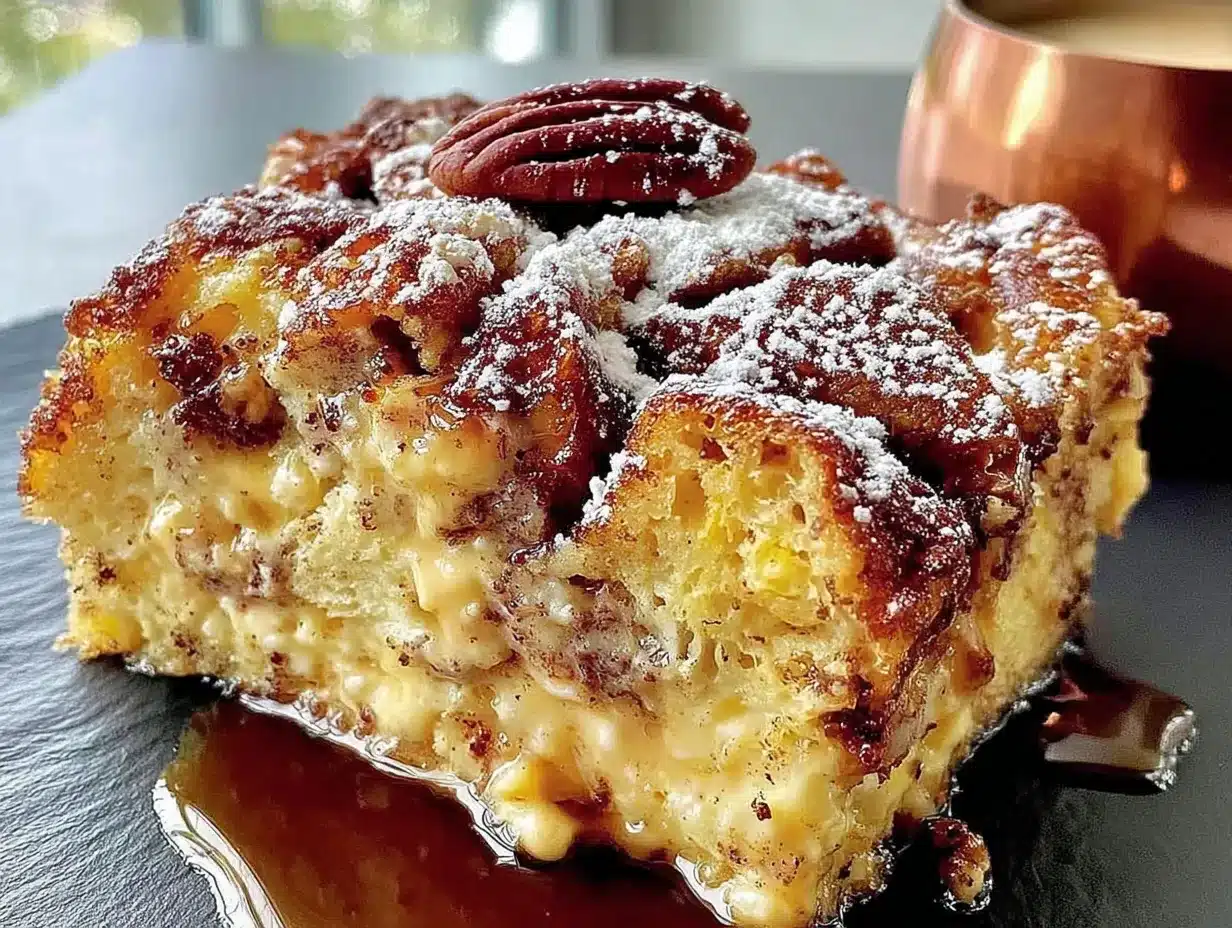
I stood there in her doorway, the borrowed sugar forgotten in my hand, while she pulled a golden, puffed-up casserole from the oven. It was speckled with toasted pecans on top, and the edges were caramelized in a way that suggested butter had been involved—generously. She cut me a piece right there, standing over the counter, and handed it to me on a paper towel like it was nothing. Let me tell you, that first bite stopped me mid-sentence. The bread had soaked up every bit of that creamy, spiced custard overnight, turning into something between a bread pudding and a cloud. It was sweet but not cloying, with that unmistakable pumpkin warmth that makes you want to curl up under a blanket.
Maybe you’ve been there—standing in someone else’s kitchen, eating something that feels like a secret, while the person who made it shrugs and says it was no big deal. That’s this recipe. It’s the kind of breakfast that makes a slow morning feel intentional, even if you threw it together in ten minutes the night before. I’ve been making Carol’s version ever since, tweaking it just a little, and I keep coming back because it’s the coziest thing I know how to make.
Why You’ll Love This Recipe
This isn’t just another French toast casserole. It’s the one that makes you look forward to waking up. I’ve tested this recipe more times than I can count—through different breads, different spice blends, and even a disastrous attempt with almond milk that I won’t repeat. What I landed on is a version that works every single time, and here’s why it’s earned a permanent spot in my breakfast rotation:
- Quick & Easy Prep: It takes about ten minutes to throw together the night before. That’s it. You mix the custard, layer the bread, pour it over, and go to sleep. Morning you will be so grateful.
- Simple Ingredients: No fancy grocery store trips. You probably have eggs, milk, pumpkin puree, and a loaf of bread in your kitchen right now. The spices are the usual suspects—cinnamon, nutmeg, ginger.
- Perfect for Cozy Mornings: This is the breakfast you make when the weather is cold, or you’ve had a rough week, or you just want the house to smell amazing without standing over a stove. It’s made for slow, pajama-clad mornings with a hot cup of coffee.
- Crowd-Pleaser: I’ve served this at brunch, on Thanksgiving morning, and to teenagers who usually inhale cereal. It gets quiet when this hits the table—the good kind of quiet, where everyone is too busy eating to talk.
- Unbelievably Delicious: The texture is what gets me every time. The top gets slightly crisp and caramelized, while the inside stays soft and custardy. The pumpkin doesn’t overpower—it just adds this cozy, earthy sweetness that pairs perfectly with maple syrup.
What makes this recipe different from the rest is the overnight soak. It’s not a gimmick. Giving the bread all night to absorb the custard means every single bite is evenly flavored, with no dry spots or sad, eggy puddles. It’s the kind of breakfast that makes you close your eyes after the first bite—comfort food reimagined for a slow, satisfying morning.
What Ingredients You Will Need
This recipe uses simple, wholesome ingredients to deliver that cozy, spiced flavor without any fuss. Most of these are pantry staples, especially if you keep pumpkin puree and spices stocked for fall baking. Here’s what you’ll need and why each one matters:
- 1 loaf (about 14-16 ounces) brioche or challah bread – Stale is better here. Day-old bread soaks up the custard without turning into mush. If your bread is fresh, cube it and let it sit out for an hour or two. I prefer brioche for its richness, but a good sourdough works too if you want a less sweet result.
- 6 large eggs – Room temperature eggs blend more smoothly into the custard. If you forgot to take them out, place them in a bowl of warm water for five minutes.
- 1 ½ cups whole milk – Whole milk gives the creamiest texture. You can use 2% in a pinch, but don’t go lower. The fat is what makes the custard velvety.
- 1 cup pumpkin puree – Not pumpkin pie filling. Make sure you grab the 100% pure pumpkin. I like Libby’s for consistent texture, but store brands work fine too. If your puree looks watery, blot it with a paper towel before using.
- ½ cup packed light brown sugar – Brown sugar adds moisture and a deeper, almost caramel-like sweetness. Dark brown sugar works too, but the flavor will be more molasses-forward.
- 2 teaspoons vanilla extract – Pure vanilla extract is worth the splurge here. Imitation vanilla can taste artificial when baked.
- 1 ½ teaspoons ground cinnamon – The backbone of the spice blend. I use Ceylon cinnamon for a milder, sweeter flavor, but Saigon cinnamon works if you want more punch.
- ½ teaspoon ground nutmeg – Freshly grated nutmeg makes a noticeable difference. It’s warmer and more aromatic than pre-ground.
- ½ teaspoon ground ginger – Adds a little warmth without being spicy.
- ¼ teaspoon ground cloves – A little goes a long way. Cloves can easily overpower, so measure carefully.
- ¼ teaspoon salt – Salt balances the sweetness and enhances the spices. Don’t skip it.
- 3 tablespoons unsalted butter, melted – For greasing the dish and drizzling over the top before baking. It helps the top get golden and crisp.
- ½ cup chopped pecans (optional) – Adds crunch on top. Toasting them first for a few minutes in a dry pan brings out their nutty flavor.
For serving: Maple syrup, whipped cream, or a dusting of powdered sugar. A pat of salted butter melting into the warm casserole is also highly recommended.
Equipment Needed
You don’t need a professional kitchen to pull this off. Most of these tools are things you already have, and I’ve included some workarounds for the few that aren’t.
- 9×13-inch baking dish – This is the standard size for a casserole of this volume. Glass or ceramic works best because they heat evenly. If you only have metal, reduce the oven temperature by 25°F and check for doneness earlier.
- Large mixing bowl – For whisking the custard. A wide bowl makes it easier to whisk without splashing.
- Whisk – A balloon whisk is ideal for getting the eggs fully incorporated into the milk and pumpkin. A fork will work in a pinch, but it takes more elbow grease.
- Measuring cups and spoons – For accuracy. I’ve made this recipe without measuring and regretted it—too much cinnamon can make it taste like potpourri.
- Spatula – For gently pressing the bread down into the custard to make sure every piece gets soaked.
- Plastic wrap or foil – To cover the dish overnight. Plastic wrap creates a tighter seal, but foil works if you spray it first with cooking spray to prevent sticking.
- Knife and cutting board – For cubing the bread. A serrated knife works best for soft breads like brioche without squishing them.
I’ve made this casserole with a cheap whisk I bought at a dollar store and a Pyrex dish I’ve had for a decade. It still turned out great. Don’t overthink the equipment—focus on the ingredients and the overnight soak.
Preparation Method
This recipe is designed to be made the night before, so the bread has time to fully absorb the custard. The actual hands-on time is about ten minutes, and then you walk away. Here’s exactly how to do it.
- Cube the bread. Cut the loaf into 1-inch cubes. Don’t stress about uniformity, but try to keep them roughly the same size so they cook evenly. If your bread is fresh, spread the cubes on a baking sheet and let them sit out for an hour to dry out slightly. This step isn’t mandatory, but it helps the bread hold its shape after soaking.
- Grease the baking dish. Use about 1 tablespoon of the melted butter to generously coat the bottom and sides of your 9×13-inch dish. This prevents sticking and adds flavor.
- Make the custard. In a large mixing bowl, whisk together the eggs until they’re broken up and slightly frothy. Add the whole milk, pumpkin puree, brown sugar, vanilla extract, cinnamon, nutmeg, ginger, cloves, and salt. Whisk until everything is completely combined. The mixture should be smooth and a deep orange color. Taste a tiny bit—it should taste like liquid pumpkin pie filling.
- Layer the bread. Spread half of the bread cubes evenly in the greased dish. Pour half of the custard mixture over the top, gently pressing the bread down with a spatula so it starts soaking in. Add the remaining bread cubes, then pour the rest of the custard over everything. Use the spatula to gently press the bread down again, making sure every piece gets coated.
- Let it soak. This is the most important step. Cover the dish tightly with plastic wrap or foil and refrigerate for at least 6 hours, but overnight is best (8-12 hours). The longer it sits, the more evenly the custard penetrates the bread. Don’t skip this—it’s what makes the texture so good.
- Bake the casserole. The next morning, take the dish out of the refrigerator about 20 minutes before baking to take the chill off. Preheat your oven to 350°F (175°C). Remove the plastic wrap and drizzle the remaining 2 tablespoons of melted butter over the top. Sprinkle the chopped pecans on top if you’re using them.
- Bake until golden. Place the dish on the middle rack and bake for 40-45 minutes. The casserole is done when the top is golden brown, the edges are slightly puffed, and the center is set—it should jiggle just a little, like a cheesecake, but not be liquidy. A knife inserted into the center should come out mostly clean.
- Rest before serving. Let the casserole sit for 5-10 minutes after it comes out of the oven. This allows the custard to settle and makes it easier to cut clean pieces. Serve warm with maple syrup, a dusting of powdered sugar, or a dollop of whipped cream.
Cooking Tips & Techniques
I’ve made this casserole at least a dozen times, and I’ve learned a few things the hard way. Here are the tips that make the difference between a good casserole and a great one.
Don’t over-soak the bread. I know I said overnight is best, but there is a limit. If you let it sit for more than 24 hours, the bread can break down into a paste. Stick to the 8-12 hour window for the best texture.
Watch your oven temperature. Every oven runs a little differently. If your casserole is browning too quickly on top but still jiggly in the center, tent it loosely with foil for the last 10 minutes of baking. This prevents the top from burning while the inside finishes cooking.
Use the right bread. This is the most common mistake I see. Avoid using sandwich bread—it’s too soft and will turn into glue. Brioche, challah, or a sturdy French bread are your best bets. They have enough structure to hold up to the custard without disintegrating.
Let the eggs come to room temperature. Cold eggs can make the custard lumpy and prevent it from emulsifying properly. If you’re in a hurry, place the eggs in a bowl of warm water for 5 minutes before cracking them.
Press the bread down firmly. When you pour the custard over the bread, use a spatula to press the cubes down so they’re fully submerged. The top pieces might stick up a little, and that’s fine—they’ll get crispy in the oven. But the majority should be sitting in the liquid.
Don’t skip the salt. I once forgot the salt, and the casserole tasted flat and one-dimensional. Salt doesn’t make it salty—it makes the pumpkin and spices taste like themselves.
Variations & Adaptations
This recipe is forgiving, and I’ve tried several variations over the years. Here are some of my favorites.
Gluten-Free Version: Swap the brioche for a good gluten-free bread. Look for one that’s sturdy and not too sweet. I’ve used a gluten-free sourdough with great results. The texture will be slightly different, but the flavor is still there.
Dairy-Free Version: Use full-fat oat milk or canned coconut milk (the kind in a carton, not a can) instead of whole milk. Use a dairy-free butter alternative for greasing the dish. The casserole will be a little less rich, but it still works beautifully.
Lower-Sugar Version: Reduce the brown sugar to ⅓ cup and skip the maple syrup drizzle. The pumpkin and spices still provide plenty of sweetness. You can also use a sugar substitute like monk fruit, but I haven’t tested that myself.
Apple-Pumpkin Combo: Peel and dice one medium apple (Honeycrisp or Granny Smith work well) and layer it between the bread cubes. It adds a tart, juicy contrast to the sweet custard.
Chocolate Chip Version: Sprinkle ½ cup of dark chocolate chips over the top before baking. The chocolate melts into the custard and creates these little pockets of richness that are absolutely decadent.
Make It a Savory-Sweet Hybrid: Add a pinch of cayenne pepper or black pepper to the custard. It sounds weird, but the heat plays off the sweetness in a way that’s surprisingly good. Start with just a pinch and taste as you go.
Serving & Storage Suggestions
This casserole is best served warm, straight from the oven, with a generous drizzle of maple syrup. I like to set out a few toppings so everyone can customize their own bowl—whipped cream, extra toasted pecans, a sprinkle of cinnamon, or even a handful of fresh pomegranate seeds for a pop of color.
What to serve with it: A side of crispy bacon or breakfast sausage balances the sweetness. A simple green salad with a tangy vinaigrette also works if you’re serving this for brunch and want something lighter. For drinks, hot coffee with a splash of cream or a mug of spiced chai tea is perfect.
Storing leftovers: Cover the dish tightly with foil or transfer individual portions to an airtight container. It will keep in the refrigerator for up to 4 days. The texture softens a bit as it sits, but the flavor actually gets better—the spices meld together even more.
Reheating: The best way to reheat is in the oven at 300°F for about 10 minutes, which helps the top crisp up again. The microwave works in a pinch (about 45 seconds per serving), but the texture will be softer. If you’re reheating a large portion, add a splash of milk to the dish before warming to restore some moisture.
Freezing: This casserole freezes surprisingly well. Bake it, let it cool completely, then wrap the entire dish in plastic wrap and a layer of foil. Freeze for up to 3 months. To serve, thaw overnight in the refrigerator and reheat in a 350°F oven until warmed through. I’ve done this for holiday mornings, and it’s a lifesaver.
Nutritional Information & Benefits
This is a comfort food, so let’s not pretend it’s a health food. But it does have some redeeming qualities. A single serving (about one-ninth of the casserole) contains roughly:
- Calories: 310
- Protein: 10g
- Fat: 14g
- Carbohydrates: 38g
- Fiber: 3g
- Sugar: 20g
Pumpkin puree is packed with vitamin A and fiber, which supports eye health and digestion. The eggs provide high-quality protein, and the cinnamon has anti-inflammatory properties. If you use whole milk, you’re also getting a good dose of calcium.
For a lighter option, swap the whole milk for oat milk and reduce the brown sugar. You can also skip the pecans to cut some fat and calories. I’ve made it both ways, and honestly, the full-fat version is worth the indulgence for a special occasion.
This recipe contains gluten, dairy, eggs, and tree nuts (if you use pecans). For allergen-friendly variations, check the section above.
Conclusion
This cozy overnight pumpkin French toast casserole is the kind of recipe that makes you look forward to waking up. It’s easy enough for a weekday (if you plan ahead) and special enough for a holiday brunch. The overnight soak does all the work, so you can sleep in while your kitchen fills with the smell of cinnamon and pumpkin.
I love this recipe because it reminds me of that morning at Carol’s house—the casualness of it, the way something so simple could feel so comforting. It’s not about impressing anyone. It’s about making a morning feel warm and intentional, whether you’re feeding a crowd or just yourself with a book and a cup of coffee.
Try it once, and I think you’ll see what I mean. And if you tweak it—add some chocolate chips, swap the nuts, throw in an apple—I’d love to hear about it. Drop a comment below and tell me how your version turned out. There’s no wrong way to make this, honestly. Just good bread, good custard, and a little patience overnight.
Frequently Asked Questions
Can I make this casserole without the overnight soak?
Technically yes, but I wouldn’t recommend it. The overnight soak is what gives the bread that soft, custardy texture throughout. If you bake it right away, the bread stays firmer and the custard doesn’t penetrate as evenly. If you’re short on time, let it sit for at least 2 hours at room temperature before baking.
Can I use canned pumpkin pie filling instead of pumpkin puree?
No. Pumpkin pie filling has added sugar and spices, which will throw off the balance of the recipe. Stick to 100% pure pumpkin puree for the best results. If you only have pie filling, reduce the brown sugar and spices by half, but be prepared for a sweeter, less controlled flavor.
How do I know when the casserole is fully baked?
The top should be golden brown and puffed slightly around the edges. The center should be set but still have a slight jiggle, like a cheesecake. Insert a knife into the center—if it comes out mostly clean with just a few moist crumbs, it’s done. If it comes out wet, give it another 5 minutes.
Can I double this recipe for a larger crowd?
Absolutely. Double all the ingredients and use a larger baking dish (like a 12×17-inch roasting pan). You may need to increase the baking time by 10-15 minutes, so keep an eye on it. The overnight soak time stays the same.
What’s the best way to reheat individual portions?
The microwave is fastest—about 45 seconds to 1 minute per serving. But for the best texture, reheat in a toaster oven or regular oven at 300°F for about 8-10 minutes. This helps the top crisp up again instead of turning soft.
Pin This Recipe!
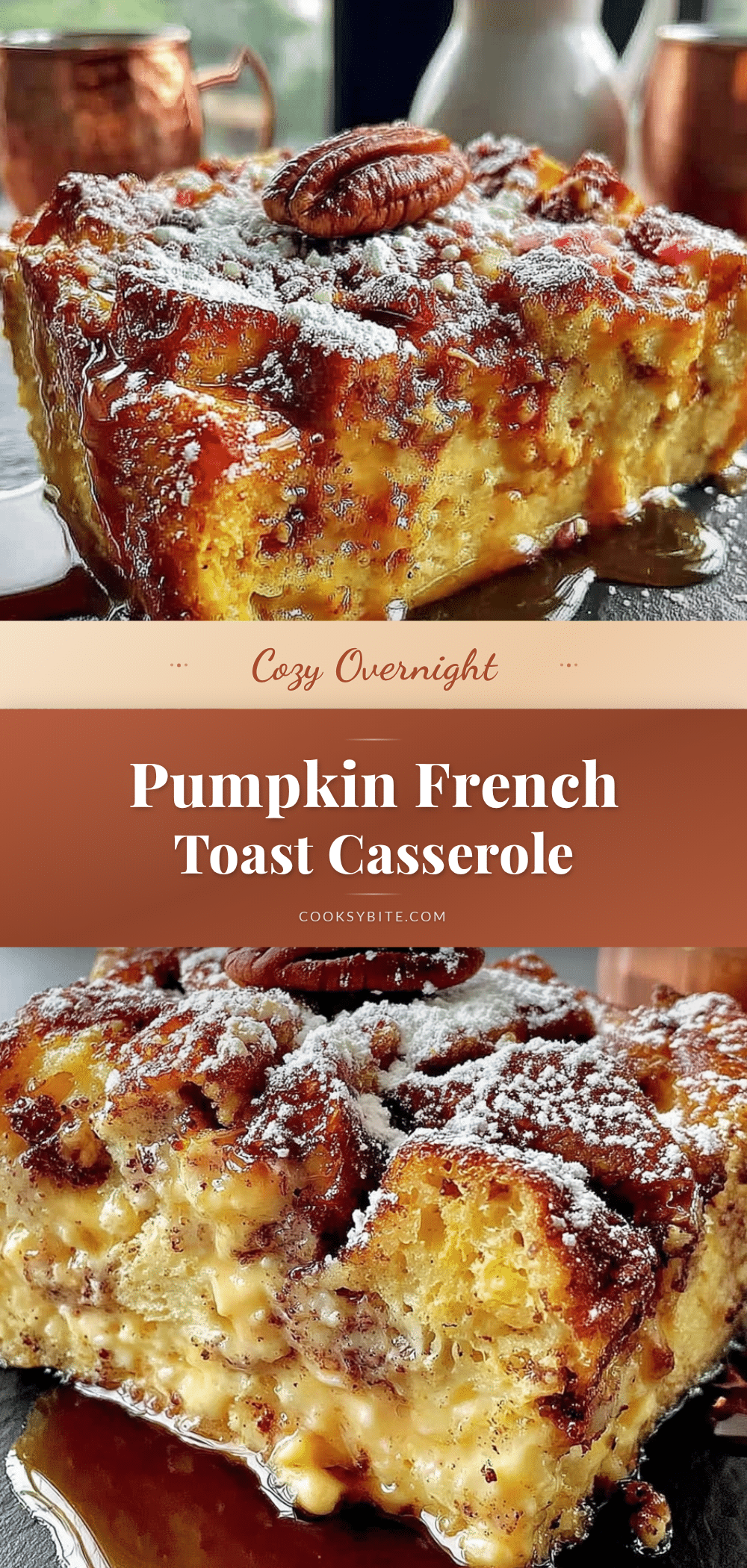
Cozy Overnight Pumpkin French Toast Casserole: Easy & Best Breakfast

This overnight pumpkin French toast casserole is the coziest breakfast you can make. With a creamy, spiced custard that soaks into brioche overnight, it’s easy to prep in ten minutes and perfect for slow, pajama-clad mornings.
- Prep Time: 10 minutes
- Cook Time: 40-45 minutes
- Total Time: 8 hours 50 minutes (includes overnight soak)
- Yield: 9 servings 1x
- Category: Breakfast
- Cuisine: American
Ingredients
- 1 loaf (about 14–16 ounces) brioche or challah bread
- 6 large eggs, room temperature
- 1 ½ cups whole milk
- 1 cup pumpkin puree (not pumpkin pie filling)
- ½ cup packed light brown sugar
- 2 teaspoons vanilla extract
- 1 ½ teaspoons ground cinnamon
- ½ teaspoon ground nutmeg
- ½ teaspoon ground ginger
- ¼ teaspoon ground cloves
- ¼ teaspoon salt
- 3 tablespoons unsalted butter, melted
- ½ cup chopped pecans (optional)
Instructions
- Cube the bread into 1-inch cubes. If fresh, spread on a baking sheet and let dry for an hour.
- Grease a 9×13-inch baking dish with 1 tablespoon of the melted butter.
- In a large bowl, whisk eggs until frothy. Add milk, pumpkin puree, brown sugar, vanilla, cinnamon, nutmeg, ginger, cloves, and salt. Whisk until smooth.
- Spread half the bread cubes in the dish. Pour half the custard over, pressing gently with a spatula. Add remaining bread and custard, pressing again to coat.
- Cover tightly with plastic wrap or foil and refrigerate for at least 6 hours, preferably overnight (8-12 hours).
- The next morning, remove from fridge 20 minutes before baking. Preheat oven to 350°F (175°C).
- Remove plastic wrap, drizzle remaining 2 tablespoons melted butter over top, and sprinkle with pecans if using.
- Bake for 40-45 minutes until golden brown, edges puffed, and center set with a slight jiggle. A knife inserted should come out mostly clean.
- Let rest for 5-10 minutes before serving. Serve warm with maple syrup, powdered sugar, or whipped cream.
Notes
For best texture, use day-old brioche or challah. Avoid over-soaking beyond 24 hours. If browning too quickly, tent with foil. Let eggs come to room temperature for smoother custard. Press bread firmly into custard for even absorption. Don’t skip the salt.
Nutrition
- Serving Size: 1 serving (1/9 of ca
- Calories: 310
- Sugar: 20
- Sodium: 320
- Fat: 14
- Saturated Fat: 6
- Carbohydrates: 38
- Fiber: 3
- Protein: 10
Keywords: pumpkin french toast casserole, overnight french toast, pumpkin breakfast casserole, easy french toast casserole, fall breakfast recipe