This was supposed to be a simple roasted squash situation. You know, the kind where you halve it, scoop out the seeds, and call it a day. But it was a Tuesday night before Thanksgiving a few years back, and I was already in a tizzy. I’d grabbed what I thought was butternut squash from the grocery store—turns out, my eyes were playing tricks on me. I got home, realized my mistake, and there I was, holding two acorn squashes and a plan that had just gone out the window.
I was already running late for a Friendsgiving potluck, and I had nothing to bring. I stared at those squashes like they’d personally betrayed me. Then, in a moment of pure “I don’t have time for this” energy, I grabbed my sharpest knife and started slicing them into rings instead of halves. I figured, why not? They’d cook faster, look way more impressive, and honestly, I had no other ideas. I tossed them with maple syrup, a pinch of cayenne (because I’m chaotic like that), and threw them in the oven. I fully expected a soggy, burnt mess.
The result was nothing like the plan—and better. The rings came out perfectly caramelized, with those gorgeous, crispy edges that make you forget you’re eating a vegetable. At the potluck, they disappeared faster than the mac and cheese. People were asking for the recipe, and I had to admit, “I have no idea what I did.” It was a happy little accident that turned into my most-requested side dish. Honestly, I’ve never gone back to roasting acorn squash any other way. Maybe you’ve been there—staring at an ingredient you didn’t plan for, ready to toss it in frustration. Trust me, this is the kind of mistake you’ll want to make again.
Why You’ll Love This Recipe
Let me tell you why these maple roasted acorn squash rings have become my secret weapon for every gathering. I’ve tested this recipe at least a dozen times—for Thanksgiving, casual Sunday dinners, and even a fancy dinner party where I pretended to be a chef. It never fails.
- Quick & Easy : Comes together in under 40 minutes, including prep. Most of that time is hands-off, so you can focus on your guests or that last-minute appetizer.
- Simple Ingredients : You probably have everything in your pantry right now. Maple syrup, butter, salt, pepper, and a little cayenne if you’re feeling spicy. No fancy grocery trips needed.
- Perfect for Hosting : These rings are a showstopper on a platter. They look like you spent hours, but honestly, it’s just good knife skills and a hot oven. Great for Friendsgiving, holiday buffets, or any potluck where you want to impress without stress.
- Crowd-Pleaser : I’ve served these to picky eaters, squash skeptics, and even my uncle who “doesn’t do vegetables.” They always get rave reviews. The caramelized maple coating is like candy, but you get to call it a vegetable.
- Unbelievably Delicious : The texture is what gets me every time. The edges get all crispy and browned, while the centers stay tender and creamy. That sweet-savory combo with a tiny kick of heat? It’s next-level comfort food.
What makes this recipe different from the rest? It’s the ring shape, honestly. Slicing the squash into even rings ensures every piece cooks uniformly and gets that perfect caramelization. No more soggy halves or burnt bottoms. Plus, the presentation is just gorgeous—like edible autumn wreaths on a plate. This isn’t just another roasted squash recipe; it’s the one that makes you close your eyes after the first bite and wonder why you didn’t try it sooner.
What Ingredients You Will Need
This recipe uses simple, wholesome ingredients to deliver bold flavor and satisfying texture without the fuss. Most of these are pantry staples, especially during fall, but you can find them year-round at any grocery store.
- 2 medium acorn squashes (about 1.5 pounds each, or 680g each) — Look for squashes that feel heavy for their size and have a deep green color with some orange patches. That orange means they’re ripe and sweet. I personally prefer organic squashes when I can find them, but conventional works just fine.
- 3 tablespoons unsalted butter (42g), melted — Butter adds richness and helps the maple syrup caramelize beautifully. You can use salted butter, just reduce the added salt slightly. For a dairy-free version, coconut oil or vegan butter works great.
- 3 tablespoons pure maple syrup (60ml) — Please use the real stuff, not pancake syrup. Grade A dark amber is my go-to for its robust flavor. It makes a huge difference in the final taste.
- 1 tablespoon brown sugar (12g), packed — This adds extra depth and helps create that sticky, caramelized coating. You can skip it if you want less sweetness, or use coconut sugar for a less refined option.
- 1/2 teaspoon ground cinnamon — Cinnamon is the classic fall spice here. It pairs beautifully with the maple and squash. Freshly ground is best, but pre-ground is totally fine.
- 1/4 teaspoon cayenne pepper (optional, but highly recommended) — This is my secret ingredient. It doesn’t make the squash spicy; it just adds a tiny warmth that balances the sweetness. Trust me on this one.
- 1/2 teaspoon salt — Use kosher salt or sea salt. It’s essential for bringing out the squash’s natural flavor and cutting through the sweetness.
- 1/4 teaspoon black pepper, freshly ground — A little pepper adds a savory note that keeps this from being overly sweet.
- Fresh thyme or rosemary (optional, for garnish) — A sprinkle of fresh herbs right before serving adds a pop of color and a lovely earthy aroma. I do this when I’m feeling fancy.
Ingredient Selection Tips: When choosing acorn squash, avoid any with soft spots or cracks. The skin should be hard and dull, not shiny. If you’re buying in advance, they store well in a cool, dark place for up to a month. For the maple syrup, I recommend Maple Grove Farms or Coombs Family Farms for consistent quality. And if you don’t have cayenne, a pinch of smoked paprika or chili powder works as a great substitute.
Equipment Needed
You don’t need a lot of fancy tools for this recipe, which is part of its charm. Here’s what you’ll need:
- A sharp chef’s knife (8-inch or larger) — This is non-negotiable. Acorn squash has a tough skin, and a dull knife is a recipe for disaster. I learned this the hard way after almost slicing my finger. A sharp knife makes the job safe and easy.
- A sturdy cutting board — Go for a large wooden or plastic board that won’t slip. Place a damp paper towel under it to keep it steady.
- A large baking sheet (18×13 inch or similar) — You need enough space to arrange the rings in a single layer without overcrowding. If they’re too close, they’ll steam instead of caramelize. I use a half-sheet pan for best results.
- Parchment paper or a silicone baking mat — This prevents sticking and makes cleanup a breeze. Trust me, you don’t want to scrub caramelized maple syrup off a pan.
- A small bowl — For mixing the butter, maple syrup, and spices together.
- A pastry brush (optional) — For brushing the mixture onto the rings. You can also use a spoon, but a brush gives you more even coverage.
- A metal spatula — For flipping the rings halfway through baking. A thin, flexible spatula works best.
Budget-Friendly Alternatives: Don’t have a pastry brush? Just use the back of a spoon to spread the glaze. No silicone mat? Parchment paper is cheap and works perfectly. And if your knife isn’t super sharp, try microwaving the whole squash for 2 minutes to soften the skin slightly before slicing. It’s a game-changer.
Preparation Method
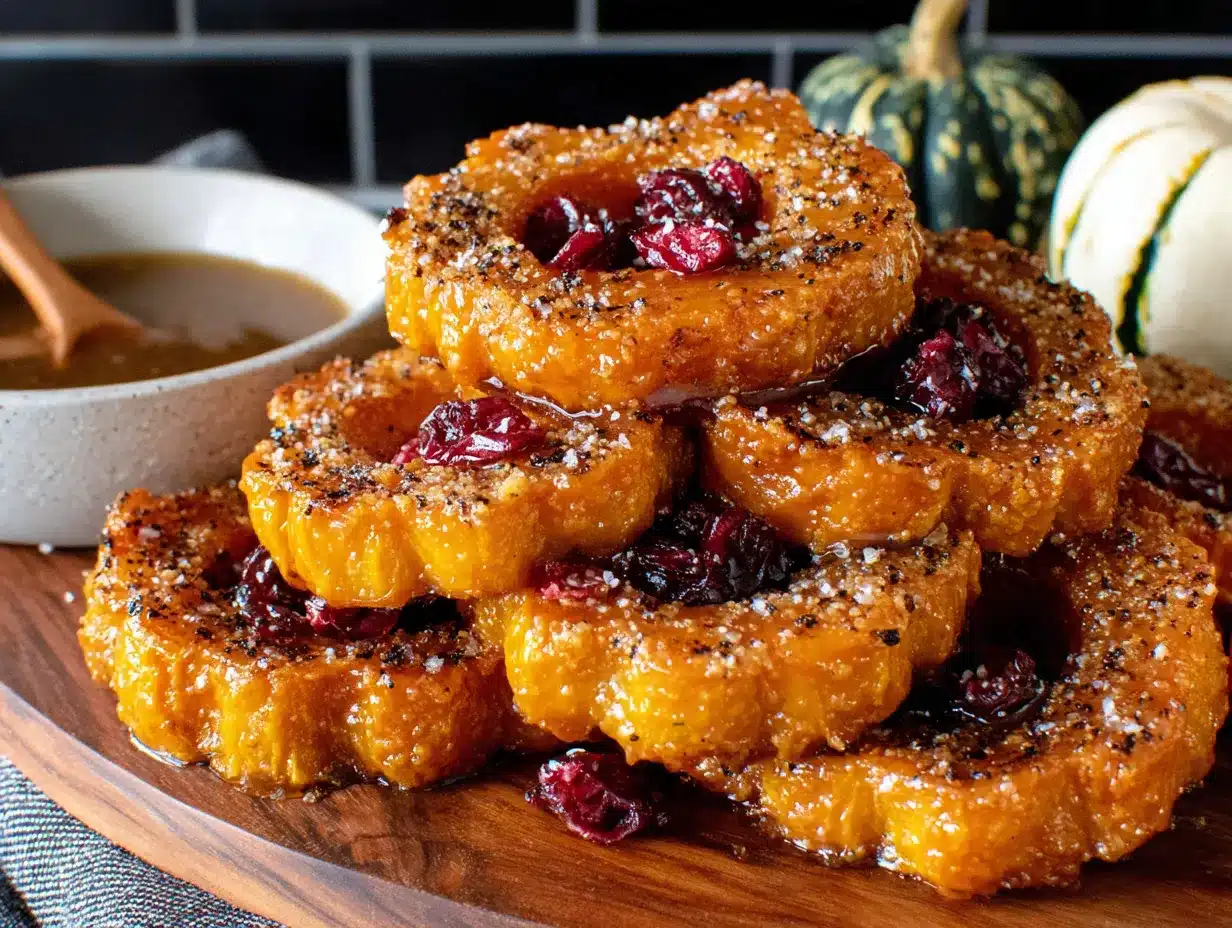
Follow these steps carefully, and you’ll have perfect maple roasted acorn squash rings every time. I’ve included all my little tricks and sensory cues so you know exactly what to look for.
- Preheat your oven to 400°F (200°C). Line a large baking sheet with parchment paper or a silicone mat. Getting the oven hot is crucial for that caramelization.
- Prepare the squash. Using your sharp chef’s knife, carefully trim off about 1/4 inch from both the top and bottom of each acorn squash. This creates a flat surface and makes it easier to slice. Then, slice each squash crosswise into rings that are about 1/2-inch thick (1.25 cm). You should get about 6-8 rings per squash, depending on its size. Use a spoon or your fingers to scoop out the seeds and stringy pulp from the center of each ring. Don’t worry about getting every last bit—a little stringiness is fine and will soften during roasting.
- Make the glaze. In a small bowl, whisk together the melted butter, maple syrup, brown sugar, cinnamon, cayenne (if using), salt, and black pepper. Mix until the sugar is mostly dissolved. Give it a taste—it should be sweet with a tiny kick at the end. Adjust the cayenne to your preference.
- Brush the rings. Arrange the squash rings in a single layer on your prepared baking sheet. Don’t overlap them. Using a pastry brush or the back of a spoon, brush the maple mixture generously over both sides of each ring. Make sure to get some inside the center holes too. Use all the glaze—don’t be shy. The rings should look glossy and well-coated.
- Roast for 15 minutes. Place the baking sheet in the preheated oven. Set a timer. After 15 minutes, the rings should be starting to soften and the edges will look slightly translucent.
- Flip and baste. Remove the sheet from the oven. Using a metal spatula, carefully flip each ring over. They’ll be tender but should hold their shape. Spoon any pooled glaze from the pan back over the rings. This step ensures even cooking and caramelization.
- Roast for another 10-15 minutes. Return the sheet to the oven. Keep an eye on them during the last 5 minutes. You’re looking for deep golden-brown edges and a sticky, caramelized surface. The rings should be tender when pierced with a fork but not mushy. If you like them extra crispy, give them another 2-3 minutes, but watch closely—maple syrup can burn quickly.
- Rest and garnish. Remove from the oven and let the rings cool on the pan for 2-3 minutes. This allows the caramel to set slightly. Transfer to a serving platter and sprinkle with fresh thyme or rosemary if desired. Serve warm or at room temperature.
Prep Note: You can slice the squash and make the glaze up to a day in advance. Store the rings in an airtight container in the fridge, and keep the glaze covered at room temperature. When you’re ready to cook, just brush and roast. Perfect for when guests are on their way!
Cooking Tips & Techniques
I’ve made this recipe more times than I can count, and I’ve definitely learned a few things along the way. Here are my best tips to ensure success.
Don’t skip the flipping step. I know it’s tempting to just toss everything in and forget about it, but flipping the rings halfway through is essential. The bottom of the rings sit in the glaze, and if you don’t flip them, they can get soggy while the tops burn. I learned this the hard way when I made a batch for a dinner party and half the rings came out uneven. Not my finest moment.
Watch the oven like a hawk during the last 5 minutes. Maple syrup has a low burning point. One minute they’re perfect, the next minute they’re charcoal. Set a timer and check them visually. You want them to look like stained glass—deep amber with darker edges. If you see smoke, pull them out immediately.
Use a metal spatula, not a plastic one. Plastic spatulas can melt or warp on a hot pan, plus they’re not thin enough to slide under the tender rings. A thin metal spatula gives you better control and won’t damage the rings. I keep a dedicated fish spatula just for this recipe.
Arrange rings in a single layer with space between them. Overcrowding is the enemy of caramelization. If the rings are touching, they’ll steam each other and you’ll end up with soft, pale squash instead of crispy, golden rings. Use two baking sheets if you need to. I’ve done it, and it’s worth the extra pan.
For extra crispy edges, broil for 1-2 minutes at the end. This is my pro tip. After the final roast, switch your oven to broil and watch the rings like a hawk. The sugar will bubble and darken almost instantly. Pull them out the second they look like they’re about to burn. The result is a crunchy, candy-like exterior that’s absolutely addictive.
Timing strategy for hosting: When I’m hosting, I slice the squash and mix the glaze in the morning. Then, about 30 minutes before I want to serve, I pop them in the oven. They’re best served fresh, but they hold well for about 20 minutes on a warm platter. This gives you time to finish the main dish and pour yourself a glass of wine.
Variations & Adaptations
One of the best things about this recipe is how adaptable it is. I’ve played around with it quite a bit, and here are some of my favorite variations.
Savory Herb Version: Skip the maple syrup and brown sugar. Instead, mix the melted butter with 2 cloves of minced garlic, 1 tablespoon fresh chopped rosemary, 1 teaspoon salt, and 1/2 teaspoon black pepper. Roast the same way, and you’ll get a savory, aromatic side that pairs perfectly with roasted chicken or pork. I made this for a Christmas dinner once, and my mother-in-law asked for the recipe—which is basically the highest compliment.
Spicy Maple-Ginger Twist: Add 1 teaspoon of freshly grated ginger and an extra 1/4 teaspoon of cayenne to the glaze. The ginger adds a warm, zesty kick that complements the maple beautifully. This version is fantastic with Asian-inspired mains like teriyaki salmon or sesame beef. I tried it on a whim one rainy Sunday, and now it’s my go-to for fall dinners.
Vegan Adaptation: Replace the butter with melted coconut oil or a high-quality vegan butter. The coconut oil adds a subtle tropical note that actually works really well with the maple. Just make sure to use a good maple syrup (most are vegan) and skip the brown sugar or use coconut sugar. I’ve served this to vegan friends, and they couldn’t tell the difference.
Air Fryer Method: If you’re short on time or want even crispier rings, try the air fryer. Preheat to 375°F (190°C). Arrange the glazed rings in a single layer in the basket (you may need to work in batches). Cook for 8-10 minutes, flipping halfway through, until golden and caramelized. The air fryer gives them an incredible crunch. I do this when I’m just cooking for myself and don’t want to heat up the whole oven.
Sweet and Smoky: Add 1/2 teaspoon of smoked paprika to the glaze along with the cayenne. The smoky flavor adds a whole new dimension that’s amazing with barbecue or grilled meats. I discovered this combo when I ran out of cinnamon and just started throwing things in the bowl. Sometimes the best recipes come from desperation!
Serving & Storage Suggestions
These maple roasted acorn squash rings are incredibly versatile when it comes to serving. Here’s how I like to present and store them.
Serving Temperature: Serve them warm, right out of the oven, for the best texture. The edges are crispy, the centers are tender, and the glaze is perfectly sticky. They’re also delicious at room temperature, which makes them perfect for potlucks or buffets. I’ve even eaten them cold straight from the fridge the next day—don’t judge me.
Presentation Tips for Hosting: Arrange the rings on a large, flat platter in a single layer, slightly overlapping like falling dominoes. Sprinkle with fresh thyme leaves, a pinch of flaky sea salt, and a drizzle of extra maple syrup for a glossy finish. For a holiday table, I like to add pomegranate seeds and toasted pecans for color and crunch. It looks like a work of art, and your guests will think you spent hours on it.
What to Serve Alongside: These rings are the perfect side for roasted turkey, baked ham, or herb-crusted pork loin. They also pair beautifully with a simple arugula salad with lemon vinaigrette, which cuts through the sweetness. For a vegetarian main, serve them alongside wild rice pilaf and roasted Brussels sprouts. And honestly, they’re amazing with just a dollop of sour cream or Greek yogurt for dipping.
Storage Instructions: Store leftover rings in an airtight container in the refrigerator for up to 4 days. They will soften over time, but the flavor only gets better as the maple syrup soaks in. I actually love them cold, straight from the fridge, as a snack.
Reheating Methods: The best way to reheat is in the oven at 350°F (175°C) for 5-7 minutes. This restores some of the crispiness. You can also reheat in an air fryer at 350°F for 3-4 minutes. Avoid the microwave—it makes them soggy and sad. Trust me, I’ve tried.
Freezer Tips: You can freeze the roasted rings in a single layer on a baking sheet, then transfer to a freezer bag for up to 3 months. Reheat directly from frozen in a 375°F (190°C) oven for 10-12 minutes. The texture won’t be quite as perfect as fresh, but they’re still delicious in a pinch.
Nutritional Information & Benefits
While this recipe feels indulgent, it actually has some surprising health benefits. Here’s the breakdown per serving (about 4 rings, assuming 4 servings total).
- Calories: Approximately 210 kcal
- Total Fat: 9g
- Saturated Fat: 5g
- Carbohydrates: 34g
- Fiber: 5g
- Sugar: 18g (mostly from maple syrup and natural squash sugars)
- Protein: 3g
- Vitamin A: 45% of the Daily Value
- Vitamin C: 30% of the Daily Value
- Potassium: 15% of the Daily Value
Health Benefits: Acorn squash is packed with fiber, which aids digestion and keeps you feeling full. It’s also rich in beta-carotene (which your body converts to vitamin A) and vitamin C, both of which support immune health. The maple syrup provides quick energy, and the cayenne pepper can boost metabolism slightly. Of course, this is still a treat—but it’s a treat that comes with some serious nutritional perks.
Dietary Considerations: This recipe is naturally gluten-free and can easily be made vegan or dairy-free with the substitutions mentioned earlier. It’s also nut-free, making it safe for school potlucks or parties. The main allergens are dairy (butter) and possibly tree nuts if you add pecan garnish.
Conclusion
I still can’t believe this recipe started as a mistake. That Tuesday night before Thanksgiving, when I grabbed the wrong squash and had to think on my feet, ended up giving me one of my most treasured side dishes. These maple roasted acorn squash rings are proof that sometimes the best things in life come from happy accidents. They’re easy enough for a weeknight, impressive enough for a holiday table, and versatile enough to adapt to any occasion.
I really hope you give this recipe a try. Don’t be afraid to customize it—add more cayenne if you like heat, throw in some fresh herbs, or try the savory version. The beauty of this dish is that it forgives mistakes. After all, it was born from one. I’d love to hear how it turns out for you. Did you try a variation? Did your guests gobble them up? Drop a comment below and let me know. And if you’re looking for more crowd-pleasing sides, check out my honey glazed carrots or these garlic parmesan roasted potatoes. Happy cooking, friends!
Frequently Asked Questions
Can I use butternut squash instead of acorn squash?
Yes, you can! Butternut squash has a similar texture and sweetness. The main difference is that butternut squash is denser and less watery, so you may need to add an extra 5-10 minutes of roasting time. Slice it into rings or half-moons, and follow the same glaze and method.
How do I prevent the rings from sticking to the pan?
Using parchment paper or a silicone baking mat is your best bet. The maple syrup can caramelize and stick to bare metal, making cleanup a nightmare. If you don’t have parchment, lightly grease your pan with butter or oil before adding the rings.
Can I make these ahead of time for a party?
Absolutely. You can slice the squash and mix the glaze up to 24 hours in advance. Store the rings in the fridge and the glaze at room temperature. Then, just brush and roast when you’re ready to serve. They’re best fresh, but you can also reheat them in a 350°F oven for 5 minutes.
What if I don’t have maple syrup?
You can substitute honey, agave nectar, or even brown sugar dissolved in a little warm water. Keep in mind that honey is sweeter and has a different flavor profile. For a sugar-free option, try a monk fruit-based syrup, though the caramelization won’t be as intense.
Why are my squash rings turning out mushy?
Mushy rings usually mean they’re overcrowded on the pan or not roasted long enough. Make sure the rings are in a single layer with space between them. Also, check your oven temperature—it needs to be hot enough (400°F) to drive off moisture and create caramelization. If they’re still mushy, try flipping them more frequently to allow steam to escape.
Pin This Recipe!
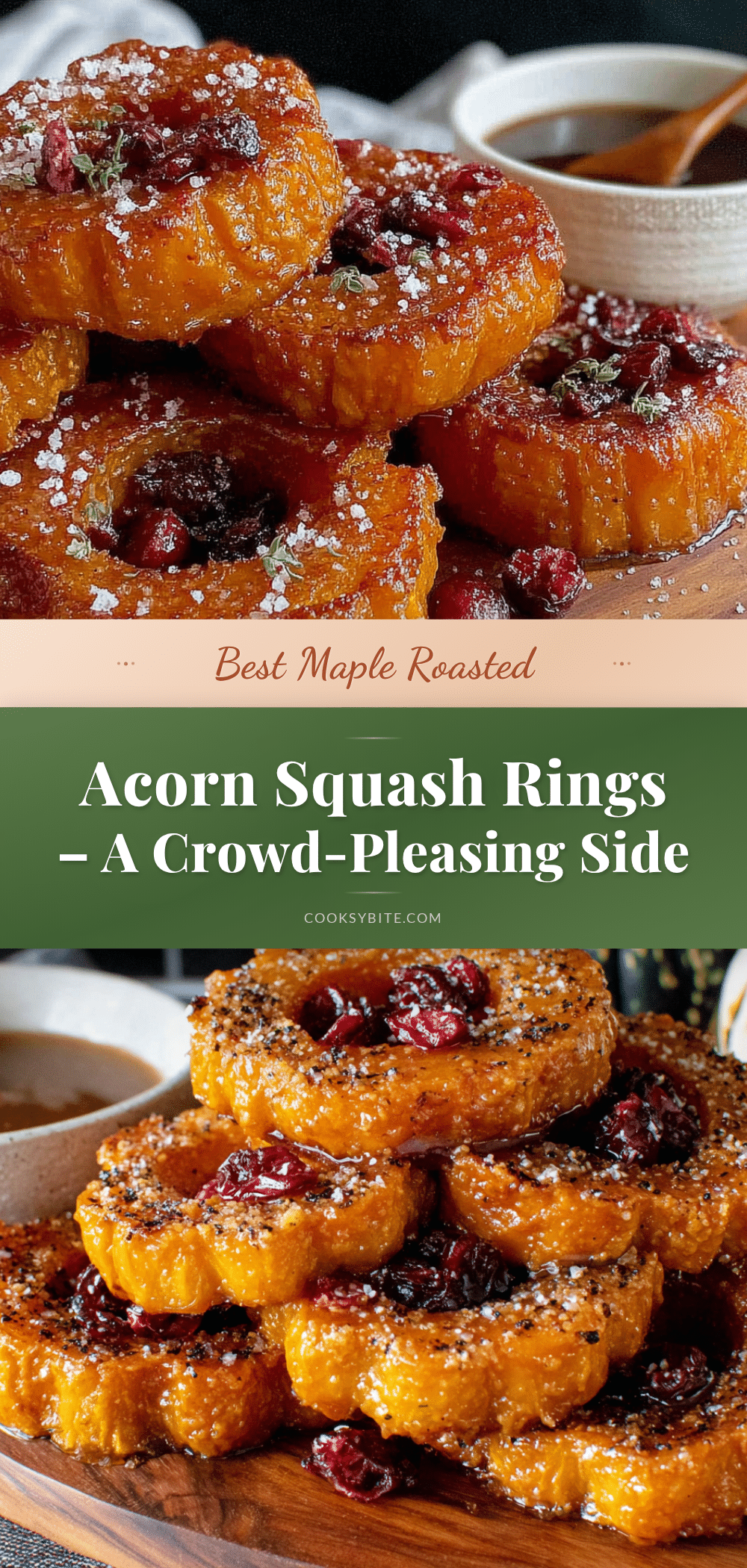
Best Maple Roasted Acorn Squash Rings
These maple roasted acorn squash rings are caramelized, crispy-edged, and tender—a perfect side dish for any gathering. Born from a happy accident, they’re quick, easy, and a crowd-pleaser.
- Prep Time: 15 minutes
- Cook Time: 25-30 minutes
- Total Time: 40-45 minutes
- Yield: 4 servings 1x
- Category: Side Dish
- Cuisine: American
Ingredients
- 2 medium acorn squashes (about 1.5 pounds each, or 680g each)
- 3 tablespoons unsalted butter (42g), melted
- 3 tablespoons pure maple syrup (60ml)
- 1 tablespoon brown sugar (12g), packed
- 1/2 teaspoon ground cinnamon
- 1/4 teaspoon cayenne pepper (optional, but highly recommended)
- 1/2 teaspoon salt
- 1/4 teaspoon black pepper, freshly ground
- Fresh thyme or rosemary (optional, for garnish)
Instructions
- Preheat your oven to 400°F (200°C). Line a large baking sheet with parchment paper or a silicone mat.
- Prepare the squash: Using a sharp chef’s knife, trim off about 1/4 inch from both the top and bottom of each acorn squash. Slice each squash crosswise into rings about 1/2-inch thick (1.25 cm). Scoop out the seeds and stringy pulp from the center of each ring.
- Make the glaze: In a small bowl, whisk together the melted butter, maple syrup, brown sugar, cinnamon, cayenne (if using), salt, and black pepper until the sugar is mostly dissolved.
- Brush the rings: Arrange the squash rings in a single layer on the prepared baking sheet. Brush the maple mixture generously over both sides of each ring, using all the glaze.
- Roast for 15 minutes. Remove from the oven, flip each ring using a metal spatula, and spoon any pooled glaze from the pan back over the rings.
- Roast for another 10-15 minutes, until deep golden-brown and tender when pierced with a fork. For extra crispy edges, broil for 1-2 minutes at the end, watching closely.
- Remove from the oven and let cool on the pan for 2-3 minutes. Transfer to a serving platter and garnish with fresh thyme or rosemary if desired. Serve warm or at room temperature.
Notes
Slice the squash and make the glaze up to a day in advance. Store rings in the fridge and glaze at room temperature. For vegan version, replace butter with melted coconut oil or vegan butter. For air fryer, cook at 375°F for 8-10 minutes, flipping halfway. Watch the oven during the last 5 minutes to prevent burning.
Nutrition
- Serving Size: 4 rings
- Calories: 210
- Sugar: 18
- Sodium: 300
- Fat: 9
- Saturated Fat: 5
- Carbohydrates: 34
- Fiber: 5
- Protein: 3
Keywords: maple roasted acorn squash, acorn squash rings, roasted squash, fall side dish, Thanksgiving side, easy squash recipe