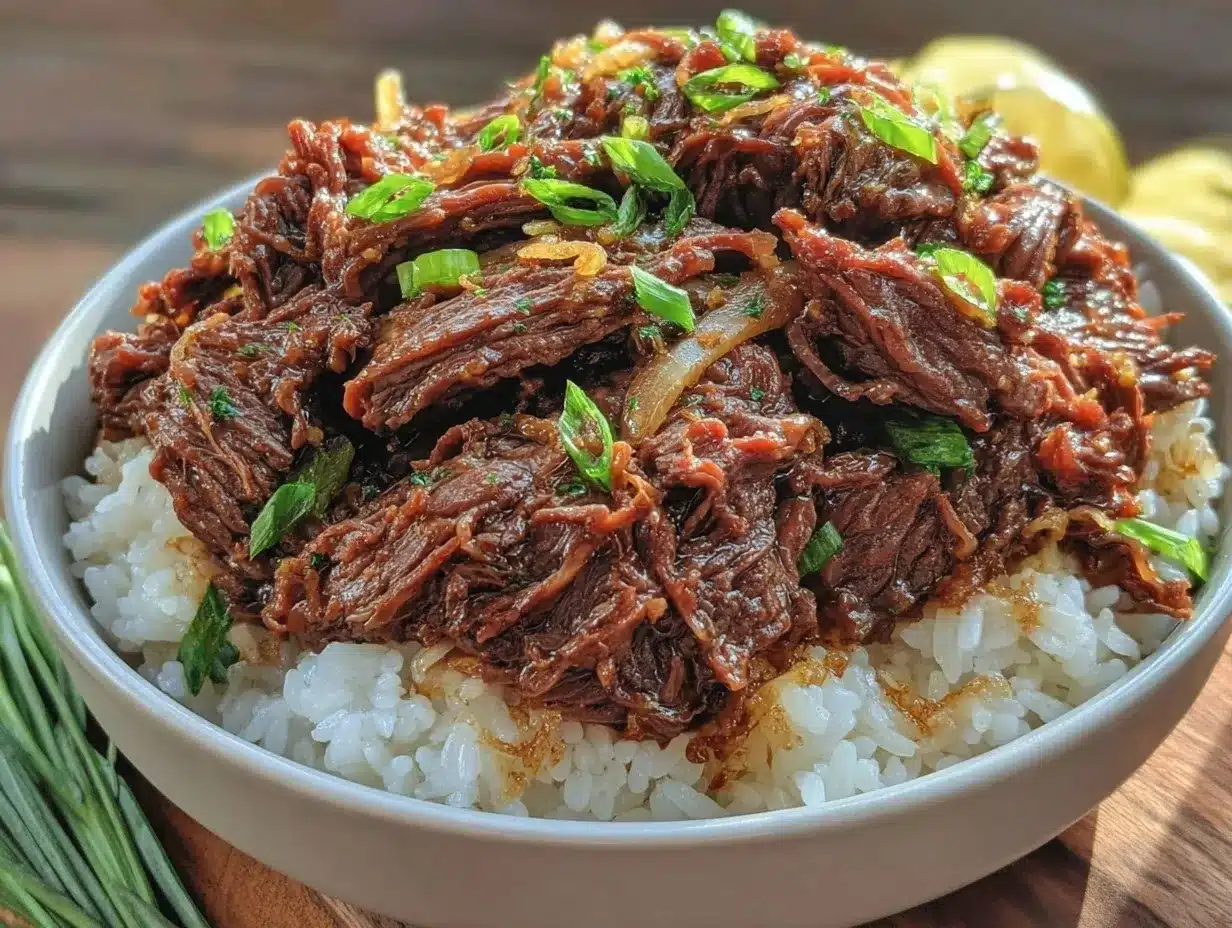
I remember the first time I stumbled upon this savory gyudon beef bowl with tender caramelized onions quite by accident. It was one of those evenings where I’d planned a fancy dinner but ended up completely wiped out after a long day at work. Honestly, I was this close to settling for takeout when I found a lonely pack of thinly sliced beef in the fridge and an onion staring back at me. I thought, “Why not try something quick and comforting?” I tossed those onions in a pan, letting them slowly melt into sweetness while the beef sizzled alongside. The aroma was so inviting that I almost forgot I was cooking for one.
That first attempt wasn’t picture-perfect, but the flavors hit a sweet spot—rich, savory, with just the right touch of caramelized sweetness from the onions. Since then, I couldn’t stop making this gyudon beef bowl multiple times a week. It’s become my go-to for nights when I want comfort but don’t want to fuss over a complicated recipe. The best part? It’s a humble dish that feels like a warm hug in a bowl, with the caramelized onions stealing the show every time.
What really makes this recipe stick around for me is how it balances busy weeknight practicality with real, satisfying flavor. It’s simple but never boring, and it always leaves you thinking, “Yeah, I nailed that.”
Why You’ll Love This Recipe
- Quick & Easy: Ready in about 30 minutes, it’s perfect when time’s tight but you want a hearty, home-cooked meal.
- Simple Ingredients: Uses pantry staples and fresh beef you can find at most markets—nothing exotic or intimidating.
- Perfect for Cozy Dinners: Ideal for quiet nights in or casual dinners with friends craving something tasty but fuss-free.
- Crowd-Pleaser: The mix of tender beef and sweet onions wins over even picky eaters, plus it pairs beautifully with steamed rice.
- Unbelievably Delicious: The caramelized onions add a depth of flavor that takes this gyudon bowl from ordinary to memorable.
This isn’t your average gyudon recipe. I’ve fine-tuned the caramelization process for the onions to bring out just the right sweetness without turning mushy. The beef is cooked gently to keep it juicy and tender, with a sauce that’s perfectly balanced—not too salty or sweet. Honestly, it’s the kind of comfort food that makes you pause and appreciate the simple joys of good cooking.
What Ingredients You Will Need
This recipe uses simple, wholesome ingredients to deliver bold flavor and satisfying texture without the fuss. Most of these are pantry staples or easy to find in any grocery store, and you can swap a few items depending on your preferences or dietary needs.
- Thinly sliced beef (300g / 10.5 oz): Look for ribeye or chuck for tenderness and flavor. I prefer locally sourced beef when possible for freshness.
- Large onions (2 medium): Thinly sliced. Yellow onions work best for caramelizing due to their natural sweetness.
- Cooked Japanese short-grain rice (4 servings): Sticky rice is ideal to soak up the sauce.
- Soy sauce (3 tbsp): Use a naturally brewed soy sauce for depth of flavor.
- Mirin (2 tbsp): Adds a subtle sweetness and gloss to the sauce.
- Sake (2 tbsp): Helps tenderize the beef and adds aroma. Can substitute with dry sherry if needed.
- Dashi stock (1/2 cup / 120 ml): For authentic umami richness. You can use instant dashi powder mixed with water.
- Granulated sugar (1 tbsp): Balances the savory elements with a hint of sweetness.
- Vegetable oil or neutral oil (1 tbsp): For sautéing onions.
- Optional toppings: Pickled ginger (beni shoga), sliced scallions, or a soft boiled egg to amp up the experience.
Substitutions: You can swap beef for thinly sliced pork or chicken if preferred. For a gluten-free version, choose tamari instead of soy sauce. Using low-sodium soy sauce can help control saltiness, especially if you’re watching sodium intake.
Equipment Needed
- Non-stick skillet or frying pan: Essential for caramelizing onions evenly without sticking. A heavy-bottomed pan works best for heat distribution.
- Sharp knife: For slicing onions and beef thinly and uniformly.
- Cutting board: Preferably separate for meat and vegetables to keep things sanitary.
- Measuring spoons and cups: For precise seasoning and sauce balance.
- Rice cooker or pot: To prepare perfect Japanese short-grain rice—sticky and slightly chewy.
- Wooden spoon or spatula: For stirring onions gently during caramelization.
If you don’t have a non-stick skillet, a well-seasoned cast iron pan works fine but watch the heat carefully to avoid burning the onions. For budget-friendly options, any standard frying pan with a thick base will do.
Preparation Method
- Prepare the rice: Start by cooking your Japanese short-grain rice following the package instructions or in a rice cooker. This usually takes around 20-30 minutes. Set aside once done and keep warm.
- Slice onions and beef: Peel and thinly slice two medium yellow onions. Slice the beef into bite-sized strips if not pre-sliced. Keep everything ready before you begin cooking.
- Caramelize the onions: Heat 1 tablespoon of vegetable oil in a non-stick skillet over medium heat. Add the sliced onions and cook gently, stirring occasionally, for about 15-20 minutes. You want the onions to turn a deep golden brown and become soft and sweet, but not burnt. If the pan gets too dry, splash a bit of water to prevent sticking. Patience here is key.
- Cook the beef: Once the onions are caramelized, push them to the side of the pan. Increase the heat to medium-high, add the beef slices, and cook for 2-3 minutes until just browned but still tender. Avoid overcooking; thin slices cook quickly.
- Make the sauce: In a small bowl, mix 3 tablespoons soy sauce, 2 tablespoons mirin, 2 tablespoons sake, 1/2 cup dashi stock, and 1 tablespoon sugar until dissolved.
- Combine and simmer: Pour the sauce over the beef and onions in the pan. Reduce heat to medium-low and let it simmer for 5 minutes, stirring occasionally, until the sauce thickens slightly and coats the beef and onions beautifully.
- Assemble the bowl: Scoop warm cooked rice into bowls. Spoon generous amounts of the savory beef and caramelized onions over the rice, making sure to drizzle some of the sauce too.
- Optional toppings: Garnish with pickled ginger, sliced scallions, or a soft boiled egg for extra flavor and texture.
Tip: If your onions brown too quickly or start to burn, lower the heat and add a splash of water. Slow caramelization is what brings out that irresistible sweetness.
Cooking Tips & Techniques
Caramelizing onions properly is the heart of this gyudon recipe. Don’t rush the process; low and slow heat brings out their natural sugars without bitterness. Stir often but gently to prevent scorching. I’ve learned that patience here transforms the whole dish.
Choosing the right beef cut is crucial. Thinly sliced ribeye or chuck works best since it cooks quickly and stays tender. Avoid lean cuts like sirloin for this dish, as they can dry out and become tough.
When adding the sauce, simmer gently. High heat can evaporate the liquid too fast and make the sauce overly salty or sticky. The goal is a silky glaze that clings to each slice of beef and onion.
Multitasking tip: While the onions caramelize, prep your rice and slice the beef to save time. Once the onions are ready, everything else moves quickly.
Common mistake: Overcrowding the pan when cooking beef. This causes steaming instead of searing, leading to less flavor. Cook in batches if needed.
Variations & Adaptations
- Vegetarian version: Substitute thinly sliced king oyster mushrooms for beef and use vegetable broth instead of dashi. The mushrooms caramelize nicely and soak up the sauce similarly.
- Spicy twist: Add a dash of shichimi togarashi (Japanese seven-spice) or a few drops of chili oil to the sauce for a warm kick.
- Low-carb adaptation: Skip the rice and serve the beef and onions over cauliflower rice or steamed greens for a lighter meal.
- Seasonal veggies: Toss in thinly sliced carrots or snap peas near the end of simmering for added crunch and color.
- Personal twist: I once stirred in a spoonful of miso paste to the sauce for a richer, deeper umami flavor. It’s subtle but adds a satisfying earthiness.
Serving & Storage Suggestions
This savory gyudon beef bowl is best enjoyed hot, right after plating, to savor the full aroma and texture of the caramelized onions and tender beef. Serve it with a side of steamed greens or a simple cucumber salad to add freshness and balance.
For leftovers, store the beef and onions separately from rice in airtight containers in the refrigerator for up to 2 days. Reheat gently on the stove or microwave, adding a splash of water or broth to loosen the sauce and avoid drying out.
Flavors tend to deepen after a day, so if you can wait, reheated gyudon can taste even better the next day. Just be careful not to overcook during reheating to keep the beef tender.
Nutritional Information & Benefits
Each serving of this savory gyudon beef bowl contains approximately 450 calories, with a balanced mix of protein, carbohydrates, and fats. The beef provides a hearty dose of iron and B vitamins, while the onions contribute antioxidants and fiber.
This dish is naturally gluten-containing due to soy sauce but can be adapted with tamari for gluten-free needs. It’s also low in sugar and packed with savory flavor, making it satisfying without unnecessary additives.
Personally, I appreciate that this recipe feels nourishing but not heavy—comfort food that supports a busy lifestyle without guilt.
Conclusion
This savory gyudon beef bowl with tender caramelized onions has become a favorite in my kitchen for good reason. It’s quick enough for a busy evening and rich enough to feel like a treat. The secret lies in those slowly caramelized onions that bring sweet depth to the savory sauce and tender beef.
Feel free to make it your own—adjust the seasoning, toppings, or even the protein to match your mood or pantry. I love how versatile and forgiving this recipe is, yet it always delivers on flavor.
If you give it a try, I’d love to hear how you made it your own or any tricks you picked up along the way. Cooking should be fun and satisfying, and this gyudon beef bowl definitely ticks those boxes.
Happy cooking and savor every bite!
FAQs
What cut of beef is best for gyudon?
Thinly sliced ribeye or chuck is ideal due to its tenderness and flavor. Avoid lean cuts like sirloin which can dry out quickly.
Can I make gyudon without dashi stock?
Yes, you can substitute dashi with vegetable or chicken broth, but dashi adds authentic umami that’s hard to replicate.
How do I caramelize onions without burning them?
Cook onions over medium-low heat and stir often. If they start to stick, add a splash of water to loosen and prevent burning.
Is this recipe freezer-friendly?
The beef and onions freeze well, but rice tends to lose texture. Freeze separately and reheat gently for best results.
What can I use instead of mirin?
Sweet sherry or a mix of sake and sugar can substitute mirin in a pinch, keeping the balance of sweetness and acidity.
Pin This Recipe!
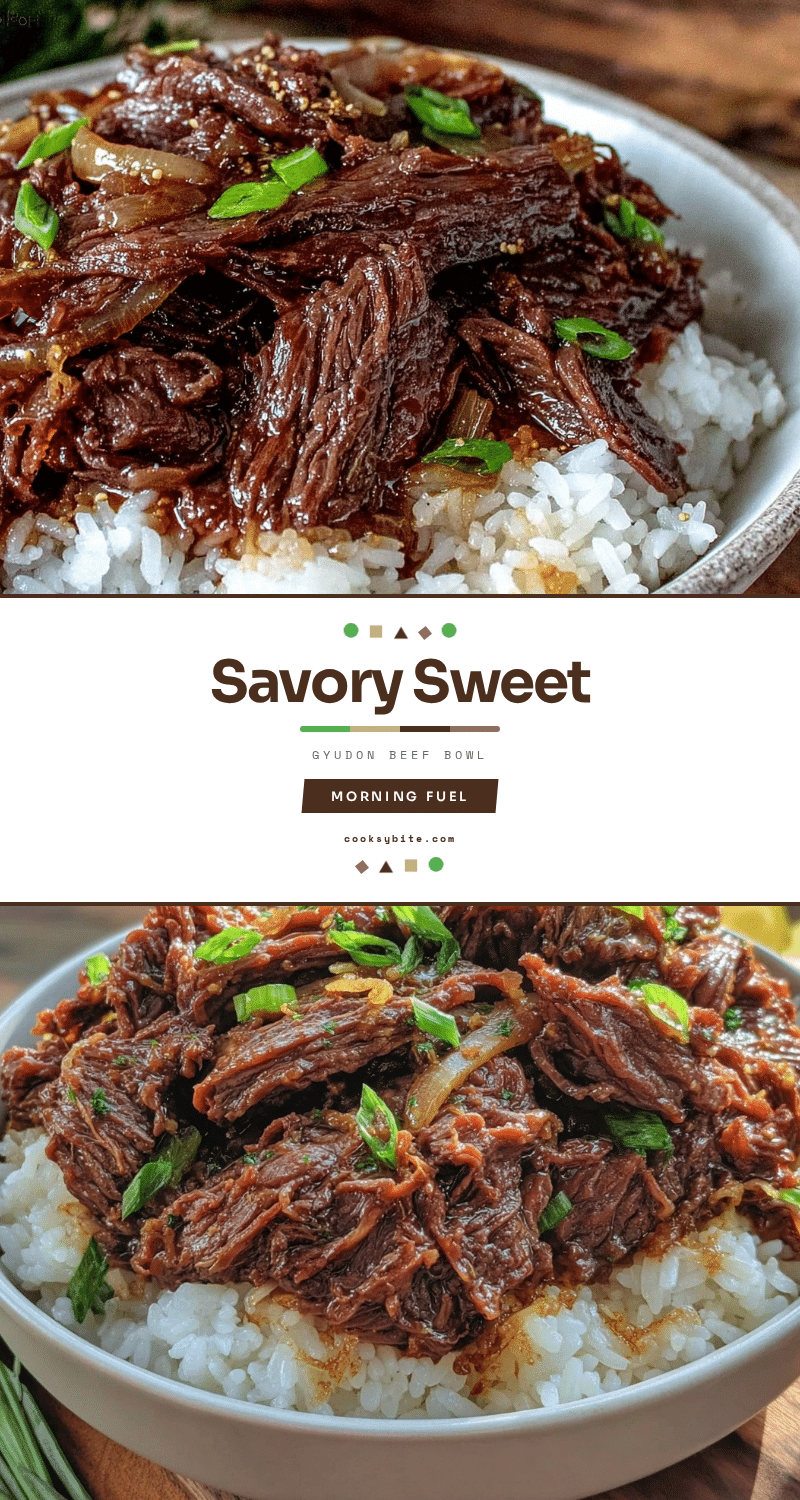
Savory Gyudon Beef Bowl Recipe with Tender Caramelized Onions
A quick and comforting Japanese beef bowl featuring tender caramelized onions and a savory sauce, perfect for busy weeknights or cozy dinners.
- Prep Time: 10 minutes
- Cook Time: 20 minutes
- Total Time: 30 minutes
- Yield: 4 servings 1x
- Category: Main Course
- Cuisine: Japanese
Ingredients
- 300g (10.5 oz) thinly sliced beef (ribeye or chuck preferred)
- 2 medium large yellow onions, thinly sliced
- Cooked Japanese short-grain rice (4 servings)
- 3 tablespoons soy sauce (naturally brewed)
- 2 tablespoons mirin
- 2 tablespoons sake (or dry sherry as substitute)
- 1/2 cup (120 ml) dashi stock (or instant dashi powder mixed with water)
- 1 tablespoon granulated sugar
- 1 tablespoon vegetable oil or neutral oil
- Optional toppings: pickled ginger (beni shoga), sliced scallions, soft boiled egg
Instructions
- Prepare the rice by cooking Japanese short-grain rice according to package instructions or in a rice cooker (about 20-30 minutes). Keep warm.
- Peel and thinly slice two medium yellow onions. Slice beef into bite-sized strips if not pre-sliced.
- Heat 1 tablespoon vegetable oil in a non-stick skillet over medium heat. Add onions and cook gently, stirring occasionally, for 15-20 minutes until deep golden brown and soft. Add splash of water if pan gets too dry.
- Push onions to the side of the pan. Increase heat to medium-high, add beef slices, and cook for 2-3 minutes until browned but still tender. Avoid overcooking.
- In a small bowl, mix soy sauce, mirin, sake, dashi stock, and sugar until dissolved.
- Pour sauce over beef and onions in the pan. Reduce heat to medium-low and simmer for 5 minutes, stirring occasionally until sauce thickens and coats beef and onions.
- Scoop warm rice into bowls. Spoon beef and caramelized onions over rice, drizzling some sauce.
- Garnish with optional toppings like pickled ginger, scallions, or a soft boiled egg.
Notes
Caramelize onions slowly over medium heat to bring out sweetness without burning. Use thinly sliced ribeye or chuck for tender beef. Avoid overcrowding the pan when cooking beef to prevent steaming. For gluten-free, substitute soy sauce with tamari. Leftovers store well separately for up to 2 days.
Nutrition
- Serving Size: 1 bowl (including be
- Calories: 450
- Sugar: 8
- Sodium: 900
- Fat: 18
- Saturated Fat: 6
- Carbohydrates: 40
- Fiber: 3
- Protein: 28
Keywords: gyudon, beef bowl, caramelized onions, Japanese recipe, quick dinner, comfort food, easy recipe