There was this one late afternoon when the sky was just beginning to turn that perfect shade of orange, and I found myself standing in a crowded kitchen with a couple of friends who had just wandered in, hungry and curious. We’d been talking about Spain’s vibrant food scene, and someone mentioned paella—specifically, the classic Paella Valenciana. Honestly, I’d always thought paella was complicated, a dish for fancy occasions or big gatherings, but someone joked, “Why don’t you just make it now?”
So, with a few pantry staples and some fresh seafood from the market, I gave it a try. What I expected to be a stressful experiment turned into a delightful, almost meditative cooking session filled with the aroma of saffron and the gentle sizzle of seafood. The rice soaked up all those warm Mediterranean flavors, and by the time we sat down to eat, everyone was hooked. It was that moment I realized making a flavorful Spanish paella Valenciana with saffron and seafood isn’t just doable—it’s downright rewarding.
That night, with the kitchen still warm and the last bits of seafood lingering on our plates, I understood why this recipe stays close to my heart. It’s simple enough for a weekday treat but special enough to feel like a little celebration, every single time.
Why You’ll Love This Recipe
- Quick & Easy: This paella comes together in under an hour, making it perfect for busy evenings when you want something impressive without the fuss.
- Simple Ingredients: You don’t need exotic items—just good quality saffron, fresh seafood, and pantry staples you probably already have.
- Perfect for Gatherings: Whether it’s a casual dinner or a small party, this dish impresses with its vibrant colors and rich flavors.
- Crowd-Pleaser: Kids and adults alike rave about its comforting yet exciting taste—seafood and saffron are a match made in heaven.
- Unbelievably Delicious: The saffron-infused rice, tender seafood, and smoky hints from the sofrito create a flavor combo that’s hard to beat.
This isn’t just any paella recipe. The secret lies in balancing the saffron’s subtle earthiness with fresh seafood and a touch of smoky paprika. I’ve tweaked the cooking times and ingredient ratios over several tries to land this version that’s both authentic and friendly for home cooks. It’s the kind of recipe that makes you pause after a bite and really appreciate the layers of flavor.
Whether you want to impress guests or just treat yourself to a cozy dinner with a Spanish twist, this paella Valenciana recipe promises a delicious, soulful experience without the stress.
What Ingredients You Will Need
This recipe uses straightforward, wholesome ingredients to deliver bold flavor and satisfying texture without the hassle. Most are pantry staples or easy to find at your local market.
- For the Rice Base:
- 1 ½ cups Bomba or short-grain rice (absorbs flavors best)
- 4 cups chicken broth (homemade or low-sodium store-bought)
- 1 teaspoon saffron threads (soaked in 2 tablespoons warm water for color and aroma)
- 2 tablespoons olive oil (extra virgin for richness)
- 1 medium onion, finely chopped
- 3 cloves garlic, minced
- 1 red bell pepper, diced
- 1 medium ripe tomato, grated or finely chopped (adds natural sweetness)
- 1 teaspoon smoked paprika (pimentón de la Vera if available)
- Salt and black pepper to taste
- For the Seafood:
- 8 large shrimp, peeled and deveined
- 8 mussels, cleaned and debearded
- 8 clams, scrubbed
- 1 cup squid rings (optional, but adds great texture)
- For Garnish:
- Fresh flat-leaf parsley, chopped
- Lemon wedges
Ingredient Tips: I prefer using Colavita olive oil for its smooth flavor, and if you can find Spanish smoked paprika, it really takes the dish to the next level. When selecting seafood, freshness is key—local fishmongers often have the best picks.
If you’re looking for a gluten-free option, this recipe fits perfectly, as it contains no wheat. For a vegetarian twist, swap seafood with artichokes and roasted vegetables, but more on that later.
Equipment Needed
- Paella Pan: Ideally, a 12-inch (30 cm) paella pan to get that signature socarrat (crispy bottom). If you don’t have one, a wide, shallow skillet or sauté pan works fine.
- Heat Source: A gas burner is traditional and allows even heat, but an electric stove or oven finish works as well.
- Wooden Spoon or Silicone Spatula: To stir gently without scratching your pan.
- Small Bowl: For soaking saffron threads.
- Sharp Knife and Cutting Board: For prepping vegetables and seafood.
If you’re on a budget, a non-stick skillet can substitute, though it won’t deliver the same crusty rice bottom—honestly, that’s part of the charm of paella. I’ve had great success with my Lodge cast iron skillet in a pinch, just remember to keep the heat steady and watch the rice closely.
Preparation Method
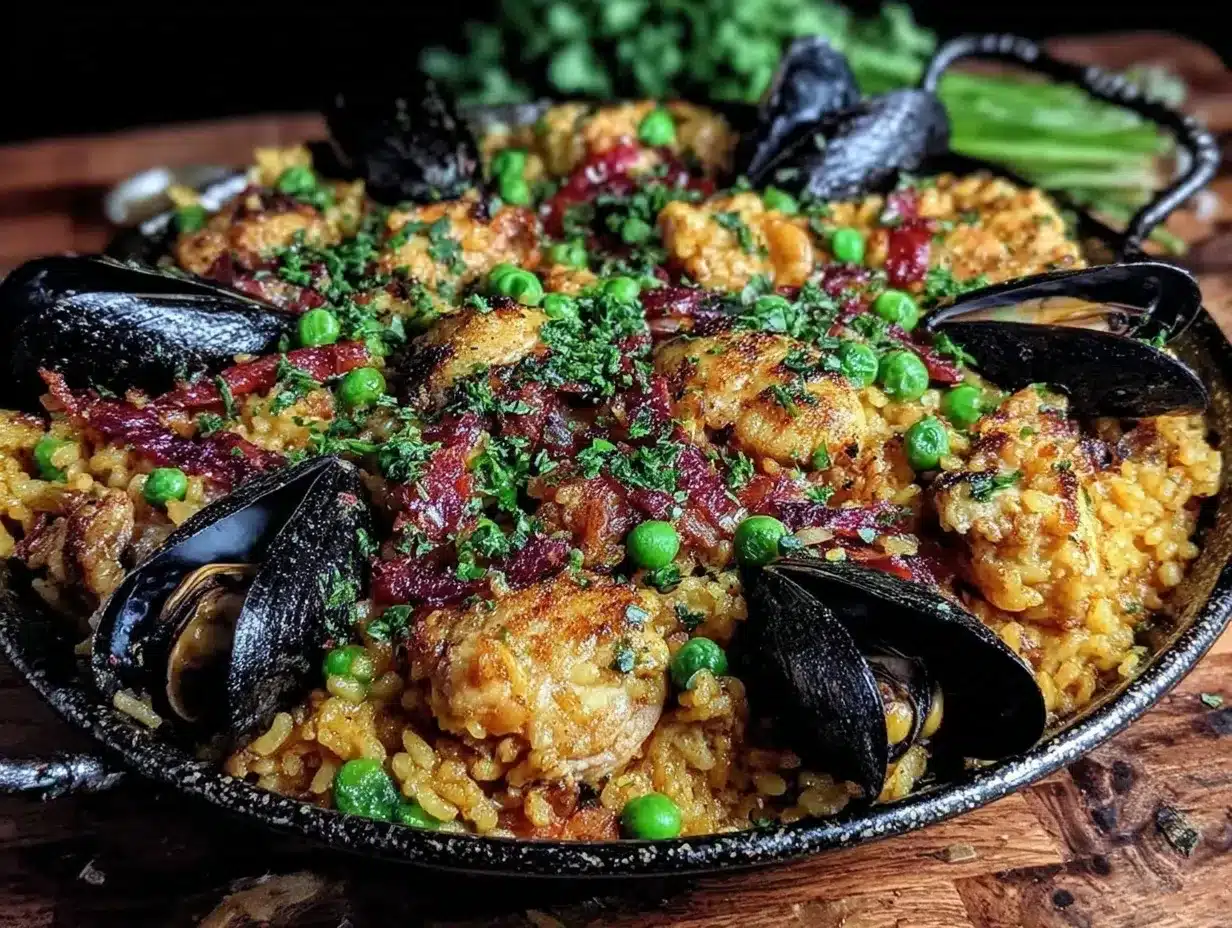
- Prep Your Ingredients (10 minutes): Soak the saffron threads in warm chicken broth to bloom their color and flavor. Clean and prep seafood, chop onion, garlic, and bell pepper, and grate the tomato.
- Cook the Sofrito (10 minutes): Heat olive oil in the paella pan over medium heat. Add onion and sauté until translucent, about 3 minutes. Toss in garlic and bell pepper; cook for another 4 minutes until softened. Stir in the grated tomato and smoked paprika, cooking down until the mixture thickens and smells fragrant—this forms the flavor base.
- Add Rice and Broth (5 minutes): Pour in the rice, stirring to coat each grain with the sofrito. Pour in the saffron-infused broth, season with salt and pepper, then spread the rice evenly across the pan. This is where patience kicks in—no stirring from this point on.
- Simmer the Rice (15-20 minutes): Let the rice cook gently over medium-low heat. You’ll notice the liquid slowly absorbing. If it’s drying too fast, add a splash more broth or water. Avoid stirring; the rice should cook evenly and start developing a slight crust on the bottom (the coveted socarrat).
- Add Seafood (10 minutes): When the rice has absorbed most of the liquid, nestle shrimp, mussels, clams, and squid rings into the rice. Cover loosely with foil or a lid, allowing the seafood to steam and the shells to open. Discard any unopened shells.
- Finish and Rest (5 minutes): Remove from heat and let the paella rest for about 5 minutes. This helps flavors meld and the rice finish cooking gently. Garnish with fresh parsley and lemon wedges before serving.
Pro Tip: Watch the heat closely after adding the broth—too high and the rice cooks unevenly; too low and it gets mushy. The texture should be tender but firm, with a little bite.
Cooking Tips & Techniques
One thing I learned the hard way is not to stir the rice after adding the broth. It’s tempting, but stirring breaks the crust and results in a mushier texture. Trust the process—it’s what gives paella its unique character.
Another tip: use a good quality saffron and soak it first. It’s worth the extra minute; the flavor and color you get are unmistakable. I also recommend prepping all your ingredients ahead because the cooking moves quickly once you start.
When working with seafood, make sure it’s fresh and cold. Adding it too early cooks it dry. Add it near the end so it steams gently and stays tender.
Timing is everything. If the liquid evaporates too fast before the rice cooks, add a bit more warm broth or water—cold liquid will shock the rice and mess with the texture.
Finally, don’t be afraid of the socarrat—the crispy rice bottom. It’s the prized part of paella! If your pan is wide enough and the heat just right, you’ll get that satisfying crunch.
Variations & Adaptations
- Vegetarian Paella: Swap the seafood for roasted vegetables like artichokes, green beans, and bell peppers. Use vegetable broth instead of chicken broth and add smoked paprika for a smoky depth.
- Chicken & Seafood Mix: Add bone-in chicken thighs or rabbit pieces browned before the sofrito step for a more traditional Valencian feel.
- Gluten-Free & Dairy-Free: This recipe is naturally free from gluten and dairy. Just double-check that your broth and paprika are free from additives.
- Seasonal Twist: In summer, fresh peas and green beans add a fresh pop; in winter, try adding sliced chorizo for warmth and spice.
Once, I experimented with swapping Bomba rice for Arborio, and while it worked, the texture was creamier and less authentic. That taught me to stick with short-grain rice for that perfect bite.
Serving & Storage Suggestions
Serve your paella warm, straight from the pan for that rustic charm. Squeeze fresh lemon juice over each serving to brighten the flavors. It pairs wonderfully with a crisp Spanish white wine or a chilled rosé.
Leftovers keep well in the fridge for up to 2 days. Reheat gently on the stovetop with a splash of broth to prevent drying. Avoid microwaving if you want to keep the texture intact.
Flavors often deepen after resting overnight, so if you’re planning ahead, the next-day paella can be just as good—maybe even better!
Nutritional Information & Benefits
This paella recipe offers a balanced mix of protein from the seafood, healthy fats from olive oil, and complex carbs from rice. Saffron, though used in small amounts, contains antioxidants that support overall health. The dish is naturally gluten-free and low in saturated fat, making it a wholesome choice for many diets.
Seafood supplies essential omega-3 fatty acids, which promote heart and brain health. Plus, the vegetables add fiber and vitamins, rounding out a meal that feels indulgent but also nourishing.
Conclusion
This flavorful Spanish paella Valenciana with saffron and seafood is one of those recipes that feels like a little celebration every time it’s made. Its blend of fragrant saffron, tender seafood, and perfectly cooked rice creates a comforting yet exciting dish that’s surprisingly easy to pull off.
Feel free to tweak it to match your taste—add a bit more heat, swap seafood for veggies, or even double the recipe for a crowd. I love how this dish brings people together around the table, sharing stories and savoring every bite.
Give it a try, and don’t be shy about sharing your own spin. There’s something magical about paella that invites creativity and connection—and I’m sure you’ll make it your own in no time.
FAQs
What type of rice is best for paella Valenciana?
Bomba rice is ideal because it absorbs liquid well without getting mushy. Short-grain rice varieties work best for authentic texture.
Can I use frozen seafood for this paella?
Yes, but thaw it completely and pat dry to avoid excess moisture. Fresh seafood yields the best flavor and texture.
Is saffron necessary, or can I substitute it?
Saffron adds unique aroma and color but can be replaced with turmeric for color, though the flavor won’t be quite the same.
How do I get the crispy socarrat without burning the rice?
Cook the rice over medium-low heat without stirring, and once the liquid is mostly absorbed, increase the heat slightly for a couple of minutes to create the crust. Watch carefully to avoid burning.
Can I make paella Valenciana ahead of time?
Yes, you can prepare it and refrigerate for up to 2 days. Reheat gently on the stovetop with a bit of broth to keep it moist and flavorful.
Pin This Recipe!
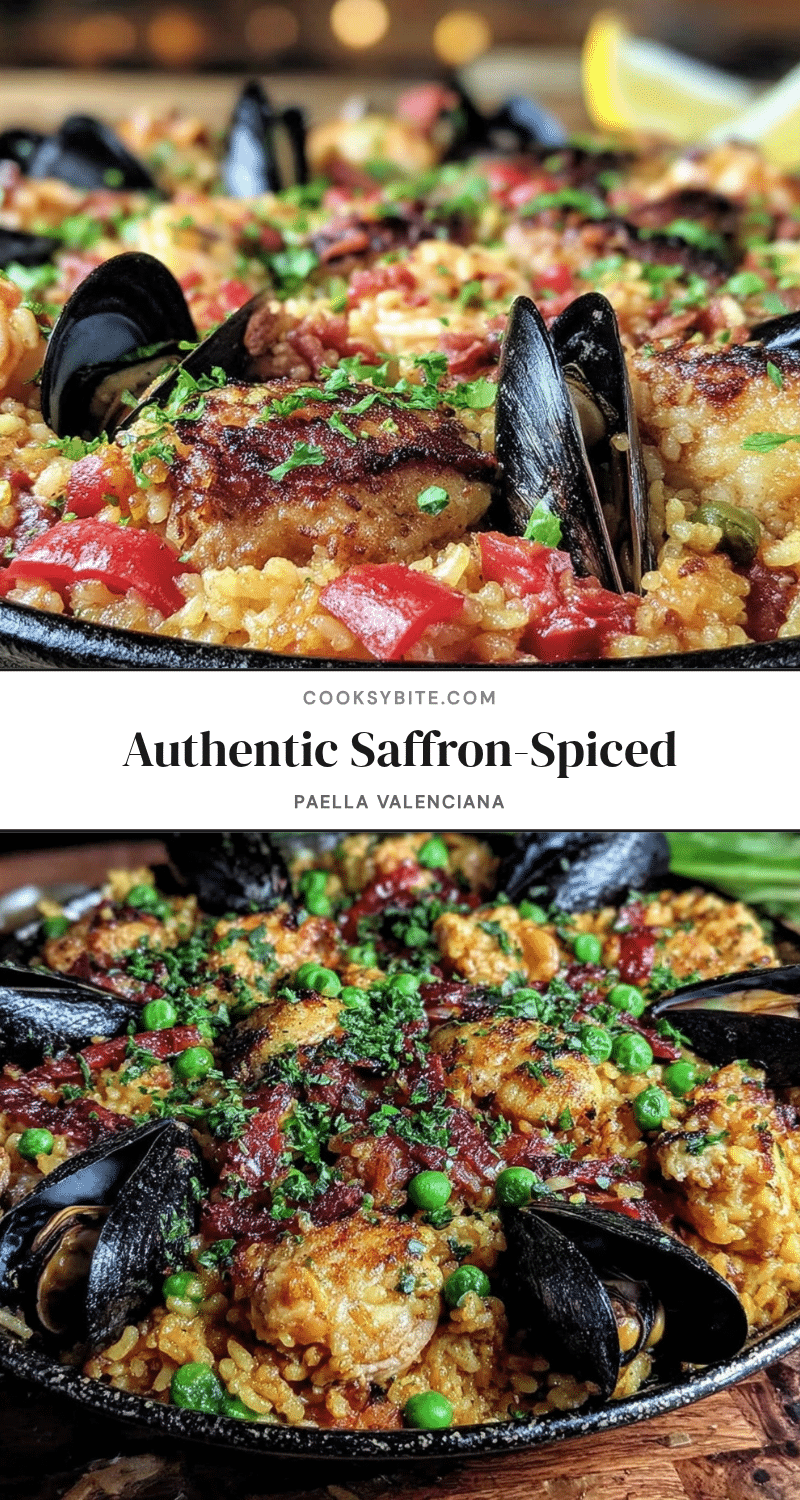
Flavorful Spanish Paella Valenciana Recipe Easy Seafood Saffron Dish
A classic Spanish paella Valenciana featuring saffron-infused rice and fresh seafood, perfect for a quick, flavorful, and impressive meal.
- Prep Time: 10 minutes
- Cook Time: 40 minutes
- Total Time: 50 minutes
- Yield: 4 servings 1x
- Category: Main Course
- Cuisine: Spanish
Ingredients
- 1 ½ cups Bomba or short-grain rice
- 4 cups chicken broth (homemade or low-sodium store-bought)
- 1 teaspoon saffron threads (soaked in 2 tablespoons warm water)
- 2 tablespoons extra virgin olive oil
- 1 medium onion, finely chopped
- 3 cloves garlic, minced
- 1 red bell pepper, diced
- 1 medium ripe tomato, grated or finely chopped
- 1 teaspoon smoked paprika (pimentón de la Vera if available)
- Salt and black pepper to taste
- 8 large shrimp, peeled and deveined
- 8 mussels, cleaned and debearded
- 8 clams, scrubbed
- 1 cup squid rings (optional)
- Fresh flat-leaf parsley, chopped (for garnish)
- Lemon wedges (for garnish)
Instructions
- Soak saffron threads in warm chicken broth to bloom their color and flavor. Clean and prep seafood, chop onion, garlic, and bell pepper, and grate the tomato.
- Heat olive oil in the paella pan over medium heat. Add onion and sauté until translucent, about 3 minutes. Add garlic and bell pepper; cook for another 4 minutes until softened.
- Stir in grated tomato and smoked paprika, cooking until the mixture thickens and smells fragrant.
- Add rice, stirring to coat each grain with the sofrito. Pour in saffron-infused broth, season with salt and pepper, and spread rice evenly across the pan. Do not stir from this point on.
- Simmer rice gently over medium-low heat for 15-20 minutes until liquid is mostly absorbed. Add more broth or water if drying too fast.
- Nestle shrimp, mussels, clams, and squid rings into the rice. Cover loosely with foil or lid and steam for 10 minutes until shells open. Discard any unopened shells.
- Remove from heat and let paella rest for 5 minutes. Garnish with fresh parsley and lemon wedges before serving.
Notes
Do not stir the rice after adding broth to develop the socarrat (crispy bottom). Use fresh seafood and soak saffron for best flavor. Adjust heat carefully to avoid burning or mushy rice. Leftovers keep well for up to 2 days and reheat gently with broth.
Nutrition
- Serving Size: 1 serving (approxima
- Calories: 450
- Sugar: 5
- Sodium: 700
- Fat: 12
- Saturated Fat: 2
- Carbohydrates: 50
- Fiber: 3
- Protein: 30
Keywords: paella, Spanish paella, paella Valenciana, seafood paella, saffron rice, easy paella recipe, Spanish cuisine, saffron dish