Introduction
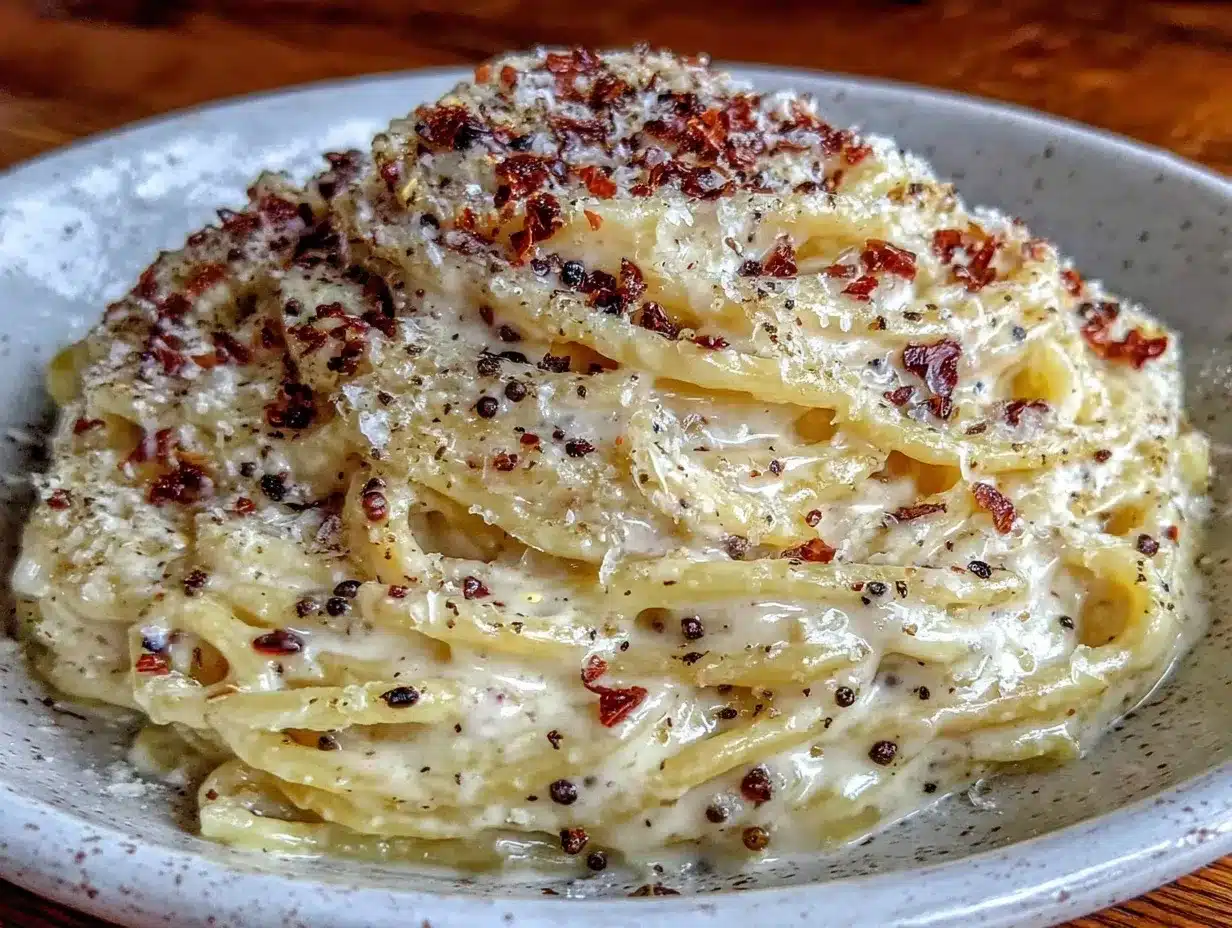
It’s funny how a simple meal can sneak its way into your routine and become a kind of obsession. I remember the first time I made this creamy cacio e pepe pasta—honestly, I wasn’t expecting much. The recipe was just a quick suggestion from an old cookbook I found buried in my kitchen shelf. I was craving something comforting but light, and this classic Roman dish seemed like a no-fuss option. At first, I was skeptical about how just cheese, pepper, and pasta could taste so rich and satisfying. But as I tossed the pasta with pecorino romano and freshly cracked black pepper, something clicked. The sauce turned out silky, clinging to every strand of spaghetti perfectly, and that peppery bite? Pure magic.
That night, as I sat down with a bowl, the aroma swirling around me, I realized why Italians have kept this dish close to their hearts for centuries. No heavy cream, no complicated steps—just simple ingredients that somehow come alive when combined right. Since then, I’ve whipped up this creamy cacio e pepe pasta more times than I can count—sometimes for a quick solo dinner, other times as a crowd-pleaser at small gatherings. It’s one of those recipes that feels like a warm hug on a plate, and honestly, it’s stuck around in my kitchen because it never fails to deliver that cozy, satisfying comfort.
There’s something quietly grounding about this recipe, a reminder that sometimes the simplest things are the best. And that’s exactly why it’s become a staple for me—because it’s not just about the food, but the small moments it creates. It’s easy, unpretentious, and most importantly, it tastes like home, even when you’re miles away from Rome.
Why You’ll Love This Recipe
- Quick & Easy: Ready in under 30 minutes, perfect for those busy weeknights when you want something comforting without spending hours in the kitchen.
- Simple Ingredients: Just pasta, pecorino romano, black pepper, and pasta water—no fancy or hard-to-find items needed.
- Perfect for Cozy Dinners: Ideal when you crave a warm, soul-soothing meal that feels indulgent without being heavy.
- Crowd-Pleaser: Family and friends always ask for seconds, and it’s great for casual gatherings or last-minute guests.
- Unbelievably Delicious: The creamy texture and peppery kick create a flavor combo that’s both simple and unforgettable.
- This isn’t just another cacio e pepe recipe—it’s my carefully tested version that balances cheese and pepper perfectly. I found that grating pecorino romano finely and using plenty of freshly cracked black pepper makes all the difference. Plus, the technique of stirring pasta water into the cheese to create a velvety sauce (without cream!) gives it that signature creamy texture.
- It’s the kind of dish that makes you pause and savor each bite, the kind of comfort food that sticks with you long after the plate is empty.
What Ingredients You Will Need
This recipe calls for a handful of simple, wholesome ingredients that come together to deliver bold flavor and satisfying texture without fuss. Most of these are pantry staples, and the beauty is in their quality and balance.
- Spaghetti or tonnarelli pasta: 12 ounces (340 grams) – I prefer spaghetti for its classic feel, but tonnarelli adds a nice chew if you can find it.
- Pecorino Romano cheese: 1 cup (about 100 grams), finely grated – Look for a firm, aged pecorino romano for the best sharpness and melt.
- Black pepper: 2 teaspoons freshly cracked – Don’t skimp here; the freshly cracked pepper is key for that peppery punch.
- Salt: for pasta water – Use enough to make the water taste like the sea, helping season the pasta perfectly.
- Water from the pasta: about 1 cup (240 ml), reserved – This starchy water is the secret to that creamy sauce consistency.
- Optional: A small knob of unsalted butter (about 1 tablespoon) can be added for extra silkiness, especially if your pecorino is very sharp.
For best results, I recommend using a good-quality pecorino romano like those from Sardinia, which melts evenly and adds authentic flavor. If you want a milder version, you can mix in a bit of Parmesan, but honestly, the pure pecorino taste is what makes this classic.
If you’re gluten-free, swap the spaghetti for gluten-free pasta, but keep in mind the sauce clings best to traditional semolina pasta.
Equipment Needed
- Large pot: For boiling the pasta – I like one with tall sides to avoid water spilling over.
- Large skillet or sauté pan: To toss the pasta with cheese and pepper – a wide pan helps coat the pasta evenly.
- Fine grater or microplane: For grating the pecorino romano finely – a sharp grater ensures the cheese melts smoothly.
- Wooden spoon or tongs: For stirring the pasta and sauce together – tongs help toss the pasta without breaking it.
- Measuring cups and spoons: Precision counts here, especially for pepper and cheese.
- Optional but handy: a ladle to scoop pasta water and a timer to track pasta cooking times precisely.
If you don’t have a microplane, a fine box grater works just as well, though the cheese might not melt quite as quickly. I’ve also found that a nonstick pan can make tossing the pasta easier, preventing sticking without extra oil.
Preparation Method
- Bring a large pot of salted water to a boil. Add about 1 tablespoon of salt per 4 quarts (4 liters) of water. The water should taste briny like the sea. This seasons the pasta internally as it cooks. Time: 10 minutes.
- Add the pasta. Cook the spaghetti until just shy of al dente (about 8 minutes for most brands). It will finish cooking in the sauce. Tip: Stir occasionally to prevent sticking.
- Reserve about 1 cup (240 ml) of the pasta water. Use a ladle or carefully pour some water into a bowl before draining the pasta.
- Drain the pasta. Don’t rinse! The starch on the pasta helps thicken the sauce.
- Toast the black pepper in a large skillet over medium heat. Stir for 1-2 minutes until fragrant. This step awakens the pepper’s flavor and adds a slight smoky note.
- Add the drained pasta to the skillet. Toss to coat with toasted pepper.
- Lower the heat to medium-low. Slowly add the reserved pasta water (start with ½ cup), stirring constantly.
- Gradually sprinkle in the finely grated pecorino romano. Stir vigorously to combine, allowing the cheese to melt and emulsify with the water, forming a creamy sauce that clings to the pasta. Add more pasta water if needed to reach desired creaminess.
- If using, stir in the butter now. It adds silkiness and rounds out the sharpness of the cheese.
- Taste and adjust seasoning. Add more pepper or cheese if you like it bolder. Serve immediately while warm.
Pro tip: If the sauce seems too thick or grainy, add small spoonfuls of pasta water and stir vigorously; the starch helps smooth it out. If it’s too thin, sprinkle in a little more cheese and stir until thickened.
Cooking Tips & Techniques
Getting the creamy cacio e pepe texture right is all about timing and technique. One rookie mistake is adding the cheese too quickly or letting the heat get too high, which can cause the cheese to clump instead of melting smoothly. I learned this the hard way—once ended up with a grainy mess that looked nothing like the silky sauce I was aiming for!
Always grate the cheese finely, almost powder-like. This helps it dissolve evenly and prevents clumping. Also, don’t underestimate the power of that reserved pasta water. It’s full of starch that acts as a natural thickener and emulsifier, turning simple cheese and pepper into a rich, creamy coating.
When stirring the pasta with cheese and water, do it gently but persistently. I like using tongs because they let me toss the pasta without breaking the strands. Keep the heat medium-low to avoid overheating the cheese.
Another tip: toast your black pepper before adding the pasta. You’ll smell a warm, nutty aroma that adds depth to the dish. Freshly cracked pepper is crucial here; pre-ground just won’t have the same punch.
Finally, timing matters. Serve your creamy cacio e pepe pasta right away. It tastes best when warm and fresh, before the sauce thickens or dries out.
Variations & Adaptations
- Vegetarian twist: Add sautéed mushrooms or roasted cherry tomatoes for a pop of color and earthiness.
- Gluten-free option: Swap spaghetti for gluten-free pasta, but choose one that holds sauce well, like brown rice or chickpea-based pasta.
- Spicy kick: Toss in a pinch of red pepper flakes along with the black pepper for extra heat.
- Seasonal variation: In spring, stir in some fresh peas or asparagus tips for a subtle sweetness that balances the saltiness.
- Dairy-free adaptation: Use a vegan pecorino-style cheese and a bit of olive oil instead of butter. The texture won’t be quite the same, but it’s still satisfying.
- One of my favorite personal tweaks is adding a splash of lemon zest at the end—it brightens the whole dish without overpowering the classic flavors.
Serving & Storage Suggestions
Cacio e pepe pasta is best served immediately, straight from the stove, while the sauce is luxuriously creamy and warm. Plate it simply, maybe with a sprinkle of extra pecorino and more cracked black pepper on top for presentation.
Pairs beautifully with a crisp green salad or roasted vegetables, and a dry white wine like Pinot Grigio or a light Italian red complements the peppery cheese notes nicely.
If you happen to have leftovers (though it’s rare!), store them in an airtight container in the refrigerator for up to 2 days. When reheating, add a splash of warm water or broth and gently heat on the stove, stirring to loosen the sauce. Microwaving can make it dry and clumpy, so stovetop reheating is best.
Interestingly, the flavors deepen after resting, so sometimes letting it sit for 10-15 minutes before serving intensifies the peppery punch, but don’t wait too long or the sauce will thicken and become less creamy.
Nutritional Information & Benefits
This creamy cacio e pepe pasta is a straightforward dish with a moderate calorie count, mainly coming from the pasta and cheese. A typical serving (about 1 cup cooked) provides roughly 400-450 calories.
The pecorino romano cheese offers a good source of calcium and protein, while the black pepper adds a metabolism-boosting component and aids digestion.
For those watching carbs, you can reduce portion size or choose whole wheat pasta for more fiber. This recipe is naturally gluten-free if you swap in gluten-free noodles.
Keep in mind that it does contain dairy and gluten unless substituted, so it’s not suitable for those with allergies or intolerances without modifications.
From a wellness perspective, this dish is a comforting, balanced meal that satisfies hunger without feeling heavy, making it a great choice for a quick, nourishing dinner.
Conclusion
Creamy cacio e pepe pasta is one of those recipes that proves simple ingredients can create something truly special. It’s quick to make, requires few ingredients, and delivers a rich, peppery flavor that sticks with you. I love how it turns a few pantry staples into a soul-soothing meal that feels like a little escape to Rome.
Feel free to tweak the pepper level or add your favorite veggies to make it your own. Honestly, this recipe has become a go-to for me whenever I want a fuss-free dinner that tastes like a cozy night in Italy.
If you try it, I’d love to hear how you make it yours—drop a comment or share your tweaks! Here’s to many warm bowls of creamy, peppery pasta happiness in your kitchen.
Frequently Asked Questions
What kind of cheese is best for cacio e pepe?
Pecorino romano is the traditional choice because of its sharp, salty flavor and great melting properties. Using finely grated cheese helps create a smooth sauce.
Can I use Parmesan instead of pecorino romano?
You can, but Parmesan is milder and less salty. Mixing Parmesan with pecorino can balance the flavor if you prefer a less sharp taste.
Why is the pasta water important in this recipe?
The starchy pasta water acts as a natural thickener and helps emulsify the cheese into a creamy, smooth sauce without clumping.
How do I prevent the cheese from clumping?
Grate the cheese finely and add it slowly while stirring vigorously over low heat. Also, use enough pasta water to help the cheese melt evenly.
Is cacio e pepe gluten-free?
Traditional cacio e pepe uses wheat pasta, so it’s not gluten-free. However, you can substitute gluten-free pasta to make it suitable for gluten-free diets.
Pin This Recipe!
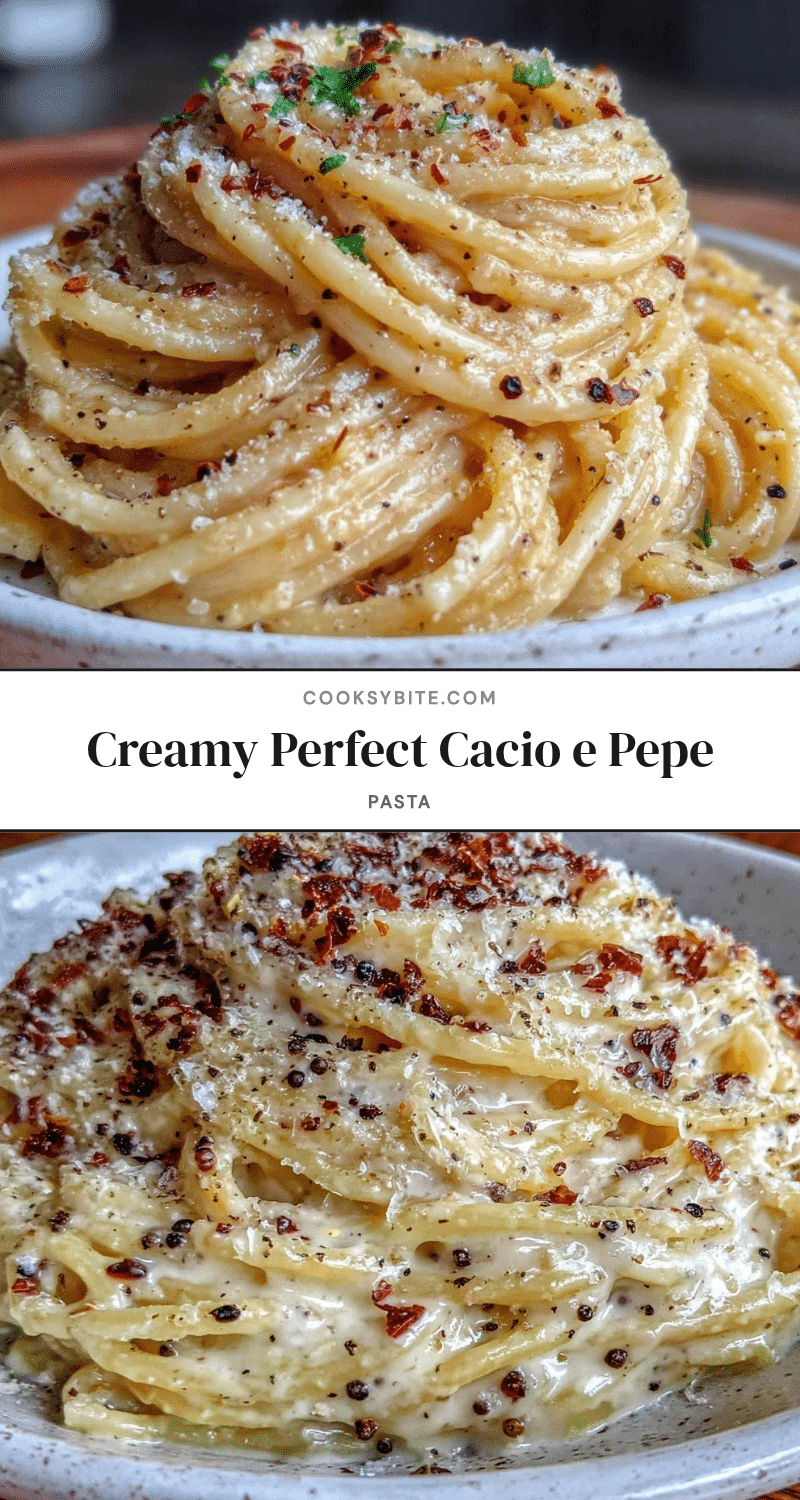
Creamy Cacio e Pepe Pasta
A simple and comforting Roman pasta dish featuring spaghetti tossed with pecorino romano cheese, freshly cracked black pepper, and starchy pasta water to create a creamy, peppery sauce without cream.
- Prep Time: 10 minutes
- Cook Time: 8 minutes
- Total Time: 18 minutes
- Yield: 4 servings 1x
- Category: Main Course
- Cuisine: Italian
Ingredients
- 12 ounces spaghetti or tonnarelli pasta
- 1 cup (about 100 grams) finely grated Pecorino Romano cheese
- 2 teaspoons freshly cracked black pepper
- Salt for pasta water
- About 1 cup (240 ml) reserved pasta water
- Optional: 1 tablespoon unsalted butter
Instructions
- Bring a large pot of salted water to a boil. Add about 1 tablespoon of salt per 4 quarts (4 liters) of water. The water should taste briny like the sea.
- Add the pasta and cook until just shy of al dente, about 8 minutes. Stir occasionally to prevent sticking.
- Reserve about 1 cup (240 ml) of the pasta water before draining the pasta.
- Drain the pasta without rinsing to keep the starch on the noodles.
- Toast the black pepper in a large skillet over medium heat for 1-2 minutes until fragrant.
- Add the drained pasta to the skillet and toss to coat with the toasted pepper.
- Lower the heat to medium-low and slowly add about ½ cup of the reserved pasta water, stirring constantly.
- Gradually sprinkle in the finely grated Pecorino Romano cheese, stirring vigorously to combine and form a creamy sauce. Add more pasta water if needed to reach desired creaminess.
- If using, stir in the butter to add silkiness and balance the sharpness of the cheese.
- Taste and adjust seasoning with more pepper or cheese if desired. Serve immediately while warm.
Notes
Grate the cheese finely to prevent clumping. Toast black pepper before adding pasta for enhanced flavor. Use reserved pasta water to emulsify the sauce and achieve creamy texture. Serve immediately for best taste. For gluten-free option, substitute pasta accordingly. Butter is optional for extra silkiness.
Nutrition
- Serving Size: About 1 cup cooked p
- Calories: 425
- Sugar: 2
- Sodium: 600
- Fat: 14
- Saturated Fat: 7
- Carbohydrates: 55
- Fiber: 3
- Protein: 18
Keywords: cacio e pepe, creamy pasta, pecorino romano, black pepper pasta, Roman pasta recipe, easy pasta recipe, comfort food