Introduction
One quiet Sunday afternoon, I found myself standing in my tiny kitchen, ricotta tub in hand, wondering if I could really pull off making cannoli from scratch. Honestly, I’d always admired those crispy Italian cannoli shells filled with that silky ricotta filling but figured they were too fiddly to attempt at home. The idea seemed daunting—deep-frying delicate shells and making a creamy filling that wouldn’t be too runny or bland. But that afternoon, with an old recipe scribbled on a napkin from a neighbor who swears by her Nonna’s method, I gave it a shot.
What surprised me wasn’t just how doable it was, but how that first bite transported me straight to a bustling Sicilian street market. The shells crackled perfectly, and the ricotta filling was rich yet light, with just a hint of sweetness and citrus. I kept making these cannoli all week—friends stopped by, curious about the crunchy tubes I kept filling and refilling. It became my little ritual, a blend of comfort and a tiny celebration tucked into a crispy, creamy package. This recipe stuck with me because it’s not just about dessert; it’s a moment of joy wrapped in tradition and simplicity.
So here’s the recipe for crispy Italian cannoli with creamy ricotta filling that feels like a quiet nod to old-world charm, made right in your kitchen. It’s honest, approachable, and a little bit special—just like the best memories often are.
Why You’ll Love This Recipe
- Quick & Easy: The whole batch comes together in about an hour, perfect when you want something impressive but don’t have all day.
- Simple Ingredients: No exotic pantry hunts needed—just staples like flour, ricotta, sugar, and a few flavorings you might already have.
- Perfect for Special Occasions: Whether it’s a family dinner, holiday treat, or casual get-together, these cannoli always steal the show.
- Crowd-Pleaser: Adults and kids alike adore the crunch paired with that creamy ricotta filling—it’s hard not to ask for seconds.
- Unbelievably Delicious: The key is balancing the crisp shell with a silky, lightly sweetened ricotta that melts in your mouth.
- This isn’t just any cannoli recipe; it’s the one where the dough is rolled thin enough for that signature crunch without being brittle, and the ricotta is whipped to just the right fluffiness with a subtle citrus zest twist.
- It’s the kind of recipe that makes you close your eyes and savor the moment, bringing a slice of Italy into your home kitchen.
What Ingredients You Will Need
This recipe uses simple, wholesome ingredients to deliver bold flavor and satisfying texture without the fuss. Most items are pantry staples, and you can tweak a few for dietary preferences or what’s on hand.
- For the Cannoli Shells:
- All-purpose flour – 2 cups (250 g), sifted for lightness
- Granulated sugar – 2 tbsp (optional, for subtle sweetness)
- Salt – ½ tsp
- Unsalted butter – 3 tbsp (melted, adds flakiness)
- White wine – ½ cup (120 ml, dry; helps with crispness)
- Egg yolk – 1 large (for richness)
- Vegetable oil – for frying (neutral oil like canola or sunflower)
- For the Creamy Ricotta Filling:
- Whole milk ricotta cheese – 2 cups (480 g), drained well (I prefer a small-curd variety for best texture)
- Powdered sugar – ¾ cup (90 g), sifted to avoid lumps
- Vanilla extract – 1 tsp (pure vanilla adds depth)
- Fresh lemon zest – 1 tsp (brightens the flavor)
- Mini chocolate chips or chopped candied orange peel – ¼ cup (optional, for texture and flavor bursts)
Substitution tips: Use almond flour mixed with all-purpose flour (half and half) for a subtle nutty twist and slight gluten reduction. Swap powdered sugar with coconut sugar for a less refined option. For a dairy-free filling, coconut cream whipped with a touch of maple syrup works surprisingly well, though it won’t taste exactly like traditional ricotta.
Equipment Needed

- Mixing bowls – for dough and filling preparation
- Rolling pin – crucial for rolling dough thin; a pasta machine works great if you have one
- Cannoli forms or tubes – metal or stainless steel (if unavailable, tightly rolled aluminum foil tubes can work as a budget-friendly alternative)
- Deep-frying pan or heavy-bottomed pot – for frying shells evenly
- Slotted spoon or spider strainer – to safely remove shells from hot oil
- Cooling rack – to drain excess oil and keep shells crisp
- Electric mixer or whisk – for whipping ricotta filling smooth
- Pastry bag or zip-top bag with corner snipped – for piping filling neatly inside shells
Personally, I’ve found that a sturdy deep pot with a heavy base keeps oil temperature steady, and investing in reusable metal cannoli tubes makes the shaping process way less fiddly. Just remember to dry the tubes thoroughly after washing to avoid sticking!
Preparation Method
- Prepare the Dough (15 minutes + 1 hour rest):
In a large bowl, combine 2 cups (250 g) sifted all-purpose flour, 2 tbsp sugar, and ½ tsp salt. Add 3 tbsp melted unsalted butter and 1 egg yolk. Slowly pour in ½ cup (120 ml) dry white wine, stirring until a shaggy dough forms. Knead on a floured surface for about 5-7 minutes until smooth and elastic. Wrap in plastic and let rest at room temperature for 1 hour. (This resting step relaxes gluten, making rolling easier.) - Roll and Cut Shells (20 minutes):
After resting, divide dough into manageable portions. Roll out each portion thinly (about 1/8 inch or 3 mm) on a floured surface. Use a 4-inch (10 cm) round cutter or a small bowl to cut circles. Don’t worry if edges aren’t perfect—rustic charm counts here. - Shape the Shells (10 minutes):
Wrap each dough circle around a greased cannoli tube, sealing the edge with a dab of water or egg white. Make sure edges overlap slightly and press gently to stick. - Fry the Shells (10-15 minutes):
Heat vegetable oil to 350°F (175°C) in a deep pot. Fry 2-3 shells at a time, turning occasionally, until golden and crisp (about 2-3 minutes). Remove with a slotted spoon, drain on paper towels or cooling rack. Let shells cool completely before removing tubes carefully to avoid breakage. - Prepare the Ricotta Filling (10 minutes):
Drain ricotta thoroughly by placing it in a fine sieve or cheesecloth for 30 minutes prior to filling prep. In a mixing bowl, whip drained ricotta with ¾ cup (90 g) powdered sugar, 1 tsp vanilla extract, and 1 tsp lemon zest until smooth and creamy. Fold in mini chocolate chips or candied orange peel if using. - Fill the Cannoli (5-10 minutes):
Transfer filling to a pastry bag. Pipe ricotta mixture into each cooled shell from both ends until filled evenly. Dust with powdered sugar for a classic finish, if desired.
Tips: Keep an eye on oil temperature—too hot and shells brown too fast; too cool and they absorb oil and get greasy. If shells crack while frying, they may be rolled too thin or not rested enough. Filling the shells just before serving keeps them crisp longer.
Cooking Tips & Techniques
Getting those cannoli just right is all about balance and patience. One lesson I learned the hard way was under-draining ricotta. Too much moisture means soggy filling and shells that lose their crispness quickly. Use a fine mesh sieve or cheesecloth overnight if you can.
When rolling the dough, dust your surface lightly but don’t over-flour—too much flour makes the dough tough. Aim for thin but not transparent; about 1/8 inch thickness is ideal for that perfect crunch without fragility.
Frying requires steady oil temperature. I keep a thermometer handy and adjust the heat rather than guessing. Also, never overcrowd the pot—shells need space to fry evenly.
For filling, whip ricotta until airy and smooth. If you want a richer filling, folding in a little mascarpone adds silkiness but isn’t necessary.
Finally, don’t fill cannoli too early. The shells soak up moisture fast, so fill just before serving for that satisfying crunch.
Variations & Adaptations
- Gluten-Free: Substitute all-purpose flour with a gluten-free blend suitable for frying. Add a teaspoon of xanthan gum for better elasticity.
- Chocolate Shells: Mix 1 tbsp unsweetened cocoa powder into the dough for a rich twist; pairs wonderfully with orange zest filling.
- Vegan Version: Use coconut oil instead of butter, aquafaba (chickpea water) instead of egg yolk, and coconut cream mixed with sweetened tofu for filling.
- Seasonal Filling: Swap lemon zest for orange or lime zest, or fold in fresh berries or chopped pistachios for texture and color.
- I once tried adding a splash of amaretto to the filling—totally delicious and added a subtle almond note that guests loved.
Serving & Storage Suggestions
Serve cannoli chilled or at room temperature. They’re stunning dusted with powdered sugar and can be garnished with extra chocolate chips or crushed pistachios at the ends. These pair beautifully with a robust espresso or a light dessert wine like Moscato.
Store unfilled shells in an airtight container at room temperature for up to 3 days. Filled cannoli should be eaten within 24 hours and stored in the fridge to keep filling fresh. To re-crisp shells, briefly warm them in a low oven for a few minutes before filling.
Flavors deepen if you let the filling rest a few hours before piping (if you can resist!), but remember—filled cannoli don’t keep their crispness long.
Nutritional Information & Benefits
Each serving of crispy Italian cannoli with creamy ricotta filling provides a balanced treat of carbs, protein, and fats. Ricotta is a good source of calcium and protein, supporting bone health and muscle repair. Using whole milk ricotta adds richness and creaminess but can be swapped with part-skim for a lighter option.
The recipe is naturally gluten-containing unless modified, and contains dairy and egg, so keep allergies in mind. Despite being a sweet treat, this recipe avoids overly processed ingredients and uses real cheese, making it a more wholesome dessert choice than many store-bought options.
Conclusion
Making crispy Italian cannoli with creamy ricotta filling is one of those rewarding kitchen projects that feels fancy but is surprisingly straightforward. The crackle of the shell paired with that luscious filling is a comfort food moment wrapped in tradition. I love how this recipe invites you to play with flavors while delivering a classic that never fails to impress.
Don’t be afraid to tweak the filling or add your favorite mix-ins—it’s your chance to make this Italian favorite your own. I hope this recipe brings a little joy and a lot of crunch to your table, just like it did mine.
Try it, experiment, and let me know how your cannoli journey goes!
FAQs
What can I use if I don’t have cannoli tubes?
If you don’t have metal cannoli tubes, tightly roll strips of aluminum foil into tubes and grease them well before wrapping your dough around. Just be gentle when removing the tubes after frying.
How do I prevent the filling from making the shells soggy?
Fill the cannoli shells just before serving to keep them crisp. Also, make sure the ricotta is well drained to reduce moisture in the filling.
Can I bake the cannoli shells instead of frying?
Yes, baking is a healthier option. Roll dough thin, cut shapes, brush with egg wash, and bake at 375°F (190°C) for 12-15 minutes until golden. They won’t be as crunchy as fried but still tasty.
How do I store leftover cannoli?
Store unfilled shells in an airtight container at room temperature for up to 3 days. Filled cannoli should be refrigerated and eaten within 24 hours.
Can I make the ricotta filling ahead of time?
Yes, you can prepare the filling a day ahead. Keep it covered in the fridge and give it a good whip before filling the shells.
Pin This Recipe!
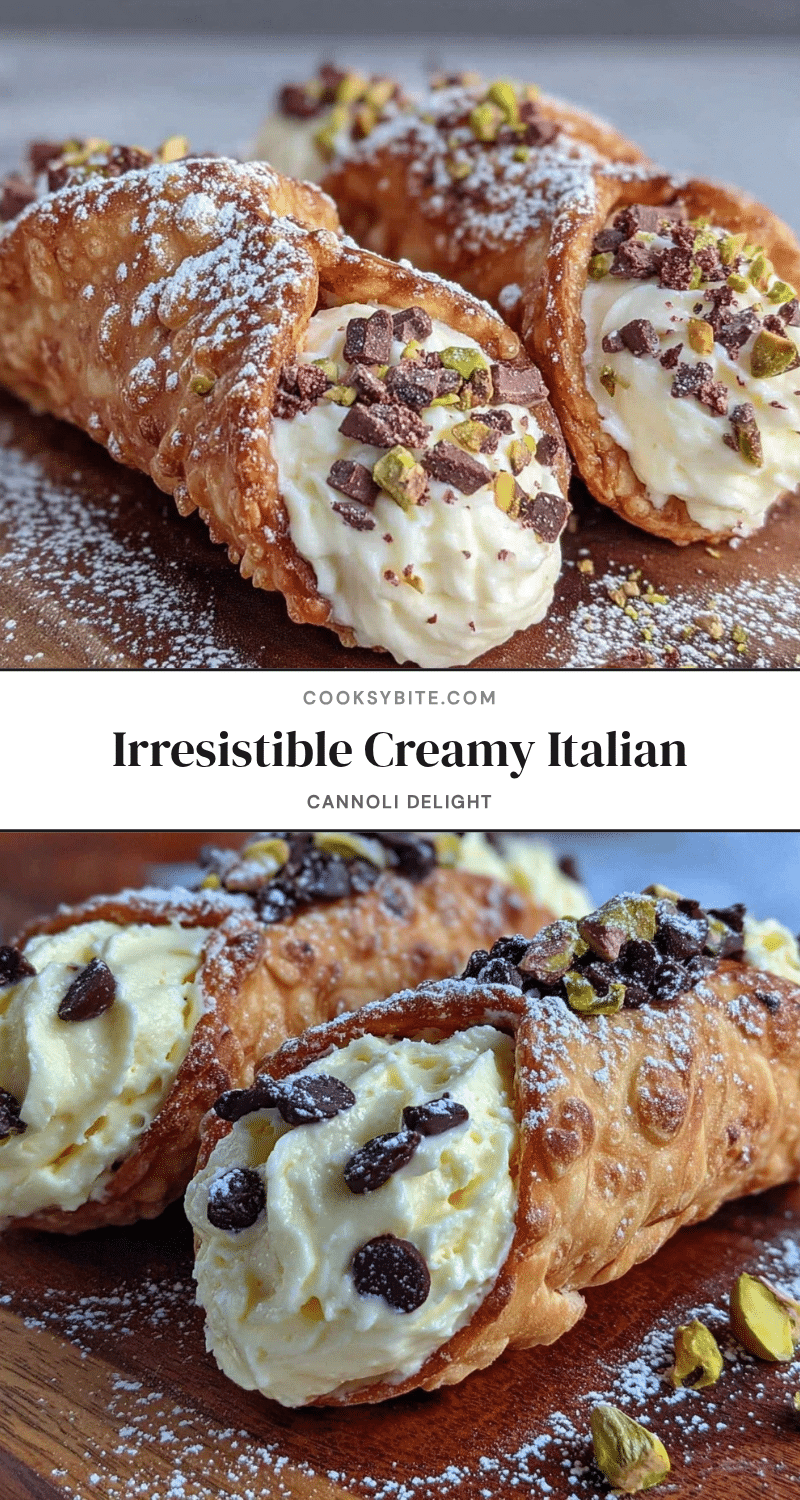
Crispy Italian Cannoli Recipe with Creamy Ricotta Filling Easy and Perfect

A classic Italian dessert featuring crispy fried cannoli shells filled with a silky, lightly sweetened ricotta filling with a hint of citrus zest. Perfect for special occasions and easy enough to make at home.
- Prep Time: 35 minutes
- Cook Time: 15 minutes
- Total Time: 1 hour 50 minutes
- Yield: 12 servings 1x
- Category: Dessert
- Cuisine: Italian
Ingredients
- 2 cups (250 g) all-purpose flour, sifted
- 2 tbsp granulated sugar (optional)
- ½ tsp salt
- 3 tbsp unsalted butter, melted
- ½ cup (120 ml) dry white wine
- 1 large egg yolk
- Vegetable oil for frying (neutral oil like canola or sunflower)
- 2 cups (480 g) whole milk ricotta cheese, drained well
- ¾ cup (90 g) powdered sugar, sifted
- 1 tsp vanilla extract
- 1 tsp fresh lemon zest
- ¼ cup mini chocolate chips or chopped candied orange peel (optional)
Instructions
- Prepare the Dough (15 minutes + 1 hour rest): In a large bowl, combine sifted flour, sugar, and salt. Add melted butter and egg yolk. Slowly pour in dry white wine, stirring until a shaggy dough forms. Knead on a floured surface for 5-7 minutes until smooth and elastic. Wrap in plastic and let rest at room temperature for 1 hour.
- Roll and Cut Shells (20 minutes): Divide dough into portions. Roll each portion thinly (about 1/8 inch or 3 mm) on a floured surface. Use a 4-inch (10 cm) round cutter or small bowl to cut circles.
- Shape the Shells (10 minutes): Wrap each dough circle around a greased cannoli tube, sealing the edge with water or egg white. Press edges gently to stick.
- Fry the Shells (10-15 minutes): Heat vegetable oil to 350°F (175°C) in a deep pot. Fry 2-3 shells at a time, turning occasionally, until golden and crisp (2-3 minutes). Remove with slotted spoon, drain on paper towels or cooling rack. Let shells cool completely before removing tubes carefully.
- Prepare the Ricotta Filling (10 minutes): Drain ricotta thoroughly. In a mixing bowl, whip ricotta with powdered sugar, vanilla extract, and lemon zest until smooth and creamy. Fold in chocolate chips or candied orange peel if using.
- Fill the Cannoli (5-10 minutes): Transfer filling to a pastry bag. Pipe filling into each cooled shell from both ends until evenly filled. Dust with powdered sugar if desired.
Notes
Keep oil temperature steady at 350°F to avoid greasy or burnt shells. Rest dough for 1 hour to relax gluten for easier rolling. Drain ricotta well to prevent soggy shells. Fill cannoli just before serving to maintain crispness. Baking shells is an alternative for a healthier option but results in less crunch.
Nutrition
- Serving Size: 1 cannoli
- Calories: 280
- Sugar: 12
- Sodium: 150
- Fat: 15
- Saturated Fat: 8
- Carbohydrates: 28
- Fiber: 1
- Protein: 6
Keywords: cannoli, Italian dessert, ricotta filling, crispy shells, homemade cannoli, deep-fried dessert, traditional Italian recipe