Introduction
There was this one evening when a last-minute dinner party invitation had me scrambling around my kitchen, wondering how on earth I’d pull off something impressive without a full day to prep. Honestly, Peking duck felt like an unreachable dream—something you’d order at a fancy restaurant, not whip up at home between answering emails and folding laundry. But then, as I rifled through my fridge and pantry, an idea sparked. What if I tried making the Perfect Peking Duck with Pancakes right there and then? No fancy equipment, no crazy ingredients—just patience and a bit of elbow grease.
It wasn’t flawless the first time. The skin wasn’t as crisp, and the pancakes were a little thick, but by the third try that week, I was hooked. Each time, the rich aroma of roasting duck filling the kitchen became this quiet comfort, almost like a little celebration in the middle of a hectic week. What stuck with me was how this recipe turned chaos into something warm and inviting, a feast that felt like a hug after a long day.
It’s funny how a dish that seemed so daunting at first became this go-to for impressing friends and savoring a quiet night in. The Perfect Peking Duck with Pancakes isn’t just a recipe; it’s a little ritual that reminds me good things take time—and patience pays off deliciously.
Why You’ll Love This Recipe
- Quick & Easy: The recipe comes together in about 3 hours, including resting and roasting time, making it perfect for weekend gatherings or those special nights when you want to impress without stress.
- Simple Ingredients: You probably have most of these on hand or can find them easily at the local market—no exotic hunting required.
- Perfect for Feasts: Whether it’s a holiday meal, a birthday, or a weekend dinner with friends, this Peking duck with pancakes always steals the show.
- Crowd-Pleaser: It’s a dish that gets everyone around the table chatting and smiling, especially when the crispy skin and tender meat come together with the soft, warm pancakes and hoisin sauce.
- Unbelievably Delicious: The balance of savory duck, sweet and tangy sauce, and the fresh crunch of scallions creates a flavor combo that’s honestly addictive.
- This isn’t just another duck recipe. The secret lies in the drying method that guarantees that crackling skin and the homemade pancakes that are thinner and softer than any store-bought version I’ve tried—trust me, it makes all the difference.
- It’s a dish that brings people together—whether it’s passing pancakes around the table or sharing stories over a fragrant meal, it’s comfort food with flair.
What Ingredients You Will Need
This recipe uses straightforward ingredients that combine for bold flavor and that iconic Peking duck texture. Most are pantry staples or easy to find at your local grocery or Asian market.
- Whole duck (about 5-6 lbs / 2.3-2.7 kg): Look for a fresh or fully thawed duck with firm skin and minimal bruising for best results.
- Maltose or honey (2 tablespoons): For glazing the skin to get that perfect caramelized crispiness. I prefer maltose for its authentic sheen.
- Chinese five-spice powder (1 teaspoon): Adds that warm, aromatic touch.
- Salt (2 teaspoons): For seasoning inside and out.
- Shaoxing wine or dry sherry (2 tablespoons): Helps tenderize and add flavor.
- Scallions (4, cut into thin strips): Fresh and crunchy for wrapping.
- Fresh cucumber (1 medium, julienned): Adds a crisp, cool contrast.
- Hoisin sauce (1/2 cup): The sweet and savory dip everyone loves.
- For the pancakes:
- All-purpose flour (2 cups / 250 g): The base for soft, thin pancakes.
- Boiling water (about 3/4 cup / 180 ml): Helps create that tender texture.
- Sesame oil (1 tablespoon): Adds subtle nuttiness and keeps pancakes from sticking.
Substitutions? You can swap maltose for honey if that’s what you have, and gluten-free flour blends can work for the pancakes if needed (though the texture will be slightly different). For those avoiding alcohol, a splash of apple cider vinegar mixed with a bit of water can replace Shaoxing wine.
Equipment Needed
- Roasting pan with rack: Essential for letting the duck roast evenly and the fat to drip away. If you don’t have a rack, improvise with a wire cooling rack inside a baking sheet.
- Large pot or sink: For the initial hot water rinse and drying process—this step is key for crisp skin.
- Pastry brush: For applying the maltose glaze evenly.
- Mixing bowls: For pancake dough and prepping ingredients.
- Rolling pin: To roll out those delicate pancakes thinly and evenly.
- Sharp knife: For carving the duck and slicing vegetables.
- Kitchen thermometer (optional): Helps check that the duck is cooked through perfectly.
I’ve found that a simple oven thermometer can be a game changer for roasting the duck just right. Also, investing in a good non-stick skillet for making pancakes makes a huge difference—mine has served me well for over five years and cleans up in a snap.
Preparation Method
- Prep the duck: Rinse the duck inside and out with hot water (about 180°F / 82°C) to tighten the skin. Pat dry thoroughly with paper towels. This step is crucial for crispiness and takes about 10 minutes.
- Season and dry: Rub the duck cavity with salt and five-spice powder. Pour Shaoxing wine inside. Hang the duck or place it on a rack in a cool, airy spot for 2 hours to dry the skin (or refrigerate uncovered overnight if you have time).
- Glaze the skin: Mix maltose with a few tablespoons of warm water until smooth. Brush the mixture over the entire duck skin evenly. This sticky glaze is what creates that irresistible shiny, crackly crust. Allow to dry for another 30 minutes.
- Preheat oven: Set your oven to 375°F (190°C). Place the duck breast side up on the rack in the roasting pan.
- Roast the duck: Roast for about 1 hour and 15 minutes, turning the duck every 20 minutes and basting with drippings. Watch for skin color—aim for deep golden and crispy. Use a thermometer if you want; the internal temperature should reach 165°F (74°C).
- Rest the duck: Once cooked, let the duck rest for 15 minutes before carving. This helps juices redistribute and keeps the meat tender.
- Make the pancakes: While the duck roasts, combine flour and boiling water in a bowl. Stir with a wooden spoon until a shaggy dough forms. Let it cool slightly, then knead on a floured surface for about 5 minutes until smooth. Divide into 16 balls.
- Roll and cook pancakes: Roll each ball into a thin circle (about 6 inches / 15 cm diameter). Brush lightly with sesame oil, then fold in half. Roll again gently to seal. Cook in a dry non-stick skillet over medium heat for 1-2 minutes per side until light golden spots appear. Keep warm in a towel.
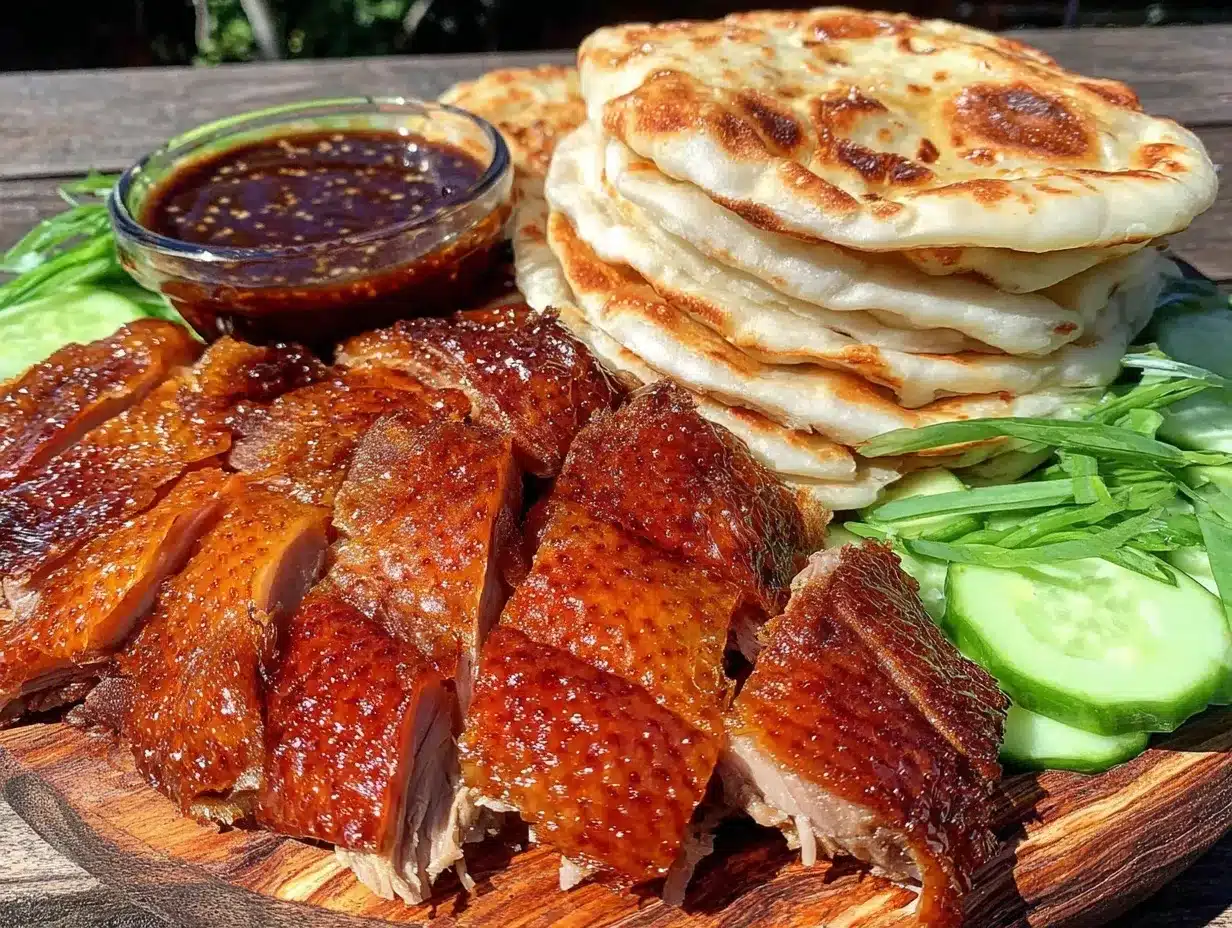
- Carve and serve: Slice the duck skin and meat into thin strips. Arrange with pancakes, scallions, cucumber, and hoisin sauce on the table for everyone to assemble their own.
Pro tip: Watch the duck closely in the last 20 minutes to avoid burning the skin. Also, when rolling pancakes, if the dough feels sticky, dust with a little extra flour, but don’t go overboard or the pancakes get tough.
Cooking Tips & Techniques
Getting that legendary crispy skin is all about patience and drying. Don’t skip the drying phase—it’s what separates average duck from Perfect Peking Duck. If you don’t have a place to hang the duck, a wire rack in the fridge works just as well.
When glazing, apply a thin, even coat of maltose or honey glaze. Too thick, and it’ll burn; too thin, and you miss out on that signature crackle.
Multitasking is your friend here—start the pancake dough while the duck dries. That way, everything comes together without a last-minute rush.
Common mistake? Overcooking the duck. The meat can dry out fast if the oven is too hot or the duck is left too long. Use a thermometer if you’re unsure, and rest the meat well to keep it juicy.
For pancakes, rolling them thin is key. I learned the hard way that thick pancakes overwhelm the duck. Also, brushing sesame oil on the pancakes before folding keeps them soft and prevents sticking.
Variations & Adaptations
- Gluten-Free Version: Use a gluten-free flour blend for the pancakes. The texture will be slightly different but still tasty.
- Spicy Twist: Add a teaspoon of chili oil to your hoisin sauce or sprinkle some crushed red pepper flakes on the duck slices for heat lovers.
- Vegetarian Alternative: Swap duck with roasted duck-flavored seitan or mushrooms, and serve with the same pancakes and condiments for a plant-based feast.
- Seasonal Flair: In spring, add fresh mint or cilantro to the wrap for brightness; in winter, serve with pickled vegetables for contrast.
- Oven-Free Method: If you don’t have an oven, a slow cooker can roast the duck slowly, but you’ll miss the crispy skin. Finish the skin in a hot skillet or under a broiler for a few minutes to crisp up.
Once, I tried adding star anise to the drying phase—subtle but lovely aroma that gave the duck a slightly deeper flavor. Don’t be afraid to experiment!
Serving & Storage Suggestions
Serve the Peking duck warm with pancakes fresh off the skillet. Arrange the scallions, cucumber, and hoisin sauce on small plates for easy assembly. It’s a social dish, so encourage everyone to build their own wraps—it’s part of the fun.
Pair with a light jasmine tea or a crisp white wine like Riesling to balance the richness.
Leftovers? Wrap the carved duck tightly and refrigerate for up to 3 days. Pancakes keep well in an airtight container for 2 days; reheat gently in a steamer or microwave wrapped in a damp towel to keep them soft.
For longer storage, freeze duck slices and pancakes separately. Thaw overnight in the fridge and reheat before serving. Flavors often deepen after resting, so next-day duck wraps are surprisingly delicious.
Nutritional Information & Benefits
This Peking duck recipe provides a good source of protein and essential vitamins from the duck meat. The skin is higher in fat, so moderation is key if you’re watching your intake. The fresh scallions and cucumbers add fiber and vitamin C, balancing the meal.
The homemade pancakes use simple flour and water, keeping calories reasonable without added sugars or preservatives.
For those mindful of gluten, swapping pancake flour to gluten-free options is straightforward.
From a wellness standpoint, this dish is satisfying and nutrient-dense without being overly processed—comfort food that doesn’t skimp on wholesomeness.
Conclusion
The Perfect Peking Duck with Pancakes is one of those recipes that once you’ve made it, you’ll find yourself coming back to it time and again—not just for the flavors but for the whole experience it brings to the table. It’s approachable yet impressive, familiar yet special. Customizing the fillings or tweaking the spice level lets you make it truly your own.
For me, it’s the recipe that turns an ordinary evening into a memorable feast, the crispy skin and tender meat a reward for the effort and patience. Give it a try—you might find it becomes a family favorite or your signature dish to wow guests.
And hey, I’d love to hear how your Peking duck turns out or any creative twists you add. Sharing food stories makes the meal even better.
FAQs
How long does it take to make Perfect Peking Duck?
From start to finish, including drying and roasting, plan for about 3 to 4 hours. The drying process is important for crispy skin, so don’t rush it.
Can I use a regular oven for roasting the duck?
Absolutely. A conventional oven set to 375°F (190°C) works perfectly. Just keep an eye on the duck to avoid burning the glaze.
What can I substitute if I can’t find maltose?
Honey is a great substitute for maltose when glazing the duck, though maltose gives a more authentic shine and texture.
How do I store leftover pancakes?
Keep them in an airtight container in the fridge for up to 2 days. Reheat gently with a damp towel to maintain softness.
Is this recipe suitable for beginners?
Yes! While Peking duck feels fancy, the steps are straightforward. Just follow the drying and roasting tips carefully, and you’ll impress yourself and others.
Pin This Recipe!
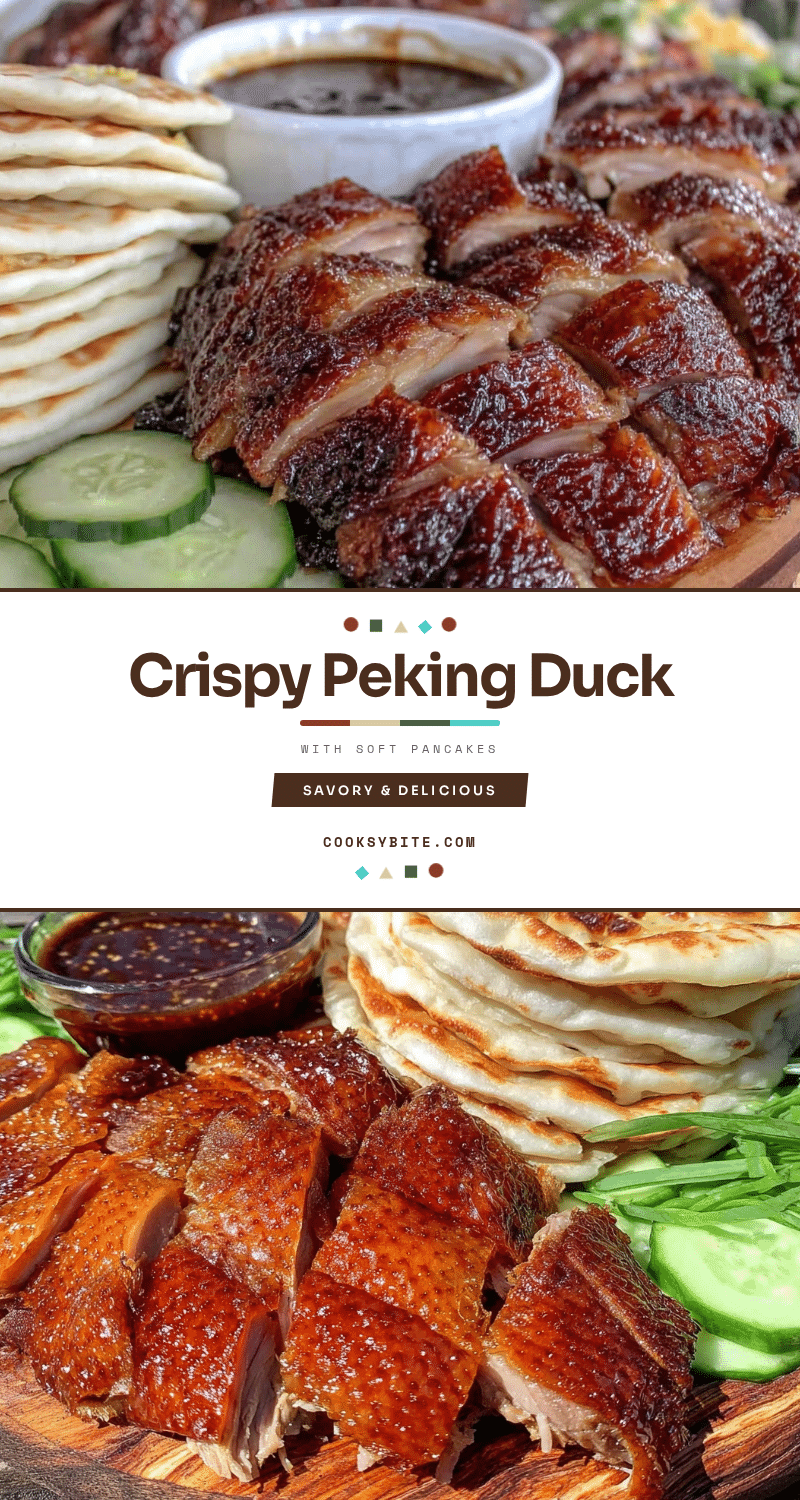
Perfect Peking Duck Recipe Easy Steps for Homemade Pancakes Feast
A straightforward recipe for making authentic Peking duck with crispy skin and soft homemade pancakes, perfect for impressing guests or enjoying a comforting feast at home.
- Prep Time: 2 hours 15 minutes
- Cook Time: 1 hour 15 minutes
- Total Time: 3 hours 30 minutes
- Yield: 4-6 servings 1x
- Category: Main Course
- Cuisine: Chinese
Ingredients
- Whole duck (about 5-6 lbs / 2.3-2.7 kg)
- Maltose or honey (2 tablespoons)
- Chinese five-spice powder (1 teaspoon)
- Salt (2 teaspoons)
- Shaoxing wine or dry sherry (2 tablespoons)
- Scallions (4, cut into thin strips)
- Fresh cucumber (1 medium, julienned)
- Hoisin sauce (1/2 cup)
- All-purpose flour (2 cups / 250 g) for pancakes
- Boiling water (about 3/4 cup / 180 ml) for pancakes
- Sesame oil (1 tablespoon) for pancakes
Instructions
- Rinse the duck inside and out with hot water (about 180°F / 82°C) to tighten the skin. Pat dry thoroughly with paper towels. This step takes about 10 minutes.
- Rub the duck cavity with salt and five-spice powder. Pour Shaoxing wine inside. Hang the duck or place it on a rack in a cool, airy spot for 2 hours to dry the skin (or refrigerate uncovered overnight if you have time).
- Mix maltose with a few tablespoons of warm water until smooth. Brush the mixture evenly over the entire duck skin. Allow to dry for another 30 minutes.
- Preheat oven to 375°F (190°C). Place the duck breast side up on the rack in the roasting pan.
- Roast the duck for about 1 hour and 15 minutes, turning every 20 minutes and basting with drippings. Aim for deep golden and crispy skin. Internal temperature should reach 165°F (74°C).
- Let the duck rest for 15 minutes before carving to redistribute juices.
- While the duck roasts, combine flour and boiling water in a bowl. Stir until a shaggy dough forms. Let cool slightly, then knead on a floured surface for about 5 minutes until smooth. Divide into 16 balls.
- Roll each ball into a thin circle about 6 inches (15 cm) diameter. Brush lightly with sesame oil, fold in half, then roll gently again to seal.
- Cook pancakes in a dry non-stick skillet over medium heat for 1-2 minutes per side until light golden spots appear. Keep warm in a towel.
- Slice the duck skin and meat into thin strips. Arrange with pancakes, scallions, cucumber, and hoisin sauce for serving.
Notes
Drying the duck skin thoroughly is crucial for crispiness. Use maltose for authentic glaze but honey works as a substitute. Watch the duck closely in the last 20 minutes to avoid burning. Roll pancakes thin to avoid overpowering the duck. Rest the duck after roasting to keep meat juicy.
Nutrition
- Serving Size: About 1/4 to 1/3 of
- Calories: 650
- Sugar: 5
- Sodium: 850
- Fat: 45
- Saturated Fat: 12
- Carbohydrates: 30
- Fiber: 2
- Protein: 40
Keywords: Peking duck, homemade pancakes, Chinese duck recipe, crispy duck skin, hoisin sauce, five-spice powder, roasting duck