Introduction
It was a chilly Sunday afternoon, and honestly, the kitchen felt like a small island of warmth in my otherwise hectic weekend. I was scrolling through some old family photos when the scent of simmering beef and sweet soy sauce from my neighbor’s apartment drifted through the cracked window. It instantly took me back to a time when my aunt would patiently stir a pot of galbi jjim, that tender Korean beef stew with rich, savory sauce, filling the house with its mouthwatering aroma. I figured, why not try making it myself? Turns out, this recipe is more than just a stew—it’s a slow-cooked hug on a plate. The first time I made it, I was skeptical about whether I could get that melt-in-your-mouth tenderness without spending all day in the kitchen. But after a few tries, it became my go-to comfort meal, especially on evenings when I needed something to slow things down and soothe the soul. The balance of flavors, that glossy, thick sauce, and the tender beef ribs just made me pause and savor every bite. It’s honestly the kind of dish that stays with you long after the last forkful.
Why You’ll Love This Recipe
After testing this galbi jjim recipe multiple times, I can say it’s a winner for so many reasons. Here’s why it’s stuck around in my kitchen rotation:
- Quick & Easy: While galbi jjim is traditionally a slow-cooked dish, this version comes together in about 2 hours with some smart shortcuts, making it perfect for weekend dinners that still feel special.
- Simple Ingredients: No need for hard-to-find items—soy sauce, garlic, ginger, a few veggies, and beef short ribs are all you need. I usually grab my soy sauce from Kikkoman for the best balance of flavor.
- Perfect for Cozy Nights: It’s the ultimate comfort food, perfect when you want to impress guests or just treat yourself after a long day.
- Crowd-Pleaser: I’ve seen even my pickiest friends ask for seconds. The tender beef and rich sauce hit all the right notes.
- Unbelievably Delicious: That deep, savory sauce with a hint of sweetness and spice elevates the dish beyond your average stew.
What makes this galbi jjim stand out is the special step of marinating the ribs with a blend of soy, ginger, and a touch of Asian pear, which adds a subtle sweetness and helps tenderize the meat. Plus, the slow simmering ensures the beef is fall-off-the-bone tender without drying out. Honestly, it’s not just a recipe; it’s a small celebration of Korean home cooking that’s accessible for anyone willing to spend a little time in the kitchen.
What Ingredients You Will Need
This recipe uses simple, wholesome ingredients to deliver bold flavor and satisfying texture without the fuss. Most are pantry staples or easy to find in Asian markets.
- Beef Short Ribs: About 3 pounds (1.4 kg), cut into 2-inch pieces. Look for meaty ribs with some marbling for the best tenderness and flavor.
- Soy Sauce: ½ cup (120 ml) of a good-quality soy sauce like Kikkoman or a naturally brewed variety for depth.
- Garlic: 6 cloves, minced. Garlic is essential for that punch of aroma and flavor.
- Fresh Ginger: 1 tablespoon, grated. Adds warmth and subtle spice to the sauce.
- Asian Pear: ½ medium, grated (optional but highly recommended). Helps tenderize the beef and adds a gentle sweetness.
- Brown Sugar: 2 tablespoons to balance the soy’s saltiness with a sweet note.
- Sesame Oil: 1 tablespoon for a nutty finish.
- Rice Wine or Mirin: ¼ cup (60 ml), adds a mild acidity and sweetness to the sauce.
- Carrots: 2 medium, peeled and cut into chunks. Adds sweetness and texture.
- Chestnuts: ½ cup (optional), peeled and roasted, for a traditional touch and natural sweetness.
- Green Onions: 3 stalks, sliced for garnish and fresh bite.
- Black Pepper: Freshly ground, to taste.
- Water or Beef Broth: 2 cups (480 ml) for simmering the stew.
For substitutions, you can swap short ribs for beef chuck if preferred, though ribs give that signature richness. If Asian pear isn’t available, a grated apple or a teaspoon of pear juice concentrate can work. For a gluten-free version, choose tamari instead of soy sauce. I’ve tried both, and tamari gives a slightly smoother taste without losing the umami punch.
Equipment Needed
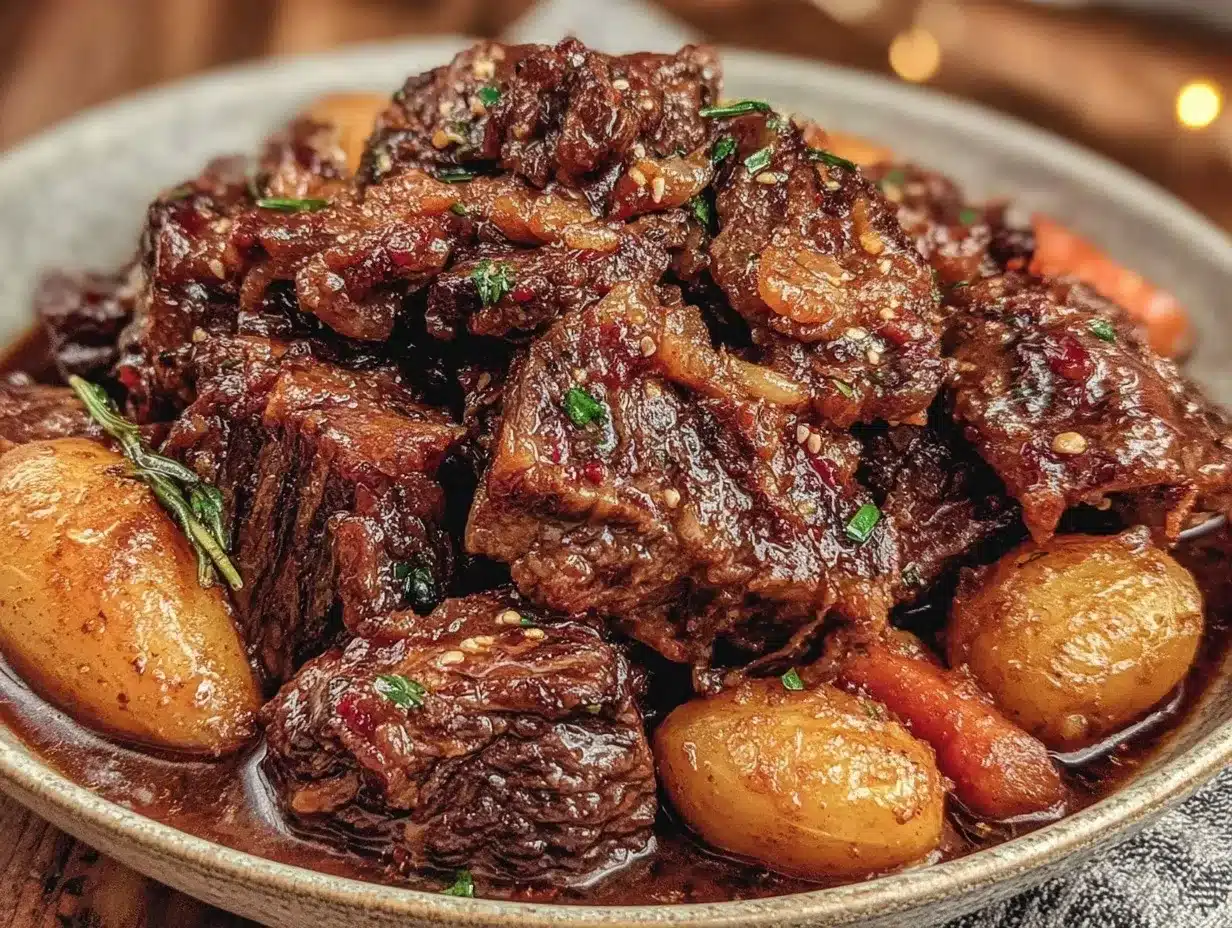
- Large Heavy-Bottomed Pot or Dutch Oven: This is key for even heat distribution and slow, gentle simmering. I use my 6-quart cast iron Dutch oven, which holds heat beautifully and prevents burning.
- Sharp Knife and Cutting Board: For prepping ribs and vegetables safely and efficiently.
- Grater or Microplane: To grate the Asian pear and ginger finely.
- Measuring Cups and Spoons: Essential for precise balance of sauce ingredients.
- Wooden Spoon or Silicone Spatula: For stirring without scratching your cookware.
- Colander or Strainer: To rinse ribs if needed.
If you don’t have a Dutch oven, a heavy stainless steel pot with a tight-fitting lid works, just keep an eye on the heat. For smaller kitchens, a slow cooker can be an alternative, though you’ll miss a bit of the caramelization you get from stovetop simmering.
Preparation Method
- Prepare the Ribs (15 minutes): Rinse the beef short ribs under cold water and pat dry with paper towels. This step helps remove excess blood and impurities, leading to a cleaner stew.
- Make the Marinade (10 minutes): In a large bowl, combine ½ cup soy sauce, grated Asian pear, minced garlic, grated ginger, 2 tablespoons brown sugar, ¼ cup rice wine or mirin, and 1 tablespoon sesame oil. Whisk until sugar dissolves and ingredients are well blended.
- Marinate the Beef (1 hour minimum): Add the ribs to the marinade, turning to coat each piece thoroughly. Cover and refrigerate for at least 1 hour or overnight for deeper flavor and tenderness. (I usually let mine chill overnight when I plan ahead.)
- Brown the Ribs (10 minutes): Heat your Dutch oven over medium-high heat. Remove ribs from marinade (reserve marinade) and brown them in batches, about 2-3 minutes per side, until nicely caramelized. This step seals in the flavor and adds a savory crust.
- Sauté the Vegetables (5 minutes): Remove browned ribs and set aside. In the same pot, add carrot chunks and chestnuts, sautéing briefly to pick up the pan flavors.
- Add Liquids and Simmer (1 hour 15 minutes): Return ribs to the pot. Pour in reserved marinade and 2 cups water or beef broth. Bring to a boil, then reduce heat to low. Cover and simmer gently for 1 hour 15 minutes. Check occasionally to ensure it’s not boiling too hard; you want a slow, steady simmer.
- Check Tenderness and Adjust Seasoning (5-10 minutes): After simmering, the beef should be tender and nearly falling off the bone. Taste the sauce and add freshly ground black pepper or a touch more sugar or soy if needed.
- Finish and Garnish: Sprinkle sliced green onions over the stew before serving. The fresh burst cuts through the richness nicely.
Pro tip: If the sauce is too thin, remove the lid and simmer uncovered for 10 more minutes to reduce and thicken. The glossy, sticky sauce is the hallmark of great galbi jjim.
Cooking Tips & Techniques
One lesson I’ve learned is that temperature control is everything. Letting the stew simmer too hard can dry out the ribs, while too low heat will keep the beef tough. Steady, gentle simmering is the sweet spot.
Don’t skip browning the ribs! That caramelized crust adds layers of flavor that simple boiling can’t replicate. I’ve tried shortcuts without browning, and it just doesn’t taste the same—trust me on this one.
Marinating overnight is a game changer. It’s tempting to rush this step, but the pear and soy soak deep into the meat, making it tender and flavorful. Even just one hour helps, but overnight is best.
Multitasking tip: While the stew simmers, prep side dishes or clean up. This recipe rewards patience, so don’t rush the cooking time.
If you want an extra hint of smokiness, a splash of toasted sesame oil right at the end does wonders. Just don’t add it too early or it will cook off.
Variations & Adaptations
- Spicy Galbi Jjim: Add 1-2 tablespoons of Korean chili paste (gochujang) to the marinade for a mild kick that complements the sweetness.
- Vegetarian Version: Swap beef ribs with large king oyster mushrooms and tofu chunks. Use vegetable broth instead of beef broth and simmer gently until mushrooms are tender.
- Slow Cooker Adaptation: After browning ribs and sautéing vegetables, transfer everything to a slow cooker. Add marinade and broth, then cook on low for 6-8 hours until beef is tender.
For a personal twist, I once stirred in some diced sweet potatoes along with the carrots—added a lovely natural sweetness and texture contrast. Also, if you’re avoiding nuts, skip the chestnuts or replace with water chestnuts for crunch.
Serving & Storage Suggestions
Galbi jjim is best served hot, straight from the pot, ideally with steamed white rice or sticky short-grain rice that soaks up the rich sauce beautifully. I like to garnish with a sprinkle of toasted sesame seeds and chopped green onions for a fresh finish.
Leftovers keep well in an airtight container in the refrigerator for 3-4 days. The flavors actually deepen overnight, so it’s perfect to make ahead.
To reheat, gently warm on the stovetop over low heat, adding a splash of water if the sauce has thickened too much. Avoid microwaving if possible, as slow reheating preserves the tender texture.
If you want to freeze it, pack in freezer-safe containers for up to 3 months. Thaw overnight in the fridge before reheating.
Nutritional Information & Benefits
This stew is rich in protein from the beef, along with vitamins and fiber from the carrots and chestnuts. Using lean short ribs helps balance the fat content, while the garlic and ginger offer anti-inflammatory benefits.
One serving (~1.5 cups) provides roughly 450 calories, 35g protein, and moderate fat. It’s naturally gluten-free when using tamari instead of soy sauce, and dairy-free as well.
The inclusion of Asian pear not only tenderizes but adds natural enzymes beneficial for digestion. This meal feels indulgent but offers a wholesome, nutrient-dense profile you can feel good about.
Conclusion
This tender Korean beef stew, galbi jjim, has become one of those recipes I come back to when I want something both comforting and a little special. It’s satisfying to make, with straightforward ingredients and just enough hands-on time to feel like you’re crafting something meaningful. Plus, it’s flexible enough to suit different tastes and occasions.
Whether you’re cooking for family, impressing friends, or just treating yourself, I think you’ll find this recipe hits that sweet spot between rich flavor and tender texture. Give it a try, play around with the variations, and make it yours. I can’t wait to hear how it turns out in your kitchen.
FAQs
What cut of beef is best for galbi jjim?
Beef short ribs are the traditional choice because of their rich marbling and flavor. You can also use beef chuck for a leaner alternative, but short ribs give the best tenderness.
Can I make galbi jjim without Asian pear?
Yes, you can substitute with grated apple or a small amount of pear juice concentrate. The fruit helps tenderize and sweeten the meat, so it’s worth adding if possible.
How long should I marinate the beef?
At least 1 hour is good, but marinating overnight in the fridge yields deeper flavor and more tender meat.
Is it possible to make this recipe spicy?
Absolutely! Adding Korean chili paste (gochujang) or sliced fresh chilies to the marinade will give it a pleasant heat without overpowering the flavor.
Can I prepare galbi jjim in a slow cooker?
Yes, after browning the ribs and vegetables, transfer everything to a slow cooker and cook on low for 6-8 hours. This method is convenient and produces tender results.
Pin This Recipe!
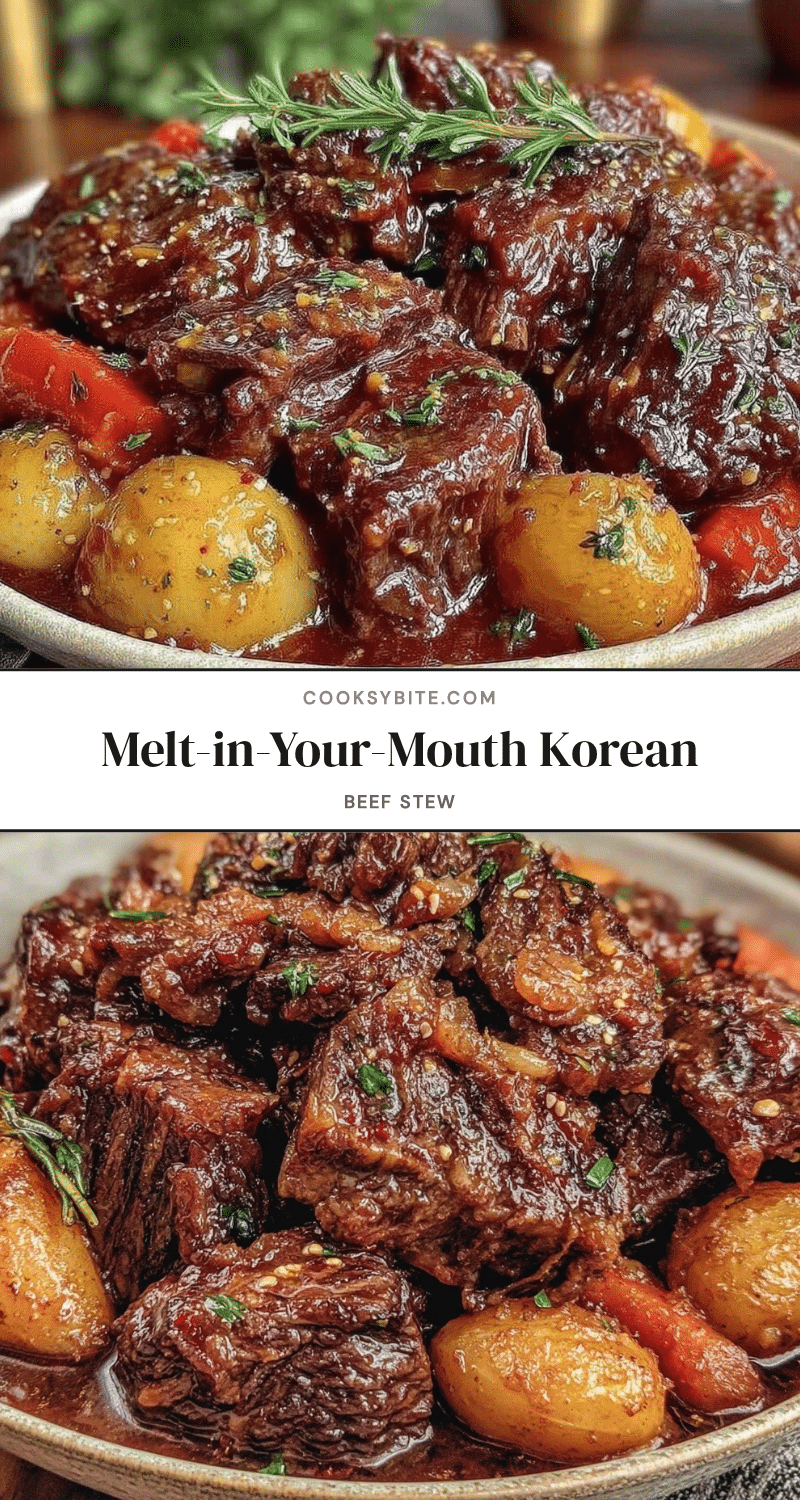
Tender Korean Beef Stew Galbi Jjim Recipe Easy Rich Savory Sauce
A comforting Korean beef stew featuring tender short ribs simmered in a rich, savory sauce with a hint of sweetness from Asian pear. Perfect for cozy nights and special dinners.
- Prep Time: 25 minutes
- Cook Time: 1 hour 25 minutes
- Total Time: 1 hour 50 minutes
- Yield: 6 servings 1x
- Category: Main Course
- Cuisine: Korean
Ingredients
- 3 pounds beef short ribs, cut into 2-inch pieces
- ½ cup soy sauce (Kikkoman or naturally brewed)
- 6 cloves garlic, minced
- 1 tablespoon fresh ginger, grated
- ½ medium Asian pear, grated (optional but recommended)
- 2 tablespoons brown sugar
- 1 tablespoon sesame oil
- ¼ cup rice wine or mirin
- 2 medium carrots, peeled and cut into chunks
- ½ cup chestnuts, peeled and roasted (optional)
- 3 stalks green onions, sliced for garnish
- Freshly ground black pepper, to taste
- 2 cups water or beef broth
Instructions
- Rinse the beef short ribs under cold water and pat dry with paper towels.
- In a large bowl, combine soy sauce, grated Asian pear, minced garlic, grated ginger, brown sugar, rice wine or mirin, and sesame oil. Whisk until sugar dissolves and ingredients are well blended.
- Add the ribs to the marinade, turning to coat each piece thoroughly. Cover and refrigerate for at least 1 hour or overnight for deeper flavor and tenderness.
- Heat a large heavy-bottomed pot or Dutch oven over medium-high heat. Remove ribs from marinade (reserve marinade) and brown them in batches, about 2-3 minutes per side, until caramelized.
- Remove browned ribs and set aside. In the same pot, add carrot chunks and chestnuts, sautéing briefly to pick up the pan flavors.
- Return ribs to the pot. Pour in reserved marinade and 2 cups water or beef broth. Bring to a boil, then reduce heat to low. Cover and simmer gently for 1 hour 15 minutes.
- After simmering, check that the beef is tender and nearly falling off the bone. Taste the sauce and add freshly ground black pepper or a touch more sugar or soy if needed.
- If the sauce is too thin, remove the lid and simmer uncovered for 10 more minutes to reduce and thicken.
- Sprinkle sliced green onions over the stew before serving.
Notes
Marinate ribs overnight for best tenderness and flavor. Browning the ribs is essential for depth of flavor. Maintain a gentle simmer to avoid drying out the meat. If sauce is too thin, simmer uncovered to thicken. For a smoky hint, add toasted sesame oil at the end. Slow cooker adaptation possible by cooking on low for 6-8 hours after browning.
Nutrition
- Serving Size: Approximately 1.5 cu
- Calories: 450
- Sugar: 8
- Sodium: 900
- Fat: 25
- Saturated Fat: 8
- Carbohydrates: 15
- Fiber: 2
- Protein: 35
Keywords: galbi jjim, Korean beef stew, beef short ribs, savory sauce, comfort food, slow-cooked beef, Asian pear, easy Korean recipe