That evening was one of those unexpected downpours that trap you indoors, where the only soundtrack is the rhythmic tapping of rain against the window panes. I remember shuffling to the fridge, tired and craving something that felt like a warm hug. Honestly, I wasn’t planning on making anything fancy—just something quick and satisfying. Then my eyes landed on the jar of kimchi, sitting patiently on the shelf. I’d always been a bit skeptical about kimchi jjigae stew; spicy fermented cabbage seemed a bit intimidating for a solo cook like me.
Still, I figured, why not give it a shot? I tossed together a few pantry staples, and within minutes, the kitchen filled with a fragrant, spicy aroma that made me pause. The tang from the kimchi mixed with the rich broth was like a cozy blanket on a chilly night. That first spoonful was surprisingly soothing, and before I knew it, I was hooked—making this kimchi jjigae stew recipe multiple times that week.
What stuck with me wasn’t just the flavor, but the way this simple stew transformed a gloomy evening into a comforting ritual. It’s become my go-to whenever I need a little spicy warmth and a reminder that sometimes the best meals come from the simplest, most unplanned moments.
Why You’ll Love This Cozy Kimchi Jjigae Stew Recipe
After testing this kimchi jjigae stew recipe countless times, it’s clear why it stands out. I’ve had family, friends, and even skeptical guests come back for seconds, which honestly warms my heart more than anything.
- Quick & Easy: Ready in under 30 minutes, this stew is perfect for busy weeknights or when you want something comforting without the fuss.
- Simple Ingredients: It calls for pantry-friendly staples like kimchi, tofu, and pork (optional), so you won’t need a special trip to the store.
- Perfect for Comfort Food Cravings: Whether it’s a rainy day or you just want that spicy kick, this stew always hits the spot.
- Crowd-Pleaser: Kids might be hesitant at first, but the flavor balance wins them over—plus, you can easily tweak the spice level.
- Unbelievably Delicious: The combination of fermented kimchi with a savory broth and tender ingredients is pure magic.
What makes this recipe truly special is the layering of flavors—the slow-simmered kimchi and broth create depth, while a touch of sugar balances the heat perfectly. It’s not just another spicy stew; it’s a dish that feels like home, even if you’re miles away from Korea.
Ingredients You Will Need
This kimchi jjigae stew recipe uses simple, wholesome ingredients that come together to create a bold, spicy flavor with a satisfying texture. Most of these are pantry staples or easy to find at your local market.
- Kimchi: About 2 cups, well-fermented and chopped (the star of the stew!)
- Pork belly or shoulder: 6 ounces (170 grams), thinly sliced (optional, but adds richness)
- Tofu: 1 block (14 ounces/400 grams), firm or medium-firm, cut into cubes
- Onion: 1 small, sliced thin
- Garlic: 3 cloves, minced (adds aromatic depth)
- Gochugaru (Korean red pepper flakes): 1 tablespoon (adjust for spice)
- Gochujang (Korean chili paste): 1 tablespoon (for umami and heat)
- Vegetable or anchovy broth: 4 cups (950 ml) (I prefer homemade anchovy broth for authenticity)
- Soy sauce: 1 tablespoon (for seasoning)
- Sesame oil: 1 teaspoon (adds nuttiness)
- Green onions: 2 stalks, chopped (for garnish and freshness)
- Sugar: 1 teaspoon (balances acidity)
If you don’t eat pork, you can easily swap it for mushrooms or omit it altogether. For a gluten-free option, use tamari instead of soy sauce. And if you happen to have fresh kimchi from a Korean market, even better—the flavor will be bold and authentic.
Equipment Needed
- Medium-sized pot or Korean earthenware pot (ttukbaegi): This holds heat well and gives the stew a traditional vibe, but a regular pot works fine.
- Knife and cutting board: For prepping the pork, vegetables, and tofu.
- Wooden spoon or ladle: For stirring without scratching your pot.
- Measuring spoons and cups: To keep the seasoning balanced.
Honestly, I’ve made this stew in everything from a heavy-bottomed saucepan to a cast-iron pot, and it turns out great. If you’re on a budget, a simple stainless steel pot will do just fine. Just make sure it’s big enough to hold all the ingredients comfortably.
Preparation Method
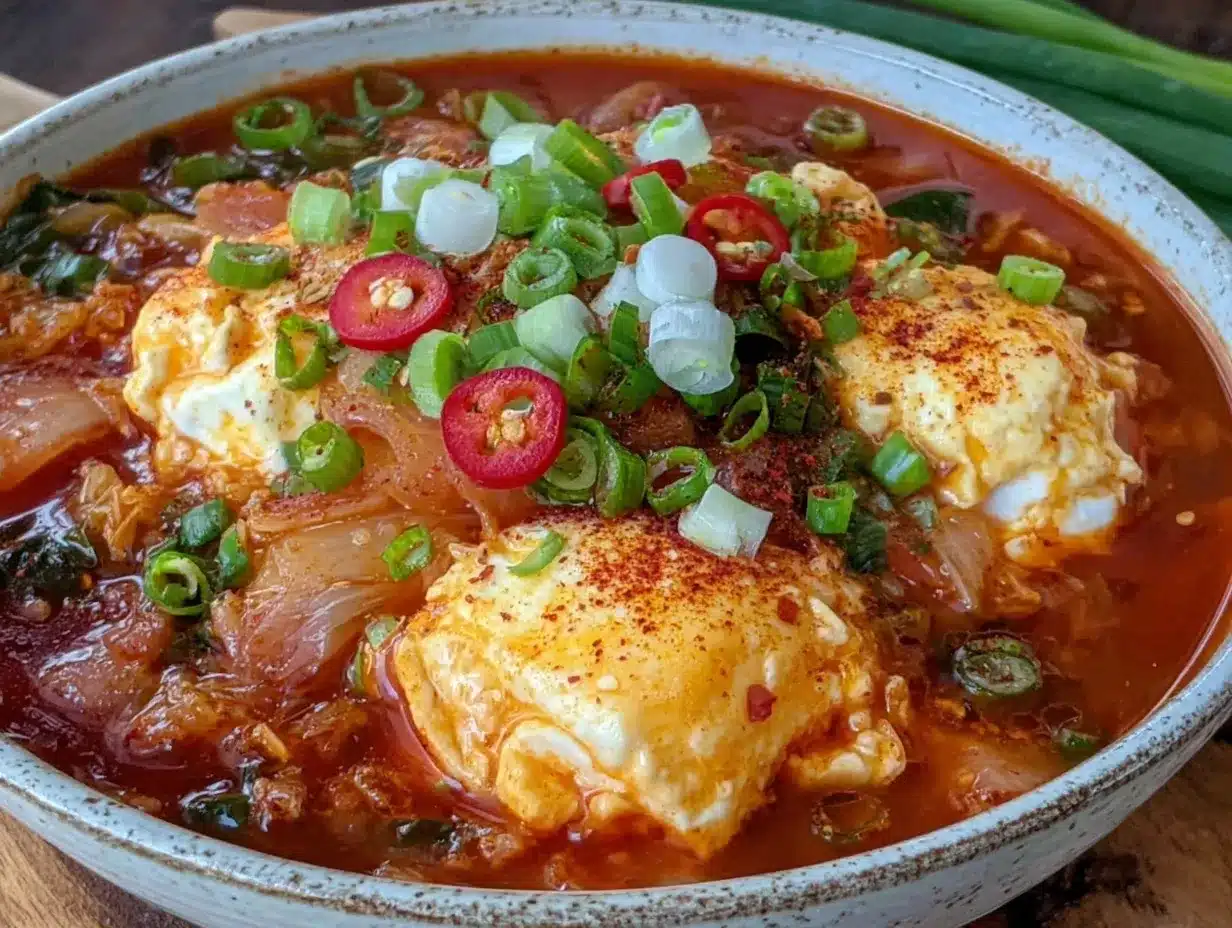
- Prep your ingredients: Slice the pork thinly, chop the kimchi, slice the onion, and cube the tofu. Mince your garlic and chop the green onions. This should take about 10 minutes.
- Sauté aromatics and pork: Heat 1 teaspoon of sesame oil in your pot over medium heat. Add the minced garlic and sliced onion, cooking until fragrant and softened—about 2-3 minutes. Toss in the pork slices and cook until they turn light brown, roughly 4-5 minutes. This step builds your stew’s base flavor.
- Add kimchi and seasoning: Stir in the chopped kimchi, gochugaru, and gochujang. Cook for another 3 minutes, letting the kimchi release its tangy aroma and the spices bloom. You’ll notice the pot filling with a rich, spicy scent here.
- Pour in broth and simmer: Pour in 4 cups (950 ml) of broth, soy sauce, and sugar. Bring the stew to a boil, then reduce heat and simmer gently for 15 minutes. This slow simmer lets the flavors meld and the pork tenderize.
- Add tofu and finish: Gently add tofu cubes to the pot, simmering for another 5 minutes without stirring too much (to keep the tofu intact). Taste and adjust seasoning if needed. Just before serving, sprinkle chopped green onions on top for a fresh pop of color and flavor.
This simple 5-step method makes the whole process manageable—even on days when your kitchen feels like a chaotic zone. The key is patience in the simmering phase; rushing this part can leave your stew flat. The smell will tell you when it’s ready—it’s a spicy, tangy invitation you won’t want to ignore.
Cooking Tips & Techniques
Making kimchi jjigae stew well is about balancing heat, sourness, and umami. Here are some tips I’ve picked up along the way:
- Choose well-fermented kimchi: It gives the broth that signature tangy punch. Fresh kimchi won’t have the same depth, so let it sit in the fridge for a few days if needed.
- Don’t over-stir once tofu’s added: Cubed tofu is delicate and breaks apart easily. Stir gently or just let it sit while simmering.
- Adjust spice carefully: Gochugaru and gochujang vary in heat by brand. Taste as you go, especially if you’re cooking for kids or spice-sensitive folks.
- Simmer low and slow: It’s tempting to crank the heat, but a slow simmer lets flavors develop and keeps the pork tender.
- Multitasking tip: While the stew simmers, prep your rice or simple sides. This stew pairs beautifully with steamed rice—that’s a classic combo you can’t skip!
I once burned the pork by rushing the sauté step—lesson learned: patience is key, especially with the initial sear. Also, I like to keep an eye on the broth level; if it reduces too much, just add a splash of water or more broth to keep the stew saucy and comforting.
Variations & Adaptations
Kimchi jjigae is versatile, so here are some ideas to switch it up:
- Vegetarian version: Skip the pork and use shiitake mushrooms or extra tofu. Use vegetable broth instead of anchovy broth.
- Seafood twist: Add clams, shrimp, or canned tuna for a briny depth. Add seafood in the last 5 minutes of simmering.
- Milder option: Reduce gochugaru and gochujang amounts, or swap for sweet paprika for color without heat.
- Seasonal veggies: Toss in zucchini or spinach near the end for extra texture and freshness.
One time, I experimented by adding a raw egg on top just before serving—the heat poached it perfectly, making the stew even more luscious. It’s a great way to add richness without extra effort.
Serving & Storage Suggestions
Serve your cozy kimchi jjigae stew hot, ideally straight from the pot, with a bowl of fluffy steamed rice. The rice helps mellow the spice and soak up the flavorful broth.
For drinks, a cold barley tea or light beer pairs nicely, balancing the heat and adding refreshment.
Leftovers keep well in the fridge for up to 3 days. When reheating, warm gently on the stove to preserve tofu texture. The flavors often deepen overnight, making it even tastier the next day.
If you want to freeze it, remove tofu before freezing, as it can change texture. Freeze the broth and pork mixture in an airtight container for up to 2 months. Thaw overnight in the fridge before reheating.
Nutritional Information & Benefits
This kimchi jjigae stew is fairly light but packed with nutrients. Kimchi brings probiotics, which support digestion and gut health. The pork adds protein and iron, while tofu contributes plant-based protein and calcium.
One serving (about 1.5 cups or 350 grams) typically contains:
| Calories | 250-300 kcal |
|---|---|
| Protein | 18-22 grams |
| Fat | 12-15 grams |
| Carbohydrates | 10-12 grams |
For those watching sodium, keep in mind kimchi and soy sauce add saltiness—adjust accordingly. This stew is naturally gluten-free if you use tamari instead of soy sauce and is low in carbs, making it suitable for various diets.
Conclusion
This cozy kimchi jjigae stew recipe is a spicy, comforting classic that’s easy enough for weeknight cooking but impressive enough for sharing. It’s the kind of meal that wraps you up in warmth and leaves you feeling satisfied without weighing you down.
Feel free to tweak the spice or protein to match your mood or pantry. I love this stew because it reminds me that good food doesn’t have to be complicated—it just needs a bit of patience and the right blend of flavors.
Give it a try, and don’t hesitate to share your own spins or questions—I’m always excited to hear how others make this recipe their own. Here’s to more cozy, spicy nights!
FAQs About Cozy Kimchi Jjigae Stew
Can I make kimchi jjigae without pork?
Absolutely! You can skip the pork and add mushrooms or extra tofu. Using vegetable broth keeps it vegetarian-friendly.
How spicy is this stew? Can I make it milder?
The stew has a moderate spicy kick thanks to gochugaru and gochujang. To reduce heat, simply use less of these or substitute with sweet paprika.
What’s the best kimchi to use for jjigae?
Well-fermented, aged kimchi works best because it provides a tangy depth. Fresh kimchi won’t deliver the same richness.
Can I prepare this stew ahead of time?
Yes, it actually tastes better the next day once flavors meld. Store leftovers in the fridge for up to 3 days, reheating gently.
Is it okay to freeze kimchi jjigae stew?
You can freeze the stew without tofu, as freezing can alter tofu’s texture. Freeze in airtight containers for up to 2 months.
Pin This Recipe!

Cozy Kimchi Jjigae Stew Recipe Easy 5-Step Comforting Spicy Flavor

A quick and easy Korean kimchi jjigae stew that combines spicy fermented kimchi with tofu and pork in a savory broth, perfect for comforting meals on chilly days.
- Prep Time: 10 minutes
- Cook Time: 25 minutes
- Total Time: 35 minutes
- Yield: 4 servings 1x
- Category: Main Course
- Cuisine: Korean
Ingredients
- 2 cups well-fermented and chopped kimchi
- 6 ounces pork belly or shoulder, thinly sliced (optional)
- 1 block (14 ounces) firm or medium-firm tofu, cut into cubes
- 1 small onion, sliced thin
- 3 cloves garlic, minced
- 1 tablespoon gochugaru (Korean red pepper flakes)
- 1 tablespoon gochujang (Korean chili paste)
- 4 cups (950 ml) vegetable or anchovy broth
- 1 tablespoon soy sauce
- 1 teaspoon sesame oil
- 2 stalks green onions, chopped
- 1 teaspoon sugar
Instructions
- Prep your ingredients: Slice the pork thinly, chop the kimchi, slice the onion, and cube the tofu. Mince your garlic and chop the green onions. This should take about 10 minutes.
- Sauté aromatics and pork: Heat 1 teaspoon of sesame oil in your pot over medium heat. Add the minced garlic and sliced onion, cooking until fragrant and softened—about 2-3 minutes. Toss in the pork slices and cook until they turn light brown, roughly 4-5 minutes.
- Add kimchi and seasoning: Stir in the chopped kimchi, gochugaru, and gochujang. Cook for another 3 minutes, letting the kimchi release its tangy aroma and the spices bloom.
- Pour in broth and simmer: Pour in 4 cups (950 ml) of broth, soy sauce, and sugar. Bring the stew to a boil, then reduce heat and simmer gently for 15 minutes.
- Add tofu and finish: Gently add tofu cubes to the pot, simmering for another 5 minutes without stirring too much. Taste and adjust seasoning if needed. Just before serving, sprinkle chopped green onions on top.
Notes
Choose well-fermented kimchi for best flavor. Do not over-stir after adding tofu to keep it intact. Adjust spice levels by varying gochugaru and gochujang amounts. Simmer slowly to develop flavors and tenderize pork. Leftovers taste better the next day. Remove tofu before freezing to preserve texture.
Nutrition
- Serving Size: About 1.5 cups (350
- Calories: 275
- Fat: 13.5
- Carbohydrates: 11
- Protein: 20
Keywords: kimchi jjigae, kimchi stew, Korean stew, spicy stew, tofu stew, comfort food, easy Korean recipe