Late one humid evening in my tiny kitchen, the kind where the windows fog up and the air feels thick with leftover heat, I found myself craving something comforting but with a bit of a kick. Honestly, I wasn’t in the mood for anything complicated—just a quick, satisfying meal. I had some leftover rice, a few shrimp hiding in the freezer, and a lonely chicken breast. I tossed them together, threw in a bunch of fragrant spices and sauces I had picked up from a small Indonesian grocery a while back, and hoped for the best. What came out was this unexpectedly vibrant, flavorful Indonesian nasi goreng with chicken and shrimp that instantly became my go-to when I needed food that feels like a hug and a little adventure all at once.
It’s funny how some of the best recipes come from those moments when you’re just winging it, right? That first bite was a bit of a revelation—the smoky, sweet, and spicy layers mingling with tender chicken and juicy shrimp, all wrapped up in perfectly fried rice. Since then, I’ve made this dish more times than I can count, each time tweaking it just a touch but never straying far from that original magic. If you’re someone who loves bold flavors but hates fuss, or if you want a taste of authentic Indonesian street food from your own kitchen, this recipe is for you.
What really stuck with me is how this nasi goreng recipe feels both simple and special. It’s a reminder that great food doesn’t need to be complicated, and sometimes the best meals come from what you already have on hand. Let’s just say, this flavorful Indonesian nasi goreng with chicken and shrimp has quietly claimed a permanent spot in my recipe rotation—and I bet it will in yours, too.
Why You’ll Love This Recipe
- Quick & Easy: Comes together in about 30 minutes, perfect for those busy weeknights or when hunger hits hard and fast.
- Simple Ingredients: You don’t need to hunt down exotic items; most are pantry staples or easy to find at your local market.
- Perfect for Any Occasion: Whether it’s a casual dinner, a weekend treat, or a potluck where you want to impress without sweating it, this nasi goreng fits the bill.
- Crowd-Pleaser: The combination of savory chicken, succulent shrimp, and that signature smoky-sweet fried rice always gets people asking for seconds.
- Unbelievably Delicious: The balance of sweet kecap manis, fragrant garlic, and a hint of chili transforms simple ingredients into a soulful, satisfying dish.
This isn’t just any fried rice recipe. What sets it apart is the layering of classic Indonesian flavors—like the use of kecap manis (a sweet soy sauce) blended with sambal oelek for heat, and the way the chicken and shrimp soak up those spices without overpowering the rice’s texture. It’s that interplay between the tender proteins and the caramelized, slightly crispy rice that makes every bite sing.
Plus, this recipe is flexible enough to let you play with ingredients you have on hand, but the core method and seasoning are what make it authentically Indonesian and consistently delicious. It’s the kind of dish that makes you pause and savor, the kind that makes you close your eyes after the first bite and think, “Yep, this is exactly what I needed.”
What Ingredients You Will Need
This recipe uses simple, wholesome ingredients to deliver bold flavor and satisfying texture without the fuss. Most of these are pantry staples or easy substitutes, so you won’t have to run around hunting for anything exotic.
- For the Fried Rice Base:
- 2 cups cooked jasmine rice, preferably day-old and chilled (this prevents mushiness)
- 2 tablespoons vegetable oil or peanut oil (for that authentic stir-fry flavor)
- 3 cloves garlic, finely minced (adds aromatic depth)
- 1 small onion, finely chopped (sweetness and texture)
- For the Protein:
- 1 boneless, skinless chicken breast, cut into bite-sized pieces (lean and tender)
- 8 oz (225g) shrimp, peeled and deveined (medium-sized, fresh or thawed frozen)
- For the Seasoning:
- 3 tablespoons kecap manis (Indonesian sweet soy sauce – I prefer ABC brand for its perfect balance)
- 1 tablespoon soy sauce (adds saltiness and umami)
- 1 teaspoon sambal oelek or chili paste (adjust to your heat preference)
- 1 teaspoon shrimp paste (optional, but it adds that authentic savory punch)
- Salt and freshly ground black pepper, to taste
- For Garnish and Extras:
- 2 green onions, sliced thinly (fresh crunch and color)
- 1 egg (to fry and serve on top, optional but classic)
- Fresh cucumber slices and tomato wedges (for serving, refreshing contrast)
- Fried shallots (optional, for a crispy topping)
- Lime wedges (to squeeze over just before eating)
If you can’t find kecap manis, you can make a quick substitute by mixing regular soy sauce with a bit of brown sugar or molasses, but the flavor won’t quite be the same. For a gluten-free version, look for tamari or gluten-free soy sauce options. Also, if shrimp paste isn’t your thing, you can skip it—it’s traditional but not mandatory.
Equipment Needed
- Large wok or heavy-bottomed skillet – a wok really helps get that perfect high heat stir-fry effect, but a large skillet works fine too.
- Wooden spoon or spatula – for stirring without scratching your cookware.
- Sharp knife and cutting board – for prepping chicken, shrimp, and veggies.
- Measuring spoons and cups – to keep the seasoning balanced (especially with the sweet soy sauce).
- Optional: a small frying pan if you want to cook the egg separately for topping.
I’ve tried this recipe with both a nonstick skillet and a carbon steel wok. The carbon steel wok heats up faster and gives you that slightly smoky flavor, but it requires seasoning and care. The nonstick pan is easier to clean and great for beginners. If you’re on a budget, a good quality skillet will do just fine.
Preparation Method

- Prep Your Ingredients (10 minutes): Start by chopping the garlic and onion finely. Cut the chicken breast into small, bite-sized pieces—this helps them cook quickly and evenly. Peel and devein your shrimp if needed. Slice the green onions and prepare any garnishes.
- Heat the Oil & Sauté Aromatics (3–4 minutes): Heat 2 tablespoons of vegetable oil in your wok or skillet over medium-high heat until shimmering. Toss in the minced garlic and chopped onion, stirring frequently. You want them to soften and become fragrant but not brown too much.
- Cook the Chicken (5 minutes): Add the chicken pieces to the pan, spreading them out so they sear nicely. Stir occasionally until the chicken is cooked through and lightly golden on the edges. This usually takes about 5 minutes depending on your pan and heat.
- Add Shrimp & Seasoning (3–4 minutes): Toss in the shrimp and cook until they turn pink and opaque—this happens quickly, about 2-3 minutes. Next, stir in the kecap manis, soy sauce, sambal oelek, and shrimp paste (if using). Mix everything thoroughly so the chicken and shrimp are evenly coated. You should see the sauce caramelizing a bit on the pan’s surface.
- Incorporate the Rice (5 minutes): Add the cold jasmine rice to the pan. Break up any clumps with your spatula, stirring constantly to mix with the seasoned proteins and aromatics. This step is crucial—keep the rice moving so it heats through evenly and develops a slight crispiness on the bottom without becoming mushy.
- Taste & Adjust (1-2 minutes): Give it a taste and add salt or pepper as needed. If you want more heat, a little extra sambal oelek goes a long way. At this point, the dish should be a beautiful balance of sweet, savory, and spicy.
- Fry the Egg (Optional, 3 minutes): In a small separate pan, fry an egg sunny-side up with a runny yolk. This is classic for nasi goreng and adds richness, but you can skip or scramble if you prefer.
- Serve & Garnish: Plate the nasi goreng and top with the fried egg. Scatter sliced green onions and fried shallots over the top. Arrange cucumber slices and tomato wedges on the side with lime wedges for squeezing.
Pro tip: Using day-old rice is the secret here. Freshly cooked rice tends to be too soft and sticky, which makes it harder to get that ideal fried rice texture. If you only have freshly cooked rice, spread it out on a tray to cool and dry a bit before frying.
Cooking Tips & Techniques
One of the trickiest parts of making Indonesian nasi goreng is balancing the sauce so it’s flavorful but not soggy. Using sweet soy sauce (kecap manis) smartly is key—it adds richness and that signature dark color without overpowering the other ingredients.
Don’t rush the stir-fry. Cooking over medium-high heat and stirring constantly prevents sticking and helps the rice develop a slight crisp without burning. Also, adding the rice in small batches or fluffing it before adding helps separate the grains for better texture.
A mistake I made the first few times was overcrowding the pan. If your pan isn’t big enough, the rice steams instead of frying. If that happens, cook in two batches or use a larger skillet or wok.
Multitasking helps here: while the rice cooks, you can prepare the garnishes or fry the egg. It saves time and keeps everything coming together hot and fresh.
Lastly, if you’re nervous about shrimp paste (because it smells strong), start with a small amount or omit it altogether. The dish will still taste great, just a bit less authentic.
Variations & Adaptations
- Vegetarian Version: Swap chicken and shrimp for firm tofu or tempeh, and replace shrimp paste with mushroom soy sauce or a bit of miso paste for umami.
- Spice Level: Adjust sambal oelek to taste or add fresh sliced bird’s eye chilies for a sharper heat punch.
- Seasonal Twist: Add diced pineapple or mango for a subtle sweetness that complements the savory flavors—perfect for summer meals.
- Low-Carb Option: Use riced cauliflower instead of jasmine rice for a lighter version, though the texture and flavor will be a bit different.
- Personal Favorite: I once added a splash of coconut milk at the end for a creamier, richer nasi goreng—it was unexpectedly delicious and kept the aroma tropical.
Serving & Storage Suggestions
Serve your flavorful Indonesian nasi goreng hot, straight from the wok, topped with that golden fried egg for maximum comfort. The fresh cucumber and tomato slices on the side are not just pretty—they add a refreshing crunch and balance the spices beautifully.
This dish pairs well with a cold beer or an iced jasmine tea to cut through the richness. For a heartier meal, add some sautéed greens or a simple salad on the side.
Leftovers keep well in the refrigerator for up to 3 days. Store in an airtight container, and when reheating, sprinkle a little water over the rice before microwaving or warming in a pan to prevent drying out. Flavors tend to deepen overnight, so sometimes leftovers taste even better!
Nutritional Information & Benefits
This nasi goreng with chicken and shrimp is a balanced dish packed with protein, carbs, and healthy fats. A serving typically contains around 450-500 calories, depending on portion size.
Chicken provides lean protein important for muscle repair, while shrimp adds omega-3 fatty acids beneficial for heart health. The garlic and onions offer antioxidants, and if you include fresh veggies like cucumber and tomato, you get added vitamins and fiber.
For those watching gluten intake, use tamari instead of soy sauce. It’s a flavorful meal that can fit into many diets without feeling like a compromise.
Conclusion
This flavorful Indonesian nasi goreng with chicken and shrimp has become one of those rare recipes that feels both familiar and exciting every time I make it. It’s straightforward, packed with layers of taste, and doesn’t demand much time or fancy ingredients. Honestly, it’s the kind of meal that makes a simple weeknight feel a little special without fuss.
Feel free to tweak the spice level, protein choice, or garnishes to suit your taste. What matters most is that it brings you that perfect bite—comforting, vibrant, and satisfying. I hope this recipe finds a happy place in your kitchen as it did in mine.
If you give it a try, I’d love to hear how you made it your own or what little secrets you add. Sharing food stories is part of what makes cooking so joyful, after all. Here’s to many delicious meals ahead!
FAQs
Can I use freshly cooked rice for nasi goreng?
Fresh rice tends to be too soft and sticky for fried rice. If you only have fresh rice, spread it out on a tray to cool and dry for at least 30 minutes before cooking to help achieve better texture.
What can I substitute for kecap manis?
You can mix regular soy sauce with brown sugar or molasses to mimic the sweetness and thickness. It won’t be exactly the same but will work in a pinch.
Is shrimp paste necessary?
Not really. It adds authentic umami flavor but has a strong aroma some may find off-putting. You can omit it or substitute with miso paste or mushroom soy sauce.
How spicy is this nasi goreng?
The heat comes mainly from sambal oelek, so adjust the amount to your preference. You can skip it for a milder dish or add fresh chilies for extra kick.
Can I make this dish vegetarian?
Absolutely! Replace chicken and shrimp with firm tofu or tempeh, and swap shrimp paste for a vegetarian-friendly umami substitute like mushroom soy sauce or miso.
Pin This Recipe!
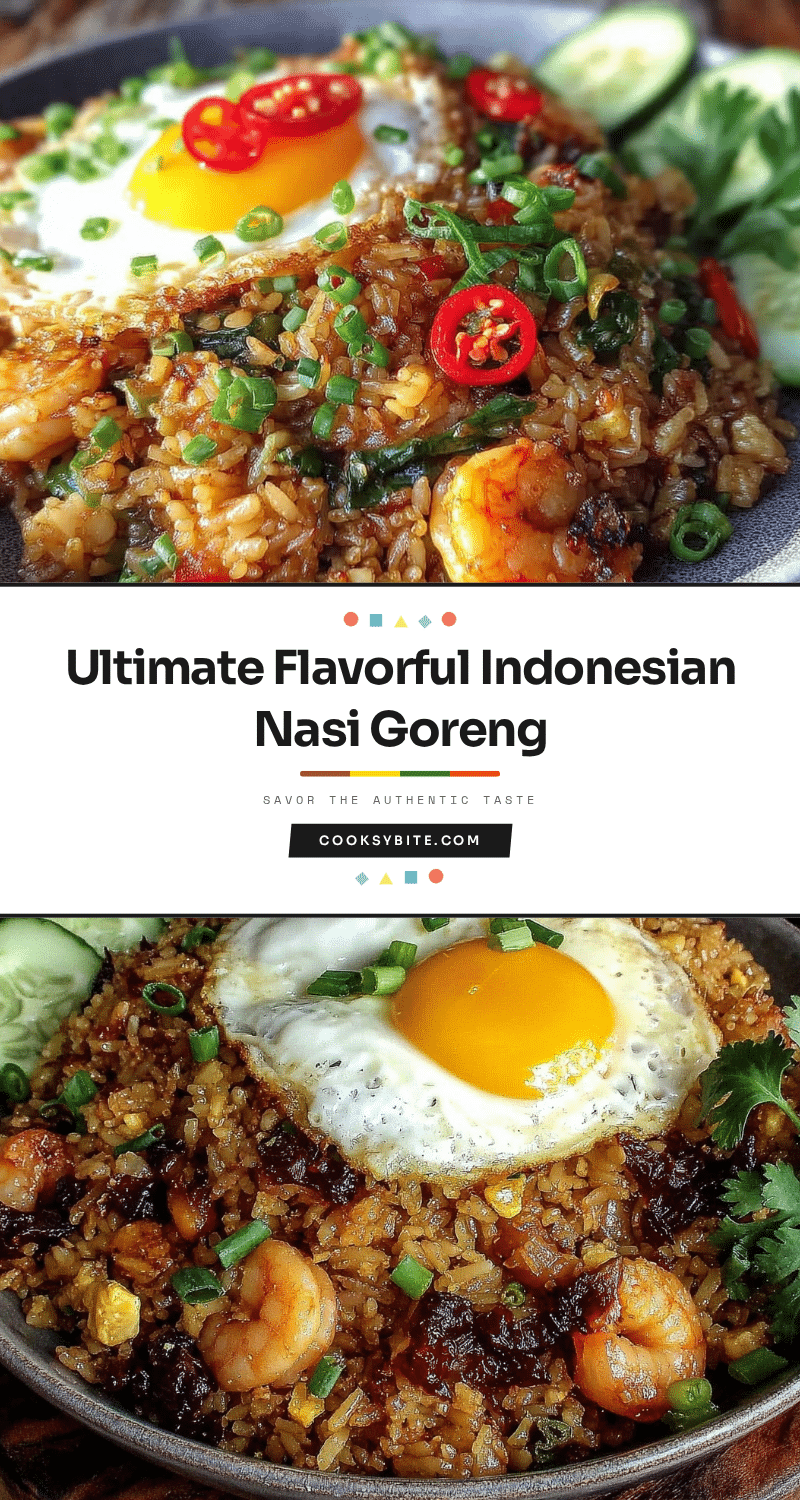
Flavorful Indonesian Nasi Goreng Recipe with Chicken and Shrimp

A quick and authentic Indonesian fried rice dish featuring tender chicken, succulent shrimp, and a smoky-sweet blend of spices and sauces. Perfect for a comforting meal with bold flavors.
- Prep Time: 10 minutes
- Cook Time: 20 minutes
- Total Time: 30 minutes
- Yield: 2-3 servings 1x
- Category: Main Course
- Cuisine: Indonesian
Ingredients
- 2 cups cooked jasmine rice, preferably day-old and chilled
- 2 tablespoons vegetable oil or peanut oil
- 3 cloves garlic, finely minced
- 1 small onion, finely chopped
- 1 boneless, skinless chicken breast, cut into bite-sized pieces
- 8 oz (225g) shrimp, peeled and deveined
- 3 tablespoons kecap manis (Indonesian sweet soy sauce)
- 1 tablespoon soy sauce
- 1 teaspoon sambal oelek or chili paste
- 1 teaspoon shrimp paste (optional)
- Salt and freshly ground black pepper, to taste
- 2 green onions, sliced thinly
- 1 egg (optional, for frying and serving on top)
- Fresh cucumber slices and tomato wedges (for serving)
- Fried shallots (optional, for topping)
- Lime wedges (to squeeze over before eating)
Instructions
- Prep your ingredients: finely mince garlic and chop onion; cut chicken breast into bite-sized pieces; peel and devein shrimp if needed; slice green onions and prepare garnishes.
- Heat 2 tablespoons of vegetable oil in a wok or large skillet over medium-high heat until shimmering.
- Add minced garlic and chopped onion; sauté for 3-4 minutes until fragrant and softened but not browned.
- Add chicken pieces; cook for about 5 minutes, stirring occasionally, until cooked through and lightly golden.
- Add shrimp; cook for 2-3 minutes until pink and opaque.
- Stir in kecap manis, soy sauce, sambal oelek, and shrimp paste (if using); mix thoroughly to coat chicken and shrimp and allow sauce to caramelize slightly.
- Add cold jasmine rice; break up clumps and stir constantly for about 5 minutes to heat through and develop slight crispiness without mushiness.
- Taste and adjust seasoning with salt, pepper, or extra sambal oelek as desired.
- Optional: In a separate small pan, fry an egg sunny-side up for topping.
- Serve nasi goreng topped with fried egg, garnished with sliced green onions, fried shallots, cucumber slices, tomato wedges, and lime wedges.
Notes
Use day-old rice for best texture to avoid mushiness. If using fresh rice, spread it out to cool and dry before cooking. Adjust sambal oelek to control spice level. Shrimp paste is optional and can be omitted or substituted with miso or mushroom soy sauce for vegetarian versions. Avoid overcrowding the pan to ensure proper frying and crispiness.
Nutrition
- Serving Size: About 1 to 1.5 cups
- Calories: 475
- Sugar: 8
- Sodium: 850
- Fat: 14
- Saturated Fat: 2.5
- Carbohydrates: 55
- Fiber: 2
- Protein: 30
Keywords: nasi goreng, Indonesian fried rice, chicken and shrimp fried rice, quick dinner, authentic Indonesian recipe, spicy fried rice, kecap manis, sambal oelek