Introduction
It was one of those evenings when the day had stretched longer than I expected—work calls, errands, and the constant buzz of everyday chaos left me craving something that felt like a warm hug. Honestly, I wasn’t planning on making anything fancy. But then, I remembered the osso buco recipe my neighbor had casually mentioned over a fence chat just last week. You know, that kind of thing where you think, “Hmm, I’ll try it sometime,” and suddenly that “sometime” is now.
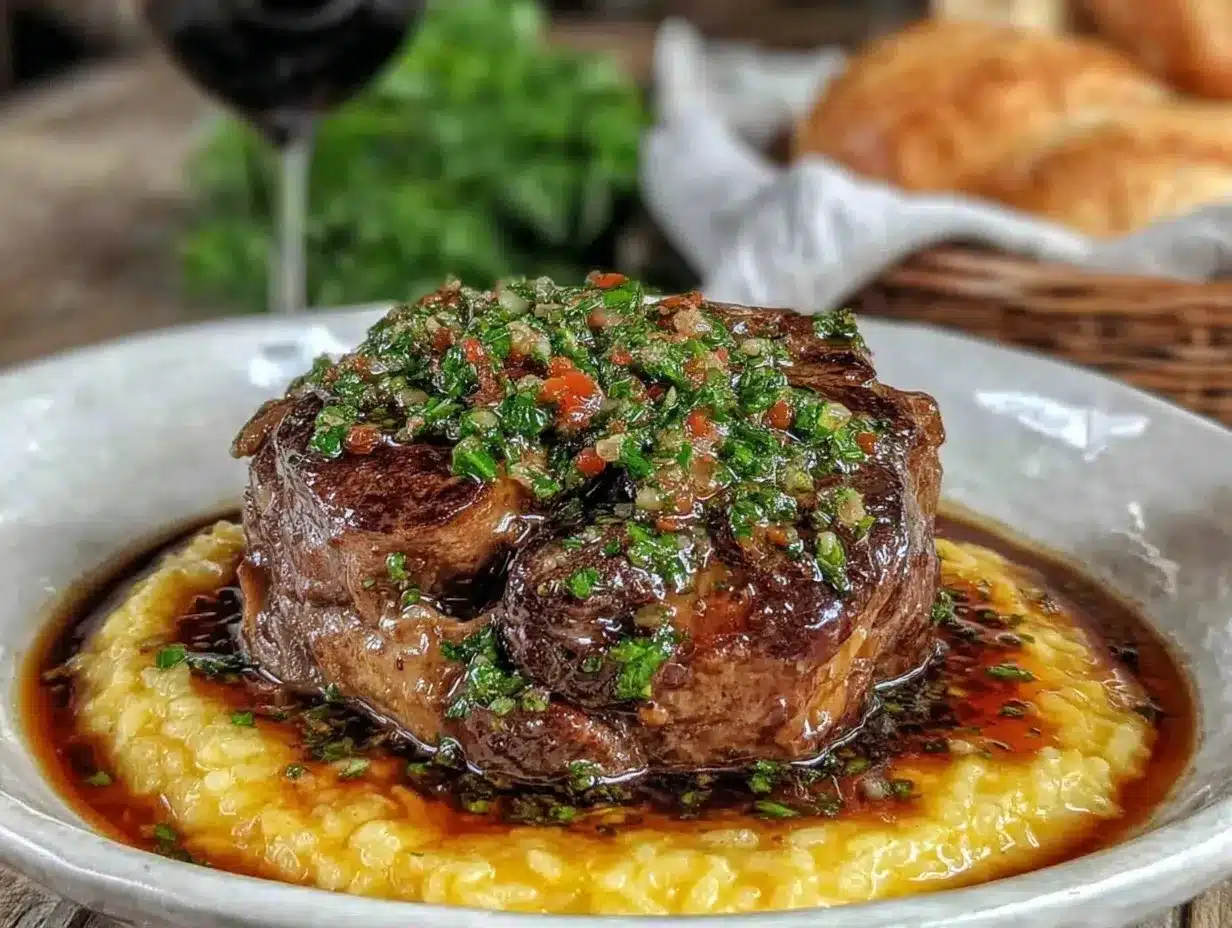
I didn’t have much time, but this recipe promised comfort without complexity, so I gave it a go. The smell of braised veal shanks filling the kitchen, mingling with that unmistakable aroma of saffron in risotto—it was like a little Milanese escape right at my stove. At first, I was skeptical about pulling off something so classic without a chef’s kitchen or a whole afternoon. But by the time dinner was served, I realized this osso buco Milanese with saffron risotto wasn’t just doable—it was downright rewarding.
There’s something quietly satisfying about a meal that feels both special and homey at once. This recipe stuck with me because it’s not just about the food; it’s about slowing down, savoring, and sharing something timeless, even on the busiest nights. That’s why I’m still making it again and again—because sometimes comfort is just a pot and a little patience away.
Why You’ll Love This Recipe
- Rich, Tender Flavor: The slow braising of veal shanks turns them meltingly tender, with deep, savory notes that fill the room.
- Simple Yet Sophisticated: No complicated ingredients or techniques—just classic flavors done the right way.
- Perfect for Cozy Dinners: Whether it’s a weekend treat or a special occasion, this dish brings a touch of Milan to your table.
- The Saffron Risotto: Creamy, fragrant, and golden-hued, it pairs beautifully and makes the whole meal feel indulgent.
- Impress Without Stress: You don’t need to be a professional chef to nail this—the recipe guides you through every step.
- Family and Crowd Pleaser: I’ve served this to friends who usually shy away from “fancy” meals, and they kept asking for seconds.
- Authentic Technique: From deglazing the pan to the gremolata finish, it’s a tribute to traditional Milanese cooking that you can trust.
What Ingredients You Will Need
This recipe uses straightforward, wholesome ingredients that come together to create a comforting and flavorful dish. Most of these are pantry staples or easy to find at your local market.
- For the Osso Buco:
- 4 veal shanks (about 1.5 to 2 inches thick, 3-4 lbs / 1.4-1.8 kg total) – look for good marbling for tenderness
- Salt and freshly ground black pepper – seasoning is key
- All-purpose flour (about ½ cup / 60g) – for dredging
- 3 tablespoons olive oil (extra virgin recommended)
- 2 tablespoons unsalted butter – adds richness
- 1 large onion, finely chopped
- 2 celery stalks, finely chopped
- 2 carrots, finely chopped
- 4 cloves garlic, minced
- 1 cup dry white wine (about 240 ml) – I prefer an Italian Pinot Grigio
- 1 ½ cups beef or veal broth (360 ml) – homemade or low-sodium store-bought works well
- 1 can (14 oz / 400g) diced tomatoes
- 2 teaspoons fresh thyme leaves or 1 teaspoon dried thyme
- 2 bay leaves
- For the Gremolata (topping):
- 1 lemon, zest only – fresh zest brightens the dish
- 3 tablespoons fresh flat-leaf parsley, finely chopped
- 1 garlic clove, minced
- For the Saffron Risotto:
- 1 ½ cups Arborio rice (300g) – the classic risotto rice
- 4 cups chicken or vegetable broth (950 ml), kept warm
- 1 small onion, finely chopped
- 2 tablespoons unsalted butter
- 1 tablespoon olive oil
- Pinch of saffron threads (about 0.1g) – soak in 2 tablespoons warm broth before adding
- ½ cup dry white wine (120 ml)
- ½ cup freshly grated Parmesan cheese (50g) – use a good-quality Parmigiano-Reggiano
- Salt and pepper to taste
Ingredient tips: For the veal shanks, a trusted butcher or a reputable grocery store with a good meat section is your best bet. The saffron threads are the real flavor star in the risotto—don’t skip them, but a little goes a long way! If you can’t find veal, beef shanks make a nice alternative but will have a slightly different texture.
Equipment Needed
- Large heavy-bottomed Dutch oven or deep skillet with lid – perfect for slow braising
- Large saucepan for risotto – a wide, heavy pan helps with even cooking
- Wooden spoon or heatproof spatula – for stirring risotto and sautéing veggies
- Fine grater or microplane – handy for lemon zest and Parmesan
- Measuring cups and spoons
- Chef’s knife and cutting board – sharp knife makes chopping easier
- Ladle – useful for adding broth gradually to risotto
If you don’t have a Dutch oven, a heavy-bottomed pot with a lid will do just fine. I personally like using cast iron because it holds heat so well, but you can also use stainless steel. For the risotto, a non-stick pan can help prevent sticking but isn’t required. Keeping your knives sharp will save you time and keep your prep neat.
Preparation Method
- Prep the veal shanks: Pat the veal shanks dry with paper towels. Season both sides generously with salt and pepper, then dredge lightly in flour, shaking off any excess. This step helps develop a golden crust and thickens the sauce later. (About 10 minutes)
- Sear the shanks: Heat olive oil and butter over medium-high heat in the Dutch oven. Once shimmering, add the veal shanks and brown on all sides, about 4-5 minutes per side. Don’t rush this — the color adds flavor. Transfer the shanks to a plate and set aside. (10-12 minutes)
- Sauté the soffritto: Lower heat to medium. Add chopped onion, celery, carrots, and garlic to the pot. Cook gently until softened and fragrant, about 7 minutes, stirring often. This is the flavor base, so don’t skip or rush it.
- Deglaze and build the sauce: Pour in the white wine, scraping up browned bits from the bottom. Let it simmer until reduced by half, about 5 minutes. Add the diced tomatoes, broth, thyme, and bay leaves. Stir to combine.
- Return the veal shanks: Nestle the shanks back into the pot, spooning some sauce over the top. The liquid should come halfway up the meat; add a splash more broth if needed. Bring to a gentle simmer.
- Braise low and slow: Cover and cook on low heat for about 1 hour 45 minutes to 2 hours, turning the shanks halfway through. The meat should be fork-tender and nearly falling off the bone. (If using an oven, set to 325°F / 160°C.)
- Prepare the gremolata: While the meat braises, mix lemon zest, parsley, and garlic in a small bowl. Set aside to use as a fresh, zesty topping.
- Make the saffron risotto: Warm broth in a saucepan. Heat olive oil and 1 tablespoon butter in a large pan over medium heat. Add onion and cook until translucent, about 5 minutes.
- Add the rice: Stir in Arborio rice, coating grains with oil and butter. Toast lightly for 1-2 minutes until edges turn translucent.
- Deglaze with wine: Pour in white wine and cook, stirring, until fully absorbed.
- Add saffron and broth gradually: Pour in saffron soaked in warm broth. Add broth ladle by ladle, stirring constantly and letting liquid absorb before adding more. This should take about 18-20 minutes. The risotto will be creamy with a slight bite.
- Finish risotto: Stir in remaining butter and Parmesan. Season with salt and pepper. Keep warm until ready to serve.
- Serve: Place osso buco on plates, spoon sauce over, sprinkle gremolata on top, and serve alongside saffron risotto. Enjoy immediately!
Cooking Tips & Techniques
Getting the perfect osso buco Milanese with saffron risotto is about patience and attention to detail, but it’s not hard, I promise. One thing I learned after my first attempt (which was a bit dry) is to keep the braise liquid at a gentle simmer—not boiling. Boiling toughens the meat, and slow heat breaks down the connective tissue beautifully.
When browning the shanks, don’t overcrowd the pan. Do it in batches if needed, so you get that lovely crust. That fond—the browned bits stuck to the pan—is flavor gold; deglazing with wine lifts it into the sauce.
For risotto, constant stirring isn’t just for show; it helps release the rice’s starch, creating that signature creamy texture. But don’t over-stir or you’ll bruise the grains. Adding broth little by little gives you control over the final texture.
Also, saffron is best steeped in warm broth before adding—it blooms its color and flavor much better this way. A pinch goes a long way, so be careful not to overdo it!
Finally, gremolata is a must—it cuts through the richness and adds a fresh, vibrant finish. I always make a bit extra because it’s so good I want to sprinkle it everywhere.
Variations & Adaptations
- Beef Shank Substitute: If veal isn’t available, beef shanks work well. They take a little longer to tenderize but deliver a rich flavor.
- Gluten-Free Option: Skip the flour dredging or replace with cornstarch for a gluten-free version. The sauce will still thicken nicely from reduction.
- Vegetarian Adaptation: Swap veal for large portobello mushrooms or eggplant slices and use vegetable broth. Serve with the saffron risotto and gremolata for a hearty, meat-free meal.
- Saffron Alternatives: If saffron is hard to find, turmeric can give a golden color, but the flavor will differ. Add a dash of smoked paprika for warmth.
- Wine-Free: Replace white wine with additional broth and a splash of lemon juice for acidity.
One personal twist I tried was adding a splash of orange zest to the gremolata—it added a subtle sweetness that worked surprisingly well with the savory meat.
Serving & Storage Suggestions
Serve the osso buco Milanese hot, straight from the pot, with a generous spoonful of the saffron risotto on the side. Garnish with gremolata just before serving to keep that fresh brightness. A simple green salad or steamed green beans complement the meal nicely.
If you have leftovers, store the meat and sauce in an airtight container in the fridge for up to 3 days. The risotto is best eaten fresh but can be refrigerated for 1-2 days. Reheat risotto gently on the stove with a splash of broth or water to loosen it up.
Flavors actually deepen after a day, so if you can wait, leftovers taste fantastic reheated. Just reheat slowly to keep the veal tender and the risotto creamy.
Nutritional Information & Benefits
This dish packs a hearty dose of protein from veal, with vitamins and minerals from the vegetables and saffron. Veal is a lean meat option, providing iron and zinc, essential for energy and immune function.
The risotto’s Arborio rice supplies carbohydrates for sustained energy, and saffron adds antioxidants and mood-boosting compounds. The gremolata’s lemon zest and parsley bring vitamin C and fresh herb benefits, aiding digestion.
While this meal is richer than a weeknight staple, it can fit into a balanced diet when enjoyed in moderation. For gluten-free diners, simple flour substitutions make it accessible, and the recipe can be adapted to lower sodium by using homemade broth.
Conclusion
Perfect Osso Buco Milanese with saffron risotto is one of those dishes that feels like a little celebration every time you make it. It’s approachable enough for home cooks but delivers that authentic Italian charm that impresses without fuss. I keep coming back to this recipe because it’s not just about the meal—it’s about creating a moment of calm and comfort amidst the busyness.
Feel free to tweak the gremolata or swap proteins as you like; the foundation is solid enough to hold your personal touch. If you try it, I’d love to hear how your version turns out or what variations you’ve added. Cooking is a shared experience, and this recipe is a great one to bring people together.
So, when the evening calls for something special but not complicated, this osso buco Milanese with saffron risotto is waiting to become your new favorite.
FAQs
What cut of meat is best for osso buco?
Veal shanks about 1.5 to 2 inches thick are traditional and ideal for osso buco because of their tender texture and marrow-rich bones. Beef shanks can be used as a substitute.
Can I make osso buco in a slow cooker?
Yes! Brown the shanks first, then transfer to a slow cooker with the sauce ingredients. Cook on low for 6-8 hours until tender.
How do I know when the risotto is done?
The rice should be creamy with a slight bite in the center (al dente). It shouldn’t be mushy or hard. Taste frequently during the last few minutes of cooking.
Is saffron necessary for the risotto?
Saffron adds the distinctive golden color and unique aroma. While optional, it’s highly recommended. If unavailable, turmeric can color the risotto but won’t replicate the flavor.
Can I prepare parts of this recipe ahead of time?
You can make the gremolata and broth in advance. The osso buco can be braised a day ahead—the flavors often improve overnight. Reheat gently before serving.
Pin This Recipe!
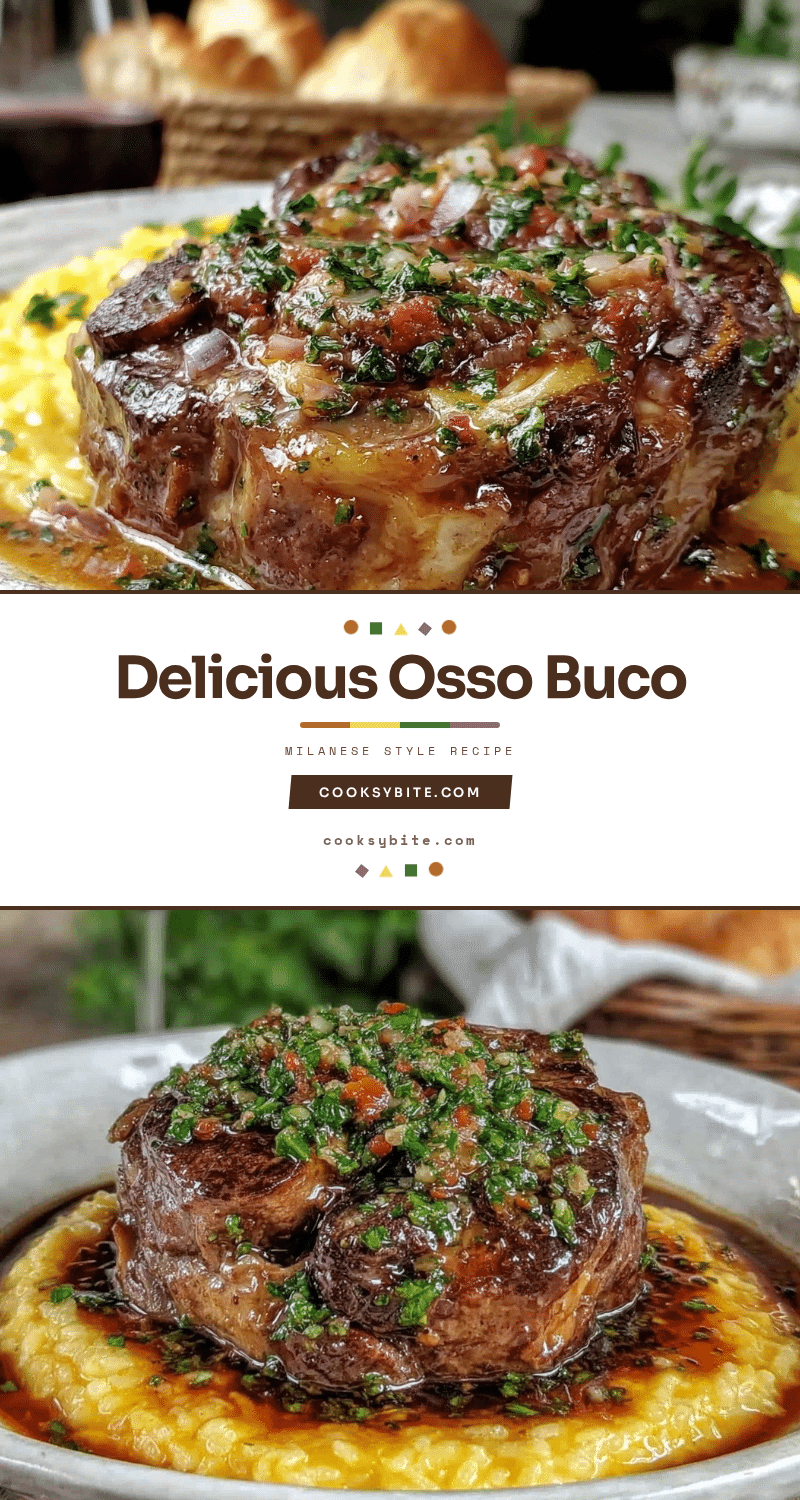
Perfect Osso Buco Milanese Recipe with Easy Saffron Risotto Guide

A comforting and flavorful Milanese classic featuring slow-braised veal shanks paired with creamy saffron risotto, perfect for cozy dinners and special occasions.
- Prep Time: 20 minutes
- Cook Time: 2 hours 15 minutes
- Total Time: 2 hours 35 minutes
- Yield: 4 servings 1x
- Category: Main Course
- Cuisine: Italian
Ingredients
- 4 veal shanks (about 1.5 to 2 inches thick, 3–4 lbs / 1.4–1.8 kg total)
- Salt and freshly ground black pepper
- ½ cup all-purpose flour (60g)
- 3 tablespoons olive oil (extra virgin recommended)
- 2 tablespoons unsalted butter
- 1 large onion, finely chopped
- 2 celery stalks, finely chopped
- 2 carrots, finely chopped
- 4 cloves garlic, minced
- 1 cup dry white wine (240 ml / 8 fl oz)
- 1 ½ cups beef or veal broth (360 ml / 12 fl oz)
- 1 can (14 oz / 400g) diced tomatoes
- 2 teaspoons fresh thyme leaves or 1 teaspoon dried thyme
- 2 bay leaves
- For the Gremolata:
- 1 lemon, zest only
- 3 tablespoons fresh flat-leaf parsley, finely chopped
- 1 garlic clove, minced
- For the Saffron Risotto:
- 1 ½ cups Arborio rice (300g)
- 4 cups chicken or vegetable broth (950 ml / 32 fl oz), kept warm
- 1 small onion, finely chopped
- 2 tablespoons unsalted butter
- 1 tablespoon olive oil
- Pinch of saffron threads (about 0.1g), soaked in 2 tablespoons warm broth
- ½ cup dry white wine (120 ml / 4 fl oz)
- ½ cup freshly grated Parmesan cheese (50g)
- Salt and pepper to taste
Instructions
- Pat the veal shanks dry with paper towels. Season both sides generously with salt and pepper, then dredge lightly in flour, shaking off any excess. (About 10 minutes)
- Heat olive oil and butter over medium-high heat in a Dutch oven. Once shimmering, add the veal shanks and brown on all sides, about 4-5 minutes per side. Transfer the shanks to a plate and set aside. (10-12 minutes)
- Lower heat to medium. Add chopped onion, celery, carrots, and garlic to the pot. Cook gently until softened and fragrant, about 7 minutes, stirring often.
- Pour in the white wine, scraping up browned bits from the bottom. Let it simmer until reduced by half, about 5 minutes. Add diced tomatoes, broth, thyme, and bay leaves. Stir to combine.
- Nestle the shanks back into the pot, spooning some sauce over the top. The liquid should come halfway up the meat; add more broth if needed. Bring to a gentle simmer.
- Cover and cook on low heat for about 1 hour 45 minutes to 2 hours, turning the shanks halfway through. The meat should be fork-tender and nearly falling off the bone. (If using an oven, set to 325°F / 160°C.)
- While the meat braises, mix lemon zest, parsley, and garlic in a small bowl to make the gremolata. Set aside.
- Warm broth in a saucepan. Heat olive oil and 1 tablespoon butter in a large pan over medium heat. Add onion and cook until translucent, about 5 minutes.
- Stir in Arborio rice, coating grains with oil and butter. Toast lightly for 1-2 minutes until edges turn translucent.
- Pour in white wine and cook, stirring, until fully absorbed.
- Add saffron soaked in warm broth. Add broth ladle by ladle, stirring constantly and letting liquid absorb before adding more. Cook about 18-20 minutes until risotto is creamy with a slight bite.
- Stir in remaining butter and Parmesan cheese. Season with salt and pepper. Keep warm until ready to serve.
- Serve osso buco on plates, spoon sauce over, sprinkle gremolata on top, and serve alongside saffron risotto. Enjoy immediately!
Notes
Keep the braise liquid at a gentle simmer to avoid toughening the meat. Brown shanks in batches to avoid overcrowding. Soak saffron in warm broth before adding to risotto for best flavor and color. Gremolata adds a fresh, vibrant finish and can be made extra to sprinkle liberally. Risotto should be stirred gently and broth added gradually for creamy texture.
Nutrition
- Serving Size: 1 veal shank with ab
- Calories: 650
- Sugar: 7
- Sodium: 600
- Fat: 25
- Saturated Fat: 9
- Carbohydrates: 65
- Fiber: 4
- Protein: 45
Keywords: osso buco, Milanese, saffron risotto, veal shanks, Italian recipe, slow braised, gremolata, comfort food