There was this one evening when the forecast promised rain and a chill that just wouldn’t quit. I found myself rummaging through the fridge, hoping for something that felt like a warm hug but without the fuss. Somehow, the idea of making a comforting sauerbraten—yes, the classic German pot roast—popped into my head. Honestly, I was skeptical at first. Sauerbraten always seemed like one of those recipes reserved for a Sunday feast or special occasion, with its long marinating times and intricate steps. But that night, I figured, why not? I had some beef roast, a few pantry staples, and a craving for something hearty.
The process wasn’t as intimidating as I imagined. The rich, tangy marinade filled the kitchen with aromas of cloves, juniper berries, and vinegar—a smell that reminded me of a cozy winter market. While the meat slowly absorbed those flavors, I whipped up potato dumplings on the side, rounding out the meal with that soft, pillowy texture that so perfectly contrasts the robust beef.
What surprised me most was how this sauerbraten recipe, paired with easy German potato dumplings, turned an ordinary, dreary evening into something quietly special. It wasn’t showy or complicated but felt honest, grounded, and deeply satisfying. Over time, this dish stuck around—not just for the warmth it brought on cold nights but because it reminded me that comfort can be simple, soulful, and worth savoring.
Why You’ll Love This Recipe
- Time-Tested Comfort: This sauerbraten recipe captures the heart of traditional German cooking without overwhelming your schedule.
- Flavorful Yet Balanced: The marinade’s blend of vinegar, spices, and a hint of sweetness creates a tender roast that’s tangy and rich—never one-note.
- Easy Potato Dumplings: Forget intimidating dumpling recipes; these are straightforward, soft, and perfect for soaking up that luscious gravy.
- Perfect for Cozy Gatherings: Whether a quiet family dinner or a small get-together, this dish feels like a warm invitation to slow down and enjoy.
- Simple Ingredients: No fancy or hard-to-find items here—most are pantry staples or easy to source at your local market.
- Tested and Family-Approved: After dozens of trials and tweaks, this version consistently delivers tender meat and dumplings that disappear fast.
What sets this recipe apart is the balance—no overly sharp vinegar bite, no dry roast. The potato dumplings? They’re not dense or gummy but light enough to pair beautifully with the sauerbraten’s gravy. It’s the kind of meal that makes you want to sit a little longer at the table, with second helpings on your mind.
What Ingredients You Will Need
This sauerbraten recipe uses simple, wholesome ingredients to deliver bold flavor and satisfying texture without the fuss. Most of these are pantry staples, and the potato dumplings are surprisingly easy to make from scratch.
- For the Sauerbraten Marinade & Roast:
- Beef roast (chuck or rump), about 3–4 pounds (1.3–1.8 kg) – I prefer a cut with some marbling for tenderness
- Red wine vinegar, 1 cup (240 ml) – the acid tenderizes the meat
- Red wine, 1 cup (240 ml) – a dry variety like cabernet sauvignon works well
- Water, 1 cup (240 ml)
- Onion, 2 medium, sliced
- Carrots, 2 medium, chopped
- Bay leaves, 2 pieces
- Whole cloves, 6–8 – adds warm spice notes
- Juniper berries, 8–10 – look for dried ones in specialty stores
- Black peppercorns, 10–12
- Brown sugar, 2 tablespoons – balances the vinegar’s tang
- Salt, to taste
- Vegetable oil or lard, 2 tablespoons – for browning the meat
- For the Potato Dumplings:
- Starchy potatoes, 2 pounds (900 g), peeled and boiled – Russets or Yukon Gold work best
- All-purpose flour, 1 cup (120 g) – to bind
- Egg, 1 large, beaten
- Salt, 1 teaspoon
- Nutmeg, a pinch (optional) – adds a subtle warmth
- Butter, for serving (optional)
Pro tip: I like using a trusted brand like [Brand Name] for red wine vinegar because it has a smooth acidity that doesn’t overpower. For the juniper berries, if you can’t find fresh, a small jar from a well-stocked spice shop does the trick. And if you want a gluten-free option, swapping all-purpose flour for a mix of potato starch and rice flour works nicely in the dumplings.
Equipment Needed
- Large, heavy-bottomed roasting pan or Dutch oven – perfect for marinating and slow cooking the roast
- Large mixing bowl – for preparing the potato dumpling dough
- Potato masher or ricer – helps achieve smooth, lump-free potatoes
- Slotted spoon – to lift dumplings from boiling water
- Measuring cups and spoons – for precise ingredient amounts
- Sharp knife and cutting board – for prepping vegetables and meat
No fancy gadgets needed here; I once used a fork to mash potatoes when my ricer was packed away, and the dumplings still came out soft. For browning the meat, a cast iron skillet can work if you don’t have a Dutch oven. If you’re on a budget, even a sturdy stainless steel pot will do the job, just watch the heat carefully to avoid sticking.
Preparation Method
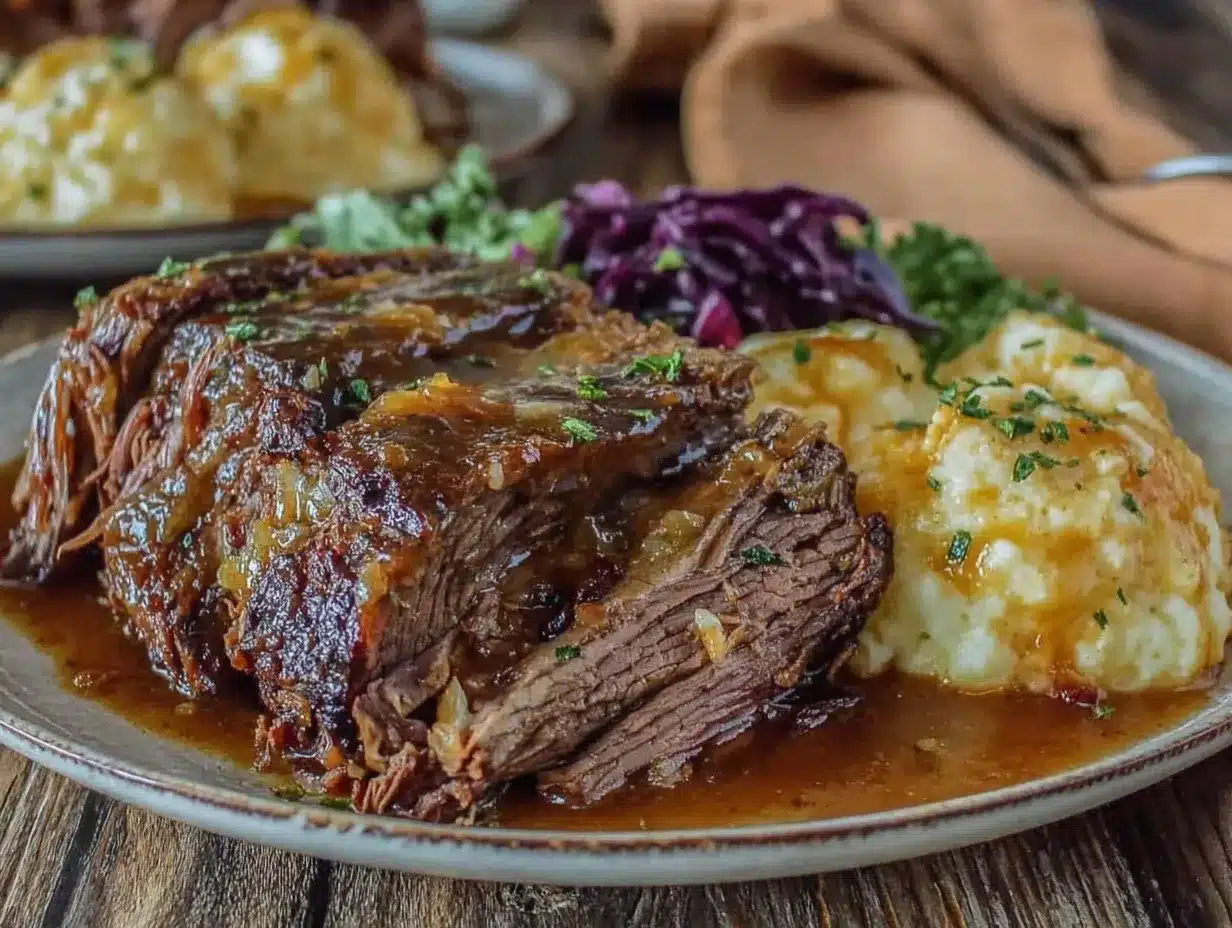
- Prepare the Marinade: In a large bowl, combine red wine vinegar, red wine, water, sliced onions, chopped carrots, bay leaves, cloves, juniper berries, black peppercorns, and brown sugar. Stir gently to mix. This mix should smell tangy and fragrant. (10 minutes)
- Marinate the Beef: Place the beef roast in a large, non-reactive container or zip-top bag. Pour the marinade over it, making sure the meat is fully submerged. Cover and refrigerate for 3 to 5 days, turning once a day to redistribute flavors. This slow soak is the secret to tender, flavorful sauerbraten. (5 minutes prep + marinating time)
- Remove and Dry: When ready to cook, take the beef out of the marinade and pat it dry with paper towels. Strain the marinade, reserving the liquid and vegetables separately. (5 minutes)
- Browning the Meat: Heat oil or lard in your Dutch oven over medium-high heat. Brown the roast on all sides until a deep golden crust forms, about 4-5 minutes per side. Browning locks in flavor and texture. (15 minutes)
- Sauté the Marinade Veggies: Remove the roast, then add the strained onions, carrots, and spices to the pot. Cook for about 5 minutes until softened and fragrant, scraping up browned bits from the bottom. (5 minutes)
- Cook the Roast: Return the beef to the pot, pour the reserved marinade liquid over it. Bring to a gentle simmer, then cover and cook on low heat for about 3 hours (or transfer to a 325°F/160°C oven). The meat should be fork-tender and juicy. (3 hours)
- Make the Gravy: Remove the meat and keep warm. Strain the cooking liquid into a saucepan. Reduce over medium heat until slightly thickened. Optionally, whisk in a bit of flour or cornstarch slurry to thicken further. Season with salt to taste. (15-20 minutes)
- Prepare the Potato Dumplings: While the roast cooks, mash the boiled potatoes until smooth. In a large bowl, combine mashed potatoes, flour, beaten egg, salt, and nutmeg. Mix gently until a soft dough forms. (10 minutes)
- Shape and Cook Dumplings: Bring a large pot of salted water to a gentle boil. Shape the dough into small balls (about the size of a golf ball). Drop dumplings carefully into the boiling water. They’re done when they float to the surface (about 10-12 minutes). Use a slotted spoon to remove and drain. (15 minutes)
- Serve: Slice the sauerbraten and plate with potato dumplings. Pour warm gravy over and add a pat of butter to dumplings if you like. (5 minutes)
Tip: Keep an eye on the simmering roast—too high heat can toughen the meat. And if the dumpling dough feels sticky, dust your hands with a little flour before shaping to avoid frustration.
Cooking Tips & Techniques
One thing I learned the hard way is that marinating time is not just a suggestion—it’s essential. Rushing the process means missing out on that signature sauerbraten tang and tenderness. Also, don’t skip drying the meat before searing; it helps achieve that perfect crust.
When browning, patience is key. Let the meat develop a deep color without moving it too much. This browning creates flavor layers that really make the dish sing.
For potato dumplings, using starchy potatoes is non-negotiable. Waxy types make the dough gummy, which is less pleasant. Also, avoid overmixing the dumpling dough; it should just come together to keep them light.
Multi-tasking helps here—start the marinade early, prep vegetables during marinating, and boil potatoes while the roast cooks. This way, the kitchen stays busy, but not chaotic.
Lastly, practice makes perfect with dumplings. My first attempts were too dense, but adjusting flour amounts and handling the dough gently made all the difference.
Variations & Adaptations
- Vegetarian Variation: Swap beef for seitan or portobello mushrooms and use vegetable broth in place of meat stock for the marinade. The flavor won’t be exactly the same, but it’s surprisingly hearty.
- Gluten-Free Adaptation: Use gluten-free flour blends for the dumplings or substitute with finely grated potato mixed with an egg and a small amount of cornstarch.
- Seasonal Twist: During fall, add a splash of apple cider vinegar instead of red wine vinegar and toss in some diced apples to the gravy for a subtle sweet contrast.
- Slow Cooker Method: After browning the beef and sautéing the veggies, transfer everything to a slow cooker and cook on low for 6-8 hours. It’s a set-it-and-forget-it option that still delivers tender meat.
- Spice It Up: Add a pinch of smoked paprika or a bay leaf more for a deeper aroma. I once tried a cinnamon stick in the marinade, which added an unexpected warmth that guests loved.
Serving & Storage Suggestions
This sauerbraten and potato dumplings dish is best served hot, right after cooking when the gravy is silky and the dumplings soft. For a classic presentation, serve with red cabbage or sauerkraut on the side—both bring a tangy crunch that complements the rich meat.
Leftovers? They store beautifully in the fridge for 3-4 days. The flavors actually mellow and deepen overnight, so the next-day meal feels even more satisfying. Reheat gently on the stove with a splash of water or broth to keep the gravy from thickening too much.
If freezing, separate meat and dumplings. Meat can last up to 3 months frozen, dumplings about a month. Thaw overnight in the fridge and reheat slowly.
Pair with a bold red wine or a malty German beer for the full experience. Honestly, it’s the kind of meal that invites slow sipping and sharing stories around the table.
Nutritional Information & Benefits
Per serving, this sauerbraten with potato dumplings provides a good balance of protein, carbohydrates, and fats. The beef offers iron and B vitamins, while the potatoes supply potassium and vitamin C.
The vinegar-based marinade may aid digestion and adds flavor without extra calories. Using moderate amounts of sugar keeps it balanced without being too sweet.
For those watching carbs, consider smaller dumpling portions or swapping potatoes with cauliflower mash. This recipe is naturally gluten-containing but can be adapted for gluten sensitivity as noted.
Overall, it’s a comforting meal that nourishes both body and soul, perfect for days when you want something grounding yet satisfying.
Conclusion
This comforting sauerbraten recipe with easy German potato dumplings is one of those dishes that quietly earns a spot in your regular rotation. It’s honest, approachable, and full of flavor that feels like a warm embrace after a long day. The balance between the tangy roast and soft dumplings is something I keep coming back to, especially when I want food that feels like a little celebration without the fuss.
Feel free to make it your own—test the spices, tweak the sides, or even try out the variations. Cooking is all about what feels right in your kitchen and on your plate. I hope this recipe brings you the same comfort and satisfaction it’s brought me over many chilly evenings.
Would love to hear how your sauerbraten turns out or any twists you try—so don’t hesitate to share!
FAQs
How long should I marinate the sauerbraten?
For the best tenderness and flavor, marinate the beef for at least 3 days in the refrigerator, turning it daily.
Can I make the potato dumplings ahead of time?
You can shape the dumplings and refrigerate them for a few hours before cooking, but they’re best fresh. Avoid freezing raw dumplings as texture may suffer.
What cut of beef is best for sauerbraten?
Chuck roast or rump roast works well due to their marbling and ability to become tender during slow cooking.
Can I use a slow cooker for this recipe?
Yes! After browning the meat and sautéing vegetables, transfer everything to a slow cooker and cook on low for 6-8 hours.
How do I fix dumplings that are too dense?
Try reducing the flour slightly or handling the dough gently without overmixing. Using starchy potatoes and mashing them well also helps keep dumplings light.
Pin This Recipe!
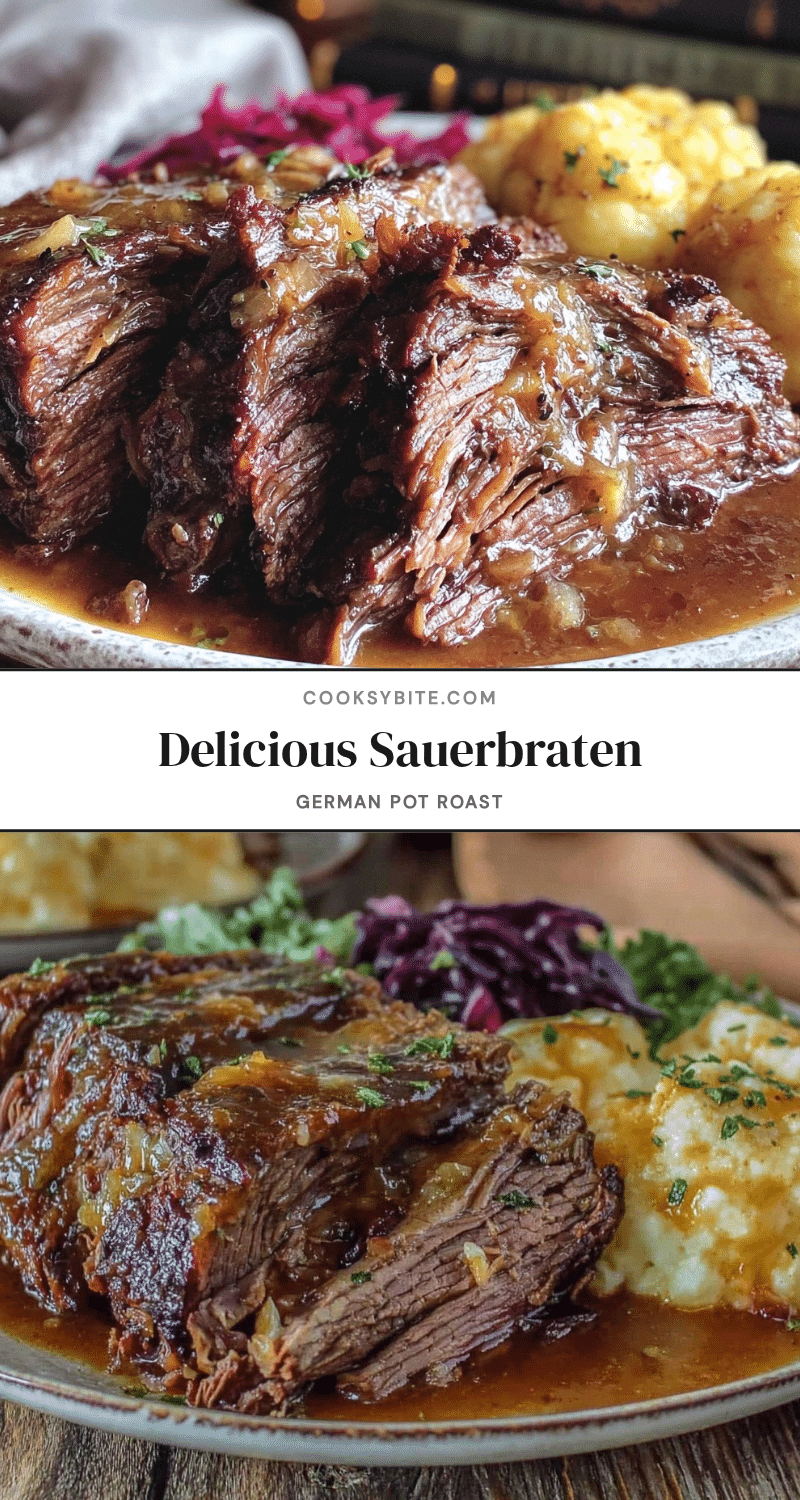
Comforting Sauerbraten Recipe with Easy German Potato Dumplings

A traditional German pot roast marinated in a tangy blend of vinegar and spices, paired with soft, pillowy potato dumplings. This recipe offers a comforting, hearty meal perfect for cozy gatherings.
- Prep Time: 15 minutes
- Cook Time: 3 hours 45 minutes
- Total Time: 3 days 4 hours
- Yield: 6 servings 1x
- Category: Main Course
- Cuisine: German
Ingredients
- 3–4 pounds beef roast (chuck or rump), preferably with marbling
- 1 cup red wine vinegar (240 ml)
- 1 cup dry red wine (240 ml), such as cabernet sauvignon
- 1 cup water (240 ml)
- 2 medium onions, sliced
- 2 medium carrots, chopped
- 2 bay leaves
- 6–8 whole cloves
- 8–10 juniper berries
- 10–12 black peppercorns
- 2 tablespoons brown sugar
- Salt, to taste
- 2 tablespoons vegetable oil or lard
- 2 pounds starchy potatoes (Russets or Yukon Gold), peeled and boiled
- 1 cup all-purpose flour (120 g)
- 1 large egg, beaten
- 1 teaspoon salt
- Pinch of nutmeg (optional)
- Butter, for serving (optional)
Instructions
- Prepare the marinade by combining red wine vinegar, red wine, water, sliced onions, chopped carrots, bay leaves, cloves, juniper berries, black peppercorns, and brown sugar in a large bowl. Stir gently to mix. (10 minutes)
- Place the beef roast in a large, non-reactive container or zip-top bag. Pour the marinade over it, ensuring the meat is fully submerged. Cover and refrigerate for 3 to 5 days, turning once daily. (5 minutes prep + marinating time)
- Remove the beef from the marinade and pat dry with paper towels. Strain the marinade, reserving the liquid and vegetables separately. (5 minutes)
- Heat oil or lard in a Dutch oven over medium-high heat. Brown the roast on all sides until a deep golden crust forms, about 4-5 minutes per side. (15 minutes)
- Remove the roast, add the strained onions, carrots, and spices to the pot. Cook for about 5 minutes until softened and fragrant, scraping up browned bits. (5 minutes)
- Return the beef to the pot, pour the reserved marinade liquid over it. Bring to a gentle simmer, cover, and cook on low heat for about 3 hours or transfer to a 325°F (160°C) oven until fork-tender. (3 hours)
- Remove the meat and keep warm. Strain the cooking liquid into a saucepan and reduce over medium heat until slightly thickened. Optionally, whisk in flour or cornstarch slurry to thicken. Season with salt to taste. (15-20 minutes)
- While the roast cooks, mash the boiled potatoes until smooth. In a large bowl, combine mashed potatoes, flour, beaten egg, salt, and nutmeg. Mix gently until a soft dough forms. (10 minutes)
- Bring a large pot of salted water to a gentle boil. Shape the dough into golf ball-sized dumplings. Drop dumplings carefully into boiling water. They are done when they float to the surface, about 10-12 minutes. Remove with a slotted spoon and drain. (15 minutes)
- Slice the sauerbraten and plate with potato dumplings. Pour warm gravy over and add a pat of butter to dumplings if desired. (5 minutes)
Notes
Marinate the beef for at least 3 days for best tenderness and flavor. Dry the meat before browning to achieve a perfect crust. Use starchy potatoes for dumplings to avoid gummy texture. If dumpling dough is sticky, dust hands with flour before shaping. Slow cooker method can be used after browning and sautéing vegetables, cooking on low for 6-8 hours. For gluten-free dumplings, substitute flour with potato starch and rice flour or cornstarch.
Nutrition
- Serving Size: 1 slice of sauerbrat
- Calories: 520
- Sugar: 6
- Sodium: 450
- Fat: 18
- Saturated Fat: 6
- Carbohydrates: 45
- Fiber: 4
- Protein: 40
Keywords: sauerbraten, German pot roast, potato dumplings, comfort food, traditional German recipe, marinated beef, easy dumplings, slow cooked beef