Late one humid evening in my tiny kitchen, I was wrestling with a bag of frozen shrimp and a stubborn packet of tapioca starch, trying to recreate the magic of my favorite dim sum spot. Honestly, I wasn’t sure if homemade har gow was something I could actually pull off — those delicate, translucent dumplings always seemed like a professional-only endeavor. But with a little patience and a lot of trial, what started as a hesitant experiment turned into a batch of perfect Cantonese dim sum har gow with tender shrimp filling that felt as good as any restaurant’s.
The wrappers were just the right thinness—slightly chewy, translucent, whisper-thin but tough enough to hold the filling snugly without tearing. And the shrimp inside? Juicy, tender, bursting with fresh flavor that made me pause mid-bite. It wasn’t a quick win; I had moments of “this won’t work” and sticky dough frustrations, but the result was worth every second. That quiet night, steaming those little parcels felt like a small, comforting victory, and it’s why this recipe stayed with me — it’s genuinely approachable, yet delivers that authentic har gow experience you don’t forget.
There’s something special about folding each dumpling by hand, watching the dough stretch and shine, knowing you’re about to eat a piece of Cantonese tradition crafted with your own two hands. It’s not just a recipe, it’s a little ritual—one that promises a taste of dim sum joy anytime you want it. And honestly, once you get the hang of these dumplings, you’ll see why I keep making them again and again—even on the busiest nights.
Why You’ll Love This Recipe
- Quick & Easy: This perfect Cantonese dim sum har gow recipe comes together in under 45 minutes once you get your ingredients ready — great for those evenings when you crave something special but don’t want to fuss for hours.
- Simple Ingredients: No need for exotic items; you’ll mostly find these in your pantry or local Asian grocery. Tapioca starch, shrimp, and a few seasonings are all it takes.
- Perfect for Entertaining: Whether it’s a weekend brunch, a casual dinner with friends, or a cozy night in, these dumplings impress without stress.
- Crowd-Pleaser: Kids, adults, and even picky eaters adore the tender shrimp filling wrapped in that silky, delicate dough.
- Unbelievably Delicious: The harmony of textures—the chew of the wrapper and the juicy shrimp inside—makes this recipe stand out from the usual frozen dim sum you find at the store.
- This isn’t just any har gow recipe: the dough uses a perfect balance of wheat and tapioca starch for that signature translucent look and tender bite. The shrimp filling gets a quick marinade that keeps it juicy and flavorful, not rubbery or bland.
- Trust me, this recipe will give you that satisfying moment when you bite into a har gow and it feels like you’re right back in a bustling dim sum house in Hong Kong.
What Ingredients You Will Need
This recipe uses simple, wholesome ingredients to deliver bold flavor and satisfying texture without the fuss. Most are pantry staples or easy to find at any Asian market. Here’s what you’ll need for the dough and the filling:
- For the Dough:
- Wheat starch – 100g (provides elasticity and chewiness)
- Tapioca starch – 50g (for that translucent, slightly sticky texture)
- Boiling water – 150ml (helps gelatinize the starch)
- Vegetable oil – 1 tsp (adds smoothness to the dough)
- A pinch of salt
- For the Shrimp Filling:
- Fresh shrimp – 250g, peeled and deveined, roughly chopped (choose fresh or high-quality frozen shrimp for best texture)
- Water chestnuts – 50g, finely chopped (adds crunch and contrast)
- Green onions – 2 stalks, minced (for a subtle aromatic note)
- Ginger – 1 tsp, grated (adds warmth and depth)
- Shao Xing rice wine or dry sherry – 1 tbsp (helps tenderize shrimp)
- Light soy sauce – 1 tsp
- Sesame oil – 1/2 tsp
- White pepper – 1/4 tsp
- Salt – 1/4 tsp
- Cornstarch – 1 tsp (binds the filling slightly)
If you can’t find water chestnuts, jicama or finely chopped bamboo shoots also work nicely. For a gluten-free option, ensure your soy sauce is gluten-free or swap with tamari. I like using brands like Lee Kum Kee for soy sauce and Bob’s Red Mill for starches to get consistent results.
Equipment Needed
- Mixing bowls – for dough and filling preparation
- Steamer basket or bamboo steamer – essential for that gentle, even cooking (a metal steamer insert over a pot works too)
- Rolling pin or small dough roller – to roll the dough thinly
- Pastry brush – handy for brushing water to seal dumplings
- Sharp knife or kitchen scissors – for chopping shrimp and other ingredients
- Measuring cups and spoons – accurate measurements matter for dough texture
- Plastic wrap or damp towel – to cover dough and prevent drying
If you don’t have a bamboo steamer, a metal steaming rack or even a heatproof plate set on a rack inside a pot can work. I’ve tried silicone steamers too, but bamboo gives a subtle fragrance that’s hard to beat. For budget options, a basic metal steamer insert fits most pots and does the job fine.
Preparation Method
- Prepare the Dough: In a heatproof bowl, combine the wheat starch, tapioca starch, and salt. Slowly pour the boiling water over the starch mixture, stirring quickly with chopsticks or a spatula until a rough dough forms. Add the vegetable oil and stir until combined. Let it cool slightly—about 5 minutes—so you can handle it without burning your fingers.
- Knead the Dough: Once cool enough, knead the dough on a clean surface until smooth and elastic, around 5-7 minutes. If the dough feels too dry, add a tiny splash of boiling water, but be careful—too wet and it gets sticky.
- Cover and Rest: Wrap the dough in plastic wrap or cover with a damp towel and let it rest for 20 minutes. This helps the starches to hydrate and makes rolling easier.
- Prepare the Filling: In a bowl, combine the chopped shrimp, water chestnuts, green onions, ginger, Shao Xing wine, soy sauce, sesame oil, white pepper, salt, and cornstarch. Mix well until the mixture becomes slightly sticky but still chunky. Chill the filling while the dough rests; cold filling is easier to handle.
- Roll and Cut Wrappers: Divide the dough into small portions (about 18-20 pieces). Roll each portion into a ball, then flatten with your palm. Use a rolling pin to roll each ball into a thin, round wrapper about 3 inches (7.5 cm) in diameter. The dough should be translucent but not tear easily.
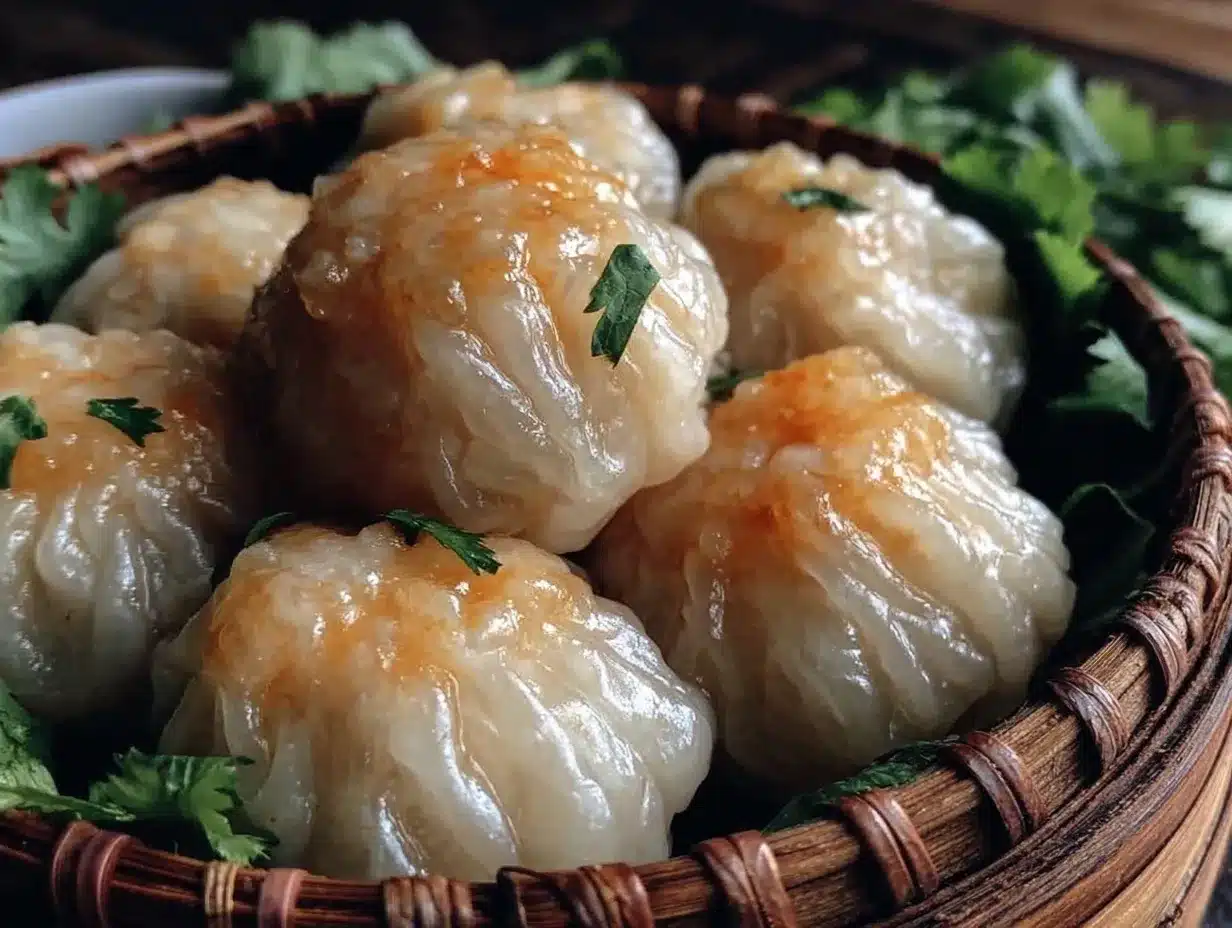
- Fill and Fold Dumplings: Place about 1 tablespoon of filling in the center of each wrapper. Wet the edges lightly with water using your finger or a pastry brush. Fold the wrapper in half, gently pleating one side over the other to form the classic crescent shape. Aim for 7-8 pleats — this part takes practice but don’t stress if they’re not perfect!
- Steam the Har Gow: Line your steamer basket with parchment paper or cabbage leaves to prevent sticking. Arrange the dumplings with space between them. Steam over boiling water for 6-8 minutes until the wrappers turn translucent and the shrimp filling is cooked through (shrimp will be opaque and firm, not rubbery).
- Serve Immediately: Serve hot with soy sauce or chili oil on the side. The dumplings are best enjoyed fresh but can be reheated gently (more on that later).
Quick tip: If your dough tears while wrapping, dampen the edges and pinch gently instead of stretching too much. And if the filling feels too wet, add a little more cornstarch next time to keep it snug inside the wrapper.
Cooking Tips & Techniques
One key to perfect Cantonese dim sum har gow is getting the dough just right. Too thick, and it feels doughy; too thin, and it tears during folding or steaming. Using a mix of wheat starch and tapioca starch is traditional and gives that signature translucent, slightly chewy texture that sets har gow apart.
When mixing the filling, don’t over-process the shrimp. You want a bit of texture, so chop rather than blitz in a food processor. The quick marinade with Shao Xing wine and sesame oil not only flavors the shrimp but keeps it tender and juicy under the heat of the steamer.
Steaming time matters — too short, and the shrimp may be undercooked; too long, and it gets rubbery. Keep an eye on the translucent wrappers as a visual cue and aim for that 6-8 minute window.
One mistake I made early on was overcrowding the steamer basket. Dumplings need space to puff slightly and avoid sticking together. Give them room and use parchment or cabbage leaves to keep them from sticking to the basket.
Lastly, practice makes perfect with the pleating. Don’t worry about perfection — each dumpling will have character, and that’s part of the charm.
Variations & Adaptations
- Vegetarian Version: Swap the shrimp with finely chopped king oyster mushrooms and water chestnuts for a similar texture. Add a splash of soy sauce and a pinch of five-spice powder to mimic the savory depth.
- Gluten-Free Option: This recipe is naturally gluten-free if you use gluten-free soy sauce. Tapioca and wheat starch don’t contain gluten, so it’s safe for most gluten-sensitive diets.
- Spicy Twist: Add finely minced fresh chili or a teaspoon of chili oil into the shrimp filling for a subtle heat that balances the sweetness of the shrimp.
- Seasonal Filling: In spring, try adding chopped fresh peas or asparagus tips to the shrimp mix for a fresh, bright bite.
- Personally, I once replaced the shrimp with finely minced lobster for a luxurious upgrade that wowed a dinner party—though it’s pricier, it’s an indulgent treat for special occasions.
Serving & Storage Suggestions
Serve your har gow immediately after steaming while the wrappers are still soft and slightly sticky. They pair perfectly with soy sauce, a splash of black vinegar, or your favorite chili oil. For a classic dim sum experience, serve alongside steamed pork buns, siu mai, and jasmine tea.
If you have leftovers, store them in an airtight container in the refrigerator for up to 24 hours. To reheat, steam the dumplings for 3-4 minutes until warmed through—avoid microwaving, which can make the wrappers tough or dry.
Flavors develop subtly after resting, but the texture is always best fresh. If you want to prep ahead, you can freeze the uncooked dumplings on a parchment-lined tray, then transfer to a freezer bag. Steam directly from frozen, adding a few extra minutes to the cooking time.
Nutritional Information & Benefits
Each serving of these perfect Cantonese dim sum har gow offers a satisfying portion of lean protein from the shrimp, which is low in calories and rich in omega-3 fatty acids. The use of tapioca and wheat starch keeps the dough light and gluten-free, depending on your soy sauce choice.
This recipe is naturally low fat and packed with flavor, making it a healthier alternative to fried dumplings. Plus, shrimp provides essential nutrients like vitamin B12 and selenium, supporting overall wellness.
Be aware that this recipe contains shellfish and soy, common allergens, so adjust accordingly for dietary restrictions.
Conclusion
This perfect Cantonese dim sum har gow recipe brings a little slice of Cantonese tradition right into your kitchen. It’s approachable enough to make on a weeknight but special enough to impress guests craving authentic dim sum. I love how the tender shrimp filling wrapped in that delicate, translucent dough always brings a smile—like a little celebration in every bite.
Feel free to tweak the filling, experiment with pleats, or make a batch for the freezer to enjoy later. It’s a recipe that invites creativity and rewards patience, and I’m confident once you try it, it’ll become a favorite in your home too.
Give it a try, and don’t be shy about sharing your own twists or questions—I can’t wait to hear how your har gow adventure goes!
FAQs
What is the secret to making har gow wrappers so translucent?
The key is using a combination of wheat starch and tapioca starch with boiling water to gelatinize the starches, creating that translucent, slightly chewy texture. Kneading and resting the dough also help.
Can I use frozen shrimp for the filling?
Yes, but make sure to thaw and drain excess water thoroughly before chopping. This keeps the filling from becoming watery and helps maintain the right texture.
How do I prevent the dumplings from sticking to the steamer?
Line the steamer basket with parchment paper, cabbage leaves, or even banana leaves. Also, leave enough space between dumplings to avoid sticking.
Can I prepare har gow ahead of time?
Absolutely! You can assemble the dumplings and freeze them on a tray before storing in a bag. Steam directly from frozen, adding a couple of extra minutes to cooking time.
What should I serve with har gow for a full meal?
Har gow pairs beautifully with other dim sum favorites like siu mai, steamed pork buns, or vegetable dumplings. A pot of jasmine or oolong tea completes the experience perfectly.
Pin This Recipe!
Perfect Cantonese Dim Sum Har Gow Recipe Easy Tender Shrimp Filling

This recipe delivers authentic Cantonese dim sum har gow with tender shrimp filling wrapped in delicate, translucent dough. It’s approachable for home cooks and yields juicy, flavorful dumplings perfect for any occasion.
- Prep Time: 25 minutes
- Cook Time: 8 minutes
- Total Time: 33 minutes
- Yield: 18-20 dumplings 1x
- Category: Appetizer
- Cuisine: Cantonese
Ingredients
- 100g wheat starch (about 3.5 oz)
- 50g tapioca starch (about 1.75 oz)
- 150ml boiling water (about 2/3 cup)
- 1 tsp vegetable oil
- A pinch of salt
- 250g fresh shrimp, peeled and deveined, roughly chopped (about 9 oz)
- 50g water chestnuts, finely chopped (about 1.75 oz)
- 2 stalks green onions, minced
- 1 tsp grated ginger
- 1 tbsp Shao Xing rice wine or dry sherry
- 1 tsp light soy sauce
- 1/2 tsp sesame oil
- 1/4 tsp white pepper
- 1/4 tsp salt
- 1 tsp cornstarch
Instructions
- Prepare the Dough: In a heatproof bowl, combine wheat starch, tapioca starch, and salt. Slowly pour boiling water over the starch mixture, stirring quickly until a rough dough forms. Add vegetable oil and stir until combined. Let cool about 5 minutes.
- Knead the Dough: Knead dough on a clean surface until smooth and elastic, about 5-7 minutes. Add a tiny splash of boiling water if too dry, but avoid stickiness.
- Cover and Rest: Wrap dough in plastic wrap or cover with a damp towel and let rest for 20 minutes.
- Prepare the Filling: In a bowl, mix chopped shrimp, water chestnuts, green onions, ginger, Shao Xing wine, soy sauce, sesame oil, white pepper, salt, and cornstarch until slightly sticky but chunky. Chill while dough rests.
- Roll and Cut Wrappers: Divide dough into 18-20 portions. Roll each into a ball, flatten with palm, then roll into thin, round wrappers about 3 inches (7.5 cm) diameter.
- Fill and Fold Dumplings: Place about 1 tablespoon filling in center of each wrapper. Wet edges with water, fold in half, pleating one side over the other to form crescent shape with 7-8 pleats.
- Steam the Har Gow: Line steamer basket with parchment paper or cabbage leaves. Arrange dumplings with space between. Steam over boiling water for 6-8 minutes until wrappers are translucent and shrimp is cooked through.
- Serve Immediately: Serve hot with soy sauce or chili oil. Reheat by steaming for 3-4 minutes if needed.
Notes
If dough tears while wrapping, dampen edges and pinch gently instead of stretching. Use cold filling for easier handling. Avoid overcrowding steamer basket to prevent sticking. For gluten-free, use tamari or gluten-free soy sauce. Dumplings can be frozen uncooked and steamed from frozen with extra cooking time.
Nutrition
- Serving Size: About 3-4 dumplings
- Calories: 70
- Sugar: 0.2
- Sodium: 220
- Fat: 1.5
- Saturated Fat: 0.2
- Carbohydrates: 9
- Fiber: 0.3
- Protein: 5
Keywords: har gow, dim sum, shrimp dumplings, Cantonese recipe, steamed dumplings, Chinese appetizer, gluten-free dumplings