Introduction
“You seriously don’t need a grill for a steak that impresses.” That’s what my friend Jake said last time he came over, watching me fiddle with the cast iron and a slab of ribeye that was thicker than my hand. Honestly, I was skeptical at first—grilling has always felt like the gold standard for steak nights, right? But when the garlic herb butter started melting over that perfectly browned crust, the kitchen suddenly smelled like a steakhouse. The reverse-sear method was a game-changer for me, especially on those nights when I just wanted a juicy steak without the fuss of firing up the grill.
I remember the first time I tried this technique; I was aiming for medium-rare but wasn’t sure if baking then searing would actually yield the tender, flavorful steak I wanted. Spoiler: it did. In fact, I ended up making it three times that week because it was just so darn good and easy. The garlic herb butter? A small touch that turned the whole thing into something special. This recipe stuck with me because it’s reliable—no wild guesswork or fancy equipment, just a trusty cast iron skillet and some patience. If you’re craving a steak that’s juicy inside, crusty outside, and dripping with buttery goodness, this is the one to try. No smoke alarms, no weather worries, and a result that’ll have you quietly proud every single time.
Why You’ll Love This Recipe
After countless attempts at steak perfection, I can confidently say this Perfect Cast Iron Reverse-Sear Ribeye with Garlic Herb Butter recipe stands out for a bunch of reasons:
- Quick & Easy: The whole process takes about 45 minutes, with most of it hands-off. Perfect for those busy weeknights or spontaneous steak cravings.
- Simple Ingredients: No fancy or hard-to-find items here. Just a good ribeye, some butter, fresh herbs, and garlic. You probably already have these sitting in your kitchen.
- Perfect for Dinner Parties: This steak recipe impresses guests without stressing you out—just what you want when you’re trying to enjoy the evening.
- Crowd-Pleaser: Whether you’re feeding steak lovers or picky eaters, this method consistently delivers juicy, tender results that everyone raves about.
- Unbelievably Delicious: The reverse-sear technique creates that coveted crust and a perfectly even pink center, while the garlic herb butter adds a luscious, aromatic finish.
What sets this ribeye apart? It’s the slow oven start that cooks the steak gently, avoiding that dreaded overcooked ring near the edges you get with traditional searing-first methods. Plus, the garlic herb butter isn’t just any topping—it seeps into every crevice as it melts, making each bite a little celebration. If you want a steak that’s restaurant-quality but made in your own kitchen, this recipe is the one to trust. Honestly, it’s the kind of steak you’ll want to make over and over, especially when paired with sides like a fresh salad or some crispy garlic chicken from the blog for a full meal experience.
What Ingredients You Will Need
This recipe uses simple, wholesome ingredients to deliver bold flavor and satisfying texture without the fuss. Most are pantry staples or easy to find at your local market, making it perfect for last-minute steak nights.
- Ribeye steak: 1 thick-cut, about 1.5 to 2 inches thick (roughly 12-16 oz or 340-450 g). Look for well-marbled cuts, preferably USDA Choice or better for the best flavor.
- Salt: Kosher salt or sea salt, for seasoning generously.
- Black pepper: Freshly cracked, to taste.
- Unsalted butter: 3 tablespoons, softened (I like Plugrá for its rich flavor).
- Fresh garlic: 3 cloves, minced or finely grated (adds that punch without overpowering).
- Fresh herbs: 1 tablespoon each of finely chopped rosemary and thyme (you can also use oregano or parsley if you prefer).
- Olive oil: 1 tablespoon, for searing (choose extra virgin for quality, but any neutral oil with a high smoke point works).
- Optional: A squeeze of lemon juice in the butter for a subtle brightness.
If you want to switch things up, swapping the ribeye for a boneless strip steak works well, though the fat content won’t be quite the same. For a dairy-free twist, try coconut oil instead of butter, but I’ve found butter really brings the flavor home. And if fresh herbs aren’t handy, a teaspoon of dried Italian seasoning can substitute in a pinch.
Equipment Needed
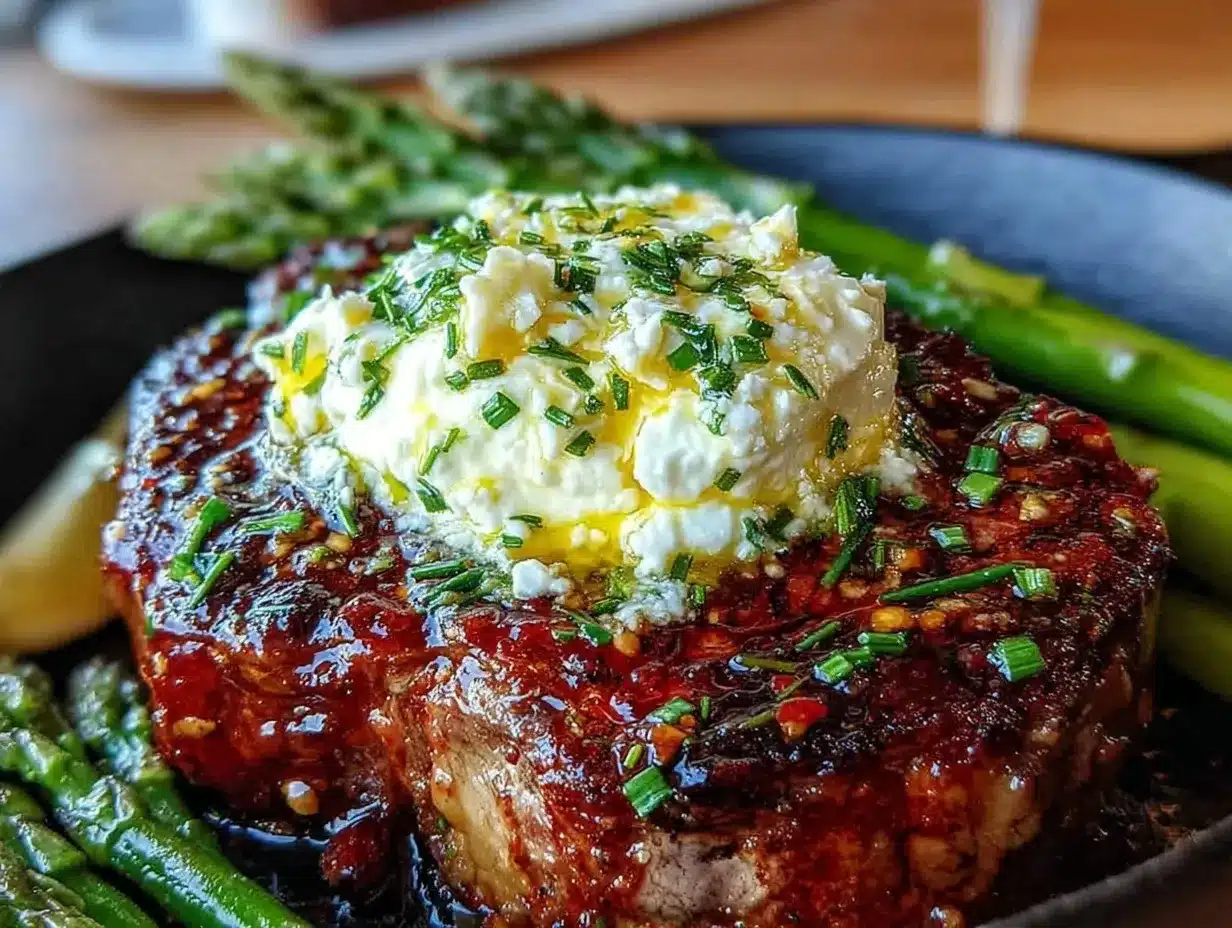
- Cast iron skillet: A trusty 10 to 12-inch pan is ideal for even heat distribution and that sought-after sear. I’ve tried cheaper pans before, but nothing beats cast iron for this recipe.
- Oven-safe wire rack: For placing the steak in the oven so air circulates evenly around it. If you don’t have one, a baking sheet alone can work, but the rack helps prevent steaming.
- Instant-read meat thermometer: Essential for nailing the perfect temperature without guesswork. Trust me, it’s worth it.
- Tongs: For flipping the steak without piercing it and losing juices.
- Small bowl and spoon: To mix the garlic herb butter easily.
Don’t have a wire rack? No worries—you can improvise with an oven-safe cooling rack or even crumpled foil on a baking sheet to elevate the steak slightly. And if you’re on a budget, hand-me-down cast iron pans work just as well once seasoned properly. Just keep them dry and lightly oiled after each use to avoid rust.
Preparation Method
- Preheat your oven to 275°F (135°C). Place the wire rack on a baking sheet.
- Pat the ribeye dry with paper towels. This helps the crust form later.
- Generously season both sides of the steak with kosher salt and freshly cracked black pepper. Don’t be shy—you want a good layer to bring out flavors.
- Place the steak on the wire rack, then into the preheated oven. Roast until the internal temperature reaches about 110°F (43°C) for medium-rare, which should take around 20–30 minutes depending on thickness. Use the instant-read thermometer to check.
- While the steak is in the oven, prepare the garlic herb butter: In a small bowl, mix softened butter, minced garlic, chopped rosemary, thyme, and a pinch of salt. Set aside.
- Once the steak reaches temperature, heat the cast iron skillet on high. Add olive oil and let it get shimmering hot—this usually takes 2-3 minutes.
- Carefully transfer the steak to the skillet. Sear each side for about 1-2 minutes until a deep golden-brown crust forms. Don’t forget to sear the edges too, holding the steak with tongs.
- During the last 30 seconds of searing, add the garlic herb butter to the skillet. Spoon the melted butter over the steak repeatedly to infuse flavor.
- Remove the steak from the pan and let it rest on a cutting board for 5-10 minutes. This step is crucial—resting locks in the juices and gives you that tender bite.
- Slice against the grain and serve immediately. You can drizzle any leftover garlic butter from the pan on top.
Pro tip: If you find the crust isn’t as dark as you like, you can add an extra 30 seconds per side during searing, but watch closely to avoid burning. And don’t skip resting—even the best sear won’t save a steak that’s lost its juices.
Cooking Tips & Techniques
Getting the perfect cast iron reverse-sear ribeye is all about timing and temperature control. Here’s what I’ve learned through trial and error:
- Patience is key. Slow roasting the steak in the oven lets it cook evenly without overcooking the edges. Trying to rush this step usually means a steak that’s tough or unevenly cooked.
- Use a reliable meat thermometer. Nothing beats the peace of mind that comes from seeing the internal temp instead of guessing. I swear by my ThermoWorks Thermapen for accuracy.
- Don’t overcrowd the skillet. Sear the steak on its own to get that beautiful crust. Crowding cools the pan and causes steaming, which kills the crust.
- Keep the butter ready but don’t add it too early. Adding garlic herb butter right at the end prevents burning the garlic and herbs, keeping the flavor fresh and vibrant.
- Rest before slicing. I can’t stress this enough—resting lets the juices redistribute, so you get a juicy, tender bite instead of a dry one.
One time, I rushed the sear and ended up with a steak that had a grayish edge—lesson learned! Now, I stick religiously to the timing and get consistent results. Plus, multitasking is easier with this method because you can prep the butter and sides while the steak is in the oven, making dinner flow smoothly.
Variations & Adaptations
This recipe is flexible enough to suit different tastes and dietary needs without losing its signature charm.
- For a spicy kick: Add a pinch of smoked paprika or cayenne pepper to the garlic herb butter. It adds warmth and complexity without overpowering the beef.
- Seasonal herbs swap: In spring, try fresh tarragon or chives instead of rosemary and thyme for a lighter, brighter flavor profile.
- Low-carb or keto-friendly: This recipe is naturally low-carb, but you can pair it with cauliflower mash or sautéed greens to keep it light and nutritious.
- Dairy-free option: Replace butter with ghee or avocado oil infused with garlic and herbs for a similar richness without dairy.
- Alternative cooking methods: If you prefer, you can reverse-sear ribeye on a grill by slowly cooking it over indirect heat before finishing on direct flames, but the cast iron version is my go-to for rainy days.
I once tried a combo of garlic herb butter with a drizzle of truffle oil for a luxurious twist—it was a hit at a dinner party and paired beautifully with some pink velvet bundt cake served for dessert, proving steak nights can be fancy yet effortless.
Serving & Storage Suggestions
Serve your ribeye hot off the cutting board with a pat of garlic herb butter melting on top. It pairs wonderfully with roasted vegetables, mashed potatoes, or even a fresh arugula salad dressed simply with lemon and olive oil.
For beverages, a bold red wine or a classic cocktail like an Old Fashioned complements the richness perfectly. If you’re aiming for a full meal experience, sides like cherry chocolate brownies for dessert make for an indulgent finish.
Leftovers keep well wrapped in the fridge for 2-3 days. Reheat gently in a low oven (around 250°F or 120°C) to avoid overcooking, or briefly in a skillet with a splash of water to steam it slightly. Avoid the microwave as it tends to toughen the meat. Flavors often deepen after resting overnight, so if you can resist, the next day’s steak sandwiches or salads are even better.
Nutritional Information & Benefits
A 12-ounce (340 g) ribeye steak typically contains around 700-800 calories, with approximately 60 grams of protein and 55 grams of fat, depending on marbling. It’s a great source of iron, zinc, and B vitamins, which support energy and immune function.
The garlic and fresh herbs add antioxidants and anti-inflammatory benefits, while using unsalted butter lets you control sodium intake. This recipe fits well into low-carb, paleo, and ketogenic diets.
Personally, I appreciate how this steak satisfies my protein needs and feels like a treat without complicated prep or processed ingredients. It’s a reminder that good nutrition can be delicious and downright comforting.
Conclusion
This Perfect Cast Iron Reverse-Sear Ribeye with Garlic Herb Butter recipe is a keeper—simple enough to whip up any night, yet impressive enough for special occasions. The method takes the guesswork out of cooking steak and delivers that juicy, tender texture you crave. Plus, the garlic herb butter adds just the right touch of flavor that lingers without overpowering.
Feel free to make it your own by swapping herbs or trying that spicy twist I mentioned. I love this steak because it’s reliable and satisfying, one of those recipes that I keep coming back to when I want a no-fail, crowd-pleasing meal. If you try it out, I’d love to hear how it turns out or what tweaks you make—drop your thoughts below and share the steak love!
Now, it’s time to get that skillet hot and enjoy a steak night that’s all about flavor, ease, and a little kitchen magic.
FAQs
What is the reverse-sear method for cooking steak?
The reverse-sear method involves cooking the steak slowly at a low temperature first (usually in the oven), then finishing it with a high-heat sear in a skillet. This technique ensures even cooking and a perfect crust.
How do I know when the ribeye is done?
Using an instant-read thermometer is the best way. For medium-rare, aim for an internal temperature of about 130°F (54°C) after resting. The steak will continue to cook slightly after removal from heat.
Can I use this method for other cuts of steak?
Definitely! Thick cuts like strip steak, filet mignon, or even T-bone work well with reverse searing, but thinner cuts might cook too quickly in the oven before searing.
How long should I rest the steak after cooking?
Rest your steak for 5 to 10 minutes tented loosely with foil. This allows the juices to redistribute, giving you a tender, juicy bite.
What sides pair well with garlic herb butter ribeye?
Roasted vegetables, mashed potatoes, sautéed greens, or even a fresh salad complement this steak beautifully. For dessert, treats like decadent red wine chocolate cake fit the bill for a satisfying end to your meal.
Pin This Recipe!
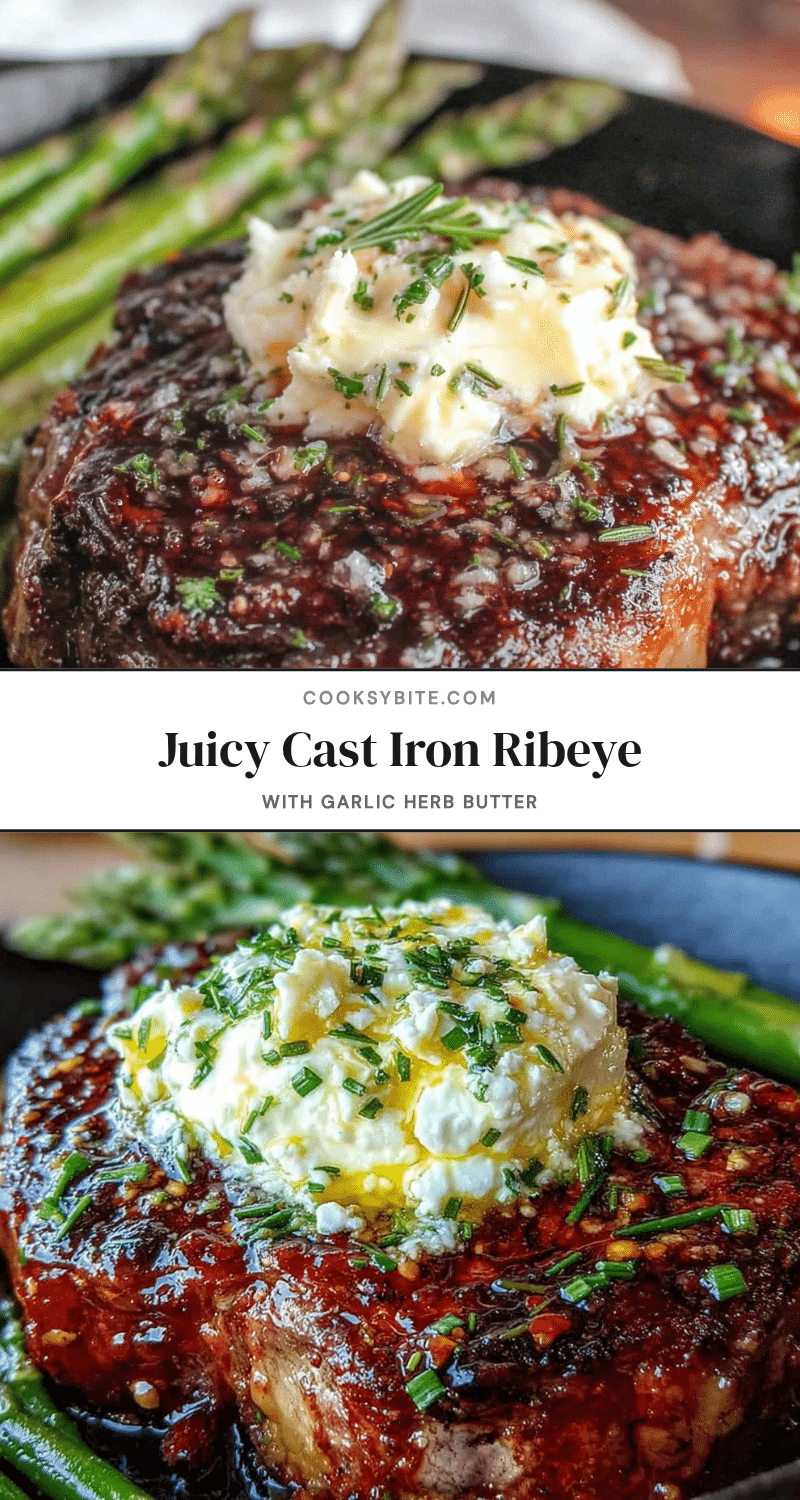
Perfect Cast Iron Reverse-Sear Ribeye Recipe with Garlic Herb Butter for Easy Juicy Steak
A simple and reliable reverse-sear ribeye steak recipe cooked in a cast iron skillet with garlic herb butter, delivering a juicy, tender steak with a perfect crust.
- Prep Time: 10 minutes
- Cook Time: 30 minutes
- Total Time: 40 minutes
- Yield: 1 serving 1x
- Category: Main Course
- Cuisine: American
Ingredients
- 1 thick-cut ribeye steak, about 1.5 to 2 inches thick (12–16 oz or 340–450 g)
- Kosher salt or sea salt, for seasoning generously
- Freshly cracked black pepper, to taste
- 3 tablespoons unsalted butter, softened
- 3 cloves fresh garlic, minced or finely grated
- 1 tablespoon fresh rosemary, finely chopped
- 1 tablespoon fresh thyme, finely chopped
- 1 tablespoon olive oil (extra virgin or any neutral oil with high smoke point)
- Optional: a squeeze of lemon juice in the butter
Instructions
- Preheat your oven to 275°F (135°C). Place the wire rack on a baking sheet.
- Pat the ribeye dry with paper towels to help the crust form later.
- Generously season both sides of the steak with kosher salt and freshly cracked black pepper.
- Place the steak on the wire rack, then into the preheated oven. Roast until the internal temperature reaches about 110°F (43°C) for medium-rare, about 20–30 minutes depending on thickness. Use an instant-read thermometer to check.
- While the steak is in the oven, prepare the garlic herb butter: In a small bowl, mix softened butter, minced garlic, chopped rosemary, thyme, and a pinch of salt. Set aside.
- Once the steak reaches temperature, heat the cast iron skillet on high. Add olive oil and let it get shimmering hot (2-3 minutes).
- Carefully transfer the steak to the skillet. Sear each side for about 1-2 minutes until a deep golden-brown crust forms. Sear the edges as well, holding the steak with tongs.
- During the last 30 seconds of searing, add the garlic herb butter to the skillet. Spoon the melted butter over the steak repeatedly to infuse flavor.
- Remove the steak from the pan and let it rest on a cutting board for 5-10 minutes to lock in the juices.
- Slice against the grain and serve immediately. Drizzle any leftover garlic butter from the pan on top.
Notes
Use a reliable instant-read thermometer for perfect doneness. Rest the steak for 5-10 minutes before slicing to retain juices. If crust is not dark enough, add 30 seconds per side during searing but watch closely to avoid burning. Avoid overcrowding the skillet to maintain a good sear. For dairy-free option, substitute butter with ghee or avocado oil infused with garlic and herbs.
Nutrition
- Serving Size: 1 ribeye steak (12-1
- Calories: 750
- Sodium: 300
- Fat: 55
- Saturated Fat: 25
- Carbohydrates: 1
- Protein: 60
Keywords: ribeye steak, reverse sear, cast iron skillet, garlic herb butter, juicy steak, easy steak recipe, medium-rare steak