It was one of those quiet Sunday afternoons when I found myself with nothing but a stubborn craving for something sweet and a fridge full of eggs and cream. Honestly, I wasn’t planning on making crème brûlée that day—just a quick dessert to wrap up a long week. But as I stood in the kitchen, the idea of that silky custard topped with a crisp, caramelized sugar crust popped into my head, and I couldn’t shake it. I remember thinking, “Could I pull off that perfect caramelized crust without a fancy torch?”
The first attempt was a bit of an experiment—half curiosity, half desperation for something comforting. I didn’t expect much, but the moment I cracked through the brittle, golden shell and the creamy custard melted on my tongue, I was hooked. That balance of textures, the subtle vanilla sweetness, and the little crackle under my spoon made me realize crème brûlée isn’t just a fancy restaurant dessert—it can be your quiet kitchen victory, too.
After a few tries tweaking the timing and technique, I settled on a recipe that delivers that classic French creamy texture with a perfectly caramelized crust every single time. It’s become my go-to for impressing guests or indulging when I need a little culinary reset. What I love most is how this recipe feels approachable yet truly special—like you’re treating yourself to a small luxury without the fuss.
It’s funny how something so simple can feel so satisfying. That’s why this creamy French crème brûlée with perfect caramelized crust stuck with me—it’s not just dessert, it’s a little moment of joy you can recreate at home, no matter your skill level in the kitchen.
Why You’ll Love This Recipe
After making this creamy French crème brûlée recipe more times than I can count, I can say with confidence it’s a dessert that checks all the boxes. Here’s why it might become your new favorite, too:
- Quick & Easy: You can have it ready in under an hour (plus chilling time), perfect for last-minute dinner guests or a weekend treat.
- Simple Ingredients: No need to hunt down obscure items—just cream, eggs, sugar, and vanilla, all pantry staples for most kitchens.
- Perfect for Special Occasions: Whether you’re celebrating a birthday, hosting a dinner party, or just want to feel fancy on a Tuesday, this recipe fits the bill.
- Crowd-Pleaser: It’s a classic for a reason—kids, adults, everyone loves cracking through that caramelized crust into the smooth, luscious custard.
- Unbelievably Delicious: The combination of creamy, velvety custard and the crunchy, caramelized sugar top is seriously next-level comfort food.
What sets this crème brûlée apart is the little details—like using real vanilla bean for a deep, aromatic flavor and mastering the caramelization technique that gives you that perfect crack every time. I’ve found that blending the custard gently without over-whisking keeps it silky and smooth, avoiding any unwanted bubbles or graininess.
Honestly, it’s the kind of dessert that makes you pause and savor the moment. Whether you’re sharing it with someone special or indulging solo, it’s a comforting, elegant treat that never feels over the top. That’s why this recipe continues to be my quiet favorite for those times when you want something both simple and impressive.
What Ingredients You Will Need
This creamy French crème brûlée recipe uses straightforward, wholesome ingredients to deliver a classic, indulgent flavor and a silky texture without any fuss. Most of these you probably have on hand already, and a few tips on choosing the best versions will make all the difference.
- Heavy Cream – 2 cups (480 ml): The rich base for your custard. I prefer a brand like Horizon Organic for its creamy texture and fresh taste.
- Vanilla Bean – 1 whole bean (or 2 teaspoons vanilla extract): For that authentic, aromatic flavor. Scrape out the seeds to infuse the custard deeply. If you don’t have a vanilla bean, pure vanilla extract works fine but won’t be quite as intense.
- Large Egg Yolks – 5 yolks (about 100 g): These are the thickening agents that give the custard its creamy body. Room temperature yolks whisk better.
- Granulated Sugar – 1/2 cup (100 g) for custard, plus extra for topping: Use fine granulated sugar; I like Domino for consistent caramelization. The sugar in the custard sweetens it gently, while the topping is what you’ll caramelize for the crust.
- Salt – A pinch: Balances the sweetness and enhances the flavors.
Substitution tips: For a dairy-free version, swap heavy cream with full-fat coconut milk, which adds a subtle coconut flavor but keeps the creaminess. Use organic eggs if possible for better flavor and color.
Note: If you want to add a twist, a splash of Grand Marnier or other orange liqueur can be stirred in after the custard sets for a lovely citrus note.
Equipment Needed
- Ramekins – 4 to 6 small (6-ounce/180 ml) dishes: Essential for portioning the custard and creating that classic brûlée presentation. I use ceramic ramekins from Le Creuset, but any oven-safe ramekin will do.
- Baking Dish or Roasting Pan: For the water bath (bain-marie) to gently cook the custard evenly. A deep enough dish to hold the ramekins and water halfway up their sides is perfect.
- Kitchen Torch: For caramelizing the sugar crust. A handheld butane torch works best. If you don’t have one, you can use your oven’s broiler, but watch it closely to avoid burning.
- Whisk and Mixing Bowls: For blending the custard ingredients smoothly. I like stainless steel bowls for easy cleanup.
- Fine Mesh Sieve: To strain the custard mixture and ensure a silky texture without lumps or cooked egg bits.
- Measuring Cups and Spoons: For precise ingredient amounts. Accuracy matters here!
If budget is tight, you can find affordable baking sets that include ramekins and a roasting pan. As for the torch, I recommend investing in a small butane torch—it’s handy for more than just crème brûlée.
Preparation Method
- Preheat your oven to 325°F (160°C). This moderate temperature ensures gentle cooking for smooth custard.
- Prepare the vanilla infusion: Pour the 2 cups (480 ml) heavy cream into a saucepan. Split the vanilla bean lengthwise, scrape out the seeds, and add both seeds and pod to the cream. Warm over medium heat just until you see tiny bubbles forming around the edges—do not boil. This takes about 5 minutes. Then remove from heat and let steep for 15 minutes to extract maximum flavor.
- Meanwhile, whisk the egg yolks: In a mixing bowl, combine 5 large egg yolks (100 g) with 1/2 cup (100 g) granulated sugar and a pinch of salt. Whisk gently until the mixture is pale and slightly thickened, roughly 2 minutes. Avoid vigorous whisking to prevent incorporating too much air.
- Strain the cream: Remove the vanilla pod from the cream and slowly pour the warm cream into the yolk mixture through a fine mesh sieve. This step catches any cooked egg bits and vanilla pod pieces, ensuring a silky custard. Stir gently to combine.
- Divide the custard: Pour the mixture evenly into 4 to 6 ramekins, filling them about 3/4 full.
- Set up the water bath: Place the ramekins in a deep baking dish or roasting pan. Carefully pour hot water into the pan to come halfway up the sides of the ramekins. This water bath helps the custard cook evenly and prevents cracking.
- Bake for 35–40 minutes: The custards are done when the edges are set but the center still jiggles slightly when nudged. Insert a toothpick to check—it should come out mostly clean.
- Cool and chill: Remove ramekins from the water bath and let cool to room temperature. Then cover with plastic wrap and refrigerate for at least 3 hours, preferably overnight. Chilling is key to a creamy texture and firm custard.
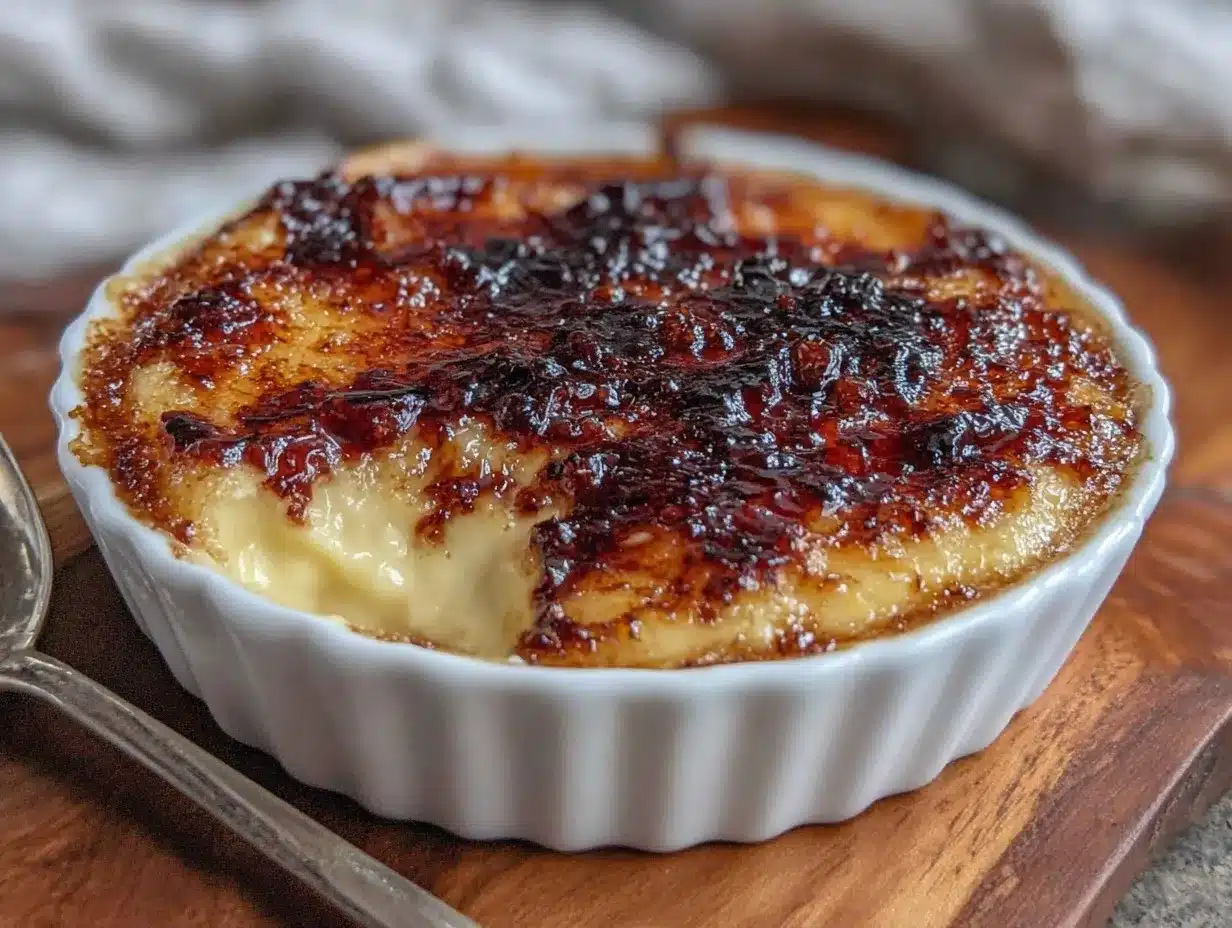
- Caramelize the sugar: When ready to serve, sprinkle a thin, even layer of granulated sugar (about 1–2 teaspoons) over each custard. Use a kitchen torch to melt and caramelize the sugar, moving the flame in circles until the crust is golden brown and crisp. If you don’t have a torch, place ramekins under a preheated broiler for 2–3 minutes, watching closely.
- Serve immediately: Let the caramelized sugar cool and harden for a minute, then serve. Listen for that satisfying crack when you tap the crust with your spoon!
Cooking Tips & Techniques
Making crème brûlée might seem intimidating, but these tips have saved me from many kitchen missteps and will help you get it just right:
- Don’t overheat the cream: If your cream boils, it can cook the eggs prematurely, leading to a grainy custard. Warm it gently until just steaming.
- Whisk gently: Vigorous whisking traps air, which makes bubbles in your custard. Slow, steady mixing keeps it smooth.
- Straining is essential: Skipping this step can leave you with lumpy custard or vanilla bits. I always sieve to guarantee that silky texture.
- Water bath is non-negotiable: It moderates the cooking temperature and prevents cracking or curdling. Make sure the water is hot but not boiling when you pour it in.
- Chill long enough: Custard needs at least 3 hours to set properly. Overnight chilling improves flavor and texture.
- Caramelize with care: Keep the torch moving to avoid burning the sugar. If using a broiler, stay close and watch carefully—it can go from perfect to burnt in seconds.
One time, I skipped chilling and ended up with a custard that was too soft and watery—lesson learned! Also, I’ve found that a thin sugar layer caramelizes more evenly than a thick one, which can burn on the edges.
Multitasking tip: While the custard chills, clean up your workspace and prepare any garnishes or drinks to serve alongside. It makes the whole experience smoother and more enjoyable!
Variations & Adaptations
While the classic vanilla crème brûlée is hard to beat, here are a few ways to tweak the recipe depending on your mood or dietary needs:
- Chocolate Crème Brûlée: Stir in 2 ounces (56 g) of melted bittersweet chocolate into the custard mixture before baking. It adds a rich twist that chocoholics will adore.
- Lavender or Earl Grey Infusion: Swap the vanilla bean for 1 tablespoon dried lavender buds or steep 1 Earl Grey tea bag in the cream. These floral and citrus notes add a delicate complexity.
- Gluten-Free and Dairy-Free: This recipe is naturally gluten-free. For dairy-free, replace heavy cream with full-fat coconut milk and use a plant-based sweetener if you prefer.
- Fruit Toppings: After caramelizing, add fresh berries or a spoonful of compote for extra freshness and color.
- Personal Favorite: I once added a pinch of cinnamon and a splash of orange zest to the custard—it created a cozy, spiced flavor perfect for autumn evenings.
Changing the cooking method isn’t common for crème brûlée, but you can attempt steaming the custard for a slightly different texture—just watch the timing carefully.
Serving & Storage Suggestions
Crème brûlée is best enjoyed chilled but with the caramelized crust freshly torched. Serve it right after caramelizing to get that satisfying crunch paired with the cool custard beneath.
Presentation-wise, a simple garnish of fresh mint leaves or a few raspberries adds a pop of color without overshadowing the dessert’s elegance. Pair it with a cup of strong espresso or a light dessert wine like Sauternes for an indulgent finish.
If you have leftovers (or want to prepare in advance), cover the ramekins tightly with plastic wrap and refrigerate for up to 3 days. Re-caramelize the sugar just before serving to restore the crispy top.
Reheating crème brûlée isn’t typical since it’s meant to be served cold, but if you want it warmer, briefly place it in a 300°F (150°C) oven for about 5 minutes—just don’t melt the sugar crust beforehand.
Interestingly, the flavors of the custard deepen and mellow after a day or two in the fridge, making it even more luscious if you have the patience to wait.
Nutritional Information & Benefits
This creamy French crème brûlée is a rich dessert, but with relatively simple ingredients, it offers some nutritional benefits worth noting. Here’s an estimate per serving (based on 6 servings):
| Calories | 280 |
|---|---|
| Fat | 22 g |
| Saturated Fat | 14 g |
| Carbohydrates | 18 g |
| Sugar | 17 g |
| Protein | 5 g |
The heavy cream provides a good dose of calcium and fat-soluble vitamins, while the eggs offer protein and essential nutrients like choline. Using real vanilla bean adds antioxidants and flavor without extra calories.
For those on low-carb diets, you can reduce the sugar slightly or use a sugar substitute for the crust, though traditional sugar caramelizes best. This dessert is naturally gluten-free, but it does contain dairy and eggs, so keep that in mind for allergies.
From my experience, enjoying crème brûlée occasionally as a treat fits well into a balanced diet, especially when paired with mindful portion sizes and wholesome meals the rest of the day.
Conclusion
Creamy French crème brûlée with perfect caramelized crust is one of those desserts that feels like a small celebration every time you make it. It’s approachable enough for home cooks yet delivers that wow factor with its silky custard and crisp, crackly topping.
Whether you stick with the classic vanilla or try one of the variations, this recipe invites you to savor the simple pleasures of good ingredients and careful technique. I love it because it’s a reminder that sometimes, the best desserts are the ones you can make yourself and share with the people you care about.
Go ahead, give it a try. And when you do, don’t be shy about tweaking it to your taste or sharing your own caramelization triumphs—I’d love to hear how it turns out!
FAQs
Can I make crème brûlée ahead of time?
Yes! You can prepare the custard up to two days in advance and keep it refrigerated. Just caramelize the sugar right before serving for the best crust.
What if I don’t have a kitchen torch?
You can use your oven’s broiler to caramelize the sugar. Place the ramekins under the broiler for 2–3 minutes, watching closely to prevent burning.
Why did my custard turn out grainy?
Graininess usually happens if the eggs overcook or the cream boils. Make sure to heat the cream gently and bake the custard in a water bath at a low temperature.
Can I use milk instead of heavy cream?
Heavy cream is key for the rich, creamy texture. Milk is too thin and won’t set properly, so it’s best to stick with cream or a full-fat alternative.
How thick should the caramelized sugar crust be?
A thin, even layer (about 1–2 teaspoons per ramekin) works best. Too thick can burn easily, and too thin might not crack properly.
Pin This Recipe!
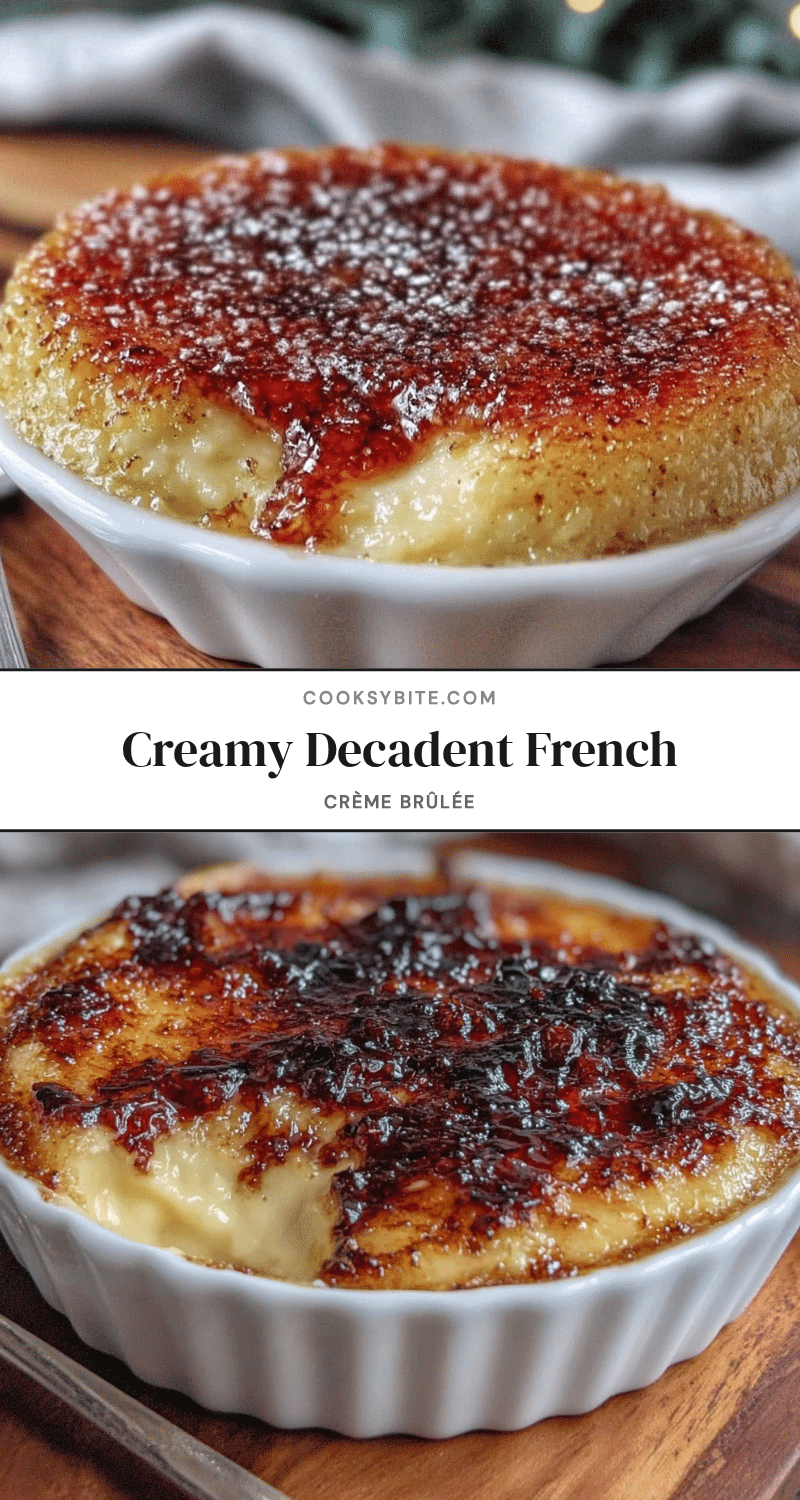
Creamy French Crème Brûlée Recipe with Perfect Caramelized Crust Tips

A classic French dessert featuring a silky custard base topped with a perfectly caramelized sugar crust. This recipe is approachable for home cooks and delivers a luxurious treat every time.
- Prep Time: 20 minutes
- Cook Time: 40 minutes
- Total Time: 3 hours 60 minutes (including chilling time)
- Yield: 4 to 6 servings 1x
- Category: Dessert
- Cuisine: French
Ingredients
- 2 cups (480 ml) heavy cream
- 1 whole vanilla bean (or 2 teaspoons vanilla extract)
- 5 large egg yolks (about 100 g)
- 1/2 cup (100 g) granulated sugar for custard, plus extra for topping
- A pinch of salt
Instructions
- Preheat your oven to 325°F (160°C).
- Pour the 2 cups heavy cream into a saucepan. Split the vanilla bean lengthwise, scrape out the seeds, and add both seeds and pod to the cream. Warm over medium heat until tiny bubbles form around the edges, about 5 minutes. Remove from heat and let steep for 15 minutes.
- In a mixing bowl, whisk 5 large egg yolks with 1/2 cup granulated sugar and a pinch of salt gently until pale and slightly thickened, about 2 minutes. Avoid vigorous whisking.
- Remove the vanilla pod from the cream and slowly pour the warm cream into the yolk mixture through a fine mesh sieve. Stir gently to combine.
- Pour the custard evenly into 4 to 6 ramekins, filling about 3/4 full.
- Place ramekins in a deep baking dish and pour hot water halfway up the sides of the ramekins to create a water bath.
- Bake for 35–40 minutes until edges are set but the center jiggles slightly. Check doneness with a toothpick; it should come out mostly clean.
- Remove ramekins from water bath and cool to room temperature. Cover with plastic wrap and refrigerate for at least 3 hours or overnight.
- Before serving, sprinkle 1–2 teaspoons granulated sugar evenly over each custard. Use a kitchen torch to caramelize the sugar until golden brown and crisp. Alternatively, use a broiler for 2–3 minutes, watching closely.
- Let the caramelized sugar cool and harden for a minute, then serve immediately.
Notes
Do not boil the cream to avoid grainy custard. Whisk gently to prevent air bubbles. Strain custard mixture for silky texture. Use a water bath to prevent cracking. Chill custard for at least 3 hours or overnight for best texture. Caramelize sugar carefully to avoid burning. Thin sugar layer caramelizes more evenly.
Nutrition
- Serving Size: 1 ramekin (about 6 o
- Calories: 280
- Sugar: 17
- Fat: 22
- Saturated Fat: 14
- Carbohydrates: 18
- Protein: 5
Keywords: crème brûlée, French dessert, caramelized sugar crust, creamy custard, vanilla bean, classic dessert