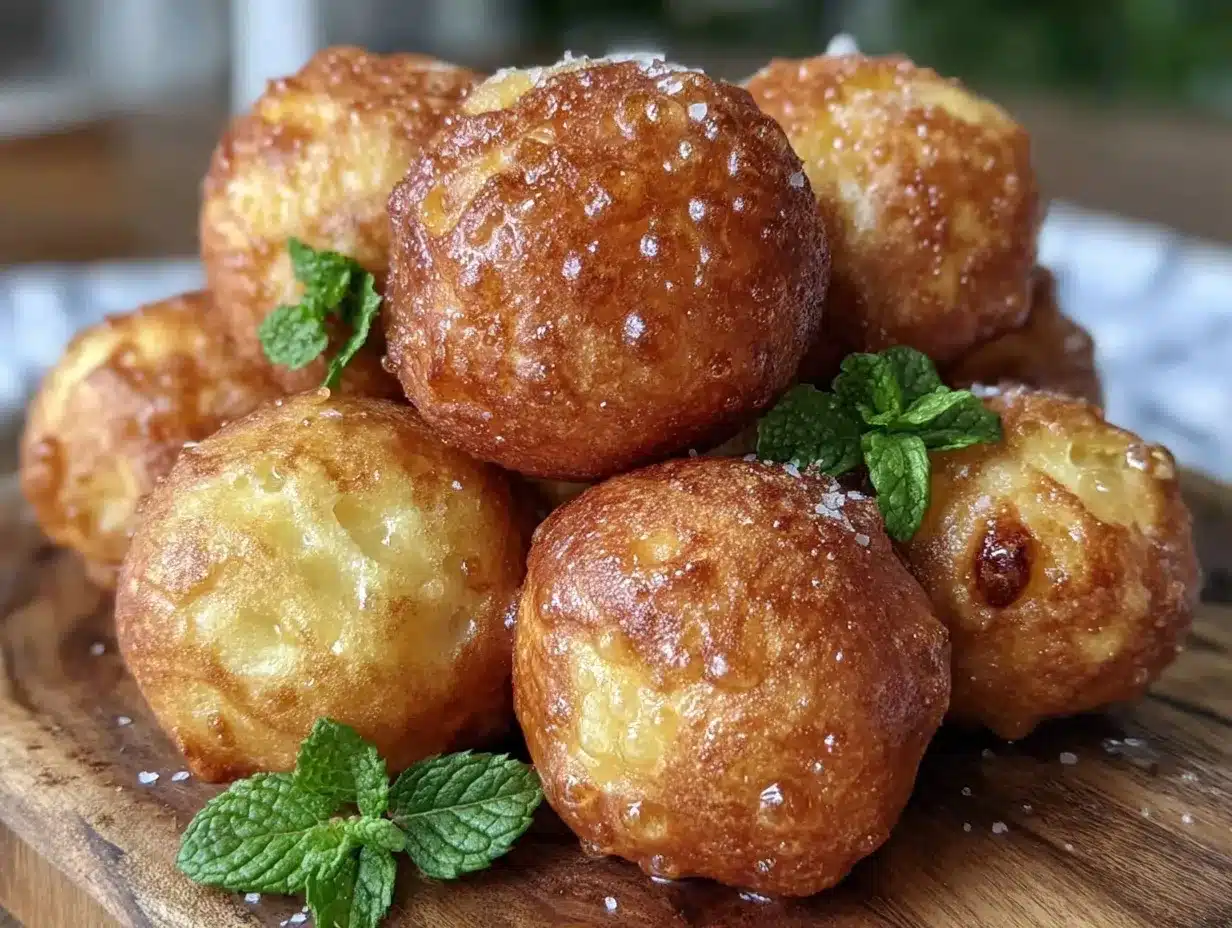
There’s something about the smell of frying dough that instantly takes me back to a lazy Sunday afternoon in Lagos, where a neighbor’s open kitchen filled the air with the irresistible scent of puff puff. Honestly, I never gave much thought to puff puff until one day, while helping a friend with her snack stall, I realized that perfecting this crispy Nigerian puff puff with fluffy, tender inside wasn’t as simple as just dropping dough into hot oil. It was a delicate dance of timing, temperature, and just the right batter consistency. I remember skeptical glances when she told me to wait—“no rushing,” she said—and, well, the results spoke for themselves.
That first bite, with its crackling outer shell and soft, pillowy center, made me a believer. I found myself making it multiple times that week, tweaking little things here and there. This recipe stuck with me because it’s not just about the food; it’s about capturing that comforting, street-food magic in your own kitchen—crisp on the outside, tender on the inside, and downright addictive. If you’ve ever wondered how to get that perfect puff puff texture, this guide will walk you through it, no fuss, just honest, seasoned advice.
Why You’ll Love This Recipe
- Quick & Easy: Comes together in under an hour, perfect for busy afternoons or unexpected cravings.
- Simple Ingredients: Uses pantry staples you probably already have—no fancy shopping needed.
- Perfect for Any Occasion: Whether it’s a casual snack, party appetizer, or kids’ treat, puff puff fits right in.
- Crowd-Pleaser: Gets rave reviews from everyone, from picky eaters to seasoned foodies.
- Unbelievably Delicious: Crispy golden exterior with a fluffy, tender inside that melts in your mouth.
- This isn’t your run-of-the-mill puff puff; it’s the kind where you can taste the care—like letting the dough rest just right, or the subtle balance of sugar and yeast that makes all the difference.
- Every batch feels like a little celebration, a way to bring a taste of Nigerian street food comfort right to your home kitchen.
What Ingredients You Will Need
This recipe uses simple, wholesome ingredients to deliver bold flavor and satisfying texture without the fuss. Most are pantry staples, easy to swap or adjust depending on what you have on hand.
- All-purpose flour – about 3 cups (360g), for that perfect structure; I prefer King Arthur’s for consistency
- Granulated sugar – 1/2 cup (100g), to give the puff puff its gentle sweetness
- Active dry yeast – 2 teaspoons (7g), the magic behind the fluffiness
- Warm water – 1 1/4 cups (300ml), to activate the yeast and bring the dough together
- Salt – 1/2 teaspoon, to balance the sweetness
- Nutmeg (optional) – 1/4 teaspoon, freshly grated adds an aromatic warmth
- Vegetable oil – for deep frying; peanut oil works great if you prefer a subtle flavor
If you’re aiming for a gluten-free version, swapping all-purpose flour with a gluten-free blend works, but note the texture will be slightly different. For a hint of extra richness, some folks add an egg or a splash of evaporated milk, but I find the classic version shines just as well.
Equipment Needed
- Large mixing bowl: For combining and proofing your dough; glass or stainless steel works best.
- Whisk or spoon: To mix ingredients—nothing fancy here, just sturdy enough to handle thick batter.
- Deep frying pan or pot: A heavy-bottomed pot helps keep oil temperature steady. I like using a cast-iron skillet when I want even heat distribution.
- Thermometer: Optional but handy to keep oil between 350°F and 375°F (175–190°C) for perfect frying results.
- Slotted spoon or spider strainer: To scoop out puff puff and drain oil quickly.
- Paper towels: To absorb excess oil after frying.
For budget-friendly options, a deep saucepan and a candy thermometer work just fine. I’ve tried frying without a thermometer but found that consistent oil temperature really makes the difference between soggy and crispy puff puff.
Preparation Method
- Activate the yeast: In your large mixing bowl, whisk together 1 1/4 cups (300ml) of warm water (around 110°F/43°C) and 2 teaspoons (7g) of active dry yeast. Stir in 1 tablespoon of sugar from the 1/2 cup and let it sit for 5-10 minutes until frothy. If it doesn’t foam, your yeast might be dead—better to start fresh than guess.
- Mix dry ingredients: In a separate bowl, combine 3 cups (360g) all-purpose flour, 1/2 teaspoon salt, the remaining sugar (about 7 tablespoons), and 1/4 teaspoon freshly grated nutmeg if using. Give it a good stir to blend evenly.
- Combine wet and dry: Slowly pour the flour mixture into the yeast mixture, stirring with a wooden spoon or spatula. The batter should be thick but slightly sticky—think thick pancake batter, not dough you can knead. If it feels too dry, add a little water tablespoon by tablespoon.
- Proof the dough: Cover the bowl with a clean kitchen towel or plastic wrap and set it in a warm, draft-free spot. Let it rest and rise for about 1 to 1 1/2 hours, or until the batter has doubled in size and looks bubbly on the surface. This step is key for fluffy puff puff.
- Heat the oil: While the batter proofs, pour vegetable oil into your deep frying pot or skillet to a depth of about 2 inches (5cm). Heat over medium-high until it reaches 350°F to 375°F (175–190°C). Use a thermometer if you have one, or test by dropping a small bit of batter in—it should sizzle and float immediately.
- Fry the puff puff: Using two spoons or your fingers (wet to prevent sticking), scoop small portions of batter and drop gently into the hot oil. Don’t overcrowd—fry in batches of 6-8 to keep the oil temperature steady. Fry for about 3-4 minutes, turning occasionally, until golden brown and crispy on all sides.
- Drain and cool: Use a slotted spoon to transfer puff puff to paper towels to drain excess oil. Let them rest for a few minutes to cool slightly but still warm and tender inside.
- Serve: Puff puff is best enjoyed fresh and warm. You can dust with powdered sugar or serve with a dipping sauce if you like a sweet or spicy kick.
Cooking Tips & Techniques
One big lesson I learned was about patience—the yeast needs time to work its magic. Rushing the proofing stage leads to dense, chewy puff puff that lacks that signature fluffiness. If your kitchen is cold, gently warming the dough area (near a radiator or warm oven) helps speed things up.
Oil temperature is another sticking point. Too hot, and the outside burns before the inside cooks; too cool, and you get oily, soggy puff puff. Invest in a thermometer or keep a close eye on small test pieces.
I used to scoop batter with a single spoon, but using two spoons or wet fingers makes shaping easier and helps keep the puff puff round and uniform. Also, drain well on paper towels to avoid greasy bites.
Finally, don’t skip the nutmeg if you can—just a pinch adds a subtle warmth that sets this recipe apart. If you want a richer flavor, a splash of vanilla extract or a pinch of cinnamon works too.
Variations & Adaptations
- Spicy Puff Puff: Add a pinch of cayenne pepper or finely chopped chili to the batter for a subtle heat that wakes up your palate.
- Gluten-Free Option: Substitute all-purpose flour with a gluten-free blend, keeping in mind the texture will be slightly different but still tasty.
- Sweet Twist: Mix in small chocolate chips or raisins before frying for a surprise burst of sweetness in every bite.
- Baked Puff Puff: For a lighter version, shape dough balls and bake at 375°F (190°C) for 15-20 minutes until golden, though they won’t have the same crispiness as fried.
- Personally, I once tried adding mashed ripe plantains to the batter, which gave a wonderful moistness and a subtle fruity note—highly recommend if you want to experiment!
Serving & Storage Suggestions
Puff puff tastes best hot or warm straight from the fryer. Serve with a dusting of powdered sugar or alongside a spicy pepper sauce for a classic street-food feel. They also pair nicely with a cup of chilled zobo drink or hot ginger tea.
To store, keep puff puff in an airtight container at room temperature for up to 24 hours. For longer storage, refrigerate for 2-3 days or freeze in a sealed bag for up to a month. Reheat in a hot oven or toaster oven to bring back some of the crispness.
Flavors tend to mellow over time, so freshly made puff puff always wins. But if you have leftovers, a quick reheat can revive that tender inside and crispy outside delight.
Nutritional Information & Benefits
Each serving of puff puff (about 3 pieces) contains roughly 250-300 calories, mostly from carbohydrates and fats due to frying. The recipe uses simple ingredients with minimal additives, making it a straightforward treat. Using vegetable or peanut oil provides heart-healthy fats, but moderation is key.
Flour offers energy and some protein, while yeast adds beneficial probiotics during fermentation. Nutmeg, though used sparingly, contains antioxidants and anti-inflammatory compounds. For those watching gluten or sugar intake, consider gluten-free flour or reducing sugar slightly, but keep in mind the impact on texture.
Enjoying puff puff occasionally is a comforting way to indulge without guilt, especially when paired with balanced meals throughout the day.
Conclusion
Making crispy Nigerian puff puff with a fluffy, tender inside is a satisfying little project that brings a taste of tradition right into your kitchen. It’s not just about the ingredients or technique; it’s about recreating that joyful moment when you bite into a golden puff puff and feel the crunch giving way to softness. This recipe has stuck with me because it’s reliable, forgiving, and totally delicious.
Feel free to tweak the sweetness, spice it up, or swap ingredients to suit your taste. I love how puff puff can be as simple or as creative as you want it to be. If you try it, I’d love to hear how your batch turns out or what fun twists you add!
Here’s to many warm, crispy, tender bites ahead.
FAQs
How do I know if my yeast is still active for making puff puff?
Mix yeast with warm water and a little sugar; it should foam and bubble within 5-10 minutes. If not, your yeast may be expired and should be replaced.
Can I make puff puff without yeast?
Yeast is key for the fluffy texture. Without it, you’ll get more of a dense fried dough. Baking powder can be a quick substitute but won’t replicate the same flavor or fluffiness.
What oil is best for frying puff puff?
Vegetable oil or peanut oil works well due to their high smoke points and neutral flavors. Avoid olive oil as it has a lower smoke point and strong taste.
Why is my puff puff dense and not fluffy?
This often happens if the dough didn’t proof long enough or the yeast was inactive. Also, frying at the wrong temperature can affect texture.
Can I prepare puff puff batter ahead of time?
You can prepare the batter and refrigerate it for a few hours, but letting it proof fresh at room temperature yields the best rise and texture.
Pin This Recipe!
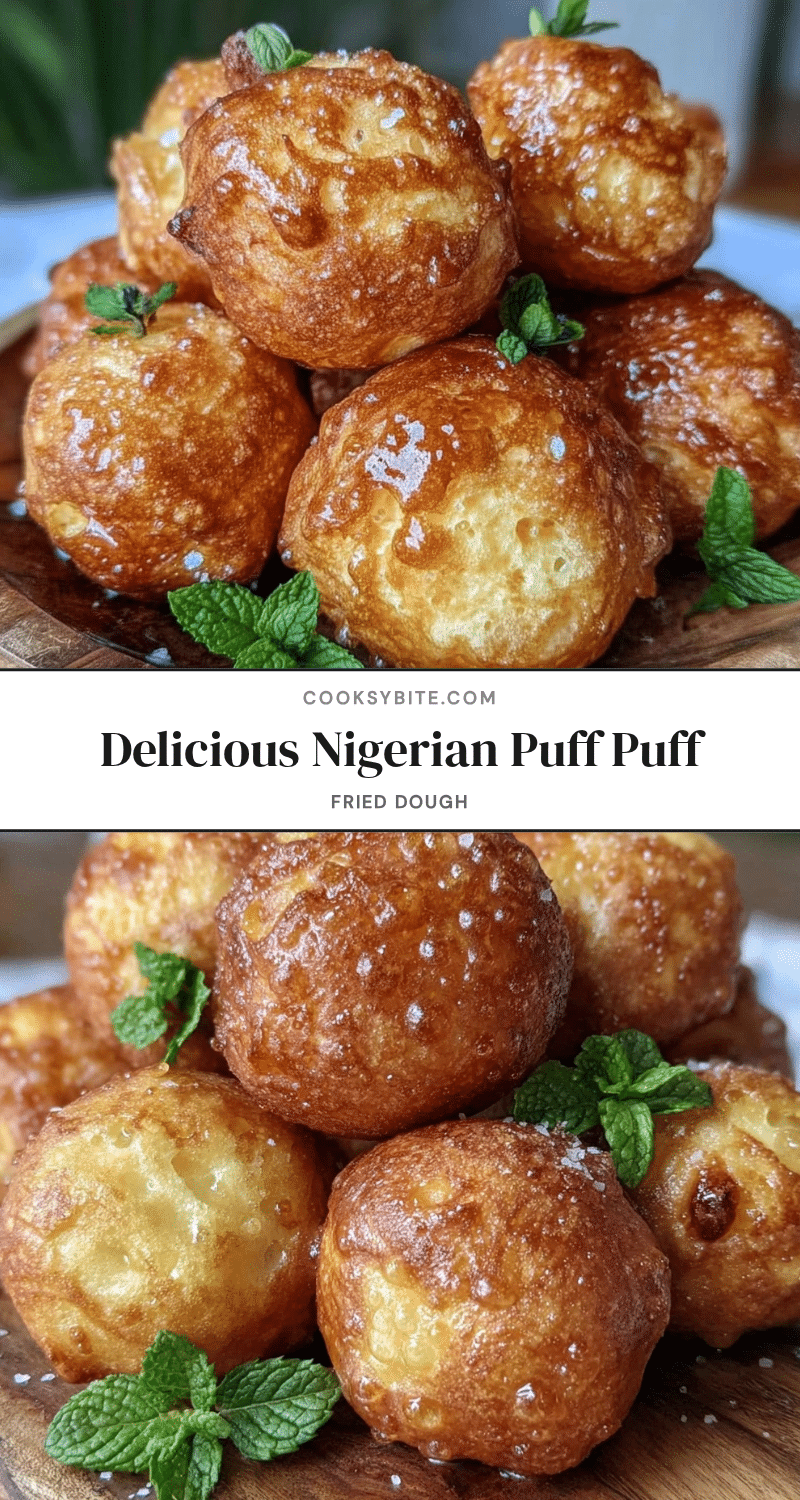
Crispy Nigerian Puff Puff Recipe Easy Fluffy Tender Inside Guide

A traditional Nigerian snack with a crispy golden exterior and a fluffy, tender inside. This easy recipe guides you through making perfect puff puff with simple pantry ingredients and tips for the best texture.
- Prep Time: 15 minutes
- Cook Time: 15 minutes
- Total Time: 1 hour 30 minutes
- Yield: About 24 pieces (8 servings) 1x
- Category: Snack
- Cuisine: Nigerian
Ingredients
- 3 cups (360g) all-purpose flour
- 1/2 cup (100g) granulated sugar
- 2 teaspoons (7g) active dry yeast
- 1 1/4 cups (300ml) warm water (around 110°F/43°C)
- 1/2 teaspoon salt
- 1/4 teaspoon freshly grated nutmeg (optional)
- Vegetable oil for deep frying (peanut oil recommended)
Instructions
- Activate the yeast: In a large mixing bowl, whisk together warm water and active dry yeast. Stir in 1 tablespoon of sugar from the 1/2 cup and let it sit for 5-10 minutes until frothy.
- Mix dry ingredients: In a separate bowl, combine all-purpose flour, salt, remaining sugar (about 7 tablespoons), and nutmeg if using. Stir to blend evenly.
- Combine wet and dry: Slowly pour the flour mixture into the yeast mixture, stirring with a wooden spoon or spatula until thick but slightly sticky batter forms. Add water tablespoon by tablespoon if too dry.
- Proof the dough: Cover the bowl and let it rest in a warm, draft-free spot for 1 to 1 1/2 hours until doubled in size and bubbly.
- Heat the oil: Pour vegetable oil into a deep frying pot or skillet to about 2 inches depth. Heat over medium-high to 350°F to 375°F (175–190°C).
- Fry the puff puff: Using two spoons or wet fingers, scoop small portions of batter and drop into hot oil in batches of 6-8. Fry for 3-4 minutes, turning occasionally, until golden brown and crispy.
- Drain and cool: Remove puff puff with a slotted spoon and drain on paper towels. Let cool slightly before serving.
- Serve warm, optionally dusted with powdered sugar or with dipping sauce.
Notes
Patience during proofing is key for fluffy puff puff. Maintain oil temperature between 350°F and 375°F to avoid soggy or burnt puff puff. Use two spoons or wet fingers to shape batter for uniform roundness. Nutmeg adds subtle warmth; optional but recommended. Variations include adding cayenne for spice or chocolate chips for sweetness.
Nutrition
- Serving Size: 3 pieces
- Calories: 275
- Sugar: 8
- Sodium: 150
- Fat: 14
- Saturated Fat: 2
- Carbohydrates: 33
- Fiber: 1
- Protein: 4
Keywords: puff puff, Nigerian snack, fried dough, crispy puff puff, fluffy puff puff, street food, easy snack, yeast dough