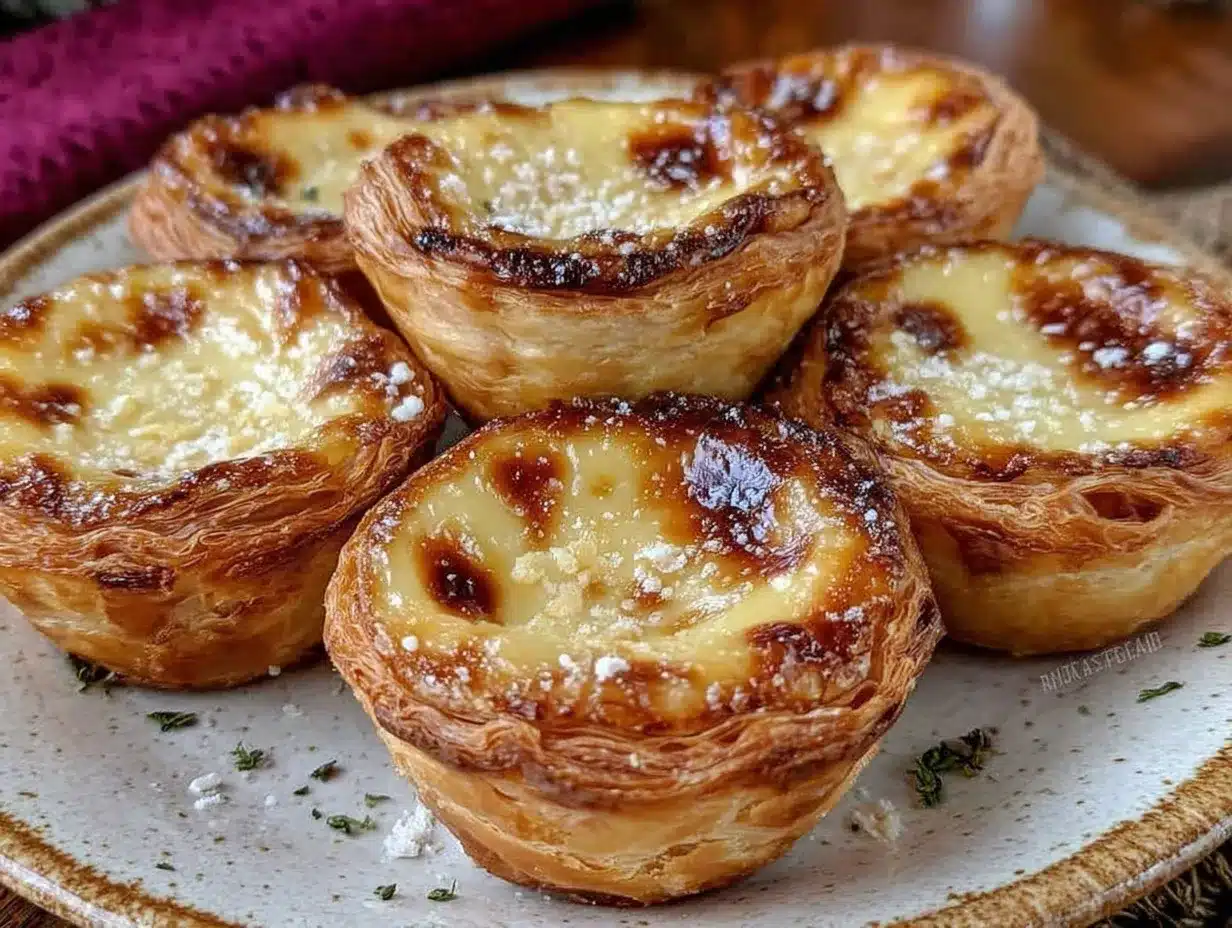
It was one of those rare quiet Sunday mornings—the kind where the kitchen feels like your own little sanctuary. I was flicking through a cookbook I’d picked up on a whim at a local market, and the photo of golden, flaky tarts with caramelized tops caught my eye. You know the ones: Pastéis de Nata, those iconic Portuguese custard tarts that seem to whisper “comfort” and “indulgence” all at once. Honestly, I was skeptical at first. Puff pastry and custard? It sounded simple enough, but I wasn’t sure my oven or my patience would do them justice.
After a few trial runs, I found the perfect balance between a crispy, shatteringly thin crust and a creamy, just-sweet custard that wobbled ever so slightly when fresh from the oven. The smell of caramelizing sugar mingling with the warm vanilla was enough to convince even my most dessert-averse friends to sneak a second tart when I wasn’t looking. Somehow, these crispy Pastéis de Nata Portuguese Custard Tarts became my go-to treat for resetting a chaotic day or impressing unexpected guests without breaking a sweat.
There’s something quietly magical about that first bite—the crust crackling, the custard melting, the slight hint of cinnamon dancing in the background. It’s not just a recipe; it’s a little moment of joy that’s stuck with me ever since. If you’re curious about making these at home, trust me, it’s worth the few extra steps. Let’s get to that perfect crispy, caramelized finish you’ll find yourself craving.
Why You’ll Love This Recipe
- Quick & Easy: Comes together in about 45 minutes, making it perfect for a spontaneous afternoon treat or last-minute dessert plans.
- Simple Ingredients: You likely have everything in your pantry—eggs, milk, sugar, and store-bought puff pastry—no need for exotic items.
- Perfect for Any Occasion: Whether it’s a weekend brunch, a coffee break, or a cozy night in, these tarts fit right in.
- Crowd-Pleaser: Kids, adults, and picky eaters alike can’t get enough of that crispy crust paired with silky custard.
- Unbelievably Delicious: The combination of flaky pastry and sweet, slightly caramelized custard is just irresistible.
- This isn’t just a copycat recipe—there’s a special touch in the custard’s texture and the crust’s crunch that comes from a gentle bake and a quick broil at the end, which really sets it apart.
- It’s comfort food with a little European flair—familiar but with that unexpected, delightful twist that makes you want another tart before you finish the first.
What Ingredients You Will Need
This recipe uses simple, wholesome ingredients to deliver bold flavor and satisfying texture without the fuss. Most are pantry staples, and the puff pastry can be store-bought to save time without sacrificing quality.
- Puff pastry sheets (thawed if frozen) – I prefer using a high-quality brand like Pepperidge Farm or homemade if you’re feeling adventurous.
- Whole milk – 1 cup (240 ml), for a rich, creamy custard base.
- Heavy cream – 1/2 cup (120 ml), adds smoothness and depth to the custard.
- Granulated sugar – 3/4 cup (150 g) for sweetness and caramelization.
- Egg yolks – 5 large, room temperature, to create that silky custard texture.
- All-purpose flour – 2 tablespoons (15 g), to thicken the custard slightly.
- Vanilla extract – 1 teaspoon, for warmth and aroma.
- Fresh lemon zest – from 1 lemon, optional but highly recommended to brighten the flavor.
- Cinnamon stick – 1 small piece, for infusing subtle spice (remove before baking).
- Water – 1/2 cup (120 ml), used to dissolve the sugar into a syrup before combining with milk and cream.
Substitution tip: Use almond milk and coconut cream for a dairy-free version, though the texture will be slightly different. Also, gluten-free puff pastry can be used if needed. For a lighter option, swap heavy cream with extra milk.
Equipment Needed
- Muffin tin or pastel de nata tart molds: A non-stick 6 or 12-cup muffin tin works perfectly. If you want to go traditional, small Portuguese tart molds are great but not essential.
- Small saucepan: For making the custard syrup and warming the milk mixture.
- Mixing bowls: At least two—one for egg yolks and flour, another for combining liquids.
- Whisk: To blend the custard smoothly without lumps.
- Fine mesh sieve: Optional but handy for straining the custard to ensure a silky finish.
- Rolling pin: If you want to roll out and shape the puff pastry yourself.
- Pastry brush: For brushing the molds with a bit of butter or flour, if needed.
Budget-friendly tip: If you don’t have a fine sieve, just pour the custard carefully to avoid lumps. And, honestly, a muffin tin is a great stand-in if you can’t find specialty molds. Just try to grease it well for easy removal.
Preparation Method
- Prepare the puff pastry: Preheat your oven to 500°F (260°C) or as high as it will safely go—this high heat is crucial for that crispy, blistered effect. Roll out the puff pastry sheet on a lightly floured surface to about 1/8 inch (3 mm) thickness. Cut into circles slightly larger than your muffin tin cups (about 4 inches/10 cm diameter). Press the pastry gently into each tin cup, letting the edges fold slightly over.
- Make the sugar syrup: In a small saucepan over medium heat, combine 3/4 cup (150 g) sugar and 1/2 cup (120 ml) water. Stir occasionally until sugar dissolves. Bring to a boil and cook without stirring until the syrup reaches a light golden color and slightly thickens—about 3 to 5 minutes. Remove from heat and set aside.
- Infuse the milk and cream: In another saucepan, combine 1 cup (240 ml) whole milk, 1/2 cup (120 ml) heavy cream, the lemon zest, and the cinnamon stick. Heat gently until just simmering, then remove from heat and let the flavors meld for 10 minutes. Remove the cinnamon stick and discard.
- Mix the custard base: In a bowl, whisk together 5 large egg yolks and 2 tablespoons (15 g) all-purpose flour until smooth. Slowly pour the warm milk mixture into the yolk mixture in a steady stream, whisking constantly to prevent curdling.
- Combine syrup and custard: Slowly whisk the sugar syrup into the custard mixture until fully incorporated. Strain the custard through a fine mesh sieve to remove any lumps or zest bits for a silky texture.
- Fill the tart shells: Carefully pour the custard into the prepared puff pastry shells, filling each about 3/4 full. Be mindful not to overfill, or it may spill during baking.
- Bake: Place the tin on the middle rack and bake at 500°F (260°C) for 12-15 minutes until the pastry is golden and the custard surface is blistered and caramelized in spots. If your oven allows, switch to broil for the last 1-2 minutes to get those signature dark spots—watch closely to avoid burning.
- Cool and serve: Remove from oven and let the tarts cool in the tin for 5 minutes before transferring to a wire rack. Serve warm or at room temperature, maybe with a light dusting of cinnamon.
Cooking Tips & Techniques
One of the trickiest parts is getting that classic crispy crust without sogginess. You want your oven blazing hot from the start—that high heat puffs the pastry layers quickly and crisps them up beautifully. I learned the hard way that a lukewarm oven just turns the pastry limp and chewy.
Don’t skip the straining step for the custard. Even a tiny bit of flour clump can ruin the smoothness, and the texture is everything here. Also, be gentle when mixing the hot milk into egg yolks—pour slowly and whisk continuously to avoid scrambled eggs.
Watch the baking time carefully. The custard should jiggle slightly when you take it out, and the tops should have those caramelized, almost burnt spots. If your oven doesn’t get hot enough, finishing under the broiler for a minute or two can mimic this effect—but keep your eyes peeled!
When filling the tart shells, don’t go overboard. The custard expands a bit, and spills make a mess and burn on the pan. Finally, a little resting time after baking helps the custard set perfectly but don’t wait too long—the tarts are best enjoyed warm.
Variations & Adaptations
- Flavor twists: Add a pinch of ground nutmeg or cardamom to the custard for a warm spice note. You can also stir in a splash of orange liqueur or vanilla bean paste for extra depth.
- Seasonal fruit topping: Try adding a few fresh berries or thinly sliced figs on top of the custard before baking for a fruity contrast.
- Dairy-free version: Use coconut milk and coconut cream instead of dairy, and swap puff pastry for a gluten-free or vegan alternative. The texture shifts but the flavor remains comforting.
- Mini tarts: Use a mini muffin tin for bite-sized treats—great for parties or portion control.
- Personal tweak: I once experimented with a sprinkle of flaky sea salt on top right after baking—it cut through the sweetness beautifully and added a lovely crunch.
Serving & Storage Suggestions
Serve Pastéis de Nata warm or at room temperature, dusted lightly with cinnamon or powdered sugar. They pair wonderfully with a strong espresso or a cup of black tea. For a brunch spread, add fresh fruit and a light salad to balance the richness.
Store leftover tarts in an airtight container in the refrigerator for up to 3 days. To reheat, pop them in a 350°F (175°C) oven for 5-7 minutes to revive that crispiness. Avoid microwaving, which makes the crust soggy.
Interestingly, the custard flavor deepens and the crust softens a bit after a day—some might like this mellow texture, but for me, freshly baked is where the magic lives.
Nutritional Information & Benefits
Each tart is roughly 220-250 calories depending on size, with about 12 grams of fat and 25 grams of carbohydrates. The eggs provide protein, and the milk adds calcium and vitamin D. Using whole milk and cream gives richness, but you can lighten it with low-fat milk if preferred.
While these tarts are treats, they contain no artificial preservatives or additives when made at home, which feels better than store-bought options. Gluten-free and dairy-free substitutions make them accessible for many dietary needs. Just be mindful of the sugar content if you’re watching intake.
From my experience, balancing indulgence with real ingredients makes this dessert one I don’t mind making often. It’s a little luxury that fits nicely into a busy life.
Conclusion
These crispy Pastéis de Nata Portuguese Custard Tarts are a comforting slice of Portugal you can create in your own kitchen without fuss. The flaky crust and luscious custard combo have a way of turning ordinary moments into something a bit more special. Whether you stick to the classic or play around with flavors, this recipe invites you to make it your own.
I love how it brings just the right balance of effort and reward—perfect for when you want to impress without stress. Give it a try, and you might just find yourself making these more often than you expected.
Feel free to share your tweaks or questions—I’m always curious how others make this recipe their own. Happy baking!
FAQs
Can I use homemade puff pastry for Pastéis de Nata?
Absolutely! Homemade puff pastry works wonderfully if you have the time to prepare it. Just make sure it’s rolled thin and chilled before shaping to get that crisp, flaky texture.
Why do my custard tarts come out watery?
This usually happens if the custard isn’t cooked enough or if the flour isn’t properly mixed in. Make sure to whisk the flour with the egg yolks and cook the custard mixture gently to thicken before baking.
Can I freeze Pastéis de Nata?
You can freeze the baked tarts wrapped tightly for up to a month. Reheat them in the oven at 350°F (175°C) for 10-12 minutes to refresh the crust. Avoid freezing the raw custard-filled pastries as the custard texture may suffer.
What if I don’t have a muffin tin?
You can use small oven-safe ramekins or tart molds. Just make sure to grease them well and adjust baking time slightly depending on size.
How do I get those signature dark spots on top?
High oven heat is key—bake at 500°F (260°C) or higher, and if your oven has a broiler, finish the tarts under it for 1-2 minutes while watching closely to avoid burning. These spots come from caramelized sugar in the custard.
Pin This Recipe!
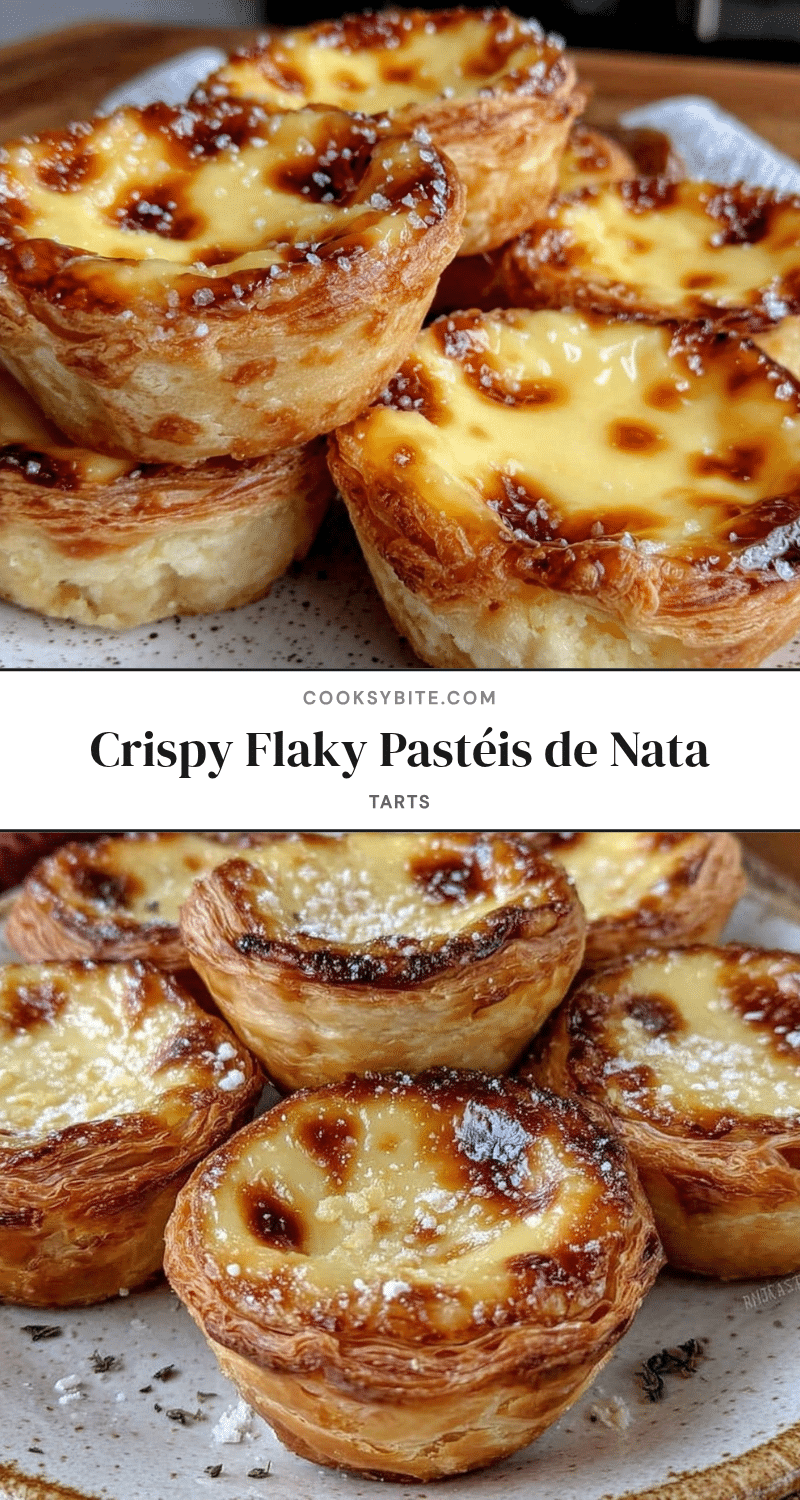
Crispy Pastéis de Nata Recipe Easy Homemade Portuguese Custard Tarts

A recipe for crispy, flaky Portuguese custard tarts with a caramelized top and creamy custard filling, perfect for any occasion and easy to make at home.
- Prep Time: 15 minutes
- Cook Time: 15 minutes
- Total Time: 45 minutes
- Yield: 6-12 tarts (depending on muffin tin size) 1x
- Category: Dessert
- Cuisine: Portuguese
Ingredients
- Puff pastry sheets (thawed if frozen)
- 1 cup (240 ml) whole milk
- 1/2 cup (120 ml) heavy cream
- 3/4 cup (150 g) granulated sugar
- 5 large egg yolks, room temperature
- 2 tablespoons (15 g) all-purpose flour
- 1 teaspoon vanilla extract
- Fresh lemon zest from 1 lemon (optional)
- 1 small cinnamon stick
- 1/2 cup (120 ml) water
Instructions
- Preheat oven to 500°F (260°C). Roll out puff pastry on a lightly floured surface to about 1/8 inch (3 mm) thickness. Cut into circles about 4 inches (10 cm) diameter and press into muffin tin cups, folding edges slightly over.
- In a small saucepan over medium heat, combine sugar and water. Stir until sugar dissolves, then boil without stirring until syrup is light golden and slightly thickened (3-5 minutes). Remove from heat.
- In another saucepan, combine milk, heavy cream, lemon zest, and cinnamon stick. Heat until just simmering, then remove from heat and let infuse for 10 minutes. Remove cinnamon stick.
- Whisk egg yolks and flour in a bowl until smooth. Slowly pour warm milk mixture into yolks, whisking constantly to prevent curdling.
- Slowly whisk sugar syrup into custard mixture until combined. Strain custard through fine mesh sieve to remove lumps and zest.
- Pour custard into pastry shells, filling about 3/4 full.
- Bake on middle rack at 500°F (260°C) for 12-15 minutes until pastry is golden and custard is blistered and caramelized. Optionally broil for 1-2 minutes to get dark spots, watching closely.
- Cool tarts in tin for 5 minutes, then transfer to wire rack. Serve warm or at room temperature, optionally dusted with cinnamon.
Notes
Use a very hot oven (500°F/260°C) for a crispy, blistered crust. Strain custard to ensure smooth texture. Pour hot milk mixture slowly into egg yolks to avoid curdling. Broil briefly at the end for signature caramelized spots. Do not overfill tart shells to prevent spills. Serve warm or at room temperature. Store leftovers in refrigerator up to 3 days and reheat in oven to restore crispiness.
Nutrition
- Serving Size: 1 tart
- Calories: 235
- Sugar: 18
- Sodium: 70
- Fat: 12
- Saturated Fat: 7
- Carbohydrates: 25
- Fiber: 0.5
- Protein: 5
Keywords: Pastéis de Nata, Portuguese custard tarts, puff pastry, custard tart recipe, crispy custard tarts, homemade Portuguese tarts