It was one of those Sunday afternoons when the kitchen felt a little too quiet, and honestly, I wasn’t in the mood for anything complicated. I had a bag of basmati rice staring at me, and a small jar of saffron threads that I’d bought on a whim during a trip to the market. I figured, why not give this Persian rice, or tahdig, a shot? I’d heard about the golden, crispy crust that everyone raves about but had never tried making it myself. Skeptical, a little impatient, and definitely hungry, I tossed the saffron into warm water and set the rice to soak.
Turns out, tahdig isn’t just some fancy side dish—it’s the kind of thing that makes you pause mid-bite and just smile quietly to yourself. That crispy bottom, infused with saffron’s warm aroma and buttery crunch, was a revelation. What started as a low-key experiment quickly became a treasured ritual in my kitchen, repeated so often that friends now ask for the recipe at every gathering. There’s something about that golden crust that feels like a little treasure hidden beneath a fluffy cloud of rice.
Over time, I refined the process—adjusting water ratios, tweaking cooking times, and perfecting the saffron infusion until it clicked. This recipe is honestly the one I trust to bring that authentic, crispy Persian rice experience home, without fuss or fancy equipment. And you know what? It might just become your favorite comfort food too, whether you’re cooking for one or a crowd.
Why You’ll Love This Recipe
- Quick & Easy: Ready in about 45 minutes, ideal for busy weeknights or when you want something special without spending hours.
- Simple Ingredients: Uses pantry staples like basmati rice, butter, and saffron—no need for hard-to-find or expensive items.
- Perfect for Entertaining: Impress guests with that signature golden crust that’s both visually stunning and delicious.
- Crowd-Pleaser: Kids and adults alike love the crispy texture contrasted with fluffy rice.
- Unbelievably Flavorful: The saffron brings a subtle floral note, while the buttery crust adds a satisfying crunch.
- This isn’t just another rice recipe—it’s a culinary tradition that’s been carefully adapted for home cooks. The secret saffron soak and careful layering ensure every grain is tender and every bite has that coveted crunch. It’s that perfect balance of texture and flavor that makes tahdig stand out.
- Honestly, there’s something quietly special about this dish. It’s not flashy, but it’s the kind of meal that feels like a warm hug on a plate.
What Ingredients You Will Need
This recipe relies on a few straightforward ingredients that come together to create an irresistible dish. Most are pantry staples, with saffron adding that unique Persian flair.
- Basmati rice: 2 cups (about 370 grams) – long-grain and fragrant, essential for fluffy, separate grains.
- Saffron threads: 1/2 teaspoon – soaked in 2 tablespoons of hot water to release its color and aroma.
- Butter: 3 tablespoons – I prefer unsalted, but salted works too; adds richness and helps form the crust.
- Vegetable oil: 3 tablespoons – helps create the crispy tahdig layer without burning.
- Salt: 1 1/2 teaspoons – adjust to taste, but don’t skip as it seasons the rice perfectly.
- Water: About 3 1/2 cups (830 ml) for cooking the rice after soaking.
- Optional: A pinch of ground turmeric or a small handful of thinly sliced potatoes for a variation on the crust.
For saffron, I like to buy high-quality threads from trusted brands like Mehr or Golha, which deliver that deep golden hue and unmistakable aroma. If saffron is hard to find, you can infuse with a pinch of turmeric for color, though the flavor won’t be quite the same.
Equipment Needed
- Heavy-bottomed pot or nonstick saucepan: Essential for even heat distribution and to prevent the rice from burning.
- Fine mesh strainer: For rinsing and draining the rice thoroughly.
- Measuring cups and spoons: For precise ingredient amounts.
- Wooden spoon or spatula: To fluff the rice without breaking grains.
- Small bowl: To soak saffron threads.
If you don’t have a heavy-bottomed pot, a nonstick pan works well but watch the heat carefully. I once tried it in a thin pan, and the crust burnt before the rice cooked through—lesson learned! For budget-friendly options, a sturdy stainless steel pot works fine, just keep the flame low and steady.
Preparation Method
- Rinse the rice: Place 2 cups (370 g) of basmati rice in a fine mesh strainer and rinse under cold water. Swirl the rice with your fingers until the water runs clear to remove excess starch. This step helps prevent clumping and ensures fluffy grains. Drain well. (Time: 5 minutes)
- Soak the rice: Transfer the rinsed rice to a bowl and cover with cold water. Add 1 teaspoon of salt. Let it soak for at least 30 minutes. Soaking softens the grains and reduces cooking time.
- Prepare saffron: While the rice soaks, steep 1/2 teaspoon of saffron threads in 2 tablespoons of hot water (not boiling) for about 10 minutes. This releases the color and flavor.
- Parboil the rice: Bring a large pot of salted water (about 4-5 quarts/liters) to a boil. Drain the soaked rice and add it to the boiling water. Cook for 5-7 minutes, stirring occasionally. The rice should be tender but still firm in the center (al dente). Drain immediately using the fine mesh strainer.
- Prepare the pot for tahdig: In your heavy-bottomed pot, melt 3 tablespoons of butter with 3 tablespoons of vegetable oil over medium heat. Swirl to coat the bottom evenly. (Note: Avoid high heat here to prevent burning.)
- Add saffron water: Drizzle the saffron-infused water over the melted butter and oil. The mixture will sizzle gently and smell fragrant.
- Layer the rice: Carefully spoon the parboiled rice into the pot, mounding it lightly. Use the back of the spoon to shape a dome. This allows steam to circulate and helps create a perfect crust.
- Cook the tahdig: Cover the pot with a clean kitchen towel and then the lid to trap steam and prevent moisture buildup. Cook over low heat for 30-40 minutes. Avoid lifting the lid during cooking to keep the steam in.
- Check the crust: After 30 minutes, gently lift a corner of the rice to peek at the golden crust. It should be crisp and deep golden, not burnt. If needed, cook another 5-10 minutes on low.
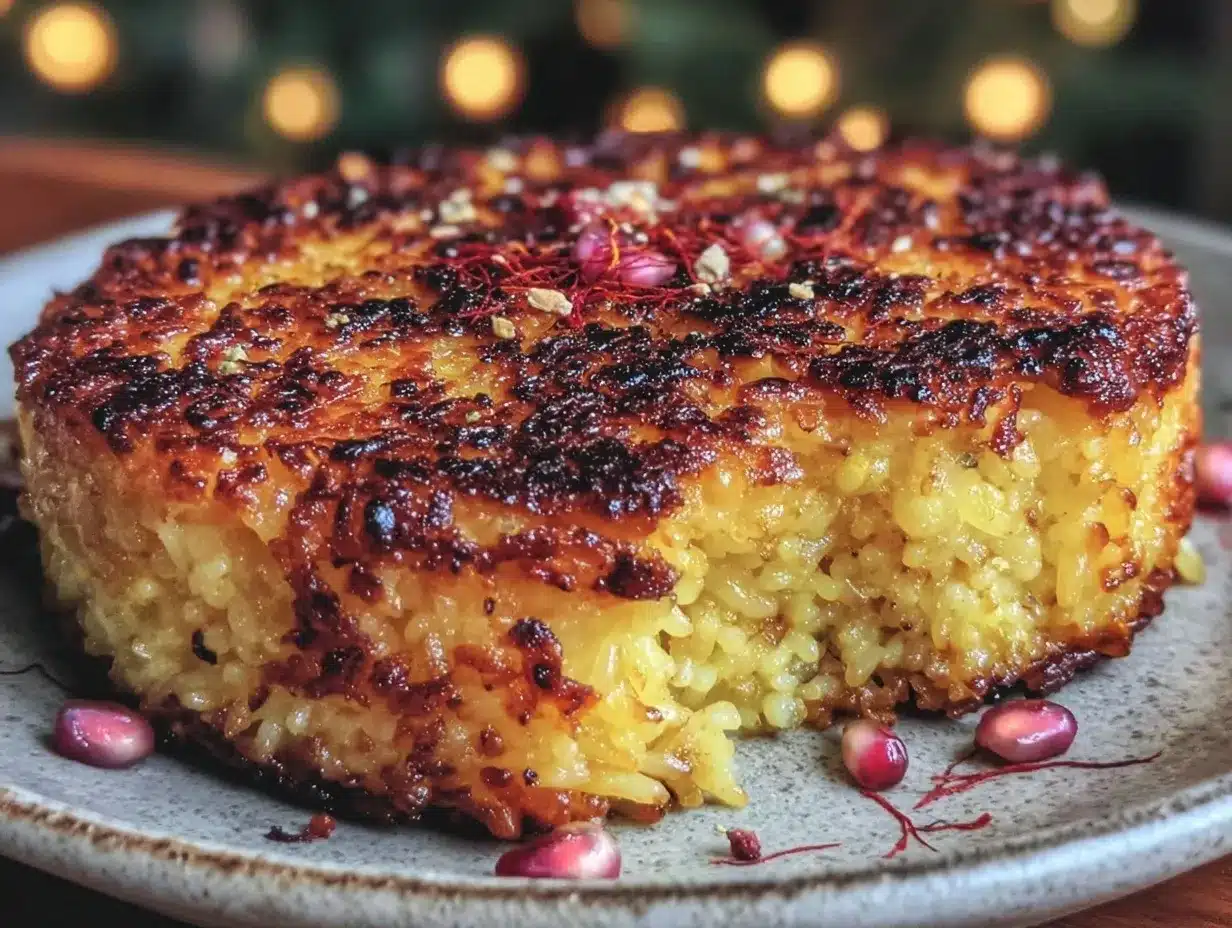
- Serve: To serve, invert the pot onto a large serving platter. The crispy tahdig will come out as a beautiful golden disc on top, with fluffy rice underneath.
Pro tip: If you want to add thinly sliced potatoes or bread on the bottom for a different tahdig style, place them in the pot before adding the butter and oil. They’ll crisp up nicely and add a unique texture.
Cooking Tips & Techniques
One of the trickiest parts about tahdig is getting that perfect crispy crust without burning it. Keep your heat low and steady—medium-low is best. If your flame is too high, the bottom will burn before the rice cooks through.
Patience is key. Don’t rush to peek under the lid; every time you lift it, steam escapes, and that affects cooking. I’ve learned this the hard way after a few failed attempts.
For fluffy rice, rinsing and soaking are non-negotiable steps. Skipping these often leads to sticky, clumpy rice. Trust me, it’s worth the extra few minutes.
Using a heavy-bottomed pot helps distribute heat evenly, preventing hot spots that cause burning. If you don’t have one, adding a heat diffuser between the burner and your pot can help.
When fluffing the rice before serving, use a gentle hand with a wooden spoon or fork. Stirring vigorously can crush the grains.
Variations & Adaptations
- Potato Tahdig: Lay thinly sliced potatoes on the bottom of the pot before adding the butter and oil for a crispy, golden potato crust.
- Bread Tahdig: Use thin flatbread or lavash on the bottom instead of oil and butter for a different kind of crunch.
- Vegan Version: Replace butter with olive oil or a plant-based spread. The crust won’t be quite as rich but still delicious.
- Herb-Infused Rice: Stir chopped fresh dill or parsley into the rice after cooking for a fresh twist.
- Spicy Saffron: Add a pinch of ground cumin or smoked paprika to the saffron water for a subtle heat.
Personally, I love the potato tahdig variation when hosting—it adds that extra layer of texture and makes the presentation even more impressive.
Serving & Storage Suggestions
Crispy Persian rice tahdig is best served warm, right after flipping it onto the plate so the crust retains its crunch. Pair it with flavorful stews like ghormeh sabzi or chicken kebabs for a complete meal.
Leftovers can be stored in an airtight container in the refrigerator for up to 3 days. When reheating, sprinkle a few drops of water on the rice and warm it in a skillet over low heat to help refresh the crust’s crispiness.
Freezing is possible but not ideal, as the crust tends to lose its texture. If you freeze, reheat slowly in a pan rather than the microwave.
Over time, the flavors deepen as the saffron melds with the rice, making it even more comforting the next day.
Nutritional Information & Benefits
Per serving (based on 4 servings): approximately 250 calories, 5g fat, 45g carbohydrates, 5g protein.
Saffron is known for its antioxidant properties and subtle mood-enhancing effects. Basmati rice is a good source of energy and is lower on the glycemic index compared to other rice varieties.
This recipe is naturally gluten-free and can be adapted for vegan diets by swapping butter for plant-based oils.
While it’s a comforting, carb-rich dish, using moderate amounts of butter keeps it balanced without being overly heavy.
Conclusion
Crispy Persian rice tahdig with saffron is one of those recipes that quietly steals your heart with every crunchy bite. It’s approachable enough for weeknight dinners but special enough to bring to the table when you want to impress without stress. The golden crust, infused with saffron’s delicate aroma, feels like a little celebration of simple ingredients done right.
Feel free to play around with the variations, adjust the seasoning, or even try different toppings. That’s the beauty of tahdig—it’s forgiving and endlessly customizable.
From my kitchen to yours, I hope this recipe brings a bit of warmth, flavor, and golden goodness to your meals.
FAQs
What type of rice is best for making tahdig?
Basmati rice is ideal because of its long grains and fragrant aroma, which help achieve fluffy, non-sticky rice with a perfect crust.
How can I tell when the tahdig is ready without burning it?
Cook on low heat and check after 30 minutes by gently lifting a corner. The crust should be golden and crisp, not dark brown or black.
Can I make tahdig without saffron?
Yes, saffron adds a unique flavor and color, but you can skip it or substitute with turmeric for a similar golden hue.
Is there a vegan way to make tahdig?
Absolutely! Replace butter with olive oil or a vegan butter substitute. The crust will still be crispy and delicious.
What’s the best way to reheat leftover tahdig?
Warm it gently in a skillet over low heat with a few drops of water to revive the crust’s crunch. Avoid microwaving as it can make it soggy.
Pin This Recipe!
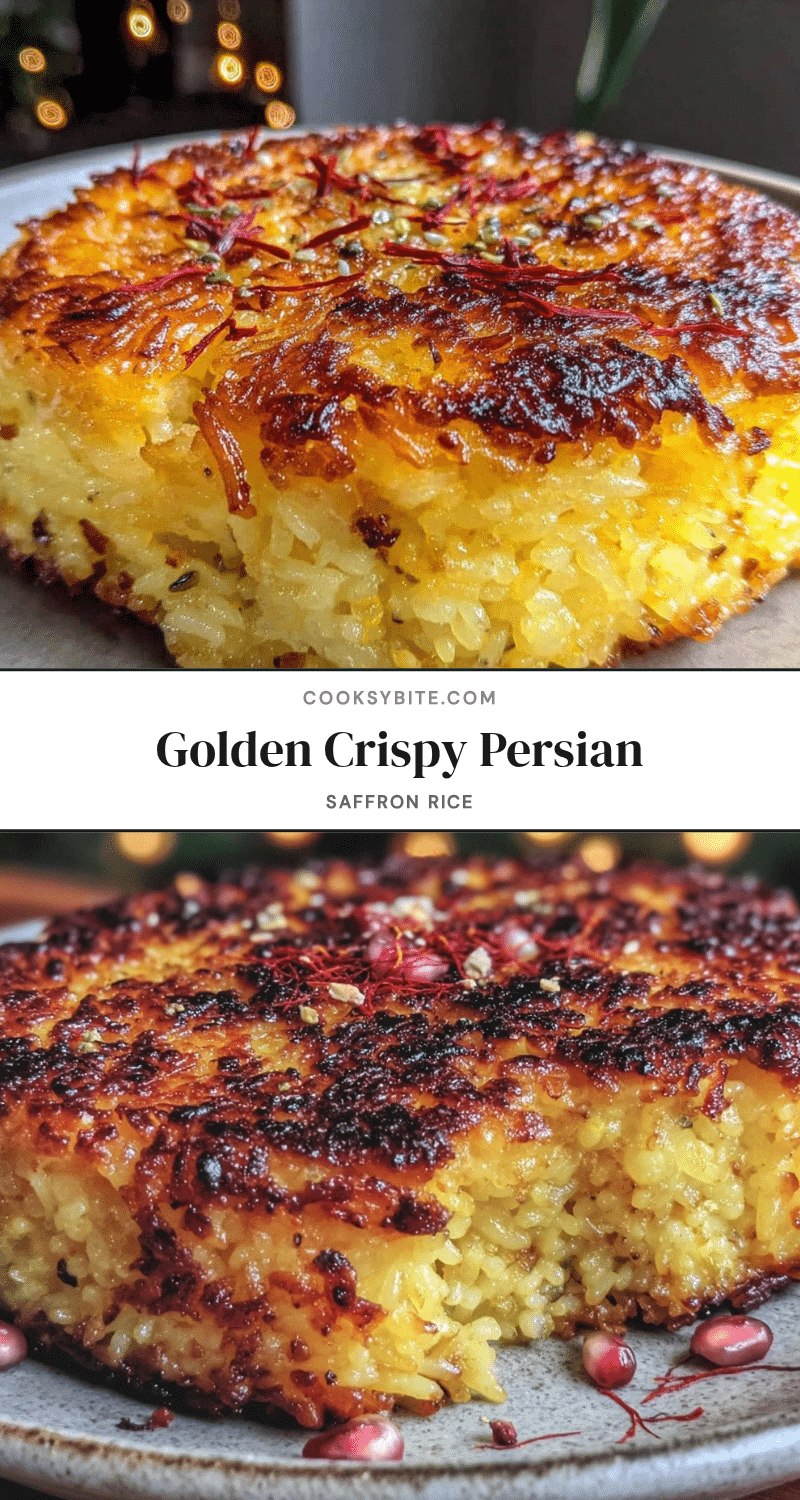
Crispy Persian Rice Tahdig Recipe Easy Golden Saffron Perfection

A simple and authentic Persian rice recipe featuring a golden, crispy saffron-infused crust known as tahdig. Perfect for weeknight dinners or entertaining guests with a flavorful and visually stunning dish.
- Prep Time: 35 minutes
- Cook Time: 40 minutes
- Total Time: 1 hour 15 minutes
- Yield: 4 servings 1x
- Category: Main Course
- Cuisine: Persian
Ingredients
- 2 cups basmati rice (about 370 grams)
- 1/2 teaspoon saffron threads, soaked in 2 tablespoons hot water
- 3 tablespoons unsalted butter (or salted butter)
- 3 tablespoons vegetable oil
- 1 1/2 teaspoons salt
- About 3 1/2 cups water (830 ml) for cooking rice
- Optional: pinch of ground turmeric or a small handful of thinly sliced potatoes
Instructions
- Rinse the rice under cold water in a fine mesh strainer until the water runs clear to remove excess starch. Drain well. (5 minutes)
- Transfer rinsed rice to a bowl, cover with cold water, add 1 teaspoon salt, and soak for at least 30 minutes.
- Steep 1/2 teaspoon saffron threads in 2 tablespoons hot water (not boiling) for about 10 minutes to release color and flavor.
- Bring a large pot of salted water (4-5 quarts) to a boil. Drain soaked rice and add to boiling water. Cook for 5-7 minutes until rice is al dente. Drain immediately.
- In a heavy-bottomed pot, melt 3 tablespoons butter with 3 tablespoons vegetable oil over medium heat, coating the bottom evenly.
- Drizzle saffron-infused water over the melted butter and oil; it will sizzle and smell fragrant.
- Carefully spoon parboiled rice into the pot, mounding lightly and shaping a dome with the back of the spoon.
- Cover the pot with a clean kitchen towel and then the lid to trap steam. Cook over low heat for 30-40 minutes without lifting the lid.
- After 30 minutes, gently lift a corner to check the golden crust. If needed, cook another 5-10 minutes on low heat.
- Invert the pot onto a serving platter to reveal the crispy tahdig crust on top with fluffy rice underneath.
Notes
Keep heat low and steady to avoid burning the crust. Do not lift the lid during cooking to maintain steam. For variations, add thinly sliced potatoes or flatbread at the bottom before butter and oil. Vegan version replaces butter with olive oil or plant-based spread. Reheat leftovers gently in a skillet with a few drops of water to refresh crispiness.
Nutrition
- Serving Size: 1 serving (about 1/4
- Calories: 250
- Fat: 5
- Carbohydrates: 45
- Protein: 5
Keywords: Persian rice, tahdig, saffron rice, crispy rice, basmati rice, Persian cuisine, golden crust rice, easy tahdig recipe