Let me tell you, the scent of garlic, fresh herbs, and a medley of vibrant veggies sizzling gently in olive oil is enough to make anyone’s mouth water. The first time I whipped up this easy colorful pasta primavera with frozen veggies, I was knee-high to a grasshopper—well, maybe not literally, but it sure felt like discovering a little kitchen treasure. I was instantly hooked. It’s the kind of moment where you pause, take a deep breath, and just smile because you know you’re onto something truly special.
This recipe came about on a rainy weekend when I was hunting for a quick, wholesome dinner without rummaging through the fridge for fresh produce that I didn’t have. Frozen veggies saved the day, and honestly, the result was so bright and flavorful that my family couldn’t stop sneaking bites off the stove. (I can’t really blame them!) It’s dangerously easy and provides pure, nostalgic comfort with a colorful twist.
Whether it’s a last-minute meal to brighten up your Pinterest dinner board or a sweet treat for your kids who need a veggie boost, this pasta primavera with frozen veggies fits the bill. Tested multiple times (in the name of research, of course), it’s become a staple for family gatherings and quick weeknight dinners alike. Trust me, you’re going to want to bookmark this one.
Why You’ll Love This Recipe
This easy colorful pasta primavera with frozen veggies isn’t just another pasta dish — it’s a real winner, and here’s why:
- Quick & Easy: Comes together in under 30 minutes, perfect for those busy weeknights when you need dinner pronto.
- Simple Ingredients: No fancy grocery runs needed; most of these veggies are pantry staples in frozen form.
- Perfect for Weeknight Dinners: Brightens up any ordinary evening with fresh flavors and a pop of color.
- Crowd-Pleaser: Kids and adults alike love the mix of tender pasta and vibrant veggies.
- Unbelievably Delicious: The combination of garlic, herbs, and a splash of lemon juice lifts this pasta into comfort food territory.
What sets this recipe apart is the clever use of frozen vegetables that keep their texture and color without the fuss of chopping fresh produce. Plus, the simple technique of sautéing veggies just right ensures they stay crisp-tender — no soggy mess here. I usually toss in a handful of fresh basil or parsley at the end to add that fresh garden vibe, making it feel like a homemade meal with minimal effort.
This pasta primavera isn’t just good; it’s the kind of recipe that makes you close your eyes after the first bite and smile. It’s comfort food with a fresh, colorful twist — healthier, faster, and with the same soul-soothing satisfaction you crave. Perfect for impressing guests without stress or simply treating yourself after a long day.
What Ingredients You Will Need
This recipe uses simple, wholesome ingredients to deliver bold flavor and satisfying texture without the fuss. Frozen veggies make it easy to enjoy seasonal tastes all year round, and you likely have most of these staples already.
- 8 oz (225 g) pasta — I prefer penne or farfalle for holding the sauce well.
- 1 tablespoon olive oil — Use extra virgin for the best flavor.
- 3 cloves garlic, minced — Adds that irresistible savory aroma.
- 1 ½ cups frozen mixed vegetables — I recommend a colorful blend with peas, carrots, corn, and green beans (look for brands like Green Giant for good texture).
- ½ cup frozen broccoli florets — Keeps the dish vibrant and adds a bit of crunch.
- ½ cup cherry tomatoes, halved — Fresh or frozen work great; they burst with sweetness.
- ¼ cup grated Parmesan cheese — Adds a salty, nutty finish (substitute with nutritional yeast for a vegan option).
- 2 tablespoons fresh basil or parsley, chopped — Adds a fresh, herbal note.
- Juice of ½ lemon — Brightens the whole dish.
- Salt and freshly ground black pepper — To taste.
- Optional: red pepper flakes — For a little kick if you like some heat.
If you want to go gluten-free, brown rice or chickpea pasta works well here. Feel free to swap the frozen veggies for fresh if you have them on hand, but frozen saves time and keeps things consistent. For a creamier twist, a splash of cream or a dollop of ricotta stirred in at the end is a personal favorite of mine.
Equipment Needed
- Large pot — For boiling the pasta. A heavy-bottomed pot helps maintain even heat.
- Large skillet or sauté pan — Preferably non-stick or stainless steel to sauté the veggies without sticking.
- Colander — To drain pasta efficiently.
- Wooden spoon or silicone spatula — For stirring without scratching your pans.
- Measuring cups and spoons — Accuracy helps keep the flavors balanced.
- Knife and cutting board — For prepping garlic, herbs, and tomatoes.
If you don’t have a large skillet, a wide saucepan works just fine. I’ve also used cast iron pans here—just be sure to preheat and use a bit more oil to prevent sticking. For budget-friendly options, an affordable non-stick pan from your local store will do wonders and clean up quickly.
Preparation Method
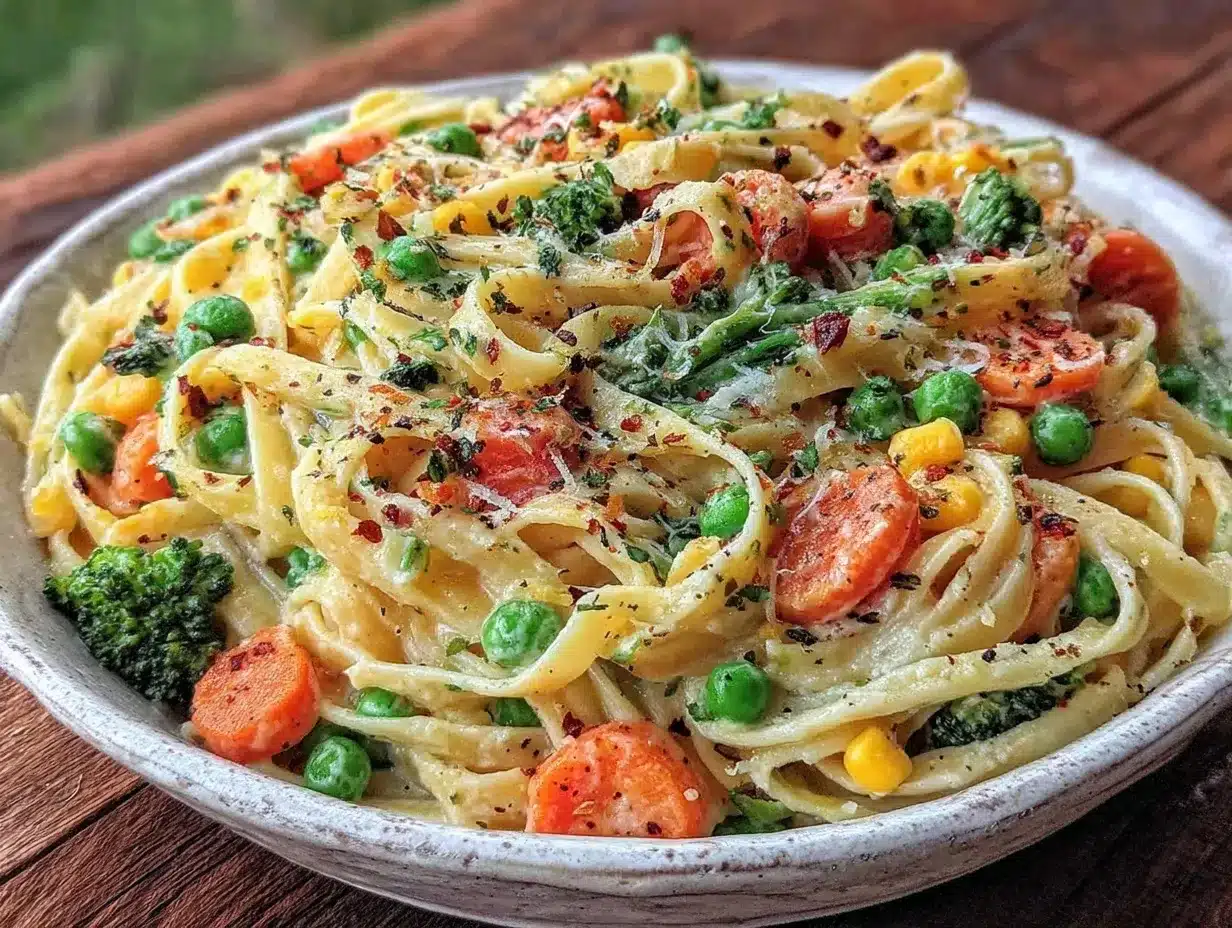
- Cook the pasta: Bring a large pot of salted water to a boil. Add 8 oz (225 g) of your chosen pasta and cook according to package instructions until al dente, about 8–10 minutes. Reserve ½ cup (120 ml) of the pasta water before draining. This starchy water will help the sauce cling beautifully.
- Prepare the veggies: While pasta cooks, heat 1 tablespoon olive oil in a large skillet over medium heat. Add 3 cloves minced garlic and sauté for about 30 seconds until fragrant (don’t let it brown, or it’ll get bitter).
- Add frozen veggies: Toss in 1 ½ cups of mixed frozen vegetables and ½ cup frozen broccoli florets. Cook, stirring occasionally, for 5–7 minutes until veggies are heated through and just tender. You want them crisp-tender, not mushy.
- Add cherry tomatoes: Stir in ½ cup halved cherry tomatoes and cook for another 2 minutes, allowing them to soften slightly and release their sweet juices.
- Combine pasta and veggies: Add the drained pasta to the skillet along with ¼ cup grated Parmesan cheese and the reserved ½ cup pasta water. Toss everything together over low heat, letting the cheese melt and the sauce thicken slightly, about 2–3 minutes.
- Finish with herbs and lemon: Remove from heat and stir in 2 tablespoons chopped fresh basil or parsley and juice of ½ lemon. Season generously with salt, freshly ground black pepper, and red pepper flakes if using. Give everything a final toss to mix.
- Serve immediately: Plate up your colorful creation and add an extra sprinkle of Parmesan or fresh herbs if you like. Enjoy warm for best flavor.
Tip: If your sauce seems dry, add a splash more pasta water. If too watery, let it cook a minute longer to reduce. The pasta water is your secret weapon here, trust me. Also, avoid overcooking the frozen veggies—they should have a bit of snap left to keep the dish lively.
Cooking Tips & Techniques
One of the best tricks I’ve learned for pasta primavera is to always save some pasta water before draining. That little starchy liquid acts like magic glue, helping the sauce cling to every noodle and veggie. It’s a game-changer!
When sautéing frozen veggies, don’t thaw them first—that only leads to soggy results. Toss them straight into the hot pan so they steam lightly but still retain texture. Stir gently and give them room to cook evenly.
Watch your garlic carefully; it goes from fragrant to burnt in seconds. I usually add garlic after the oil is hot but not smoking, and keep the heat moderate. If your garlic burns, it’ll give the dish a bitter edge, and nobody wants that.
Multitasking helps here—while your pasta cooks, you can prep the garlic and herbs, so everything comes together in sync. Timing is key to serving this pasta primavera warm and fresh.
If you want to boost the flavor, a tiny splash of white wine or a pinch of chili flakes adds subtle depth. I’ve made this dish dozens of times, and a little extra seasoning always makes it feel like you put in more effort than you did (shh, it’s our little secret!).
Variations & Adaptations
- Vegetarian or Vegan: Skip the Parmesan and toss in nutritional yeast or a sprinkle of toasted nuts for nuttiness. Use vegan pasta if preferred.
- Gluten-Free: Swap regular pasta for gluten-free versions made from rice, quinoa, or chickpeas without losing any flavor or texture.
- Seasonal Veggie Swap: In summer, fresh zucchini, bell peppers, or asparagus can replace or complement the frozen veggies for a garden-fresh burst.
- Protein Boost: Add cooked chicken, shrimp, or crispy tofu cubes to turn it into a heartier meal.
- Cheesy Creamy Twist: Stir in a spoonful of ricotta or mascarpone at the end for a luscious finish.
Personally, I once tried adding sun-dried tomatoes and Kalamata olives for a Mediterranean vibe, and it was a hit at dinner parties. Feel free to experiment with herbs like thyme or oregano or swap lemon juice for a splash of balsamic vinegar for a tangy twist.
Serving & Storage Suggestions
This pasta primavera is best served fresh and warm, straight from the skillet. Plate it with a sprinkle of extra Parmesan and a few fresh herb leaves for a pop of color. It pairs beautifully with a crisp green salad and a chilled glass of white wine or sparkling water with lemon.
Leftovers keep well in an airtight container in the refrigerator for up to 3 days. When reheating, add a splash of water or broth to loosen the sauce and warm gently on the stove or microwave to avoid drying out the pasta.
Freezing isn’t ideal because the texture of the veggies and pasta can suffer, but if you must, reheat slowly and consider adding fresh herbs after warming to freshen the flavors.
Flavors meld wonderfully overnight, making this dish even tastier the next day — perfect for meal prep or a quick lunch.
Nutritional Information & Benefits
This easy colorful pasta primavera with frozen veggies is a balanced meal packed with fiber, vitamins, and minerals. The frozen veggie blend offers vitamin C, A, and antioxidants, while the pasta provides satisfying carbohydrates to fuel your day.
Estimated per serving (makes 4 servings): 400-450 calories, 12g protein, 55g carbohydrates, 8g fat, and 6g fiber.
Using whole wheat or legume-based pasta can bump up the fiber and protein further. Plus, lemon juice and fresh herbs add antioxidants without any extra calories.
This recipe is naturally low in saturated fat and can be adapted for gluten-free or dairy-free diets with simple swaps. It’s a wholesome, colorful plate that supports wellness without skimping on flavor.
Conclusion
This easy colorful pasta primavera with frozen veggies is a trusty go-to recipe that proves quick, simple meals can be vibrant and delicious. Whether you’re cooking for a busy weeknight or feeding a crowd, this recipe hits all the right notes — bright, fresh, and comforting.
Feel free to tweak it based on what you have in the fridge or your taste preferences. I love this recipe because it’s forgiving yet flavorful, and it always brings smiles to the table. I hope it becomes your new favorite, too.
Give it a try and let me know how you customize it! Drop your thoughts, tips, or questions in the comments below — I’m all ears and love hearing your pasta primavera stories. Happy cooking, friends!
FAQs About Easy Colorful Pasta Primavera with Frozen Veggies
Can I use fresh vegetables instead of frozen?
Absolutely! Fresh veggies like zucchini, bell peppers, and asparagus work great. Just adjust cooking times so they stay crisp-tender.
How do I prevent the veggies from getting mushy?
Cook frozen veggies straight from frozen over medium heat without thawing first. Stir gently and don’t overcook—aim for crisp-tender.
What pasta shapes work best for primavera?
Short shapes like penne, farfalle, or fusilli hold the sauce and veggies nicely, but feel free to use spaghetti or linguine too.
Can I make this recipe vegan?
Yes! Skip the Parmesan cheese or use nutritional yeast. Use vegan pasta to keep it fully plant-based.
How should I store leftovers?
Keep leftovers in an airtight container in the refrigerator for up to 3 days. Reheat gently with a splash of water or broth to keep it moist.
Pin This Recipe!
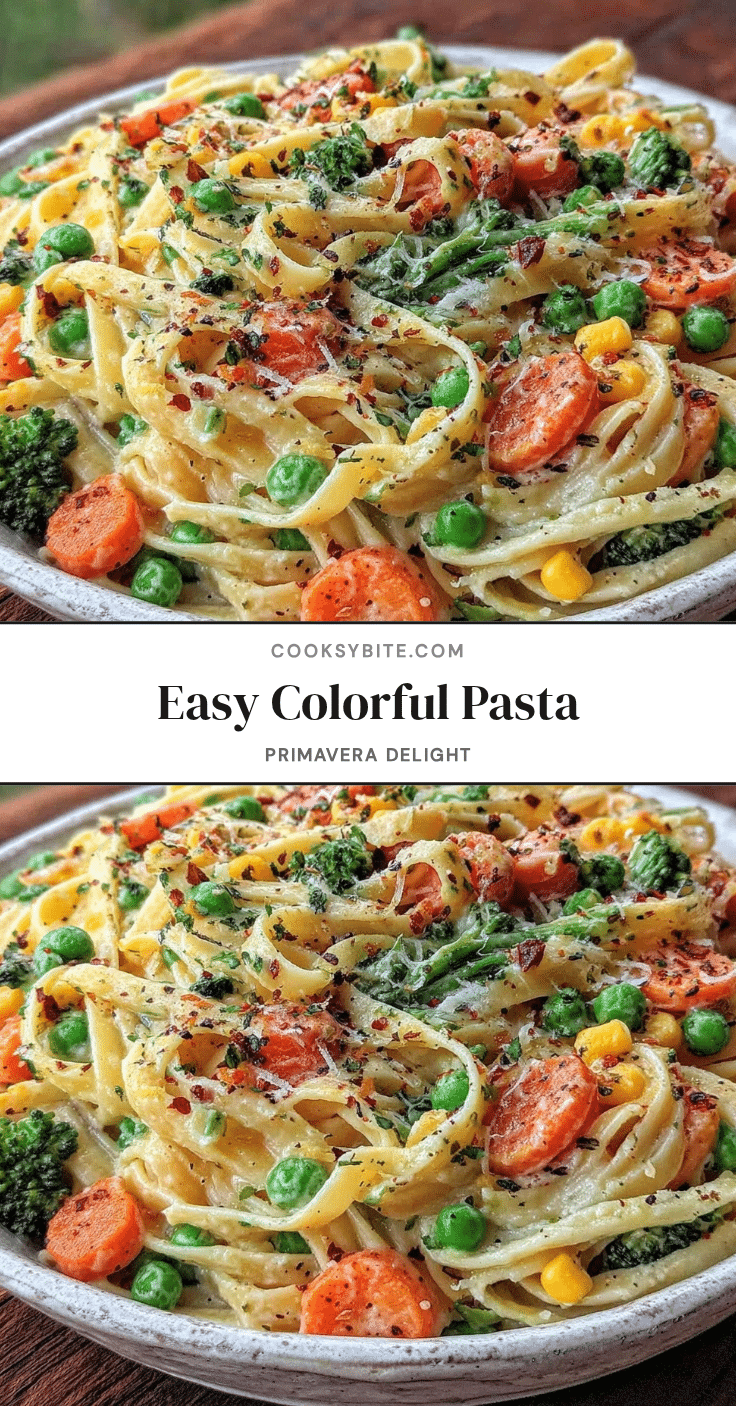
Easy Colorful Pasta Primavera Recipe with Frozen Veggies for Perfect Weeknight Dinner
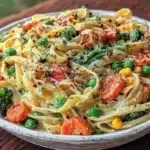
A quick and vibrant pasta primavera using frozen vegetables, perfect for busy weeknights. This recipe combines garlic, fresh herbs, and a medley of colorful veggies for a comforting and flavorful meal.
- Prep Time: 10 minutes
- Cook Time: 20 minutes
- Total Time: 30 minutes
- Yield: 4 servings 1x
- Category: Main Course
- Cuisine: Italian
Ingredients
- 8 oz (225 g) pasta (penne or farfalle preferred)
- 1 tablespoon extra virgin olive oil
- 3 cloves garlic, minced
- 1 ½ cups frozen mixed vegetables (peas, carrots, corn, green beans)
- ½ cup frozen broccoli florets
- ½ cup cherry tomatoes, halved (fresh or frozen)
- ¼ cup grated Parmesan cheese (or nutritional yeast for vegan option)
- 2 tablespoons fresh basil or parsley, chopped
- Juice of ½ lemon
- Salt and freshly ground black pepper, to taste
- Optional: red pepper flakes
Instructions
- Bring a large pot of salted water to a boil. Add 8 oz (225 g) of pasta and cook according to package instructions until al dente, about 8–10 minutes. Reserve ½ cup (120 ml) of the pasta water before draining.
- While pasta cooks, heat 1 tablespoon olive oil in a large skillet over medium heat. Add 3 cloves minced garlic and sauté for about 30 seconds until fragrant, avoiding browning.
- Add 1 ½ cups frozen mixed vegetables and ½ cup frozen broccoli florets. Cook, stirring occasionally, for 5–7 minutes until veggies are heated through and crisp-tender.
- Stir in ½ cup halved cherry tomatoes and cook for another 2 minutes until slightly softened.
- Add the drained pasta to the skillet along with ¼ cup grated Parmesan cheese and the reserved ½ cup pasta water. Toss together over low heat for 2–3 minutes until cheese melts and sauce thickens slightly.
- Remove from heat and stir in 2 tablespoons chopped fresh basil or parsley and juice of ½ lemon. Season with salt, freshly ground black pepper, and red pepper flakes if using. Toss to combine.
- Serve immediately, optionally garnished with extra Parmesan or fresh herbs.
Notes
Do not thaw frozen veggies before cooking to avoid sogginess. Save some pasta water to help the sauce cling to the pasta. Avoid burning garlic by sautéing it briefly over moderate heat. For a creamier version, add a splash of cream or a dollop of ricotta at the end. Use gluten-free pasta for a gluten-free meal. Nutritional yeast can replace Parmesan for a vegan option.
Nutrition
- Serving Size: 1 serving (about 1/4
- Calories: 425
- Sugar: 6
- Sodium: 250
- Fat: 8
- Saturated Fat: 1.5
- Carbohydrates: 55
- Fiber: 6
- Protein: 12
Keywords: pasta primavera, frozen vegetables, quick dinner, weeknight meal, easy pasta recipe, vegetarian, vegan option, gluten-free option