Introduction
There was this one evening last week when I got home later than usual, completely wiped out and with zero inspiration to cook. Honestly, I was tempted to just order takeout—again. But then I glanced at the shrimp in the fridge and remembered this easy tangy shrimp Pad Thai recipe I’d stumbled upon months ago. I figured, why not give it a quick shot? What started as a “let’s see if this even works” moment ended up being a total game-changer. The tangy sauce hit just the right spot, cutting through the tiredness like a little flavor reset. The noodles, shrimp, and that perfect zing reminded me why sometimes the simplest meals bring the biggest comfort.
I wasn’t expecting much at first—Pad Thai can be intimidating, right? But this recipe kept it real, straightforward, and surprisingly fast. No complicated sauces or hours of prep, just fresh ingredients, a quick stir-fry, and dinner on the table in under 30 minutes. Since then, I’ve made it a handful of times, tweaking it a bit here and there but always ending up with that same satisfying tangy punch and tender shrimp bite. It’s the kind of dinner that feels thoughtful, even on the busiest days, and somehow still manages to impress without the fuss.
Now, whenever I smell that familiar sweet and sour aroma, I catch myself smiling, knowing this easy tangy shrimp Pad Thai has quietly become my go-to for those hectic nights. It’s not just food—it’s a little pause, a bit of joy, a reminder that homemade dinners don’t need to be complicated to be memorable.
Why You’ll Love This Recipe
- Quick & Easy: Comes together in about 25 minutes, perfect for busy weeknights or sudden dinner cravings.
- Simple Ingredients: No need to hunt down exotic items; most are pantry and fridge staples you probably already have.
- Perfect for Any Occasion: Whether it’s a casual solo meal or an impromptu dinner with friends, it fits right in.
- Crowd-Pleaser: The tangy sauce and tender shrimp combo always gets compliments—even from picky eaters.
- Unbelievably Delicious: The balance of sweet, sour, and savory flavors makes every bite a delight, with noodles that soak up all that goodness.
- Unique Touch: Unlike other Pad Thai recipes, this one blends fresh lime juice with tamarind paste and fish sauce for a truly authentic tang without being overwhelming.
- Comfort Food with a Twist: It’s familiar, but the bright notes keep it lively and refreshing, making it a meal you’ll come back to again and again.
What Ingredients You Will Need
This recipe uses simple, wholesome ingredients to deliver bold flavor and satisfying texture without the fuss. Most are pantry staples, with a few fresh touches that bring everything together beautifully.
- For the Pad Thai:
- 8 oz (225 g) rice noodles, flat and about ¼ inch wide
- 12 oz (340 g) raw shrimp, peeled and deveined
- 2 tbsp vegetable oil (or peanut oil for extra nuttiness)
- 3 cloves garlic, minced
- 2 large eggs, lightly beaten (room temperature)
- 1 cup bean sprouts, rinsed and drained
- 3 green onions, sliced thin
- ¼ cup crushed roasted peanuts (optional but recommended)
- Fresh cilantro leaves, for garnish (optional)
- For the Tangy Sauce:
- 3 tbsp tamarind paste (I use Thai Kitchen brand, reliable and tangy)
- 2 tbsp fish sauce (feel free to use soy sauce for a vegetarian twist)
- 2 tbsp palm sugar or brown sugar (balances the tang)
- 2 tbsp fresh lime juice (adds brightness)
- 1 tsp chili flakes or Sriracha (adjust based on your heat preference)
For substitutions, almond or coconut flour won’t work here, but you can swap out shrimp with chicken or tofu for different proteins. The tamarind paste is key for that signature tang, but if you can’t find it, a mix of lime juice and a splash of vinegar can help mimic the flavor. Fresh lime juice really lifts the dish, so don’t skip that one!
Equipment Needed
- Large pot for boiling noodles (a 4-quart pot works well)
- Large non-stick skillet or wok (I prefer a wok for tossing the noodles evenly, but a big skillet does the job)
- Mixing bowls for sauce and eggs
- Measuring spoons and cups for accurate sauce ratios
- Spatula or wooden spoon for stirring
- Colander or strainer for draining noodles
If you don’t have a wok, no worries—just use your biggest skillet and don’t overcrowd the pan. I’ve found that a silicone spatula works wonders for scraping the bottom without scratching your cookware. And if you’re on a budget, a simple non-stick skillet and a decent set of measuring spoons are all you really need to get this done right.
Preparation Method
- Prepare the Noodles (10 minutes): Soak the rice noodles in warm water for about 8-10 minutes until pliable but still firm to the bite (al dente). Drain and set aside. Overcooking here makes noodles mushy, so keep an eye on them.
- Mix the Tangy Sauce: In a small bowl, whisk together tamarind paste, fish sauce, brown sugar, fresh lime juice, and chili flakes. Taste and adjust the balance—more lime if you want extra tang, or sugar if it’s too sharp.
- Cook the Shrimp (3-4 minutes): Heat 1 tablespoon oil in your wok or skillet over medium-high heat. Add shrimp and cook until pink and opaque, about 1.5-2 minutes per side. Remove and set aside to avoid overcooking.
- Sauté Garlic & Eggs (3 minutes): Add remaining oil to the pan. Toss in minced garlic, cooking until fragrant but not burnt (about 30 seconds). Pour in the beaten eggs and scramble gently until just set.
- Combine Noodles & Sauce (5 minutes): Add the drained noodles to the pan with eggs and garlic. Pour the sauce over and toss quickly but gently to coat everything evenly. If the noodles stick, splash a little water to loosen them up.
- Add Shrimp & Veggies (2 minutes): Return the cooked shrimp to the pan along with the bean sprouts and green onions. Toss everything together just until warmed through—don’t overcook or the sprouts lose their crunch.
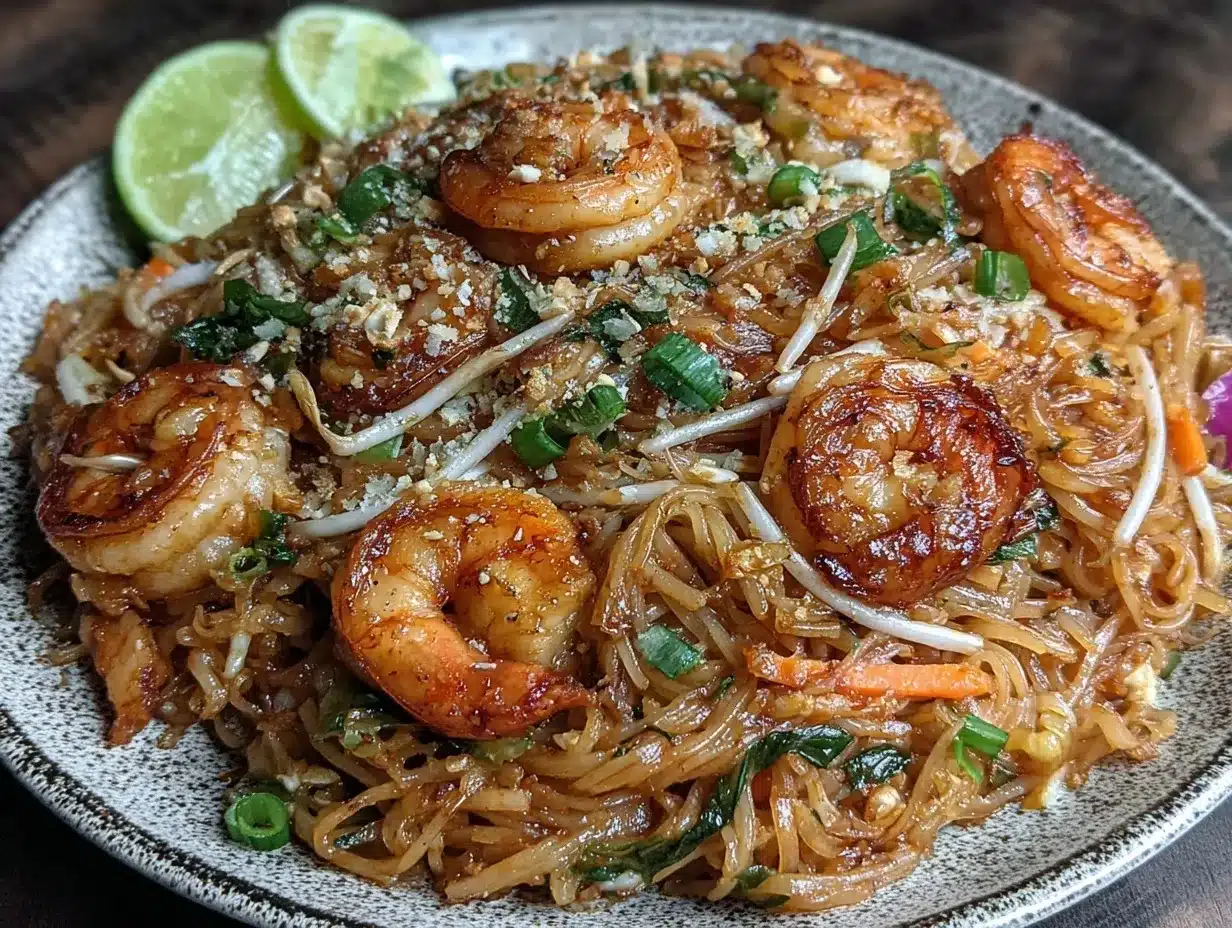
- Plate & Garnish: Serve immediately with crushed peanuts and fresh cilantro sprinkled on top. A lime wedge on the side adds a nice finishing touch.
Pro tip: Keep your heat high but manageable, and have all ingredients prepped before you start—Pad Thai comes together fast, and you don’t want anything burning or sticking while you scramble to add the next thing.
Cooking Tips & Techniques
Pad Thai is all about timing and balance. One thing I learned the hard way is that overcooking noodles kills the texture—so soaking instead of boiling is your friend. Also, don’t rush the sauce mixing; tasting it before adding to the noodles helps avoid surprises. Sometimes tamarind pastes vary in tartness, so tweak the lime and sugar accordingly.
When cooking shrimp, keep them moving in the pan but don’t overcrowd. Crowding makes them steam rather than sear, and that messes with the texture. I like to cook shrimp in batches if needed.
Scrambling eggs directly in the wok adds silkiness and little pockets of flavor throughout. If you try to make separate omelets, it never blends as well. Also, tossing the noodles with sauce on high heat helps them absorb flavor better, but be gentle to keep noodles intact.
Finally, fresh bean sprouts and green onions added last keep their crunch and brightness, which contrast beautifully with the tangy sauce and tender shrimp. It’s a little detail that makes a big difference.
Variations & Adaptations
- Protein Swaps: Replace shrimp with chicken strips, tofu cubes, or even thinly sliced beef. For tofu, press and pan-fry first to get a crispy edge.
- Spice Level: Adjust the chili flakes or swap for a milder sauce if you prefer less heat. You can also add fresh sliced red chilies for extra kick.
- Vegetarian Version: Skip fish sauce and use soy sauce or tamari, and load up on extra veggies like bell peppers, carrots, and snap peas.
- Seasonal Twists: In summer, toss in fresh mango slices or pineapple chunks for a fruity tang. In cooler months, add sautéed mushrooms or baby corn.
- Gluten-Free Adaptation: Use tamari instead of soy sauce and double-check the tamarind paste for additives.
One time, I swapped shrimp for leftover roasted chicken and added crushed peanuts and extra lime—it was a hit with friends who didn’t even notice the difference until I told them!
Serving & Storage Suggestions
This easy tangy shrimp Pad Thai is best served hot, straight from the pan. The fresh crunch of bean sprouts and peanuts really shines when it’s warm but not scorching. I like to serve it with a wedge of lime on the side for an extra squeeze of brightness at the table.
It pairs wonderfully with a simple cucumber salad or steamed greens to round out the meal. For drinks, a crisp white wine or iced jasmine tea complements the tangy and savory flavors nicely.
For leftovers, store in an airtight container in the fridge for up to 2 days. When reheating, add a splash of water or broth to loosen the noodles and warm gently in a skillet rather than the microwave to keep the texture pleasant. Flavors mellow a bit overnight, so a fresh squeeze of lime before serving brings the zing back.
Nutritional Information & Benefits
This dish is a balanced mix of protein, carbs, and fresh veggies. Shrimp provides lean protein with low calories and is rich in selenium and vitamin B12. Tamarind paste adds antioxidants and supports digestion, while fresh lime juice delivers vitamin C and a bright flavor punch without added sugar.
The rice noodles keep it gluten-free and light, though they do add carbohydrates for energy. Using minimal oil and fresh ingredients keeps this recipe on the healthier side of comfort food. Just watch the sugar in the sauce if you’re managing blood sugar levels.
Allergens to note: shellfish (shrimp), peanuts (optional topping), and fish sauce (contains fish). For allergies, swap shrimp for tofu and omit peanuts or replace with toasted sesame seeds.
Conclusion
This easy tangy shrimp Pad Thai recipe has quietly become a staple in my kitchen for those nights when I want something quick, satisfying, and full of flavor without the hassle of takeout. It’s flexible, approachable, and packs a punch of fresh, vibrant tastes that keep me coming back. Honestly, it’s the kind of recipe that feels like a little celebration on a plate, no matter how hectic the day was.
Feel free to tweak the spice, swap proteins, or add your favorite veggies to make it truly your own. Cooking should be fun, not stressful, and this recipe fits that perfectly. I’d love to hear how you make it your own or any twists you try—drop a comment below and share your experience!
Here’s to more homemade dinners that surprise you in the best way.
FAQs
What type of noodles is best for Pad Thai?
Flat rice noodles about ¼ inch wide work best because they soak up the sauce nicely and have the right chewy texture.
Can I make this recipe vegetarian?
Absolutely! Swap shrimp for tofu and replace fish sauce with soy sauce or tamari for a tasty vegetarian version.
How do I prevent the noodles from sticking?
Soak the noodles instead of boiling, and toss them quickly with oil or sauce over high heat. Adding a splash of water during cooking helps loosen them if they stick.
Is tamarind paste necessary?
Tamarind paste gives Pad Thai its signature tangy flavor, but if you can’t find it, a mix of lime juice and a little vinegar can work as a substitute.
Can I prepare this recipe ahead of time?
You can prep ingredients and sauce ahead, but it’s best to cook and assemble just before serving for the freshest texture and flavor.
Pin This Recipe!
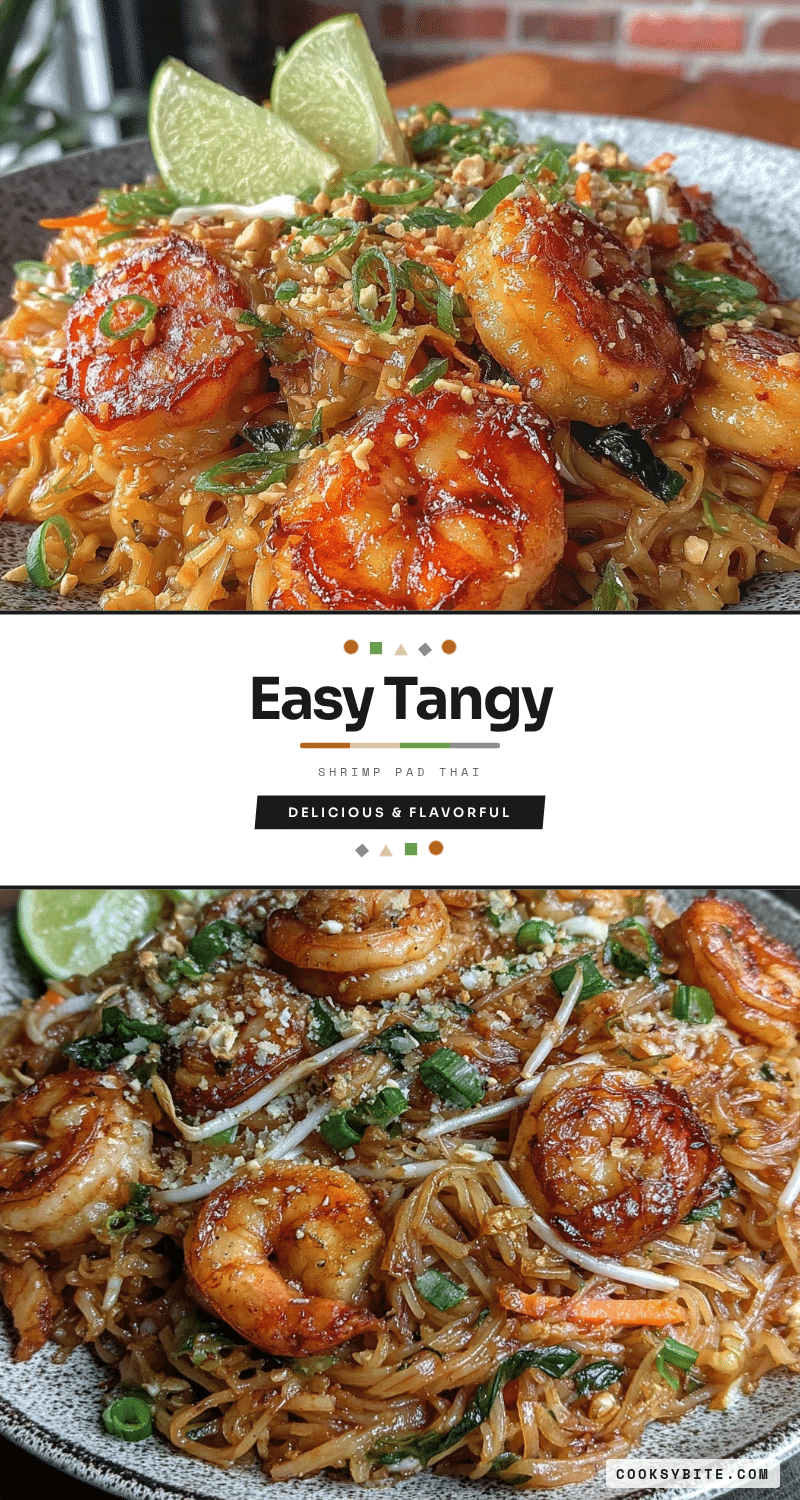
Easy Tangy Shrimp Pad Thai Recipe Perfect for Quick Homemade Dinners
A quick and easy shrimp Pad Thai recipe with a tangy sauce that comes together in about 25 minutes, perfect for busy weeknights or sudden dinner cravings.
- Prep Time: 10 minutes
- Cook Time: 15 minutes
- Total Time: 25 minutes
- Yield: 3-4 servings 1x
- Category: Main Course
- Cuisine: Thai
Ingredients
- 8 oz (225 g) rice noodles, flat and about ¼ inch wide
- 12 oz (340 g) raw shrimp, peeled and deveined
- 2 tbsp vegetable oil (or peanut oil for extra nuttiness)
- 3 cloves garlic, minced
- 2 large eggs, lightly beaten (room temperature)
- 1 cup bean sprouts, rinsed and drained
- 3 green onions, sliced thin
- ¼ cup crushed roasted peanuts (optional but recommended)
- Fresh cilantro leaves, for garnish (optional)
- 3 tbsp tamarind paste
- 2 tbsp fish sauce (or soy sauce for vegetarian)
- 2 tbsp palm sugar or brown sugar
- 2 tbsp fresh lime juice
- 1 tsp chili flakes or Sriracha
Instructions
- Soak the rice noodles in warm water for about 8-10 minutes until pliable but still firm to the bite (al dente). Drain and set aside.
- In a small bowl, whisk together tamarind paste, fish sauce, brown sugar, fresh lime juice, and chili flakes. Taste and adjust the balance as needed.
- Heat 1 tablespoon oil in a wok or large skillet over medium-high heat. Add shrimp and cook until pink and opaque, about 1.5-2 minutes per side. Remove and set aside.
- Add remaining oil to the pan. Toss in minced garlic and cook until fragrant but not burnt, about 30 seconds. Pour in beaten eggs and scramble gently until just set.
- Add drained noodles to the pan with eggs and garlic. Pour the sauce over and toss quickly but gently to coat evenly. Add a splash of water if noodles stick.
- Return cooked shrimp to the pan along with bean sprouts and green onions. Toss everything together just until warmed through, about 2 minutes.
- Serve immediately with crushed peanuts and fresh cilantro sprinkled on top. Add a lime wedge on the side.
Notes
Soak noodles instead of boiling to avoid mushiness. Adjust lime and sugar in sauce to balance tanginess. Cook shrimp in batches to avoid steaming. Scramble eggs directly in the pan for best texture. Toss noodles gently on high heat to absorb sauce without breaking.
Nutrition
- Serving Size: About 1 cup per serv
- Calories: 350
- Sugar: 8
- Sodium: 900
- Fat: 14
- Saturated Fat: 2.5
- Carbohydrates: 38
- Fiber: 2
- Protein: 22
Keywords: Pad Thai, shrimp, quick dinner, tangy sauce, easy recipe, homemade, stir-fry, Thai cuisine