It was one of those evenings when I got home later than expected, hungry but honestly a bit too tired to think about what to cook. I had a few random ingredients lying around, nothing fancy, but I remembered a little trick I picked up years ago from my old neighbor, Mrs. Lin. She was this sprightly woman who could whip up the most incredible Chinese dishes with what looked like magic. I half-jokingly texted her, “Got any quick dinner ideas with chicken and peanuts?” Her reply? “Kung Pao, but real deal.”
I had always been skeptical about making authentic Chinese dishes at home, especially Kung Pao Chicken — it seemed complicated with all those sauces and spices. But I figured, why not give it a shot? Honestly, that first attempt was a surprise. The bold mix of flavors hit me like a wave — spicy, sweet, salty, with a crunch from the peanuts. It was so flavorful and authentic that I found myself making this recipe multiple times that week. It’s the kind of meal that feels like a reward after a long day, comforting but exciting to the palate.
What stuck with me was how simple ingredients could come together to create something so rich in taste and texture. There’s a certain rhythm to stir-frying this dish, and that sizzling sound in the wok still makes me smile. This recipe isn’t just about feeding yourself; it’s about creating a moment — quick, satisfying, and a little bit special.
So here’s my take on the flavorful authentic Kung Pao chicken recipe, one that’s easy enough for weeknights but tasty enough to impress friends. It’s become a go-to in my kitchen, and I trust it’ll find a place in yours too.
Why You’ll Love This Recipe
After testing this flavorful authentic Kung Pao chicken recipe countless times (I’m not kidding, it’s been a favorite for months), I can say it really checks all the boxes for a weekday dinner or a casual get-together. Here’s what makes it stand out:
- Quick & Easy: Ready in about 30 minutes, perfect when you want something tasty but don’t want to spend hours cooking.
- Simple Ingredients: No need for exotic items. Most of what you need is probably already in your pantry or local grocery store.
- Perfect for Any Occasion: Whether it’s a cozy dinner for one or a lively potluck, this dish fits right in.
- Crowd-Pleaser: Kids and adults alike love the spicy-sweet flavor combo, and the peanuts add that irresistible crunch.
- Unbelievably Delicious: The balance of heat, sweetness, and umami makes every bite memorable — it’s comfort food with a kick.
This isn’t just another takeout copycat recipe, either. The secret is in the sauce blend — a harmony of soy sauce, rice vinegar, and a touch of sugar — and the way you toast those Sichuan peppercorns and peanuts to perfection. It’s all about layering flavors and textures, which makes this Kung Pao chicken authentically satisfying.
Every time I make it, I get that little moment of “Yes, this is exactly what I wanted” — and I think you’ll find that too.
What Ingredients You Will Need
This recipe uses straightforward, wholesome ingredients to deliver bold flavor and satisfying texture without the fuss. Most are pantry staples, with a few fresh items for that authentic punch.
- For the Chicken:
- 1 lb (450g) boneless, skinless chicken thighs, cut into bite-sized pieces (thighs stay juicy)
- 1 tablespoon soy sauce (I prefer Kikkoman for a balanced flavor)
- 1 tablespoon Shaoxing wine (or dry sherry as a substitute)
- 1 teaspoon cornstarch (helps tenderize and thicken)
- For the Sauce:
- 2 tablespoons light soy sauce
- 1 tablespoon dark soy sauce (adds depth and color)
- 1 tablespoon Chinese black vinegar (or balsamic vinegar as a backup)
- 1 teaspoon sugar
- 1 teaspoon hoisin sauce (optional, but adds a nice sweetness)
- 1 teaspoon chili paste or doubanjiang (for authentic heat)
- 1/4 cup chicken broth or water
- Other Key Ingredients:
- 3 tablespoons vegetable oil or peanut oil (high smoke point is important)
- 6-8 dried red chilies, whole (adjust based on your heat preference)
- 1 teaspoon Sichuan peppercorns, lightly crushed (don’t skip — they give that signature numbing sensation)
- 3 cloves garlic, minced
- 1-inch piece fresh ginger, minced
- 1/2 cup roasted peanuts (unsalted for best control over saltiness)
- 3 green onions, sliced (white and green parts separated)
Substitution tips: If you want a gluten-free option, use tamari instead of soy sauce. For a milder version, reduce or omit the dried chilies but keep the Sichuan peppercorns for flavor. I’ve also swapped peanuts for cashews once, which worked surprisingly well.
Equipment Needed
To make this flavorful authentic Kung Pao chicken recipe, a few kitchen tools will make your life easier:
- Wok or Large Skillet: A wok is ideal for the quick, high-heat stir-frying needed here, but a large heavy skillet works fine if you don’t have one.
- Sharp Knife and Cutting Board: For prepping chicken, garlic, ginger, and green onions precisely.
- Measuring Spoons and Cups: For accuracy with sauces and spices.
- Small Mixing Bowls: To combine and measure your sauce ahead of time.
- Spatula or Wooden Spoon: For stirring and tossing ingredients without scratching your cookware.
If you don’t have a wok, a cast iron skillet is a great alternative — it holds heat well and helps get that nice sear on the chicken. Also, a mortar and pestle is handy if you want to crush Sichuan peppercorns fresh, but you can also use the back of a spoon or a spice grinder.
Keep your wok or skillet well-seasoned and dry before heating to avoid sticking and to get that perfect sizzle.
Preparation Method
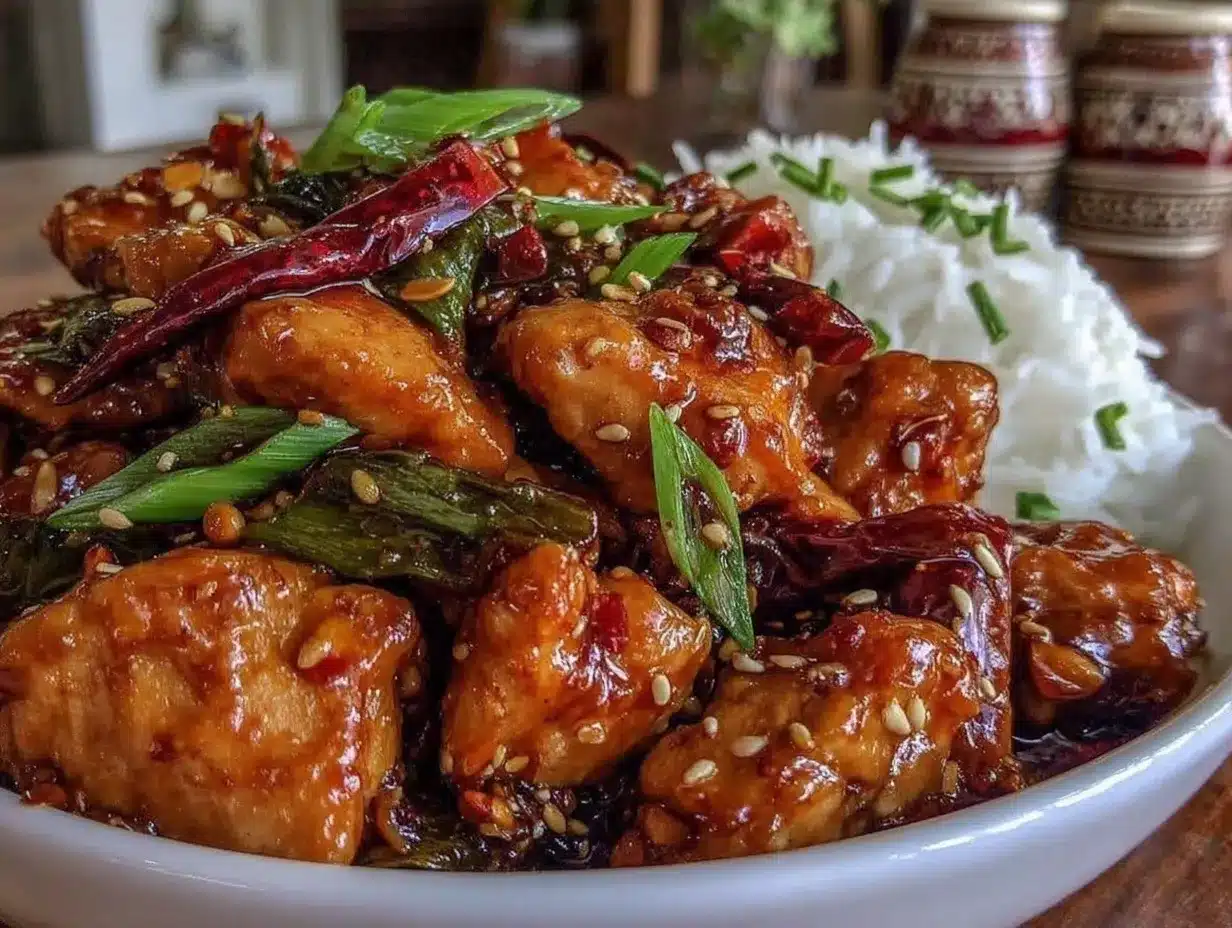
- Marinate the Chicken: In a medium bowl, combine the chicken pieces with 1 tablespoon soy sauce, Shaoxing wine, and cornstarch. Mix well until every piece is coated. Let it sit for 15 minutes—this helps tenderize the meat and creates a smooth texture when cooked.
- Prepare the Sauce: In a separate bowl, whisk together light soy sauce, dark soy sauce, black vinegar, sugar, hoisin sauce, chili paste, and chicken broth. Set aside. This sauce balances spicy, sweet, and tangy flavors perfectly.
- Toast the Peppers and Peppercorns: Heat 2 tablespoons vegetable oil in your wok over medium heat. Add the dried red chilies and Sichuan peppercorns. Stir constantly for about 30 seconds until fragrant but not burnt (watch carefully!). This step infuses the oil, which flavors the entire dish.
- Cook the Chicken: Increase heat to high, add the marinated chicken in a single layer. Let it sear without stirring for about 2 minutes, then stir-fry for another 3-4 minutes until chicken is almost cooked through and lightly browned.
- Add Aromatics: Push the chicken to the side of the wok. Add remaining 1 tablespoon oil if needed, then toss in minced garlic, ginger, and the white parts of the green onions. Stir quickly for about 30 seconds until fragrant but not burnt.
- Combine Sauce and Finish Cooking: Pour the prepared sauce into the wok. Stir everything rapidly to coat the chicken and aromatics. Cook for another 2-3 minutes until the sauce thickens and chicken is fully cooked (internal temp should hit 165°F / 74°C).
- Add Peanuts and Green Onion Tops: Toss in roasted peanuts and the green parts of the onions. Give it a final stir to combine all flavors and textures.
- Serve Immediately: Remove from heat and plate your Kung Pao chicken while hot. The sauce should be glossy with a nice sticky coating and the peanuts crunchy.
Pro tip: If the sauce gets too thick or sticky, add a splash of water or chicken broth to loosen it up. Also, keep your heat fairly high to get that authentic stir-fry flavor, but watch closely so nothing burns.
Cooking Tips & Techniques
There’s a bit of finesse in making truly flavorful authentic Kung Pao chicken, but once you get the hang of it, it’s straightforward:
- High Heat Stir-Frying: Cooking over high heat creates that signature sear and smoky aroma known as “wok hei.” Don’t overcrowd the pan as that lowers the temperature and steams the chicken instead.
- Marinating Makes a Difference: The cornstarch and soy sauce in the marinade tenderize the chicken and help the sauce cling better. I’ve skipped this step before, and honestly, the texture wasn’t as good.
- Don’t Overcook the Garlic and Ginger: These aromatics burn quickly and turn bitter, so add them after the chicken is mostly cooked and stir briefly.
- Toasting Sichuan Peppercorns: This step is crucial for releasing their unique numbing flavor. Use a dry pan and low heat, keep moving them around.
- Balancing the Sauce: Taste your sauce before adding it to the wok. Adjust sugar or vinegar to suit your palate — some days I like it tangier, others sweeter.
- Using Peanuts: Use roasted, unsalted peanuts to control saltiness. Add them at the end so they stay crunchy and fresh.
My first few times, I burned the garlic and ended up with a bitter sauce — lesson learned! Also, stirring constantly but not frantically keeps the dish from drying out or sticking. Timing and heat control really make or break this recipe.
Variations & Adaptations
This flavorful authentic Kung Pao chicken recipe is flexible if you want to switch things up or accommodate dietary needs:
- Vegetarian Version: Swap chicken for firm tofu or tempeh. Press tofu well to remove moisture, then marinate and cook similarly.
- Spice Level Adjustments: For a milder version, reduce the dried chilies or remove seeds. For extra heat, add fresh chopped chilies or a dash of chili oil at the end.
- Gluten-Free Option: Use tamari instead of soy sauce, and check that your hoisin sauce is gluten-free (or omit it).
- Nut-Free Adaptation: Replace peanuts with roasted pumpkin seeds or omit them entirely, though you’ll lose some crunch.
- Seasonal Twists: Add diced bell peppers or water chestnuts for extra texture; in cooler months, try adding baby corn or shiitake mushrooms.
Personally, I’ve made a version with cashews once when I ran out of peanuts — it was surprisingly good and gave a slightly sweeter crunch. Feel free to experiment with what you have on hand!
Serving & Storage Suggestions
Serve this Kung Pao chicken hot over steamed jasmine rice or alongside simple stir-fried vegetables. The contrast between the fluffy rice and the bold, spicy chicken is delightful.
A cold cucumber salad pairs nicely to balance the heat and adds a refreshing crunch. For drinks, a light beer or jasmine tea complements the flavor profile well.
If you have leftovers, store them in an airtight container in the fridge for up to 3 days. Reheat gently in a skillet over medium heat to keep the sauce glossy and fresh. Avoid microwaving if possible, as it can dry out the chicken.
Flavors actually deepen after a day, so sometimes I make this recipe a day ahead intentionally. Just add fresh green onions or extra peanuts when reheating for that just-cooked brightness.
Nutritional Information & Benefits
Estimated per serving (serves 4):
| Calories | 350-400 kcal |
|---|---|
| Protein | 30g |
| Fat | 20g (mostly from peanuts and oil) |
| Carbohydrates | 15g |
This dish offers a good dose of protein from chicken and healthy fats from peanuts. Sichuan peppercorns provide antioxidants, and ginger and garlic add anti-inflammatory benefits.
By controlling oil and sugar amounts, it fits well into balanced meal plans. It’s naturally gluten-free if you swap tamari and mindful for low-carb diets if served over cauliflower rice.
Just a heads-up: peanuts are a common allergen, so adjust accordingly if needed.
Conclusion
This flavorful authentic Kung Pao chicken recipe has been a reliable favorite in my kitchen — quick to make, packed with bold flavors, and surprisingly approachable. It’s the kind of dish that feels special without being complicated, and it invites you to tweak it to your taste.
Whether you’re new to stir-frying or have been making Asian dishes for years, this recipe offers a satisfying balance of heat, tang, and crunch that keeps me coming back. I hope it becomes a staple in your rotation too.
Feel free to share your own twists or questions — I love hearing how this recipe fits into your kitchen stories. Happy cooking!
FAQs
- Can I use chicken breast instead of thighs?
Yes, you can, but thighs stay juicier and more flavorful in this recipe. If using breast, watch cooking time carefully to avoid dryness. - What can I substitute for Sichuan peppercorns?
Sichuan peppercorns have a unique numbing effect that’s hard to replace, but you can try a small pinch of ground black pepper and a bit of lemon zest for brightness. - How spicy is this dish?
It’s moderately spicy thanks to dried chilies and chili paste. You can adjust by using fewer chilies or removing seeds. - Can I prepare parts of this recipe ahead?
Absolutely. Marinate the chicken and mix the sauce a few hours ahead. Just stir-fry fresh when ready to eat. - Is this recipe freezer-friendly?
I don’t recommend freezing cooked Kung Pao chicken as the sauce and peanuts can lose texture. Leftovers keep well refrigerated for a few days.
Pin This Recipe!
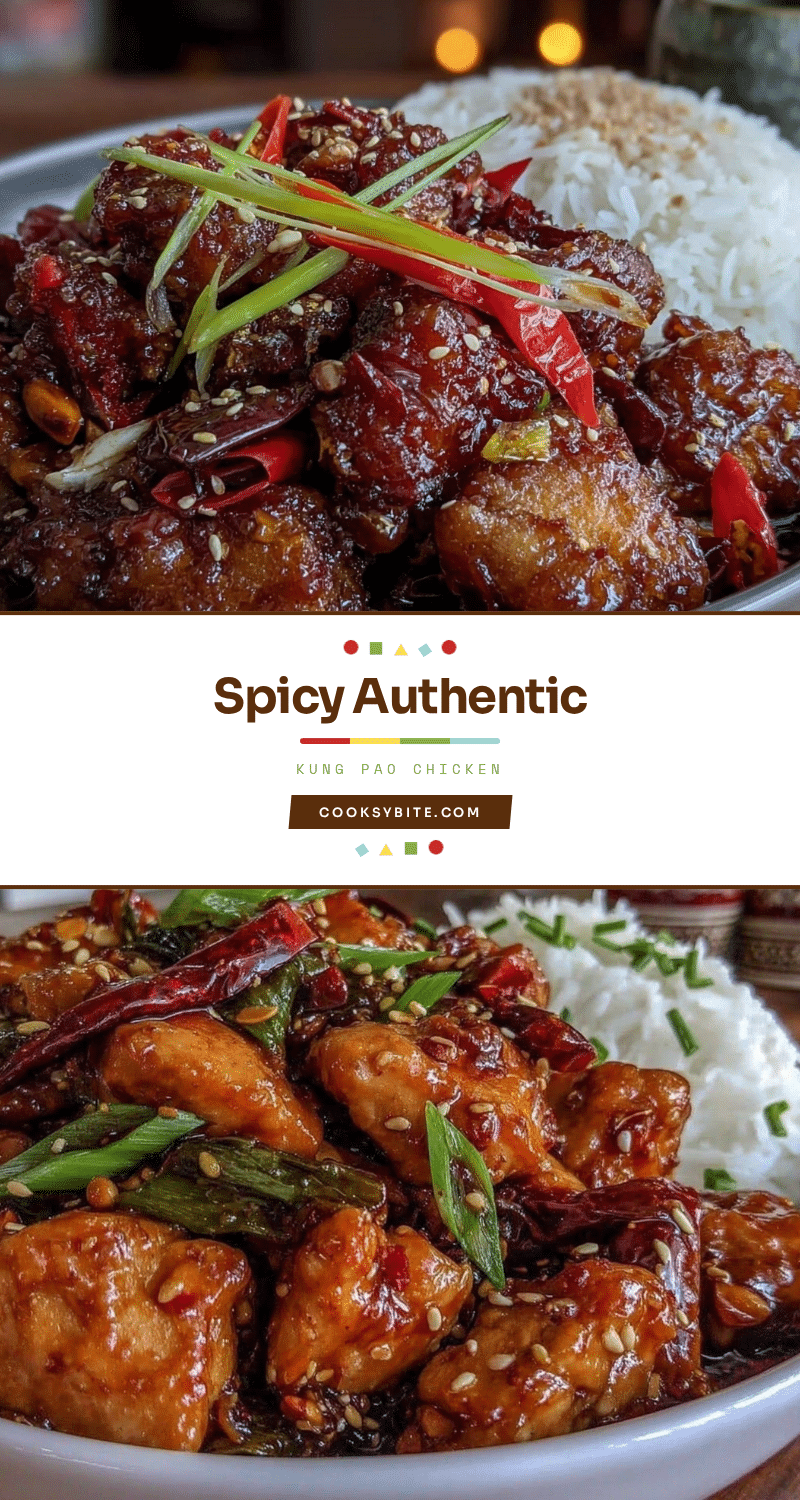
Flavorful Authentic Kung Pao Chicken Recipe Easy Step-by-Step Guide
A quick and easy authentic Kung Pao Chicken recipe featuring a bold mix of spicy, sweet, and salty flavors with crunchy peanuts. Perfect for weeknights or casual get-togethers.
- Prep Time: 15 minutes
- Cook Time: 15 minutes
- Total Time: 30 minutes
- Yield: 4 servings 1x
- Category: Main Course
- Cuisine: Chinese
Ingredients
- 1 lb boneless, skinless chicken thighs, cut into bite-sized pieces
- 1 tablespoon soy sauce
- 1 tablespoon Shaoxing wine (or dry sherry)
- 1 teaspoon cornstarch
- 2 tablespoons light soy sauce
- 1 tablespoon dark soy sauce
- 1 tablespoon Chinese black vinegar (or balsamic vinegar)
- 1 teaspoon sugar
- 1 teaspoon hoisin sauce (optional)
- 1 teaspoon chili paste or doubanjiang
- 1/4 cup chicken broth or water
- 3 tablespoons vegetable oil or peanut oil
- 6–8 dried red chilies, whole
- 1 teaspoon Sichuan peppercorns, lightly crushed
- 3 cloves garlic, minced
- 1-inch piece fresh ginger, minced
- 1/2 cup roasted peanuts (unsalted)
- 3 green onions, sliced (white and green parts separated)
Instructions
- Marinate the chicken by combining chicken pieces with 1 tablespoon soy sauce, Shaoxing wine, and cornstarch in a medium bowl. Mix well and let sit for 15 minutes.
- Prepare the sauce by whisking together light soy sauce, dark soy sauce, black vinegar, sugar, hoisin sauce, chili paste, and chicken broth in a separate bowl. Set aside.
- Heat 2 tablespoons vegetable oil in a wok over medium heat. Add dried red chilies and Sichuan peppercorns. Stir constantly for about 30 seconds until fragrant but not burnt.
- Increase heat to high and add marinated chicken in a single layer. Let sear without stirring for 2 minutes, then stir-fry for 3-4 minutes until chicken is almost cooked and lightly browned.
- Push chicken to the side of the wok. Add remaining 1 tablespoon oil if needed, then add minced garlic, ginger, and white parts of green onions. Stir quickly for about 30 seconds until fragrant.
- Pour prepared sauce into the wok. Stir rapidly to coat chicken and aromatics. Cook for 2-3 minutes until sauce thickens and chicken is fully cooked (internal temp 165°F).
- Add roasted peanuts and green parts of green onions. Stir to combine all flavors and textures.
- Serve immediately while hot with glossy sauce and crunchy peanuts.
Notes
Use tamari instead of soy sauce for gluten-free. Adjust dried chilies for spice level. Use roasted unsalted peanuts for best control of saltiness. Add a splash of water or chicken broth if sauce thickens too much. Keep heat high for authentic ‘wok hei’ flavor but watch carefully to avoid burning aromatics.
Nutrition
- Serving Size: 1 serving (approxima
- Calories: 350400
- Fat: 20
- Carbohydrates: 15
- Protein: 30
Keywords: Kung Pao Chicken, Chinese recipe, stir-fry, spicy chicken, authentic Kung Pao, easy dinner, peanuts, Sichuan peppercorns