There was this one night when I opened my fridge, staring at a bunch of random veggies and a small pack of beef, wondering what on earth I could throw together that wouldn’t feel like a sad, last-minute dinner. Honestly, I was half-expecting to just microwave something and call it a night. But then, I remembered a little Korean dish I’d tried at a friend’s house—bibimbap. It sounded fancy but was actually pretty straightforward, and I figured, why not try making a flavorful bibimbap bowl with marinated beef and fresh veggies right here in my tiny kitchen?
What started as a “let’s just see what happens” moment turned into a ritual I found myself repeating multiple times that week. The marinated beef, with its sweet and savory punch, paired with crisp, colorful veggies over warm rice—it was like a bowl of comfort and freshness all at once. I honestly didn’t expect a dish like this to come together so easily, especially on a hectic weekday evening. But it did, and it stuck around because of that balance—the pop of sesame oil, the zing of gochujang, and that satisfying sizzle of the beef.
Now, every time I crave something both comforting and vibrant, this flavorful bibimbap bowl with marinated beef and fresh veggies is what I turn to. It’s a quiet reminder that even the simplest ingredients, with a little care and the right marinade, can feel like a small celebration in a bowl.
Why You’ll Love This Recipe
- Quick & Easy: Comes together in under 30 minutes, perfect for busy weeknights or last-minute cravings.
- Simple Ingredients: No fancy grocery trips needed; you likely already have most of these in your kitchen.
- Perfect for Any Occasion: Whether it’s a cozy dinner, casual lunch, or impressing friends, this bibimbap bowl fits right in.
- Crowd-Pleaser: Kids, adults, picky eaters—they all ask for seconds because the flavors hit the right notes.
- Unbelievably Delicious: The tender marinated beef combined with fresh, crisp veggies and that spicy-sweet sauce hits all the right spots.
- Unique Twist: The marinade blends soy, garlic, and a hint of brown sugar for a perfectly balanced, deep flavor that sets this apart from other bibimbap versions.
- This recipe isn’t just a meal; it’s the kind of dish that makes you pause mid-bite and appreciate the magic of simple ingredients coming together.
What Ingredients You Will Need
This flavorful bibimbap bowl uses simple, wholesome ingredients that bring bold flavor and satisfying texture without much fuss. Most are pantry staples, and the fresh veggies add that vibrant crunch.
- For the Marinated Beef:
- 8 oz (225g) beef sirloin or ribeye, thinly sliced
- 2 tbsp soy sauce (I recommend Kikkoman for a balanced taste)
- 1 tbsp sesame oil (toasty aroma)
- 1 tbsp brown sugar (adds just the right sweetness)
- 2 cloves garlic, minced (fresh is best)
- 1 tsp grated ginger (optional, but recommended for warmth)
- 1 tsp rice vinegar (brightens the marinade)
- 1/4 tsp black pepper
- For the Fresh Veggies:
- 1 cup julienned carrots (adds crunch and color)
- 1 cup baby spinach, lightly sautéed or steamed
- 1/2 cup bean sprouts, blanched
- 1 small cucumber, thinly sliced (fresh and crisp)
- 4 shiitake mushrooms, sliced and sautéed
- For the Rice Base:
- 2 cups cooked short-grain white rice or sushi rice (warm and sticky for the perfect base)
- For the Sauce & Garnishes:
- 2 tbsp gochujang (Korean chili paste; adjust to your spice tolerance)
- 1 tbsp toasted sesame seeds
- 1 green onion, finely sliced
- 1 fried egg per serving (optional, but highly recommended)
Substitution notes: For a gluten-free version, swap soy sauce with tamari. If you want a vegetarian bibimbap, replace beef with marinated tofu or tempeh and load up on mushrooms and veggies. Fresh seasonal veggies like zucchini or bell peppers work great too.
Equipment Needed
- Large non-stick skillet or cast iron pan (for searing the beef and sautéing veggies)
- Mixing bowls (for marinating beef and tossing veggies)
- Rice cooker or pot with lid (to cook the rice perfectly)
- Sharp knife and cutting board (for prepping veggies and slicing beef)
- Measuring spoons and cups (for accurate marinade and seasoning)
- Optional: small mesh strainer (to rinse rice thoroughly)
Personally, I prefer a cast iron skillet for that nice sear on the beef, but a good non-stick pan works fine too. If you’re on a budget, a simple frying pan will do just fine. Keeping your knives sharp makes slicing beef and veggies much easier, so I always recommend regular sharpening.
Preparation Method
- Marinate the Beef: In a medium bowl, combine soy sauce, sesame oil, brown sugar, minced garlic, grated ginger, rice vinegar, and black pepper. Add the thinly sliced beef and toss well to coat. Cover and let it marinate in the fridge for at least 20 minutes (up to 1 hour for deeper flavor).
- Cook the Rice: Rinse 1 cup of short-grain rice under cold water until water runs clear. Cook according to your rice cooker instructions or simmer in a pot with 1 1/4 cups water over low heat for 15 minutes. Keep warm.
- Prepare the Veggies: While the beef marinates, blanch the bean sprouts in boiling water for 1 minute, then drain and set aside. Lightly sauté the spinach with a pinch of salt until just wilted. Sauté shiitake mushrooms in a little oil until tender and browned. Julienne carrots and slice cucumber thinly; these can be served raw for crunch.
- Cook the Beef: Heat a skillet over medium-high heat. Add marinated beef in a single layer (work in batches if needed) and cook for 2-3 minutes per side until nicely seared and cooked through. Avoid overcrowding the pan to get a good crust.
- Fry the Eggs: In a separate non-stick pan, fry eggs sunny-side up until whites are set but yolks are still runny (about 2-3 minutes). The yolk adds richness when mixed into the bowl.
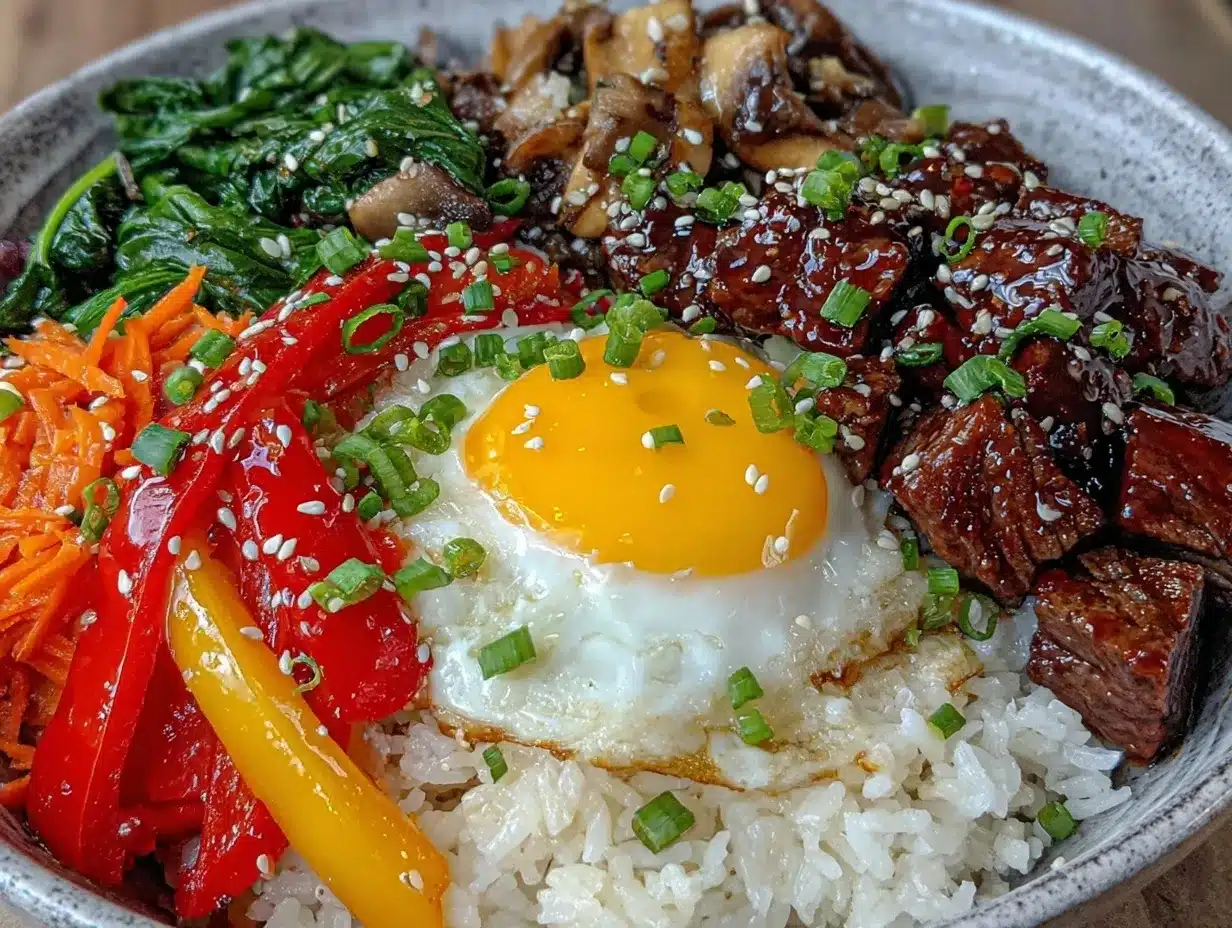
- Assemble the Bowl: Scoop warm rice into bowls. Arrange beef and each veggie component in sections on top of the rice to create that signature bibimbap look. Add a fried egg on top.
- Add the Sauce and Garnish: Drizzle or serve gochujang on the side so everyone can control the heat level. Sprinkle toasted sesame seeds and sliced green onions over the bowl for that final touch.
Tip: When mixing your bibimbap, break the egg yolk and stir everything together just before eating. It’s that moment when all the flavors and textures meld in the best way.
Cooking Tips & Techniques
Getting the marinade right is key—too much soy sauce can overpower, too little and the beef feels bland. I usually start with the listed amounts and adjust the next time based on how salty or sweet I want it.
Thin slicing the beef against the grain makes it tender and easier to chew. Don’t rush the searing process; a hot pan and a little patience give you that delicious caramelization.
Blanching bean sprouts quickly keeps their snap without losing that fresh taste. For the spinach, a quick sauté with a pinch of salt enhances the flavor without making it soggy.
When frying eggs, a non-stick pan and medium heat prevent the whites from browning too much while keeping the yolk delightfully runny. Honestly, the egg yolk is what makes this bowl feel indulgent yet homey.
Assembling the bowl with separated ingredients before mixing keeps it visually appealing, and it lets everyone customize bites. Trust me, it’s worth the extra effort.
Variations & Adaptations
- Vegetarian: Replace beef with marinated tofu or tempeh, sauté mushrooms more generously, and add roasted sweet potatoes for extra heartiness.
- Spicy Variations: Mix some chili flakes into the marinade or add a spoonful of extra gochujang for heat lovers.
- Low-Carb: Swap the rice for cauliflower rice or shredded cabbage sautéed lightly in sesame oil.
- Seasonal Veggies: In spring, try adding blanched asparagus or snap peas; in fall, roasted butternut squash complements the flavors beautifully.
- Personal Twist: I once tossed in kimchi for a tangy crunch and it added a whole new depth—definitely worth trying.
Serving & Storage Suggestions
Serve your bibimbap bowl warm, right after assembly, with the gochujang on the side so everyone can adjust spice levels. It pairs beautifully with a light cucumber salad or miso soup for a full meal.
Leftovers store well for up to 2 days in the fridge if you keep rice and toppings separate. Reheat gently in a skillet or microwave just until warm. Adding a fresh fried egg on top after reheating brings back that fresh flavor.
As the bowl sits, flavors meld and deepen—if you don’t mind a softer texture, mixing everything a few hours ahead can make for an easy, grab-and-go lunch.
Nutritional Information & Benefits
A typical serving of this bibimbap bowl provides around 450-550 calories, with a good balance of protein, carbs, and healthy fats. The marinated beef offers iron and B vitamins, while the fresh veggies contribute fiber, vitamins A and C, and antioxidants.
The sesame oil and seeds add heart-healthy fats and a boost of flavor without extra calories. For those watching carbs, swapping rice with cauliflower rice lowers the glycemic load.
This dish is naturally gluten-friendly if you pick tamari over soy sauce and can be modified to suit dairy-free or vegetarian diets easily.
Conclusion
This flavorful bibimbap bowl with marinated beef and fresh veggies isn’t just a recipe—it’s a dependable go-to that’s both satisfying and fresh. I love how easy it is to tweak based on what you have, making it feel like a new meal every time.
Whether you’re new to Korean cooking or just looking for a vibrant, healthy bowl to brighten your weeknight dinners, this dish has a way of sticking around in your routine. I hope you find it as comforting and delicious as I do, and maybe it’ll become your little kitchen secret too.
Give it a try, have fun mixing and matching your favorite veggies, and don’t forget to share how you make it your own!
FAQs
What cut of beef is best for bibimbap?
Thinly sliced sirloin or ribeye works best because they cook quickly and stay tender. Avoid tougher cuts unless you marinate longer or slice very thin.
Can I make this bibimbap vegetarian?
Absolutely! Swap the beef with marinated tofu, tempeh, or extra mushrooms for a delicious vegetarian version.
Is gochujang very spicy?
Gochujang has a moderate heat level and a sweet, fermented flavor. Start with a small amount and add more to taste, especially if you’re sensitive to spice.
How do I store leftover bibimbap?
Keep rice and toppings separate in airtight containers in the fridge for up to 2 days. Reheat gently and add a fresh fried egg when serving.
Can I prepare bibimbap ahead of time?
You can prep all components in advance and assemble just before eating to keep veggies fresh and textures vibrant.
Pin This Recipe!

Flavorful Bibimbap Bowl Recipe Easy Homemade Marinated Beef and Veggies

A quick and easy Korean bibimbap bowl featuring marinated beef, fresh veggies, and a spicy-sweet sauce, perfect for busy weeknights or last-minute dinners.
- Prep Time: 20 minutes
- Cook Time: 15 minutes
- Total Time: 35 minutes
- Yield: 2 servings 1x
- Category: Main Course
- Cuisine: Korean
Ingredients
- 8 oz (225g) beef sirloin or ribeye, thinly sliced
- 2 tbsp soy sauce
- 1 tbsp sesame oil
- 1 tbsp brown sugar
- 2 cloves garlic, minced
- 1 tsp grated ginger (optional)
- 1 tsp rice vinegar
- 1/4 tsp black pepper
- 1 cup julienned carrots
- 1 cup baby spinach, lightly sautéed or steamed
- 1/2 cup bean sprouts, blanched
- 1 small cucumber, thinly sliced
- 4 shiitake mushrooms, sliced and sautéed
- 2 cups cooked short-grain white rice or sushi rice
- 2 tbsp gochujang (Korean chili paste)
- 1 tbsp toasted sesame seeds
- 1 green onion, finely sliced
- 1 fried egg per serving (optional)
Instructions
- In a medium bowl, combine soy sauce, sesame oil, brown sugar, minced garlic, grated ginger, rice vinegar, and black pepper. Add the thinly sliced beef and toss well to coat. Cover and marinate in the fridge for at least 20 minutes, up to 1 hour.
- Rinse 1 cup of short-grain rice under cold water until water runs clear. Cook according to rice cooker instructions or simmer in a pot with 1 1/4 cups water over low heat for 15 minutes. Keep warm.
- Blanch the bean sprouts in boiling water for 1 minute, then drain and set aside. Lightly sauté the spinach with a pinch of salt until just wilted. Sauté shiitake mushrooms in a little oil until tender and browned. Julienne carrots and slice cucumber thinly; serve raw.
- Heat a skillet over medium-high heat. Add marinated beef in a single layer and cook for 2-3 minutes per side until seared and cooked through. Work in batches if needed.
- In a separate non-stick pan, fry eggs sunny-side up until whites are set but yolks are still runny, about 2-3 minutes.
- Scoop warm rice into bowls. Arrange beef and each veggie component in sections on top of the rice. Add a fried egg on top.
- Drizzle or serve gochujang on the side. Sprinkle toasted sesame seeds and sliced green onions over the bowl.
Notes
Marinate beef for at least 20 minutes for flavor; thinly slice beef against the grain for tenderness. Blanch bean sprouts quickly to keep crunch. Fry eggs sunny-side up with runny yolks for richness. Serve gochujang on the side to adjust spice level. For gluten-free, use tamari instead of soy sauce. Vegetarian option: replace beef with marinated tofu or tempeh.
Nutrition
- Serving Size: 1 bowl
- Calories: 500
- Sugar: 8
- Sodium: 800
- Fat: 20
- Saturated Fat: 4
- Carbohydrates: 50
- Fiber: 5
- Protein: 30
Keywords: bibimbap, Korean recipe, marinated beef, easy dinner, healthy bowl, spicy sauce, gochujang, quick meal