It was one of those evenings when the kitchen felt like a battleground—papers everywhere, a toddler tugging at my sleeve, and a fridge that looked more like a barren landscape than a food haven. Honestly, I wasn’t planning anything fancy, just something quick and comforting. I remembered a dusty pack of Yi Mein noodles hiding in the back of the pantry, and on a whim, grabbed some fresh vegetables lying around. I tossed everything together, half-expecting a messy flop, but what came out was this surprisingly flavorful longevity noodles dish that felt like a warm hug after a chaotic day.
That night, between bites and calming a cranky kid, I realized this simple stir-fry wasn’t just quick—it had soul. The noodles soaked up the savory sauce, the veggies stayed crisp, and the whole thing had a satisfying chew that made me pause for a moment. It’s funny how a recipe born from a frazzled evening turned into a staple in my weekly rotation. No frills, just honest, quick comfort that you can throw together even if your day’s been a whirlwind.
So here’s the story of my Flavorful Longevity Noodles (Yi Mein) with Fresh Vegetables—a dish that’s as easy as it is gratifying, and a reminder that sometimes the best meals come from the moments you least expect. Let’s get into why this recipe has stayed with me and might just find a place in your kitchen too.
Why You’ll Love This Recipe
- Quick & Easy: Ready in under 30 minutes, it’s perfect for weeknights when time isn’t on your side.
- Simple Ingredients: Uses pantry staples like Yi Mein noodles and common fresh veggies you probably already have.
- Perfect for Any Occasion: Whether it’s a casual solo dinner or a cozy family meal, this recipe fits the bill.
- Crowd-Pleaser: The balance of chewy noodles with crunchy vegetables always gets thumbs up from both kids and adults.
- Unbelievably Delicious: The sauce—savory with a subtle hint of sweetness—clings to every strand, creating a comforting flavor combo.
- What Makes It Different: Instead of drowning the noodles, this recipe lets them soak just enough, keeping that classic chewy texture. Plus, the fresh vegetable mix is tossed in at the right moment so they stay crisp but tender.
- Emotional Connection: This isn’t just a meal; it’s the kind that makes you breathe out after a hectic day and feel a little more grounded. It’s comfort food that doesn’t feel heavy, and honestly, that’s a rare find.
What Ingredients You Will Need
This recipe uses simple, wholesome ingredients to deliver bold flavor and satisfying texture without the fuss. Most of these are pantry staples or common fresh produce, making it easy to throw together without last-minute grocery runs.
- Yi Mein noodles (dried or fresh) – Look for good-quality Yi Mein for that unique chewy texture. Brands like Wing Wah or Sun Noodle work well.
- Vegetable oil – Choose a neutral oil like canola or sunflower for stir-frying.
- Garlic cloves, minced – Adds aromatic depth.
- Fresh ginger, grated (about 1 teaspoon) – For a subtle zing.
- Carrots, julienned – Adds sweetness and crunch.
- Bell peppers (red or yellow, sliced thin) – For color and a mild sweetness.
- Baby bok choy or napa cabbage, chopped – Provides leafy freshness.
- Snow peas or snap peas – Crisp and light.
- Soy sauce (2 tablespoons) – The salty backbone; I prefer low-sodium for balance.
- Oyster sauce (1 tablespoon) – Adds umami richness; vegetarian versions can swap with mushroom sauce.
- Sesame oil (1 teaspoon) – For that toasty finish.
- Brown sugar or honey (1 teaspoon) – Balances the savory notes with a touch of sweetness.
- Green onions, sliced – For garnish and fresh bite.
- Optional toppings: Toasted sesame seeds or crushed peanuts for texture.
Substitutions to consider: If you want gluten-free, swap Yi Mein for rice noodles and use tamari instead of soy sauce. For vegan options, skip oyster sauce or use a plant-based alternative. Fresh veggie options can vary with season—zucchini or mushrooms work nicely too.
Equipment Needed
- Large pot – To boil the Yi Mein noodles; a standard 4-quart (3.8 L) pot works great.
- Large wok or skillet – For stir-frying the vegetables and tossing the noodles. A non-stick pan is fine if a wok’s not available.
- Colander or strainer – To drain noodles quickly and rinse if needed.
- Sharp knife and cutting board – For prepping vegetables.
- Measuring spoons and cups – For sauce ingredients precision.
If you don’t have a wok, a sturdy sauté pan works just as well—just make sure it’s large enough to toss everything without crowding. Personally, I like my carbon steel wok for even heat distribution, but it takes a bit of seasoning to keep it non-stick. For budget-friendly options, a good quality non-stick skillet can do the trick with less fuss.
Preparation Method
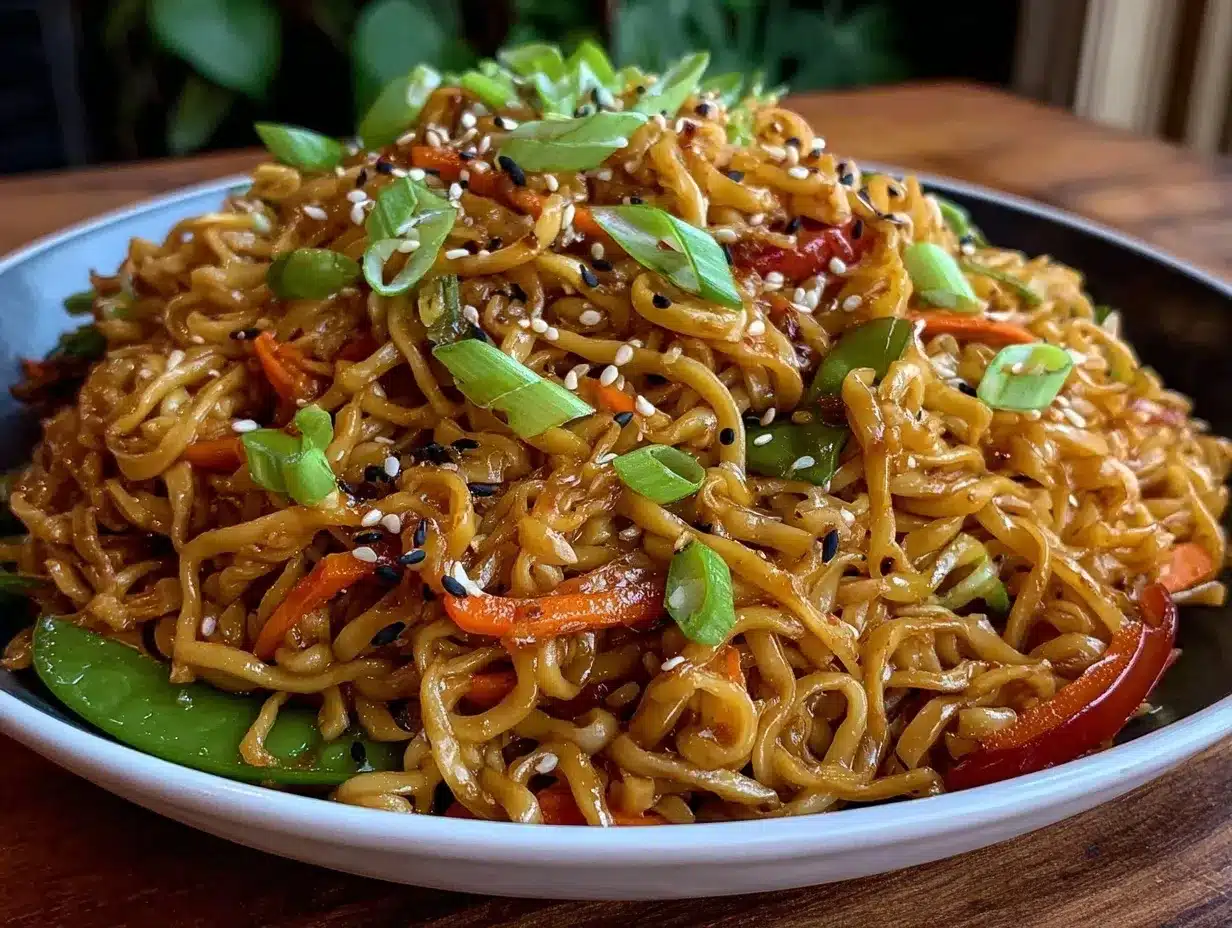
- Boil the Noodles (8-10 minutes): Bring a large pot of water to a rolling boil. Add Yi Mein noodles and cook according to package instructions until just tender but still chewy (al dente). This usually takes 6-8 minutes for dried noodles. Stir occasionally to avoid sticking. Drain and rinse under cold water to stop cooking and set aside.
- Prepare the Vegetables (5-7 minutes): While noodles cook, wash and slice your vegetables. Julienne carrots, thinly slice bell peppers, chop bok choy, and trim snow peas. Keep them roughly the same size for even cooking.
- Mix the Sauce (2 minutes): In a small bowl, combine soy sauce, oyster sauce, brown sugar or honey, and sesame oil. Stir until sugar dissolves. Set aside.
- Stir-Fry Aromatics (1-2 minutes): Heat 2 tablespoons of vegetable oil in your wok or skillet over medium-high heat. Add minced garlic and grated ginger. Stir quickly until fragrant but not browned, about 30 seconds.
- Cook Vegetables (3-4 minutes): Add carrots and bell peppers first; stir-fry for 2 minutes. Then add bok choy and snow peas; continue tossing for another 2 minutes. The veggies should be tender-crisp—bright in color and slightly soft but still with a bite.
- Toss Noodles and Sauce (2-3 minutes): Add drained noodles to the wok. Pour in the sauce mixture. Toss everything rapidly to coat the noodles and vegetables evenly. If it looks dry, splash a tablespoon of water or broth to help distribute the sauce.
- Final Touches (1 minute): Remove from heat. Sprinkle sliced green onions and optional sesame seeds or crushed peanuts on top for texture and fresh flavor.
Tip: If noodles stick together, gently separate with tongs before adding to the wok. The key is high heat and quick tossing to avoid sogginess. Also, avoid overcooking the veggies—they should retain crunch to contrast the chewy noodles.
Cooking Tips & Techniques
When making this Flavorful Longevity Noodles recipe, a few tricks go a long way. First, don’t overboil the Yi Mein. These noodles have a delightful chew that disappears if you cook them too long. I always test a strand a minute before the recommended time—better slightly underdone than mushy.
Next, prep everything before heating the pan. Stir-frying is a fast dance, and you want all ingredients ready to jump in. Using a hot wok or skillet ensures quick cooking and keeps veggies crisp. If your pan isn’t hot enough, the vegetables will steam instead of fry, losing that fresh snap.
One common slip-up is adding the sauce too early or in too large a quantity. Pour it gradually and toss continuously so the noodles soak just enough without getting soggy. If you like a saucier dish, add a splash of broth rather than soy sauce—that way, flavors stay balanced.
Lastly, don’t skip the final garnish of green onions and sesame seeds. They add brightness and texture that transform the dish from simple to memorable. I’ve burned the garlic more times than I care to admit, so watch it carefully—once it browns, the bitterness can overpower the noodles.
Variations & Adaptations
- Protein Boost: Add thinly sliced chicken, shrimp, or tofu. Stir-fry the protein first, then set aside and add back in at the end for a heartier meal.
- Seasonal Veggies: Swap or add mushrooms, baby corn, snap peas, or even kale depending on what’s fresh. Each brings its own texture and flavor punch.
- Spicy Kick: Toss in some chili garlic sauce or fresh sliced chilies to give it a fiery edge without overpowering the balance.
- Gluten-Free: Use rice noodles or shirataki noodles and substitute tamari or coconut aminos for soy sauce to suit gluten sensitivities.
- Vegetarian/Vegan: Replace oyster sauce with mushroom stir-fry sauce or soy sauce mixed with a dash of miso paste for umami depth.
Personally, I once tried this dish with roasted sweet potatoes instead of carrots—added a lovely caramelized sweetness that surprised me. Feel free to experiment with veggies and sauces to make it your own.
Serving & Storage Suggestions
Serve these noodles hot, straight from the wok, to enjoy the best texture contrast. A sprinkle of fresh herbs like cilantro or Thai basil can add a bright note. For drinks, a light jasmine tea or a crisp white wine pairs nicely without overshadowing the flavors.
If you have leftovers, store them in an airtight container in the refrigerator for up to 3 days. When reheating, add a splash of water or broth and warm gently in a skillet to revive the noodles’ texture. Microwave reheating tends to make them a bit gummy, so stovetop is preferred.
Flavors tend to meld and deepen after a day, making leftovers even tastier as the sauce soaks in. Just be mindful that the fresh crunch of vegetables softens over time, so if you plan ahead, you might want to keep some veggies separate and toss in fresh before serving.
Nutritional Information & Benefits
This recipe offers a balanced mix of carbohydrates from the Yi Mein noodles, fiber and vitamins from the fresh vegetables, and a modest amount of fats from the oils and sauces. A typical serving contains roughly 350-400 calories, with about 8-10 grams of protein, depending on the vegetables and any added protein.
Key health benefits come from the fresh veggies—carrots provide beta-carotene for eye health, bok choy offers calcium and vitamin C, and ginger aids digestion. Using low-sodium soy sauce helps keep sodium in check, making this a relatively light but satisfying meal.
For those watching gluten or animal products, simple substitutions can make it gluten-free or vegan, ensuring it fits a variety of dietary needs without compromising flavor.
Conclusion
This Flavorful Longevity Noodles (Yi Mein) with Fresh Vegetables recipe is proof that sometimes, the simplest meals carry the most meaning. Its quick prep, straightforward ingredients, and comforting textures make it a go-to for busy evenings or anytime you want a fuss-free, satisfying dish.
I love how it’s flexible enough to suit whatever’s in the fridge or your dietary preferences, yet it never feels like a compromise. It’s a dish that invites you to customize while still delivering that reliable, soul-soothing flavor I keep coming back to.
Give it a try and feel free to share your twists or experiences. Sometimes, the best recipes are the ones we make our own, and I’m always eager to hear how you bring this one to life in your kitchen!
FAQs
What are Yi Mein noodles?
Yi Mein noodles are a type of Chinese egg noodle known for their chewy texture and ability to soak up sauces well. They’re often used in longevity dishes for celebrations.
Can I use fresh vegetables other than those listed?
Absolutely! Feel free to substitute or add any fresh vegetables you like, such as mushrooms, zucchini, baby corn, or kale. Just adjust cooking times accordingly.
Is this recipe suitable for vegetarians or vegans?
Yes! Simply replace the oyster sauce with a mushroom-based sauce or soy sauce mixed with miso paste to keep it vegan-friendly.
How do I prevent the noodles from sticking together?
Rinse the cooked noodles under cold water to stop cooking and reduce stickiness. Toss them with a little oil before stir-frying to keep strands separate.
Can I prepare this recipe ahead of time?
You can prep the vegetables and sauce ahead, but it’s best to cook the noodles and stir-fry just before serving to maintain texture and freshness.
Pin This Recipe!
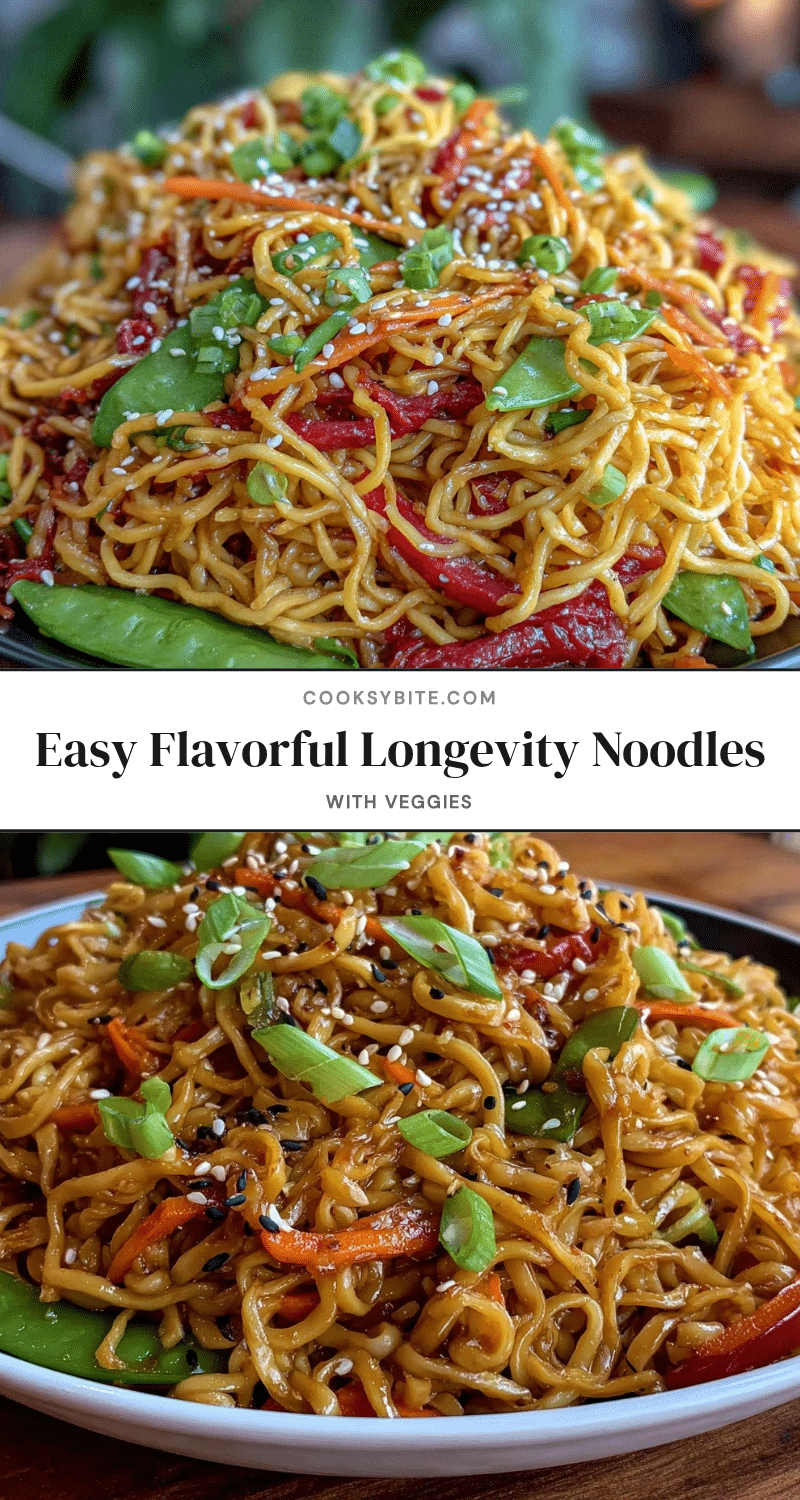
Flavorful Longevity Noodles Recipe with Fresh Vegetables Easy and Quick
A quick and comforting stir-fry dish featuring chewy Yi Mein noodles and crisp fresh vegetables tossed in a savory-sweet sauce. Perfect for busy weeknights and adaptable to various dietary needs.
- Prep Time: 10 minutes
- Cook Time: 15 minutes
- Total Time: 25 minutes
- Yield: 4 servings 1x
- Category: Main Course
- Cuisine: Chinese
Ingredients
- Yi Mein noodles (dried or fresh)
- 2 tablespoons vegetable oil (canola or sunflower)
- 2 garlic cloves, minced
- 1 teaspoon fresh ginger, grated
- 1 cup carrots, julienned
- 1 cup bell peppers (red or yellow), sliced thin
- 1 cup baby bok choy or napa cabbage, chopped
- 1 cup snow peas or snap peas
- 2 tablespoons soy sauce (low-sodium preferred)
- 1 tablespoon oyster sauce (or mushroom sauce for vegetarian/vegan)
- 1 teaspoon sesame oil
- 1 teaspoon brown sugar or honey
- 2 green onions, sliced
- Optional toppings: toasted sesame seeds or crushed peanuts
Instructions
- Bring a large pot of water to a rolling boil. Add Yi Mein noodles and cook according to package instructions until just tender but still chewy (al dente), about 6-8 minutes for dried noodles. Stir occasionally to avoid sticking. Drain and rinse under cold water to stop cooking and set aside.
- While noodles cook, wash and slice your vegetables. Julienne carrots, thinly slice bell peppers, chop bok choy, and trim snow peas. Keep them roughly the same size for even cooking.
- In a small bowl, combine soy sauce, oyster sauce, brown sugar or honey, and sesame oil. Stir until sugar dissolves. Set aside.
- Heat 2 tablespoons of vegetable oil in your wok or skillet over medium-high heat. Add minced garlic and grated ginger. Stir quickly until fragrant but not browned, about 30 seconds.
- Add carrots and bell peppers first; stir-fry for 2 minutes. Then add bok choy and snow peas; continue tossing for another 2 minutes. The veggies should be tender-crisp—bright in color and slightly soft but still with a bite.
- Add drained noodles to the wok. Pour in the sauce mixture. Toss everything rapidly to coat the noodles and vegetables evenly. If it looks dry, splash a tablespoon of water or broth to help distribute the sauce.
- Remove from heat. Sprinkle sliced green onions and optional sesame seeds or crushed peanuts on top for texture and fresh flavor.
Notes
Do not overboil the Yi Mein noodles to maintain their chewy texture. Prep all ingredients before heating the pan for quick stir-frying. Add sauce gradually and toss continuously to avoid sogginess. Use high heat to keep vegetables crisp. Garnish with green onions and sesame seeds for added texture and flavor. For gluten-free, substitute rice noodles and tamari. For vegan, replace oyster sauce with mushroom sauce or soy sauce mixed with miso paste.
Nutrition
- Serving Size: 1 cup cooked noodles
- Calories: 375
- Sugar: 6
- Sodium: 600
- Fat: 10
- Saturated Fat: 1.5
- Carbohydrates: 60
- Fiber: 5
- Protein: 9
Keywords: Yi Mein noodles, longevity noodles, stir-fry, quick dinner, fresh vegetables, easy recipe, vegetarian option, gluten-free option