There’s something quietly magical about late Sunday mornings when the kitchen smells like a bustling street stall in Hanoi. I remember the first time I tried making this flavorful Pho Bo Vietnamese beef noodle soup recipe—it wasn’t a grand plan but more a spontaneous effort to warm up a chilly weekend. Honestly, I was skeptical at first. Pho always seemed like one of those dishes you’d only get right in a specialized restaurant, with hours of simmering and elusive spice blends. But after fumbling through a few attempts and tweaking the broth, I finally hit that sweet spot where the rich, aromatic broth met tender beef slices and slippery rice noodles in perfect harmony.
That moment—the first spoonful, steam rising, flavors unfolding—felt like a quiet victory. It wasn’t just soup; it was a comforting ritual that grounded me on hectic days. Since then, I’ve made this pho recipe more times than I can count, each time feeling a little more confident and a whole lot more satisfied. There’s a rhythm to it, you know? The patience while the broth simmers, the fresh herbs piled high on the side, and the way everyone gathers around the table, sneaking tastes before the official “dinner” begins.
What stuck with me most was how approachable this pho bo recipe turned out to be. It’s not just for experts or special occasions; it’s a recipe that welcomes anyone curious enough to try. And honestly, it’s one of those dishes that hugs you from the inside out—a reason why it’s become a quiet staple in my rotation. It’s sort of like a secret handshake with Vietnamese culture, right there in a bowl, and I’m happy to share it with you.
Why You’ll Love This Recipe
- Quick & Easy: This flavorful pho bo recipe comes together in under 2 hours, which is pretty speedy for a homemade broth that tastes this rich.
- Simple Ingredients: No complicated or hard-to-find spices—just basics you might already have, plus a few fresh herbs and aromatics.
- Perfect for Cozy Nights: Ideal for chilly evenings when you want something warm, satisfying, and a little indulgent without the fuss.
- Crowd-Pleaser: The blend of tender beef, fragrant broth, and fresh toppings always earns compliments from family and friends.
- Unbelievably Delicious: The slow-simmered spices give the broth a deep, layered flavor that feels both light and hearty.
This is not just another pho recipe floating around the internet. What makes it stand out is the careful balance of spices—star anise, cinnamon, cloves—that gently perfume the broth without overpowering it. Plus, the tip to quickly blanch the beef slices right before serving keeps the meat tender and juicy, not overcooked. I’ve tried versions where the broth felt too heavy or bland, but this one hits the right note every time. It’s comforting, yes, but with enough brightness from lime and herbs to keep things fresh and exciting. Honestly, it’s the kind of recipe that makes you close your eyes, savor the first bite, and realize you nailed it.
What Ingredients You Will Need
This recipe uses simple, wholesome ingredients to deliver bold flavor and satisfying texture without the fuss. Most of these are pantry staples, with a handful of fresh aromatics and herbs to finish it off beautifully.
- Beef Bones (2-3 pounds / 900-1350 grams): Preferably marrow bones or knuckle bones for rich broth.
- Beef Brisket or Chuck (1 pound / 450 grams): Sliced thinly for a tender bite.
- Rice Noodles (Pho noodles, 8 ounces / 225 grams): Fresh or dried, soak or boil according to package instructions.
- Onions (2 medium): Charred or roasted for smoky depth.
- Ginger (3-inch piece): Also charred to bring out its warmth.
- Star Anise (4-5 whole): Key spice for that signature pho aroma.
- Cinnamon Stick (1-2 sticks): Adds subtle sweetness and warmth.
- Cloves (3-4 whole): Pungent and aromatic, use sparingly.
- Fish Sauce (4 tablespoons): For savory umami boost (I prefer Red Boat brand for authenticity).
- Rock Sugar or White Sugar (1 tablespoon): Balances the salty and spicy notes.
- Salt (to taste): Essential seasoning for the broth.
- Fresh Herbs: Thai basil, cilantro, and mint (a generous handful each).
- Bean Sprouts (1 cup): For crunch and freshness on the side.
- Lime Wedges (2-3): Adds a bright, tangy finish.
- Chili Peppers (optional): Thinly sliced if you like a bit of heat.
You can swap the beef brisket for sirloin if you prefer leaner meat, or replace rock sugar with brown sugar if that’s what you have handy. For a gluten-free option, double-check your fish sauce brand, as some contain wheat. And if you’re hunting for that perfect pho noodle, look for medium-width flat rice noodles—they hold up well in the broth without getting mushy.
Equipment Needed
- Large Stockpot (6-8 quarts / 6-8 liters): For simmering the broth; a wide pot works best for even heat distribution.
- Fine Mesh Strainer or Cheesecloth: To strain the broth and remove solids for a clear result.
- Charcoal Grill or Gas Stove Burner: Optional but highly recommended for charring onions and ginger (adds smoky flavor).
- Sharp Knife: For slicing beef and chopping herbs precisely.
- Large Bowl: To soak and rinse rice noodles.
- Soup Bowls and Chopsticks: For authentic serving experience.
If you don’t have a grill, you can char onions and ginger directly on your gas stove burner or under the broiler—just keep a close eye so they don’t burn completely. I’ve tried using a regular pan for charring, but it tends to lack that smoky punch. For budget-friendly options, any heavy-bottomed pot will do just fine, even if it’s not a dedicated stockpot. The key is maintaining a gentle simmer for hours without boiling vigorously.
Preparation Method
- Char the Aromatics (15 minutes): Lightly char the onions and ginger over an open flame or under the broiler until blackened spots appear—this adds a smoky depth to the broth.
- Prepare the Bones (10 minutes): Rinse beef bones under cold water. Place them in the stockpot, cover with cold water, and bring to a rolling boil. Boil for 10 minutes to remove impurities, then drain and rinse bones thoroughly.
- Simmer the Broth (1 hour 30 minutes): Return the cleaned bones to the pot, add 4 quarts (about 4 liters) of fresh water, charred onions, ginger, star anise, cinnamon sticks, and cloves. Bring to a gentle simmer, skimming off any foam or fat rising to the top. Let it simmer uncovered for 1.5 hours to develop flavor.
- Season the Broth (5 minutes): Add fish sauce, rock sugar, and salt to taste. Let simmer another 15 minutes to meld the seasonings.
- Prepare the Beef (10 minutes): While broth simmers, slice brisket thinly against the grain. Set aside. If preferred, you can poach the brisket in the broth for 20 minutes until tender, then slice.
- Cook the Noodles (5 minutes): Soak dried rice noodles in warm water for 30 minutes or boil fresh noodles for 1-2 minutes until tender. Drain and rinse under cold water to stop cooking.
- Strain the Broth (5 minutes): Use a fine mesh strainer or cheesecloth to strain out solids, resulting in a clear, fragrant broth.
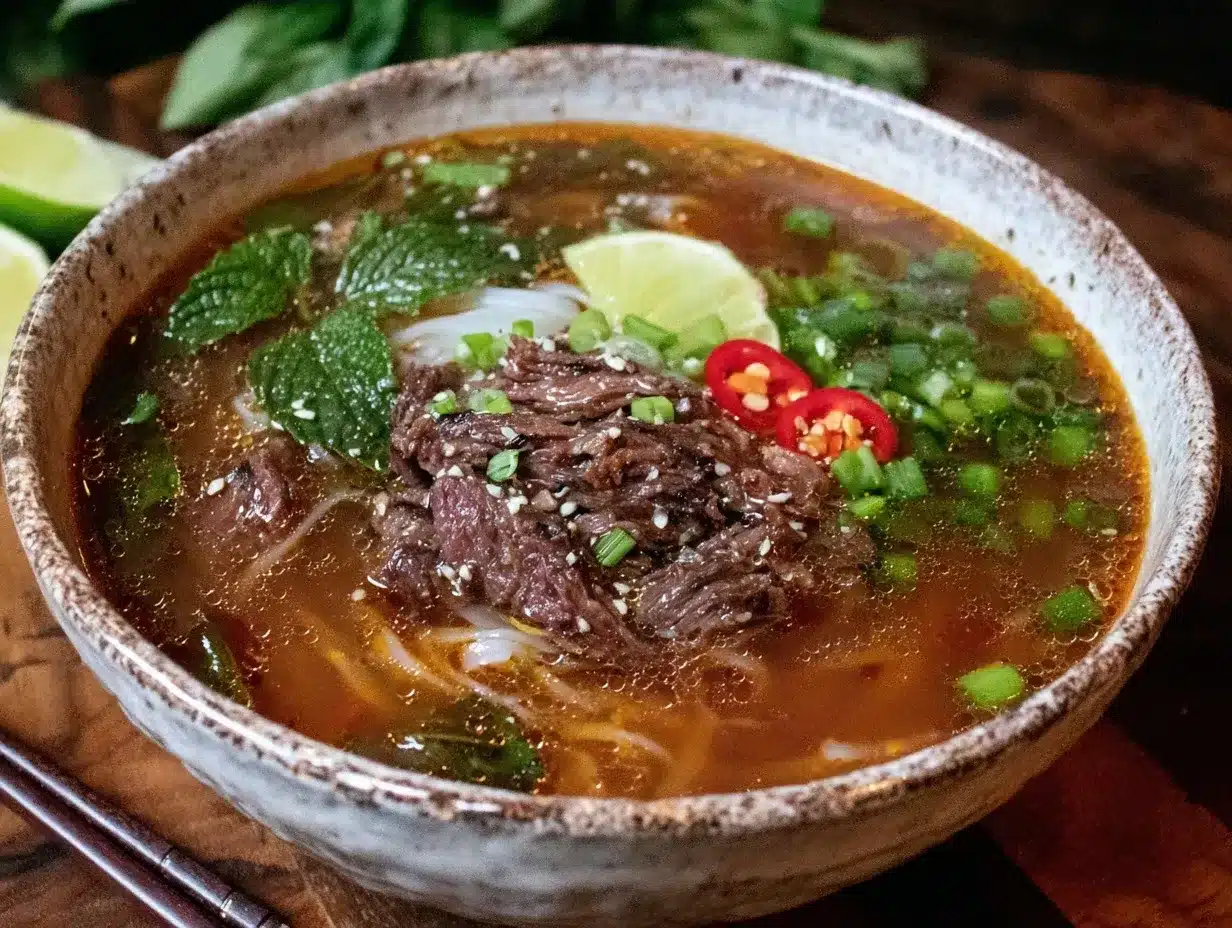
- Assemble the Bowls: Divide noodles into individual bowls. Top with raw or cooked beef slices. Pour hot broth over to gently cook the raw beef (if using). Add fresh herbs, bean sprouts, lime wedges, and sliced chilies to taste.
Pro Tip: Keep the broth at a gentle simmer—not a rolling boil—to avoid cloudiness. And don’t skip the skimming step; it makes a world of difference in clarity and flavor. If you want the beef slices perfectly tender, blanch them quickly in boiling broth instead of cooking them directly in the pot.
Cooking Tips & Techniques
One of the trickiest parts of pho is getting a crystal-clear broth that still bursts with flavor. The secret lies in patience and attention. For instance, parboiling the bones removes impurities, preventing a cloudy broth that looks and tastes off. Also, keep your simmer gentle—vigorous boiling churns up fats and bits that cloud the liquid.
Another tip: char the onions and ginger just right. Too little and the broth lacks that smoky undertone; too much and it gets bitter. I’ve learned to watch closely and pull them off as soon as blackened spots appear, no more. It’s a subtle balance but worth the effort.
When it comes to slicing the beef, always go against the grain—it makes the meat easier to chew and enjoy. Also, slicing thinly helps it cook quickly when you pour the hot broth over the top at serving time. This method keeps the meat tender and juicy, avoiding that rubbery texture you sometimes get when simmering beef too long.
Lastly, multitasking is your friend. While the broth simmers, prep your herbs and noodles to streamline assembly. If you’re short on time, soak rice noodles in hot water rather than boiling them—they soften just as well and save a step.
Variations & Adaptations
- Vegetarian Pho: Swap beef bones for a rich vegetable broth base with dried shiitake mushrooms and kombu seaweed. Use tofu or seitan instead of beef slices.
- Spicy Pho Bo: Add fresh chili slices or a spoonful of chili garlic sauce to the broth for a kick. You can also infuse the broth with fresh ginger and jalapeños.
- Low-Carb Pho: Replace rice noodles with spiralized zucchini or shirataki noodles for a lighter option that’s keto-friendly.
- Slow Cooker Method: Use a slow cooker to simmer bones and aromatics on low for 6-8 hours. This hands-off approach deepens flavor but requires longer cooking time.
- Personal Twist: I’ve tried adding a splash of star anise-infused simple syrup at the end for a slightly sweet finish—surprisingly delicious and unique.
Allergic to fish sauce? Try coconut aminos or a dash of soy sauce (gluten-free tamari works too). And if you want a heartier meal, swap out the brisket for thinly sliced ribeye or flank steak—just adjust cooking times accordingly.
Serving & Storage Suggestions
Serve pho hot, ideally straight from the pot to the bowl, so the beef slices cook perfectly in the steaming broth. Garnish with plenty of fresh herbs, bean sprouts, lime wedges, and chilies on the side so everyone can customize their bowl.
Pair your pho with a cold Vietnamese iced coffee or a light jasmine tea to complement the flavors. For a side, crispy spring rolls or pickled vegetables add nice texture contrast.
To store leftovers, keep broth and noodles separate. Refrigerate broth in an airtight container for up to 3 days or freeze for up to 3 months. Noodles store best in the fridge for 1-2 days; reheat by briefly dipping in hot water to avoid mushiness.
Reheat broth gently on the stove—avoid boiling again to keep flavors fresh. You’ll find that the broth’s aroma deepens after a day or two, making leftovers even better. Just add fresh herbs and lime before serving to brighten it back up.
Nutritional Information & Benefits
This pho bo recipe offers a balanced combination of protein, carbs, and fresh herbs, making it both nourishing and comforting. A typical serving has about 350-400 calories, depending on portion sizes, with lean beef providing high-quality protein.
The broth is packed with collagen and minerals from the beef bones, which many believe support joint and skin health. Fresh herbs like basil and cilantro deliver antioxidants and vitamins, while lime juice adds a dose of vitamin C.
Rice noodles are gluten-free, making this dish suitable for those with gluten sensitivities. Just watch the fish sauce if you have allergies or prefer a plant-based version. Overall, pho is a satisfying meal that feels indulgent but offers wholesome benefits.
Conclusion
This flavorful pho bo Vietnamese beef noodle soup recipe is a bowl of comfort that’s surprisingly approachable and endlessly rewarding. It’s a recipe that invites you to slow down, enjoy the simmering process, and savor the layers of smell, taste, and texture that come together in every spoonful. I love this recipe because it balances tradition with simplicity—giving you that authentic pho experience at home without the intimidation.
Feel free to tweak the herbs, spices, and protein to suit your taste. Whether you’re making it for a cozy solo meal or sharing it with friends, pho has a way of bringing people together. Don’t hesitate to leave a comment about your own twists or questions. Here’s to many steamy, flavorful bowls ahead!
FAQs
What cut of beef is best for pho bo?
Thinly sliced brisket or chuck are popular choices because they become tender when cooked briefly in hot broth. Ribeye or flank steak work too, depending on your preference.
Can I make pho broth without beef bones?
Yes, you can use vegetable broth with mushrooms and seaweed for a vegetarian version, but the rich flavor from beef bones is hard to replicate exactly.
How do I keep the pho broth clear?
Parboil the bones first to remove impurities, skim foam during simmering, and keep the heat low to avoid boiling vigorously.
Can I prepare pho noodles ahead of time?
Yes, soak or boil noodles ahead but store them separately from broth. Reheat by dipping in hot water briefly before serving.
Is pho beef noodle soup gluten-free?
Typically yes, as rice noodles are gluten-free. Just check your fish sauce brand, as some contain wheat.
Pin This Recipe!
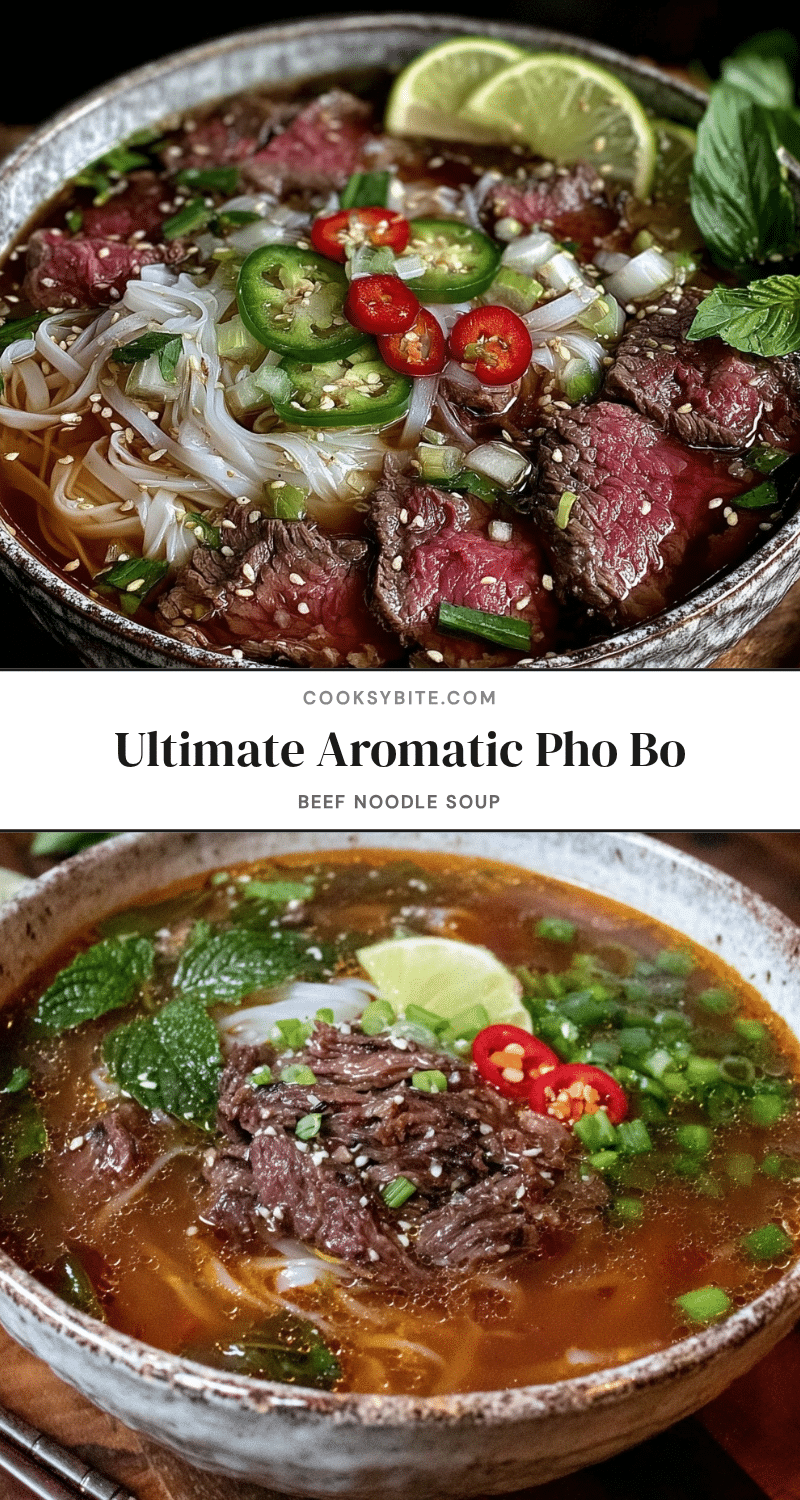
Flavorful Pho Bo Recipe Easy Homemade Vietnamese Beef Noodle Soup Guide
A comforting and authentic Vietnamese beef noodle soup recipe featuring a rich, aromatic broth simmered with spices and tender beef slices served with fresh herbs and rice noodles.
- Prep Time: 30 minutes
- Cook Time: 1 hour 50 minutes
- Total Time: 2 hours 20 minutes
- Yield: 4 servings 1x
- Category: Main Course
- Cuisine: Vietnamese
Ingredients
- 2–3 pounds beef bones (marrow or knuckle bones preferred)
- 1 pound beef brisket or chuck, thinly sliced
- 8 ounces rice noodles (pho noodles), fresh or dried
- 2 medium onions, charred or roasted
- 3-inch piece ginger, charred
- 4–5 whole star anise
- 1–2 cinnamon sticks
- 3–4 whole cloves
- 4 tablespoons fish sauce (preferably Red Boat brand)
- 1 tablespoon rock sugar or white sugar
- Salt to taste
- Fresh herbs: Thai basil, cilantro, and mint (a generous handful each)
- 1 cup bean sprouts
- 2–3 lime wedges
- Optional: thinly sliced chili peppers
Instructions
- Char the onions and ginger over an open flame or under the broiler until blackened spots appear, about 15 minutes.
- Rinse beef bones under cold water. Place in a large stockpot, cover with cold water, and bring to a rolling boil. Boil for 10 minutes to remove impurities, then drain and rinse bones thoroughly.
- Return cleaned bones to the pot. Add 4 quarts (about 4 liters) of fresh water, charred onions, ginger, star anise, cinnamon sticks, and cloves. Bring to a gentle simmer, skimming off foam or fat. Simmer uncovered for 1 hour 30 minutes.
- Add fish sauce, rock sugar, and salt to taste. Let simmer another 15 minutes to meld seasonings.
- While broth simmers, slice brisket thinly against the grain. Optionally, poach brisket in broth for 20 minutes until tender, then slice.
- Soak dried rice noodles in warm water for 30 minutes or boil fresh noodles for 1-2 minutes until tender. Drain and rinse under cold water.
- Strain broth through a fine mesh strainer or cheesecloth to remove solids, resulting in a clear broth.
- Divide noodles into bowls. Top with raw or cooked beef slices. Pour hot broth over to gently cook raw beef if using. Add fresh herbs, bean sprouts, lime wedges, and sliced chilies to taste.
Notes
Keep broth at a gentle simmer to avoid cloudiness and skim foam regularly for clarity. Char onions and ginger carefully to add smoky depth without bitterness. Slice beef thinly against the grain for tenderness. Soak noodles ahead to save time. For vegetarian version, substitute beef bones with vegetable broth and use tofu or seitan.
Nutrition
- Serving Size: 1 bowl (approximatel
- Calories: 375
- Sugar: 3
- Sodium: 900
- Fat: 10
- Saturated Fat: 3
- Carbohydrates: 40
- Fiber: 2
- Protein: 25
Keywords: pho, pho bo, Vietnamese beef noodle soup, homemade pho, beef broth, rice noodles, Vietnamese cuisine, easy pho recipe