It was one of those lazy Sunday mornings when I found myself standing in my tiny kitchen, staring at a stack of eggs and wondering what to whip up for breakfast. Honestly, I wasn’t in the mood for anything complicated—just something comforting, a bit special, but quick enough to keep the day moving. I remembered a casual chat with a coworker who raved about her go-to Japanese tamagoyaki rolls, praising their fluffy texture and that perfect balance of sweet and savory. Skeptical but curious, I decided to give it a shot.
The first roll was a bit wonky, I’ll admit—edges uneven, layers not as tight as I wanted. But then, with every subsequent roll, something clicked. The eggs puffed up beautifully in the pan, the sweet soy glaze gave a glossy finish with a hint of caramelized goodness, and the aroma was downright irresistible. That morning, the humble tamagoyaki transformed from a simple egg dish into a comforting ritual.
What surprised me most was how this recipe, which seemed so delicate and precise, turned out to be incredibly forgiving—even for someone who’s “not really a baker” or a sushi pro. It quickly became a favorite, showing up repeatedly in my weekly breakfast lineup. There’s something quietly satisfying about those soft, layered rolls that feels like a little reward for your effort. So, here’s my take on the fluffy Japanese tamagoyaki rolls with sweet soy glaze—made easy, approachable, and ready to charm you with every bite.
Why You’ll Love This Recipe
- Quick & Easy: Comes together in under 20 minutes, perfect for busy mornings or when you want a special breakfast without the fuss.
- Simple Ingredients: Uses common kitchen staples like eggs, soy sauce, and sugar—no need for exotic shopping trips.
- Perfect for Any Occasion: Whether it’s a laid-back brunch, a bento box treat, or a cozy snack, these tamagoyaki rolls fit right in.
- Crowd-Pleaser: The mild sweetness combined with the savory glaze wins over kids and adults alike every time.
- Unbelievably Delicious: The soft, fluffy layers melt in your mouth, accompanied by that glossy, slightly sticky sweet soy glaze that’s just irresistible.
- The trick lies in the rolling technique and the balance of seasoning—this isn’t just any egg roll. I’ve tested and tweaked it to get the perfect texture and flavor harmony.
- This recipe feels like comfort food reinvented—it’s light, not greasy, and has that nostalgic home-cooked vibe that makes you pause and savor.
What Ingredients You Will Need
This recipe uses simple, wholesome ingredients that come together to create bold flavor and a satisfyingly fluffy texture without any hassle. Most of them are pantry staples, and you can find substitutes easily if needed.
- Eggs: 6 large eggs, room temperature (I prefer organic or free-range for richer yolks)
- Mirin: 2 tablespoons (sweet Japanese rice wine that adds a subtle sweetness and shine; can substitute with a mix of 1 tbsp sugar + 1 tbsp water if unavailable)
- Soy Sauce: 1 tablespoon (use a light soy sauce for less saltiness; Kikkoman works great)
- Sugar: 1 tablespoon (balances the savory elements and helps caramelize the glaze)
- Dashi Stock: 2 tablespoons (optional, but adds umami depth; you can swap with water if you want a simpler version)
- Vegetable Oil: for cooking (neutral oil like canola or grapeseed works best to avoid overpowering flavors)
Optional but recommended:
- Freshly grated ginger: a small pinch (adds a subtle warmth without overwhelming)
- Chopped scallions: for garnish or folding in (fresh pop of flavor and color)
If you’re after a gluten-free version, opt for tamari instead of soy sauce. And if dairy-free, this recipe is naturally suitable since it contains no milk products.
Equipment Needed
- Tamagoyaki Pan: a rectangular or square non-stick pan is traditional and helps shape the rolls nicely. If you don’t have one, a small round non-stick skillet around 7-inch (18 cm) diameter can work, but shaping might be a bit trickier.
- Chopsticks or silicone spatula: for gently lifting and rolling the egg layers without tearing.
- Mixing bowl and whisk or fork: to beat the eggs and blend the seasoning well.
- Paper towels: to lightly oil the pan between layers, ensuring even browning and no sticking.
- Sharp knife: for slicing the finished tamagoyaki into neat rolls.
Personally, I started with a small round pan but quickly invested in a tamagoyaki pan—it’s a game changer for even cooking and uniform rolls. Non-stick quality matters here; a well-seasoned pan makes rolling easier and cleanup a breeze. If you’re on a budget, a decent non-stick skillet with a flat bottom works well too.
Preparation Method
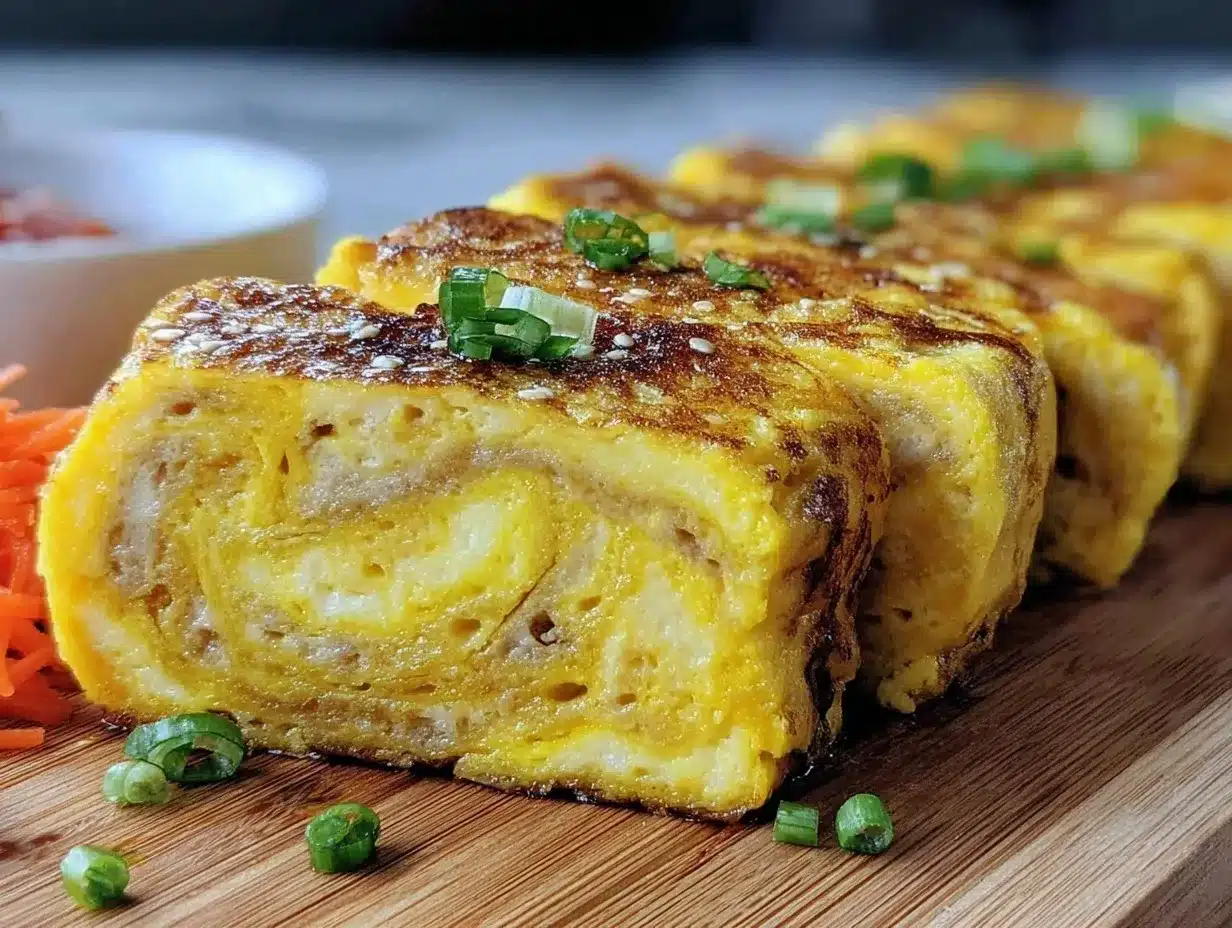
- Mix the egg base: In a medium bowl, crack 6 large eggs and beat gently with a whisk or fork until combined but not frothy. Add 2 tablespoons mirin, 1 tablespoon soy sauce, 1 tablespoon sugar, and 2 tablespoons dashi stock (if using). Whisk until the sugar dissolves and the mixture looks smooth and slightly glossy. This seasoning blend is key—make sure it’s well mixed. (Prep time: 5 minutes)
- Prepare your pan: Heat your tamagoyaki pan over medium-low heat. Lightly oil it using a paper towel dipped in vegetable oil, wiping off excess so the surface is just slick, not greasy. This helps each egg layer cook evenly without sticking.
- Cook the first layer: Pour a thin layer of the egg mixture (about 1/4 cup or 60 ml) into the pan, tilting to cover the surface evenly. Let it cook undisturbed until the edges set but the top is still slightly wet—around 1 to 1.5 minutes. The color should be pale yellow with no browning.
- Roll it up: Starting at one edge, gently lift the cooked egg sheet with chopsticks or a spatula and roll it towards the other side. Once rolled, push the roll back to the starting edge of the pan.
- Add more egg mixture: Oil the pan again lightly. Pour another thin layer of egg mixture, lifting the rolled egg slightly so the liquid flows underneath. Cook until just set but still moist on top (about 1 minute).
- Roll again: Roll the egg back towards the opposite edge, encasing the new layer. Repeat this process—oil, pour egg, cook, roll—until all the mixture is used. You should have a multilayered, fluffy roll about 3 to 4 inches wide.
- Shape and rest: Once done, gently press the roll with a spatula or bamboo mat (if you have one) to shape it neatly. Let it rest for a few minutes; this helps the layers settle and makes slicing easier.
- Make the sweet soy glaze: In a small pan, combine 2 tablespoons soy sauce, 1 tablespoon mirin, and 1 teaspoon sugar over medium heat. Stir until sugar dissolves and the glaze thickens slightly, about 2-3 minutes. Brush this glaze over the tamagoyaki rolls for a shiny, flavorful finish.
- Slice and serve: Using a sharp knife, cut the roll into 1/2-inch (1.3 cm) thick pieces. Serve warm or at room temperature, garnished with a sprinkle of chopped scallions or a small dab of grated ginger if you like.
Quick tip: Don’t rush rolling or pouring layers too thickly—thin layers cook faster and give that signature fluffiness. If you notice browning, turn down the heat a notch. The smell should be gentle, slightly sweet, never burnt. Patience makes all the difference here.
Cooking Tips & Techniques
Honestly, making tamagoyaki might seem intimidating at first, but a few tricks make it straightforward. First, controlling the heat is crucial—too hot and the egg browns or cooks unevenly, too low and it takes forever, risking rubbery texture. Medium-low heat keeps it tender and fluffy.
Another thing I learned the hard way: oiling the pan between each layer is not optional. It keeps the layers from sticking and helps create clean folds. Using a paper towel to spread oil thinly avoids greasy results.
Rolling technique is where many stumble. Instead of trying to roll quickly, gently lift and fold the egg sheet, letting it form naturally. Don’t worry if the first couple of rolls look patchy; it smooths out as you add layers.
Also, don’t overbeat the eggs. You want them combined but not foamy—that keeps the texture dense yet soft. And when slicing, use a very sharp knife and wipe the blade between cuts to maintain clean slices.
Lastly, multitasking helps—prepare your glaze while the rolls rest. That way, your tamagoyaki gets that glossy finish just as they come off the pan, locking in moisture and flavor.
Variations & Adaptations
- Vegetarian Twist: Skip dashi and add a pinch of salt or a splash of vegetable broth for umami. You can also fold in finely chopped spinach or shredded carrots for color and texture.
- Spicy Kick: Mix a little chili powder or a few drops of chili oil into the egg mixture. Serve with a side of pickled ginger for contrast.
- Herb Infusion: Add fresh herbs like chives, parsley, or shiso leaves into the layers before rolling to brighten the flavor.
- Gluten-Free: Use tamari instead of soy sauce and ensure your mirin is gluten-free. This keeps the dish safe without compromising taste.
- Alternate Cooking Method: If you don’t have a suitable pan, try cooking the mixture in thin layers in a regular skillet and stacking rolled pieces manually—less traditional, but still tasty!
Personally, I love adding a tiny pinch of toasted sesame seeds inside the layers for a nutty surprise. It’s subtle but gives a nice texture contrast.
Serving & Storage Suggestions
Serve your tamagoyaki rolls warm or at room temperature—both ways taste great. They make an elegant addition to brunch spreads or bento boxes and pair wonderfully with green tea or light sake. For a complete meal, add steamed rice and pickled veggies on the side.
Store leftovers in an airtight container in the refrigerator for up to 3 days. When reheating, gently warm in a non-stick pan over low heat or microwave briefly covered with a damp paper towel to maintain moisture.
Flavors mellow and blend over time, so sometimes I find tamagoyaki tastes even better the next day. Just bring it back to room temp before serving to enjoy its full softness.
Nutritional Information & Benefits
Each serving of these fluffy Japanese tamagoyaki rolls offers a good source of protein from eggs and a modest amount of carbs and sugars from mirin and sugar. The dish is naturally low in calories and can fit well into balanced diets.
Eggs provide essential amino acids and nutrients like vitamin D and choline, supporting brain and muscle health. Using mirin and soy sauce in moderation adds flavor without excess salt or fat.
This recipe is gluten-free when made with tamari and dairy-free by default, making it accessible for many dietary preferences. Just watch the sugar amount if you’re monitoring intake closely.
Conclusion
Fluffy Japanese tamagoyaki rolls with sweet soy glaze offer a delightful mix of textures and flavors that feels both simple and special. Whether you’re making breakfast for yourself or impressing friends with a homemade touch, this recipe strikes a lovely balance between tradition and ease.
Feel free to tweak the seasoning or fold in your favorite add-ins—cooking should be joyful, after all. For me, tamagoyaki is a little morning hug, a reminder that even the simplest ingredients can create something memorable.
Give it a try, and don’t hesitate to share how yours turned out or what twists you added. It’s a recipe that welcomes your personal stamp and keeps coming back to the table.
FAQs
What pan should I use to make tamagoyaki?
The traditional choice is a rectangular tamagoyaki pan, which helps shape the rolls evenly. If you don’t have one, a small non-stick round skillet works fine, but rolling might take more patience.
Can I make tamagoyaki without mirin?
Yes, you can substitute mirin with a mix of sugar and water (1:1 ratio) or omit it for a simpler flavor, though the sweetness and shine might be less pronounced.
Why is my tamagoyaki not fluffy?
Common reasons include cooking on too high heat, overbeating the eggs, or pouring layers too thickly. Keep the heat medium-low and pour thin layers for best results.
How do I store leftover tamagoyaki?
Keep leftovers in an airtight container in the fridge for up to 3 days. Reheat gently in a pan or microwave with a damp paper towel to avoid drying out.
Can I add other ingredients inside the tamagoyaki?
Absolutely! Finely chopped veggies, herbs, or even cooked seafood can be folded into the layers for extra flavor and texture. Just keep additions small so the egg layers hold together well.
Pin This Recipe!
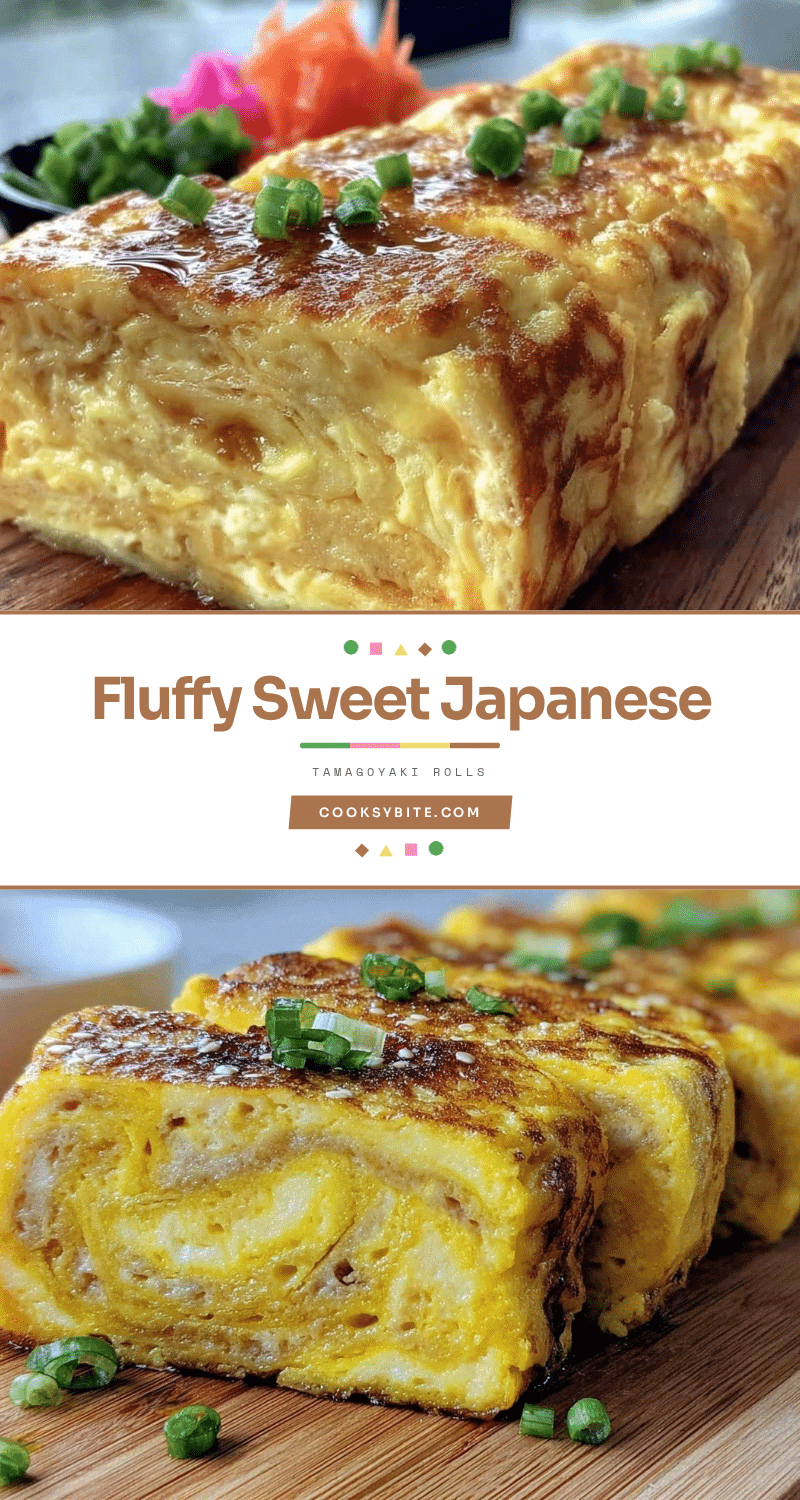
Fluffy Japanese Tamagoyaki Rolls with Sweet Soy Glaze

A quick and easy recipe for fluffy Japanese tamagoyaki rolls featuring a sweet soy glaze. Perfect for breakfast, brunch, or a light snack with a comforting, layered texture.
- Prep Time: 5 minutes
- Cook Time: 10 minutes
- Total Time: 15 minutes
- Yield: 4 servings 1x
- Category: Breakfast
- Cuisine: Japanese
Ingredients
- 6 large eggs, room temperature
- 2 tablespoons mirin (or substitute with 1 tbsp sugar + 1 tbsp water)
- 1 tablespoon soy sauce (light soy sauce recommended)
- 1 tablespoon sugar
- 2 tablespoons dashi stock (optional, can substitute with water)
- Vegetable oil for cooking (canola or grapeseed oil recommended)
- Optional: small pinch freshly grated ginger
- Optional: chopped scallions for garnish or folding in
Instructions
- In a medium bowl, crack 6 large eggs and beat gently with a whisk or fork until combined but not frothy.
- Add 2 tablespoons mirin, 1 tablespoon soy sauce, 1 tablespoon sugar, and 2 tablespoons dashi stock (if using). Whisk until sugar dissolves and mixture is smooth and slightly glossy.
- Heat a tamagoyaki pan or small non-stick skillet over medium-low heat. Lightly oil the pan using a paper towel dipped in vegetable oil, wiping off excess.
- Pour a thin layer of egg mixture (about 1/4 cup or 60 ml) into the pan, tilting to cover evenly. Cook undisturbed until edges set but top is still slightly wet, about 1 to 1.5 minutes.
- Starting at one edge, gently lift the cooked egg sheet with chopsticks or spatula and roll it towards the other side. Push the roll back to the starting edge of the pan.
- Oil the pan lightly again. Pour another thin layer of egg mixture, lifting the rolled egg slightly so liquid flows underneath. Cook until just set but still moist on top, about 1 minute.
- Roll the egg back towards the opposite edge, encasing the new layer. Repeat oiling, pouring, cooking, and rolling until all mixture is used, forming a multilayered roll about 3 to 4 inches wide.
- Gently press the roll with a spatula or bamboo mat to shape neatly. Let rest for a few minutes to settle layers.
- In a small pan, combine 2 tablespoons soy sauce, 1 tablespoon mirin, and 1 teaspoon sugar over medium heat. Stir until sugar dissolves and glaze thickens slightly, about 2-3 minutes.
- Brush the sweet soy glaze over the tamagoyaki rolls for a shiny finish.
- Using a sharp knife, cut the roll into 1/2-inch (1.3 cm) thick pieces. Serve warm or at room temperature, garnished with chopped scallions or grated ginger if desired.
Notes
Use medium-low heat to avoid browning and ensure fluffy texture. Oil the pan lightly between each layer to prevent sticking. Roll gently and pour thin layers for best results. Let the roll rest before slicing. Use tamari for gluten-free version. Substitute mirin with sugar and water if unavailable.
Nutrition
- Serving Size: Approximately 3-4 ta
- Calories: 110
- Sugar: 4
- Sodium: 350
- Fat: 7
- Saturated Fat: 2
- Carbohydrates: 5
- Protein: 7
Keywords: tamagoyaki, Japanese egg roll, sweet soy glaze, breakfast recipe, fluffy eggs, easy tamagoyaki, Japanese cuisine