I remember that rainy Sunday afternoon when I first tackled this perfect Italian Osso Buco recipe with fresh gremolata. Honestly, I wasn’t planning on making anything fancy; I was knee-deep in a pile of work, the kind that makes you forget if you’ve eaten lunch or not. The fridge was looking sparse, but I spotted a couple of veal shanks tucked in the back. At first, I thought, “Osso Buco? That’s a whole day affair, right?” Yet, something about the idea of slow-cooked, tender meat paired with that zesty gremolata kept nudging me forward.
As the aromas started filling the kitchen, the soft clinking of the wooden spoon against the pot, and the faint sizzle from the pan, a strange calm washed over me. It wasn’t just dinner—it was this quiet reset after a hectic morning. The fresh gremolata, with its punch of lemon and garlic, cut through the rich braise beautifully, making the dish feel lighter and somehow more hopeful. That day, I realized Osso Buco wasn’t just a “special occasion” meal; it could be a comforting ritual on a day that feels a little off. Since then, I’ve made this recipe enough times to feel confident calling it “perfect,” and I’m still amazed at how simple ingredients come together for such a soulful dish.
What stuck with me the most is how the gremolata’s brightness plays off the deep, hearty flavors of the braised veal, reminding me that sometimes, the best dishes balance patience and freshness in the same bite.
Why You’ll Love This Recipe
- Slow-Cooked Tenderness: The veal shanks become meltingly tender after a few hours, making every bite a delight.
- Fresh and Bright Gremolata: This easy topping adds a zesty lift that cuts through the rich braise perfectly.
- Simple Ingredients: No need for exotic pantry items—you’ll find everything at your local market or in your kitchen.
- Perfect for Cozy Dinners: Whether it’s a weekend meal or a special occasion, this dish feels both comforting and impressive.
- Make-Ahead Friendly: The Osso Buco tastes even better the next day, making it a great choice to prep ahead for stress-free dining.
- Authentic Italian Flair: This recipe stays true to traditional Milanese roots, just with a little modern ease.
What sets this recipe apart is the gremolata—a fresh mix of parsley, lemon zest, and garlic—that brings a zingy contrast to the slow-braised veal. It’s not just an afterthought; it’s the reason this version feels light and vibrant, even with the deep flavors. Plus, I’ve tested variations with white wine and tomato base, and the balance here simply wins every time. It’s the kind of dish that makes you slow down, savor, and maybe even close your eyes after that first forkful.
What Ingredients You Will Need
This perfect Italian Osso Buco recipe uses straightforward, wholesome ingredients to create a rich, comforting dish with a lively gremolata finish. Most of these are pantry staples or easy-to-find fresh items.
- Veal shanks: About 4 pieces, 1.5 to 2 inches thick, with the bone in (look for small to medium-sized shanks for best tenderness)
- All-purpose flour: For dredging the shanks (helps develop a nice crust during searing)
- Olive oil: Extra virgin, for browning the meat (I prefer Colavita for its balanced flavor)
- Unsalted butter: About 2 tablespoons, adds richness to the sauce
- Yellow onion: 1 large, finely chopped
- Carrots: 2 medium, peeled and diced
- Celery stalks: 2, diced (these three veggies form the soffritto—the flavor base)
- Garlic cloves: 3, minced (plus extra for gremolata)
- Dry white wine: 1 cup (I usually grab a bottle of Pinot Grigio for cooking)
- Crushed tomatoes: 14 oz (use San Marzano if you want that classic Italian depth)
- Beef or chicken broth: 2 cups, homemade or low-sodium store-bought
- Fresh thyme: A few sprigs
- Bay leaves: 2 leaves
- Salt and black pepper: To taste
For the Fresh Gremolata:
- Flat-leaf parsley: 1 cup, finely chopped (freshness is key here)
- Lemon zest: From 1 large lemon (avoid the bitter white pith)
- Garlic: 1 clove, minced
- Olive oil: 1 tablespoon (optional, for a slight silky texture)
Substitutions: You can swap veal shanks for beef shanks if veal is hard to find. For a gluten-free option, use rice flour or cornstarch for dredging. If fresh herbs aren’t available, dried parsley works in a pinch, but the gremolata will lose some of its vibrancy.
Equipment Needed
- Heavy-bottomed Dutch oven or large ovenproof pot: Essential for even heat distribution and slow braising. I’ve used both cast iron and enameled versions—both work great, but enamel ones are easier to clean.
- Sharp chef’s knife: For chopping vegetables and herbs.
- Cutting board: A sturdy one, preferably wood or plastic.
- Tongs: Useful for turning the shanks without piercing the meat.
- Fine grater or zester: Needed for the lemon zest in the gremolata.
- Mixing bowl: For combining gremolata ingredients.
- Measuring cups and spoons: For precise liquid and seasoning measurements.
If you don’t have a Dutch oven, a heavy, deep skillet with a tight-fitting lid works as well. Just keep an eye on liquid levels during braising to prevent drying out. For budget-friendly options, enamel coated cast iron pots from brands like Lodge offer great durability without breaking the bank.
Preparation Method
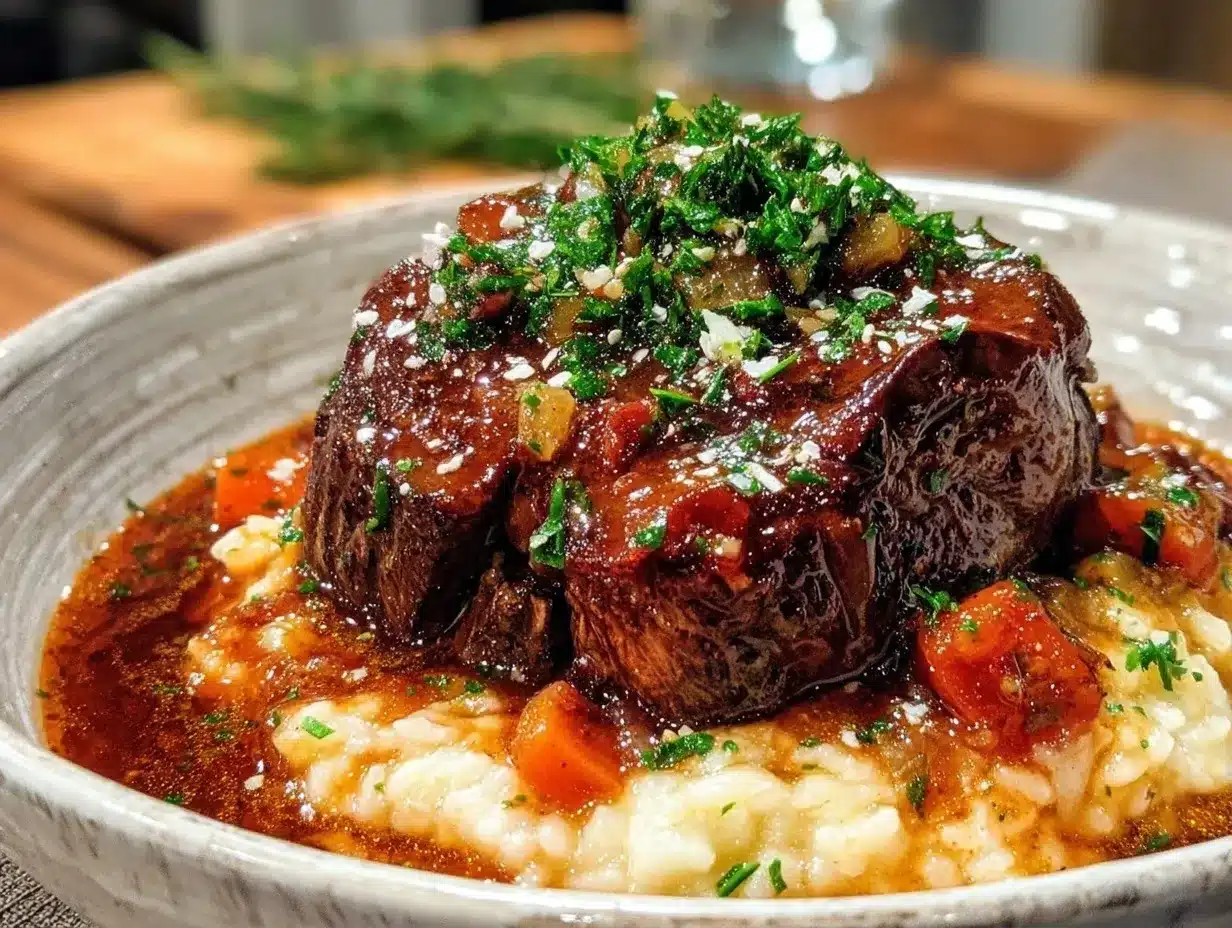
- Prep the veal shanks: Pat them dry with paper towels (this helps with browning). Season generously with salt and pepper on all sides. Dredge each shank lightly in all-purpose flour, shaking off any excess. This step creates a beautiful crust and thickens the sauce later. (About 10 minutes)
- Brown the meat: Heat 3 tablespoons olive oil and 2 tablespoons butter in the Dutch oven over medium-high heat. When hot, add the shanks in batches—don’t overcrowd the pan. Brown each side for about 4 minutes until golden and crispy. Set aside on a plate. (15 minutes)
- Sauté the soffritto: In the same pot, add the chopped onion, carrots, and celery. Cook over medium heat, stirring occasionally, until softened and fragrant—about 8 minutes. Add the minced garlic and cook for another minute until aromatic. (10 minutes)
- Deglaze with wine: Pour in the white wine to lift all those tasty browned bits from the pot’s bottom. Let it simmer and reduce by half, about 5 minutes. This step adds acidity and depth. (5 minutes)
- Add tomatoes and broth: Stir in crushed tomatoes, then return the browned shanks to the pot, nestling them in the sauce. Pour in the broth just enough to come halfway up the meat. Toss in thyme sprigs and bay leaves. Season lightly with salt and pepper. (5 minutes)
- Braise low and slow: Bring the liquid to a gentle simmer, cover, and transfer the pot to a preheated 325°F (160°C) oven. Let it cook undisturbed for 2 to 2.5 hours until the meat is fork-tender and nearly falling off the bone. Check once halfway through to spoon sauce over the shanks. (2 to 2.5 hours)
- Make the gremolata: While the Osso Buco cooks, combine chopped parsley, lemon zest, minced garlic, and olive oil in a small bowl. Mix well and set aside. This fresh topping adds that signature bright burst just before serving. (5 minutes)
- Finish and serve: When the Osso Buco is ready, remove from oven, discard thyme stems and bay leaves. Spoon sauce over the shanks, sprinkle with gremolata, and serve immediately—traditionally alongside creamy risotto or polenta. (5 minutes)
Tip: If the sauce is too thin after braising, remove the meat and simmer uncovered on the stovetop for a few minutes to reduce. If it gets too thick, stir in a splash of broth or water to loosen it up. The smell at this point is downright irresistible—a sign you’re almost there!
Cooking Tips & Techniques
One of the keys to perfect Osso Buco is patience—slow and steady wins the race here. Don’t rush the browning step; that caramelized crust is flavor gold. I once tried skipping the flour dredge, thinking it was unnecessary, but the sauce lacked body and the meat didn’t brown as nicely.
Keep the heat moderate during the braise. Too high, and the meat toughens; too low, and it barely simmers, prolonging cooking time. Also, resist the urge to stir too often—just a gentle spooning of sauce halfway through is enough.
For gremolata, prep it fresh just before serving. The lemon zest and garlic can turn bitter if left sitting too long. I’ve made gremolata a day ahead, but the flavors mellow and lose punch, so fresh is best.
Multitasking tip: Start the gremolata prep while the sauce reduces on the stove before oven time. It saves a few minutes and keeps things flowing.
Consistency comes from using quality veal shanks and fresh herbs. If you substitute beef shanks, you may need to increase cooking time slightly for similar tenderness.
Variations & Adaptations
- Beef Osso Buco: Swap veal for beef shanks if veal is not available. Cook a bit longer (up to 3 hours) for tenderness.
- Tomato-Free Version: Omit crushed tomatoes and increase broth and wine quantities for a lighter, more savory braise.
- Slow Cooker Adaptation: After browning, transfer all ingredients to a slow cooker and cook on low for 6-8 hours. Add gremolata fresh at serving.
- Gluten-Free: Use rice flour or cornstarch to dredge the shanks instead of wheat flour.
- Herb Variations: Add rosemary or sage to the braise for an earthier aroma. I once tried rosemary and loved the subtle piney note it added.
Serving & Storage Suggestions
Serve your Osso Buco hot, straight from the pot, with a generous spoonful of sauce and gremolata on top. For the perfect pairing, creamy saffron risotto or buttery polenta soak up the delicious braising juices beautifully.
A simple green salad with a light vinaigrette balances the richness nicely. For drinks, a medium-bodied red wine like Chianti or Barbera complements the flavors without overpowering them.
Leftovers keep well in an airtight container in the fridge for up to 3 days. The flavors meld and deepen over time, making it even better the next day (if you can resist!). Reheat gently on the stovetop over low heat, adding a splash of broth if the sauce thickens too much.
For longer storage, freeze the Osso Buco (without gremolata) for up to 3 months. Thaw overnight in the fridge before reheating. Prepare fresh gremolata each time for that bright finishing touch.
Nutritional Information & Benefits
This Osso Buco recipe provides a hearty serving of protein and iron from the veal shanks. The slow braising method keeps the meat tender without adding excess fat. The gremolata brings a burst of vitamin C and antioxidants thanks to fresh parsley and lemon zest.
With moderate portion sizes, this dish fits well into balanced diets. For gluten-sensitive eaters, swapping the flour is easy and keeps it safe. The recipe is naturally low in added sugars and packed with nutrient-dense veggies from the soffritto base.
I appreciate this recipe as a satisfying yet wholesome meal that doesn’t rely on heavy creams or processed ingredients. It’s comfort food with a mindful twist.
Conclusion
This perfect Italian Osso Buco with fresh gremolata recipe has become one of those dishes I return to when I want something soulful, impressive, but not complicated. It’s a dish that rewards patience with tender meat and a lively sauce that sings from the gremolata’s fresh zing. I encourage you to make it your own—try different herbs, sides, or even wine pairings to suit your taste.
For me, it’s more than just a recipe; it’s a moment of calm in a busy life, a meal that brings warmth and a little Italian sunshine to the table. Give it a try, and you might find it becoming your own kitchen favorite, too.
Feel free to share your twists and stories—I’m always curious how this classic dish makes its way into new homes and hearts.
Frequently Asked Questions
What is Osso Buco?
Osso Buco is a traditional Italian dish made from braised veal shanks cooked slowly with vegetables, wine, and broth until tender. It’s typically served with gremolata, a fresh herb condiment.
Can I use beef instead of veal?
Yes, beef shanks can be used as a substitute. They require a longer braising time (up to 3 hours) to become tender but still yield delicious results.
What is gremolata, and why is it important?
Gremolata is a simple mixture of fresh parsley, lemon zest, and garlic. It adds a bright, zesty contrast to the rich, slow-cooked Osso Buco, balancing the flavors perfectly.
Can I prepare Osso Buco ahead of time?
Absolutely. Osso Buco often tastes even better the next day as the flavors develop. Store it in the fridge and reheat gently. Prepare gremolata fresh before serving.
What should I serve with Osso Buco?
Traditional sides include creamy risotto alla Milanese or soft polenta. A simple green salad and a medium-bodied red wine also pair wonderfully.
Pin This Recipe!
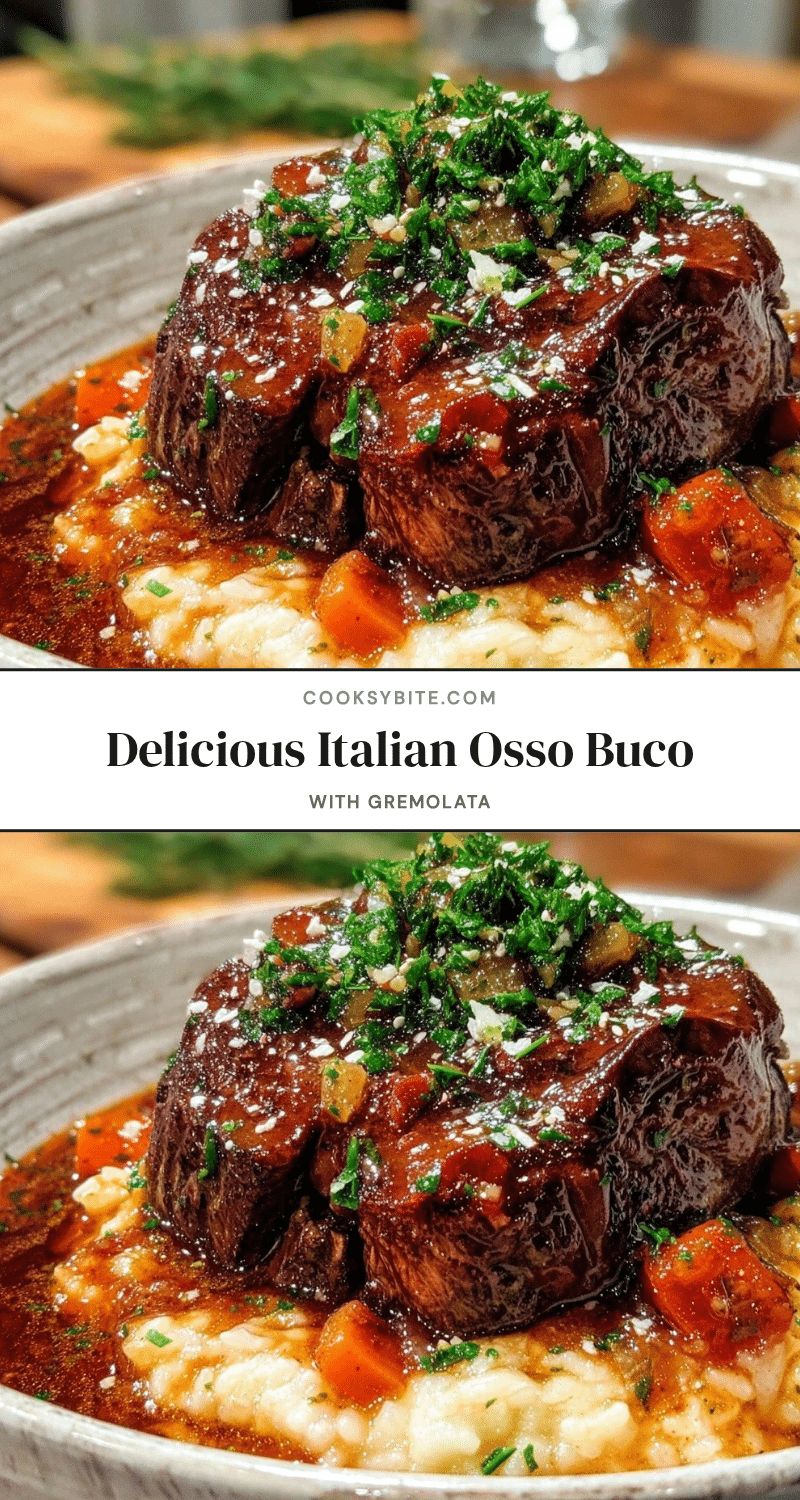
Perfect Italian Osso Buco Recipe with Easy Fresh Gremolata Sauce
A traditional Italian dish featuring slow-braised veal shanks paired with a fresh, zesty gremolata sauce. Tender, flavorful, and perfect for cozy dinners or special occasions.
- Prep Time: 25 minutes
- Cook Time: 2 hours 30 minutes
- Total Time: 2 hours 55 minutes
- Yield: 4 servings 1x
- Category: Main Course
- Cuisine: Italian
Ingredients
- 4 veal shanks, 1.5 to 2 inches thick, bone-in
- All-purpose flour, for dredging
- 3 tablespoons extra virgin olive oil
- 2 tablespoons unsalted butter
- 1 large yellow onion, finely chopped
- 2 medium carrots, peeled and diced
- 2 celery stalks, diced
- 3 garlic cloves, minced (plus 1 clove for gremolata)
- 1 cup dry white wine (such as Pinot Grigio)
- 14 oz crushed tomatoes
- 2 cups beef or chicken broth
- A few sprigs fresh thyme
- 2 bay leaves
- Salt and black pepper, to taste
- For the gremolata:
- 1 cup flat-leaf parsley, finely chopped
- Zest of 1 large lemon
- 1 garlic clove, minced
- 1 tablespoon olive oil (optional)
Instructions
- Pat veal shanks dry with paper towels. Season generously with salt and pepper on all sides. Dredge lightly in all-purpose flour, shaking off excess. (About 10 minutes)
- Heat olive oil and butter in a Dutch oven over medium-high heat. Brown shanks in batches for about 4 minutes per side until golden and crispy. Set aside. (15 minutes)
- In the same pot, sauté onion, carrots, and celery over medium heat until softened and fragrant, about 8 minutes. Add minced garlic and cook for 1 more minute. (10 minutes)
- Pour in white wine to deglaze the pot, scraping browned bits from the bottom. Simmer and reduce by half, about 5 minutes. (5 minutes)
- Stir in crushed tomatoes. Return browned shanks to the pot, nestling them in the sauce. Add broth to come halfway up the meat. Toss in thyme sprigs and bay leaves. Season lightly with salt and pepper. (5 minutes)
- Bring to a gentle simmer, cover, and transfer to a preheated 325°F (160°C) oven. Braise for 2 to 2.5 hours until meat is fork-tender. Check halfway through and spoon sauce over shanks. (2 to 2.5 hours)
- While braising, combine parsley, lemon zest, minced garlic, and olive oil in a bowl to make gremolata. Mix well and set aside. (5 minutes)
- Remove pot from oven, discard thyme stems and bay leaves. Spoon sauce over shanks, sprinkle with gremolata, and serve immediately with risotto or polenta. (5 minutes)
Notes
If sauce is too thin after braising, remove meat and simmer uncovered on stovetop to reduce. If too thick, add broth or water to loosen. For gluten-free, substitute flour with rice flour or cornstarch. Prepare gremolata fresh just before serving for best flavor. Beef shanks can be used but require longer cooking time (up to 3 hours).
Nutrition
- Serving Size: 1 veal shank with sa
- Calories: 520
- Sugar: 7
- Sodium: 480
- Fat: 22
- Saturated Fat: 7
- Carbohydrates: 18
- Fiber: 4
- Protein: 55
Keywords: Osso Buco, Italian recipe, veal shanks, gremolata, slow-cooked, braised meat, traditional Milanese, comfort food