Introduction
It was one of those evenings where nothing seemed to go right. I’d forgotten to pick up snacks for friends dropping by, and the local store was closed too early. I rummaged through my pantry, hoping for a quick fix, and that’s when I found a can of chickpeas and a small bag of pine nuts hiding in the back. Honestly, I was skeptical—homemade hummus felt like something that required a food processor and a dozen fancy ingredients. But with a bit of trial, error, and a dash of patience, I whipped up this creamy homemade hummus from scratch with toasted pine nuts, and it instantly saved the night.
The texture was smoother than anything store-bought, and the pine nuts added this subtle, nutty crunch that made everyone ask for seconds. It surprised me how such a simple recipe could feel so comforting and special—like a little kitchen victory on a chaotic day. Since then, this recipe has become my go-to for impromptu gatherings or just whenever I need a little snack that feels homemade and heartfelt. There’s something quietly satisfying about making hummus from scratch, especially when the pine nuts are toasted just right and the garlic sings softly in the background. It’s a recipe that stuck with me, not because it was fancy, but because it felt like a small, delicious reset.
Why You’ll Love This Recipe
- Quick & Easy: Ready in about 20 minutes, perfect for busy weeknights or unexpected guests.
- Simple Ingredients: Uses pantry staples and a handful of fresh items—no need for exotic spices or hard-to-find things.
- Perfect for Entertaining: Whether it’s a casual snack or part of a mezze platter, this hummus impresses effortlessly.
- Crowd-Pleaser: Creamy, nutty, and perfectly balanced, it’s a hit with kids and adults alike.
- Unbelievably Delicious: The toasted pine nuts add a warm, rich flavor twist that sets this apart from typical hummus recipes.
This recipe isn’t just another hummus—it’s the kind of homemade dip that makes you pause and savor the moment. The secret lies in toasting the pine nuts just right and blending the chickpeas until perfectly smooth, giving it a rich, velvety texture that feels indulgent yet wholesome. It’s comfort food with a simple twist, great for anyone who loves classic flavors with a little something extra.
What Ingredients You Will Need
This recipe uses simple, wholesome ingredients to deliver bold flavor and satisfying texture without the fuss. Most of these you probably already have on hand, and the pine nuts give it that special touch you didn’t know you needed.
- Chickpeas: 1 ½ cups cooked (or one 15-ounce can, drained and rinsed) – the creamy base of the hummus.
- Tahini: ¼ cup, well-stirred (I prefer Joyva for its smooth texture).
- Garlic: 2 cloves, minced (fresh is best for that vibrant punch).
- Fresh Lemon Juice: 3 tablespoons (adds bright acidity).
- Extra Virgin Olive Oil: 3 tablespoons, plus extra for drizzling.
- Ground Cumin: ½ teaspoon (optional, but adds depth).
- Salt: ¾ teaspoon, or to taste.
- Cold Water: 3-4 tablespoons, to adjust texture.
- Pine Nuts: ¼ cup, toasted until golden (the star garnish that adds crunch and warmth).
- Optional Garnish: Paprika or freshly chopped parsley for color and subtle flavor.
Feel free to swap regular chickpeas for low-sodium canned ones if you want to control salt levels. Also, if you’re after a dairy-free or nut-free version, you can skip the pine nuts and add a sprinkle of sesame seeds instead. For the tahini, if you don’t have it on hand, you can blend in a small spoonful of smooth peanut butter for a different but still tasty twist.
Equipment Needed
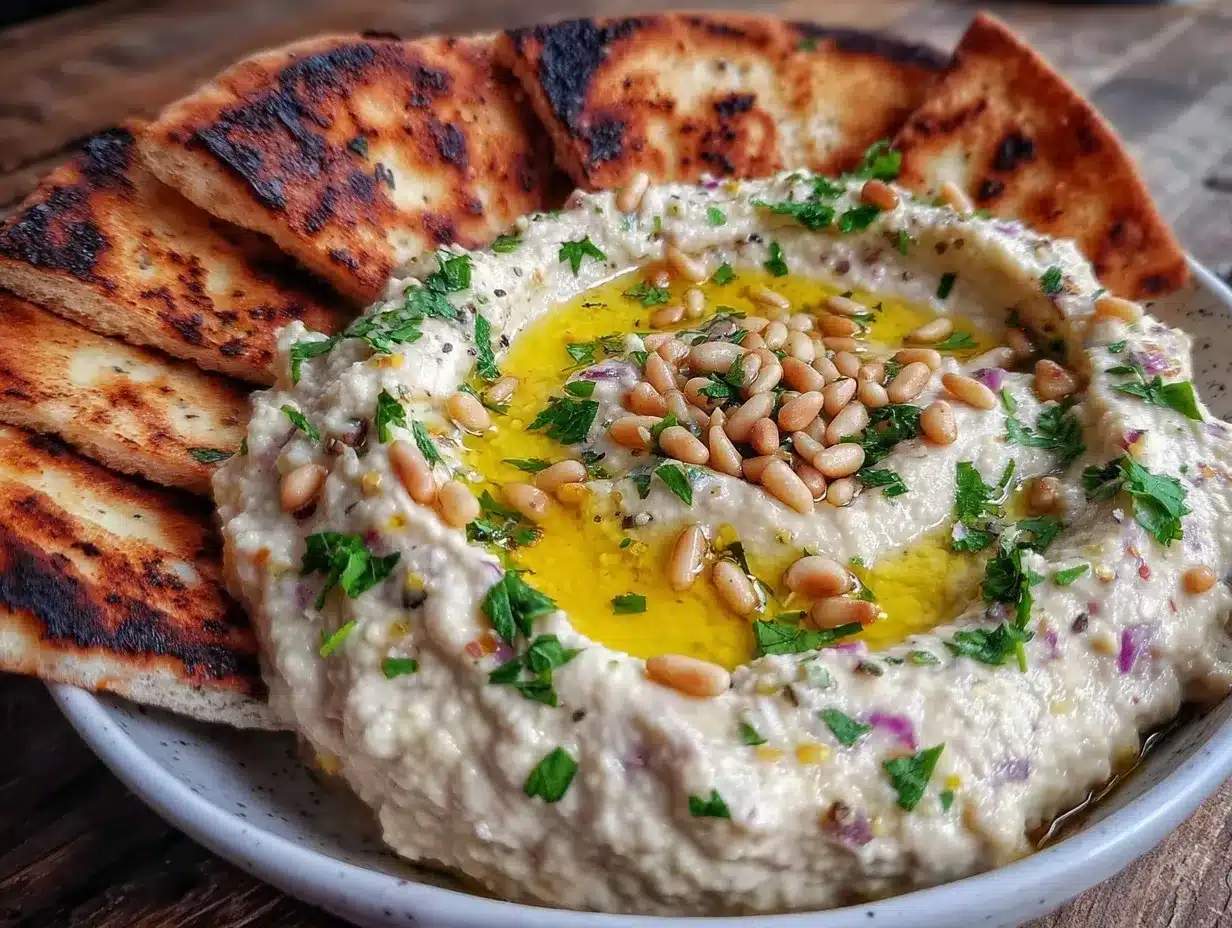
- Food Processor or High-Speed Blender: Essential for blending the chickpeas into that silky smooth texture. If you don’t have one, a sturdy hand blender can work, but it takes more elbow grease.
- Small Skillet: For toasting the pine nuts gently over medium heat. Keep an eye on them—they burn fast!
- Measuring Cups and Spoons: Accuracy helps with balanced flavor.
- Citrus Juicer: Optional, but squeezing fresh lemon juice is easier with this.
- Spatula: For scraping down the sides of the processor bowl.
I’ve tried making hummus with different tools, and honestly, a good food processor is worth the investment if you’re planning to make dips regularly. It’s easier to clean than blenders and gives a better consistency. For the pine nuts, a non-stick skillet is my favorite because it prevents sticking and uneven toasting. And don’t forget a wooden spoon or silicone spatula that won’t scratch your gear!
Preparation Method
- Toast the Pine Nuts: Place ¼ cup pine nuts in a dry skillet over medium heat. Stir frequently for about 3-5 minutes until they’re golden brown and fragrant. Remove immediately to a plate to cool—pine nuts go from toasted to burnt in seconds. (Warning: don’t walk away!)
- Prepare the Chickpeas: If using canned, drain and rinse well under cold water. For dried chickpeas, soak overnight and cook until tender (around 1.5 hours). This step is key for creamy texture.
- Blend the Base: In a food processor, combine chickpeas, tahini, minced garlic, lemon juice, olive oil, ground cumin (if using), and salt. Pulse until the mixture starts to come together, about 1-2 minutes.
- Adjust Texture: With the processor running, slowly add cold water, tablespoon by tablespoon, until the hummus reaches your desired creaminess. It should be smooth, not runny—think thick but spreadable.
- Taste and Season: Pause to taste. Add more salt, lemon juice, or garlic if needed. This step makes all the difference.
- Transfer and Garnish: Spoon the hummus into a serving bowl. Drizzle with a little extra olive oil, sprinkle the toasted pine nuts on top, and add a dusting of paprika or chopped parsley if you like.
Pro tip: scrape down the sides of the processor bowl once or twice during blending to ensure everything gets evenly mixed. Also, cold water is better than warm here—it helps emulsify the tahini and chickpeas for creaminess. If your hummus feels grainy, a couple more pulses usually fix that.
Cooking Tips & Techniques
Getting that dreamy creamy hummus texture takes a little finesse but nothing too tricky. Here’s what I learned the hard way:
- Don’t Skip Rinsing: Whether canned or cooked yourself, rinsing chickpeas removes excess starch and helps prevent bitterness.
- Toast Pine Nuts Gently: Use medium heat and keep stirring. Burnt pine nuts taste bitter and will ruin the dish.
- Use Cold Water for Creaminess: Adding cold water while blending helps create a lighter, silkier texture without thinning the flavor.
- Pulse, Don’t Overblend: Over-processing can heat up the hummus and change the texture. Blend just until smooth and creamy.
- Taste as You Go: Seasoning is personal. Lemon and salt can be adjusted to balance richness and brightness.
- Multitask Wisely: Toast pine nuts first so they can cool while you blend the hummus. Saves time and keeps nuts crisp.
Early on, I made the mistake of adding too much tahini, which made the hummus bitter and thick. Now, I measure carefully and add tahini gradually. Also, fresh garlic makes a big difference—pre-minced stuff just doesn’t give that punch.
Variations & Adaptations
Hummus is a versatile canvas, so I like to switch things up depending on mood and pantry availability:
- Roasted Red Pepper Hummus: Add ½ cup roasted red peppers to the food processor for a smoky, sweet twist.
- Herb-Infused: Blend in fresh parsley or cilantro for a bright, herbal note perfect for summer.
- Spicy Kick: Stir in a pinch of cayenne or a few drops of hot sauce for some heat.
- Low-Carb Option: Swap some chickpeas with cooked cauliflower for a lighter, lower-carb dip.
- Nut-Free Version: Omit pine nuts and sprinkle toasted sunflower seeds or pumpkin seeds instead.
Once, I accidentally used smoked paprika instead of regular and ended up with a hummus that tasted like a campfire—surprisingly good! Feel free to experiment; this recipe is forgiving and welcomes tweaks.
Serving & Storage Suggestions
This creamy homemade hummus with toasted pine nuts is best served at room temperature. Let it sit out for 15-20 minutes before serving to bring out the flavors fully. It pairs wonderfully with warm pita bread, crisp veggie sticks, or as a spread on sandwiches.
For storage, keep hummus in an airtight container in the refrigerator for up to 4 days. The flavors deepen over time, but the pine nuts are best added fresh to retain their crunch. If you want to prepare in advance, store the hummus and pine nuts separately and combine just before serving.
Reheat gently if desired by leaving it at room temp or warming briefly (but avoid the microwave, which can dry it out). When serving leftovers, a drizzle of fresh olive oil and a sprinkle of paprika can refresh the presentation and flavor.
Nutritional Information & Benefits
This homemade hummus packs a nutritious punch per ¼ cup serving, roughly:
| Nutrient | Amount |
|---|---|
| Calories | 120 |
| Protein | 5 grams |
| Fat | 8 grams (mostly healthy fats from olive oil and pine nuts) |
| Fiber | 4 grams |
| Carbohydrates | 10 grams |
Chickpeas are a great plant-based protein and fiber source, aiding digestion and keeping you full longer. Olive oil and pine nuts offer heart-healthy monounsaturated fats and antioxidants. This recipe is naturally gluten-free and vegetarian, making it suitable for many dietary preferences. Just note the pine nuts are tree nuts, which can be an allergen for some.
For me, this hummus feels like a little health boost disguised as a tasty treat—comforting but nourishing, which is a rare combo in snacks.
Conclusion
This creamy homemade hummus from scratch with toasted pine nuts is one of those recipes you come back to time and again. It’s easy enough for a weeknight snack yet impressive enough to serve guests without stress. I love how the toasted pine nuts bring a warm, nutty crunch that makes every bite feel special. Plus, it’s flexible—you can tweak the garlic, lemon, or spices to suit your mood.
Give this recipe a try, and don’t worry about perfection. Play with it, make it your own, and let it be the dip that pulls people to the table. I’d love to hear how you customize it or what unexpected ingredients you sneak in! Sharing food stories like this always feels like passing along a little kitchen magic.
Here’s to many creamy, satisfying spoonfuls ahead.
FAQs
What’s the best way to store homemade hummus?
Store it in an airtight container in the fridge for up to 4 days. Add pine nuts just before serving to keep them crunchy.
Can I make this hummus without a food processor?
You can use a blender or even a hand masher, but it will take more effort to achieve that smooth, creamy texture.
How do I prevent hummus from tasting bitter?
Use fresh ingredients, especially garlic and tahini, and avoid over-processing. Adding cold water while blending helps too.
Can I use raw pine nuts instead of toasted?
Yes, but toasting brings out their flavor and adds a nice crunch, which really enhances the hummus.
Is this recipe suitable for a vegan diet?
Absolutely! All ingredients are plant-based, making it perfect for vegan and vegetarian diets.
Pin This Recipe!
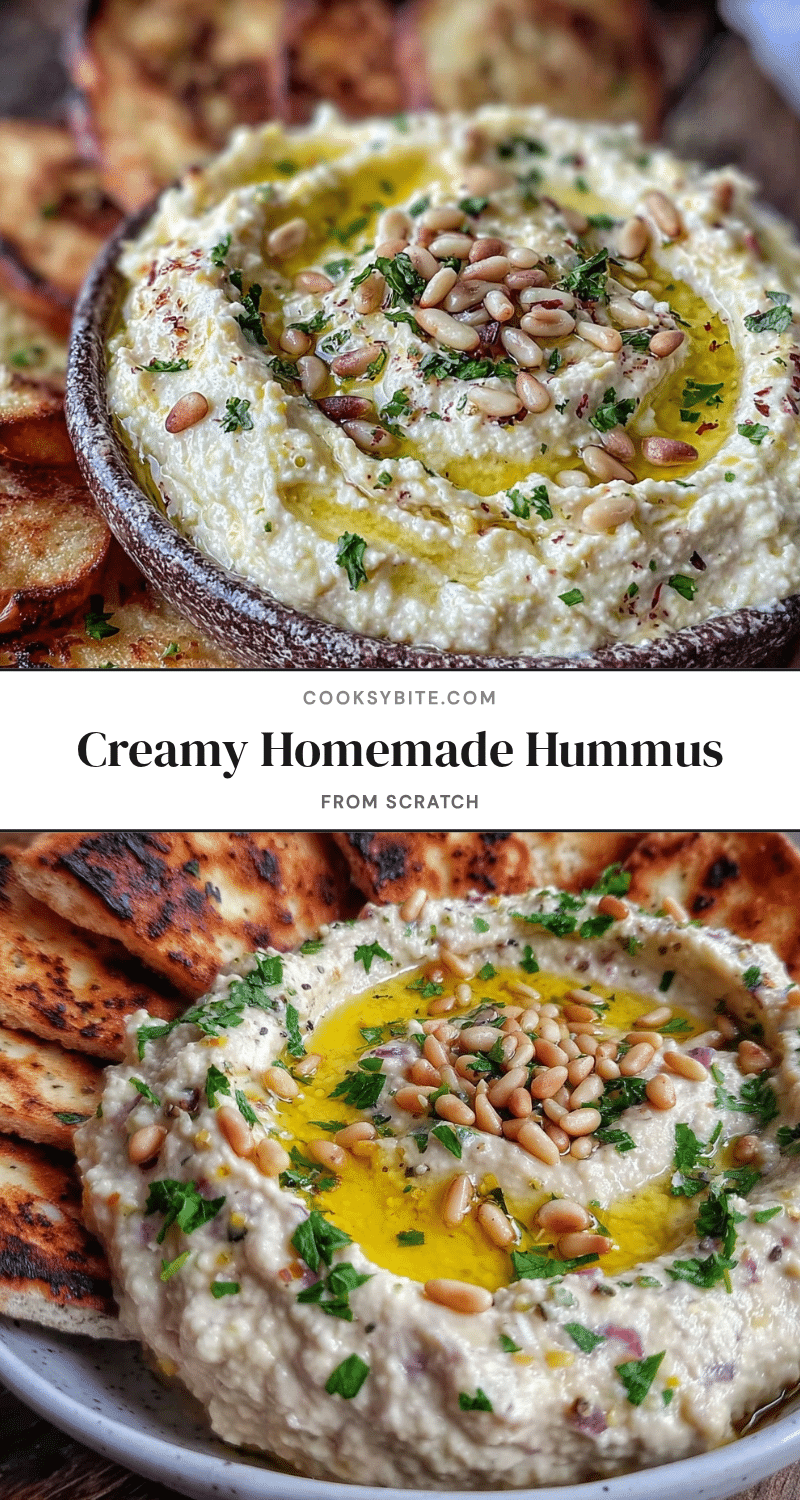
Creamy Homemade Hummus from Scratch with Toasted Pine Nuts
A quick and easy homemade hummus recipe featuring creamy chickpeas blended with tahini, garlic, lemon juice, and topped with toasted pine nuts for a nutty crunch. Perfect for snacks or entertaining.
- Prep Time: 10 minutes
- Cook Time: 5 minutes
- Total Time: 15 minutes
- Yield: 6 servings 1x
- Category: Appetizer
- Cuisine: Middle Eastern
Ingredients
- 1 ½ cups cooked chickpeas (or one 15-ounce can, drained and rinsed)
- ¼ cup tahini, well-stirred
- 2 cloves garlic, minced
- 3 tablespoons fresh lemon juice
- 3 tablespoons extra virgin olive oil, plus extra for drizzling
- ½ teaspoon ground cumin (optional)
- ¾ teaspoon salt, or to taste
- 3–4 tablespoons cold water, to adjust texture
- ¼ cup pine nuts, toasted until golden
- Optional garnish: paprika or freshly chopped parsley
Instructions
- Toast the pine nuts in a dry skillet over medium heat, stirring frequently for 3-5 minutes until golden brown and fragrant. Remove immediately to cool.
- If using canned chickpeas, drain and rinse well under cold water. If using dried chickpeas, soak overnight and cook until tender (about 1.5 hours).
- In a food processor, combine chickpeas, tahini, minced garlic, lemon juice, olive oil, ground cumin (if using), and salt. Pulse for 1-2 minutes until the mixture starts to come together.
- With the processor running, slowly add cold water tablespoon by tablespoon until the hummus reaches a smooth, spreadable creaminess.
- Pause to taste and adjust seasoning with more salt, lemon juice, or garlic if desired.
- Transfer hummus to a serving bowl. Drizzle with extra olive oil, sprinkle toasted pine nuts on top, and add a dusting of paprika or chopped parsley if desired.
Notes
Toast pine nuts gently over medium heat and watch carefully to avoid burning. Use cold water when blending to achieve a silky smooth texture. Scrape down the sides of the processor bowl during blending for even consistency. Adjust seasoning to taste. Store hummus in an airtight container in the refrigerator for up to 4 days; add pine nuts just before serving to keep them crunchy.
Nutrition
- Serving Size: ¼ cup
- Calories: 120
- Fat: 8
- Carbohydrates: 10
- Fiber: 4
- Protein: 5
Keywords: hummus, homemade hummus, creamy hummus, toasted pine nuts, easy dip, vegan dip, vegetarian, gluten-free, healthy snack