“You really have to try this,” my friend insisted, waving her phone screen like it was the holy grail of desserts. Honestly, I was skeptical—mango and coconut panna cotta sounded fancy and complicated, something I’d mess up for sure. But the idea of a no-bake treat that didn’t require hours in the kitchen was tempting after a particularly chaotic week. I found myself grabbing the ingredients almost before I could second-guess her.
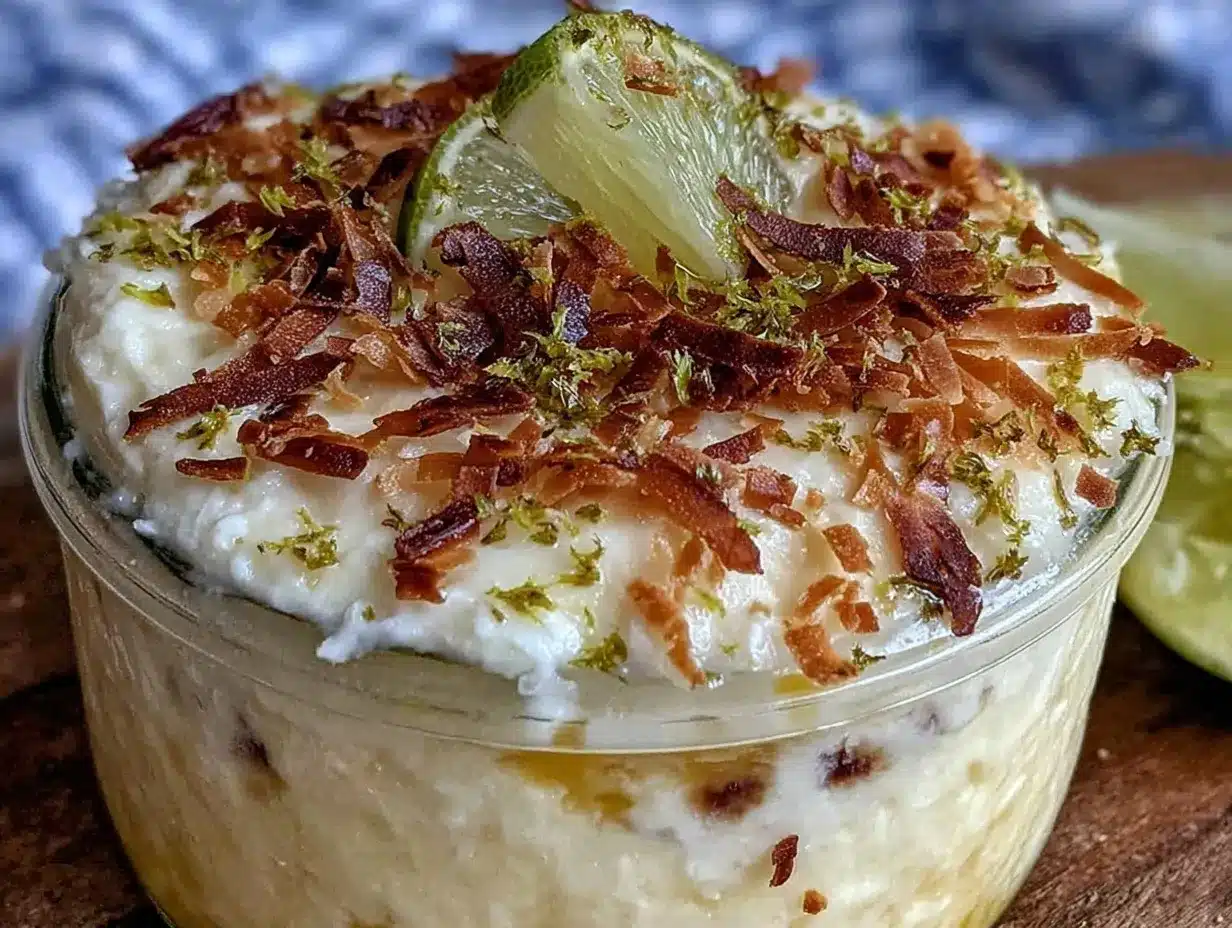
What caught me off guard was how this recipe transformed simple pantry staples and fresh mango into something silky and indulgently creamy. The toasted coconut on top added this unexpected crunch and warmth that made every bite feel like a mini tropical vacation. I made it three times that week—no joke! Each time, it felt like a little win, especially when friends stopped by and asked for the recipe without me even mentioning it.
It’s funny how a dessert that started as a casual suggestion turned into my go-to for impressing guests without breaking a sweat. The mango’s bright sweetness and the coconut’s creamy richness paired so perfectly, it stuck with me. Now, whenever I catch a whiff of toasted coconut, I’m instantly reminded of those laid-back evenings and the quiet satisfaction of a dessert done right. This panna cotta isn’t just a dish; it’s a small moment of calm and joy you can make on a busy day—no fuss, just a little magic.
Why You’ll Love This Recipe
This Creamy No-Bake Mango Coconut Panna Cotta with Toasted Coconut has become a favorite for so many reasons, and trust me, it’s not just because it tastes incredible. I’ve put it through the wringer in my kitchen, tweaking and testing until it felt just right—silky, smooth, and bursting with tropical flavor.
- Quick & Easy: Ready in under 4 hours total, with less than 15 minutes of active prep time—perfect for when you want a special dessert without the headache.
- Simple Ingredients: No exotic shopping trips needed. You probably have coconut milk, gelatin, and mangoes waiting in your fridge or pantry.
- Perfect for Entertaining: Whether it’s a summer dinner party or a casual get-together, this panna cotta feels fancy but is stress-free.
- Crowd-Pleaser: Kids love the creamy sweetness, and adults appreciate the subtle tropical flair—always a hit!
- Unbelievably Delicious: The balance of creamy coconut with fresh mango is unlike anything else—a harmony of flavors and textures.
What sets this recipe apart is the no-bake method combined with the perfect use of gelatin to achieve that delicate wobble without feeling rubbery. Plus, toasting the coconut at home brings a warm, nutty aroma that elevates the whole experience. It’s not just another mango dessert; it’s the kind that makes you pause and savor each spoonful. Honestly, it’s become my secret weapon for whipping up a dessert that looks like a million bucks without the fuss.
What Ingredients You Will Need
This panna cotta uses simple, wholesome ingredients to deliver bold flavor and satisfying texture without the fuss. Most are pantry staples, with fresh mango as the star—feel free to swap in frozen mango if fresh isn’t in season.
- For the Panna Cotta Base:
- Full-fat coconut milk (1 can, about 13.5 oz / 400 ml) – the richness here is key.
- Heavy cream (1 cup / 240 ml) – adds extra creaminess.
- Granulated sugar (¼ cup / 50 g) – balances the natural sweetness.
- Gelatin powder (1 tablespoon) – use unflavored for the perfect set.
- Water (3 tablespoons) – to bloom the gelatin.
- Vanilla extract (1 teaspoon) – brings subtle warmth and depth.
- For the Mango Layer and Topping:
- Fresh ripe mango (2 cups / 300 g, chopped) – pick mangoes that are fragrant and juicy.
- Toasted shredded coconut (½ cup / 40 g) – I toast mine in a dry pan until golden brown, which adds that irresistible crunch.
- Lime zest (optional, 1 teaspoon) – adds a bright, zesty note.
If you’re after a dairy-free option, swap the heavy cream for full-fat coconut cream or almond milk, but keep in mind this might soften the texture slightly. For a lower sugar version, try coconut sugar or a sugar substitute, but it might change the flavor a bit. I usually recommend Chaokoh brand coconut milk for its creamy consistency, but any good-quality brand will do.
Equipment Needed
- Medium saucepan – for gently warming the coconut milk mixture.
- Mixing bowls – one large and a smaller one for blooming the gelatin.
- Blender or food processor – to puree the mango into a smooth layer.
- Whisk – for mixing the gelatin and cream mixture smoothly.
- Serving glasses or ramekins (4 to 6) – choose clear ones to show off the layered colors.
- Non-stick skillet or frying pan – for toasting the shredded coconut.
If you don’t have a blender, you can mash the mango by hand with a fork, though the texture will be chunkier. I’ve done both, and while the blender gives a silky smooth layer, the hand-mashed version feels more rustic and just as tasty. For toasting coconut, keep an eye on it as it can burn quickly – I swear by a wooden spatula for gentle stirring.
Preparation Method
- Bloom the Gelatin: Sprinkle 1 tablespoon of gelatin powder over 3 tablespoons of cold water in a small bowl. Let it sit for 5-10 minutes until it blooms (absorbs the water and becomes spongy).
- Heat the Cream Mixture: In a medium saucepan, combine 1 can (400 ml) of full-fat coconut milk, 1 cup (240 ml) heavy cream, and ¼ cup (50 g) granulated sugar. Warm over medium heat, stirring occasionally, until the sugar dissolves and the mixture is hot but not boiling (about 5 minutes).
- Incorporate Gelatin: Remove the saucepan from heat. Add the bloomed gelatin and 1 teaspoon vanilla extract to the hot cream mixture. Whisk gently until the gelatin completely dissolves. If needed, return to very low heat but do not boil.
- Prepare Serving Dishes: Pour half of the panna cotta base evenly into 4 to 6 glasses or ramekins. Place them in the fridge to chill for about 30 minutes, or until set but still slightly jiggly.
- Make the Mango Layer: While the panna cotta sets, blend 2 cups (300 g) chopped fresh mango until smooth. If you want a brighter zing, add 1 teaspoon lime zest here.
- Add Mango Layer: Pour the mango puree over the set panna cotta layer in each glass. Return to the fridge for another 2 hours to fully set.
- Toast the Coconut: Just before serving, toast ½ cup (40 g) shredded coconut in a dry skillet over medium heat, stirring frequently until golden and fragrant (about 3-5 minutes). Watch closely to avoid burning.
- Serve: Sprinkle the toasted coconut on top of each panna cotta. Optionally, garnish with a thin slice of fresh mango or a small mint leaf for a pop of color.
Pro tip: If your gelatin doesn’t dissolve properly, your panna cotta might be grainy or not set right. Always whisk well off the heat and avoid boiling after adding gelatin. The subtle wobble is what you want—it means creamy perfection. If you’re pressed for time, you can speed up chilling by placing the glasses in an ice bath before refrigerating.
Cooking Tips & Techniques
Getting panna cotta just right can be tricky, but a few tricks help me every time. First off, blooming the gelatin in cold water is non-negotiable. It’s what makes the whole dessert hold together without a weird rubbery texture. I learned the hard way that tossing gelatin straight into hot liquid causes clumps.
Use full-fat coconut milk and cream for richness—low-fat versions just won’t have that velvety mouthfeel. And don’t rush the chilling process; the layers need time to set properly. I like to prep this dessert the day before serving to let the flavors meld and the texture firm up perfectly.
When toasting coconut, patience is key. Stir constantly and keep the heat moderate. Burnt coconut tastes bitter and will ruin the otherwise delicate panna cotta. I once left the pan unattended and had to start over—that’s a mistake I don’t repeat.
For a flawless mango layer, pick mangoes that are ripe but not overripe. Overripe mango can be too sweet or watery, which affects the texture. If fresh mangoes aren’t available, frozen mango chunks work fine—just thaw and drain excess liquid before blending.
Multitasking tip: While the panna cotta chills, you can prepare a quick appetizer or whip up a refreshing drink to match. This dessert pairs beautifully with something light and citrusy—like a chilled mojito or even a sparkling water with lime.
Variations & Adaptations
This recipe lends itself well to plenty of customizations. Here are a few of my favorites:
- Dairy-Free Version: Use coconut cream instead of heavy cream for a fully vegan-friendly dessert. The texture might be slightly looser but still delicious.
- Berry Twist: Swap mango for a mix of pureed strawberries and raspberries to create a vibrant pink panna cotta—perfect for spring or summer get-togethers.
- Spiced Coconut: Add a pinch of cinnamon or cardamom to the cream mixture for a warm, aromatic note that pairs wonderfully with toasted coconut.
- Layered Dessert: Try alternating mango panna cotta layers with a fluffy strawberry mousse for a stunning and flavorful contrast.
For a personal twist, I once folded in finely chopped fresh mint into the mango puree—it gave the panna cotta a refreshing lift that surprised my guests. If you’re gluten-free, this recipe is naturally safe, but always check your gelatin source if you’re super sensitive.
Serving & Storage Suggestions
Serve this panna cotta chilled straight from the fridge to appreciate its creamy texture and fresh mango brightness. I like to present it in clear glasses so the layers show beautifully—makes it feel fancy without extra effort.
It pairs well with light, tropical beverages or a crisp white wine. For a party, consider serving alongside other light desserts like mini lemon blueberry cheesecakes for a colorful dessert table.
Store leftovers covered in the fridge for up to 3 days. The flavors actually deepen overnight, making it even better the next day. If you need to store longer, panna cotta doesn’t freeze well due to the gelatin, so fresh is best.
To reheat (if you want it less chilled), let it sit at room temperature for 15 minutes. Avoid microwaving as it can cause separation and ruin the silky texture.
Nutritional Information & Benefits
Each serving of this panna cotta contains roughly 250-300 calories, with healthy fats coming from coconut milk and cream. It’s naturally gluten-free and can be made dairy-free with simple swaps.
Mangoes provide a good dose of vitamin C and antioxidants, supporting immune health and skin glow. Coconut milk adds medium-chain triglycerides (MCTs), which some studies suggest may aid in energy and metabolism.
This dessert is a sensible treat—rich and satisfying but made with real ingredients and no artificial additives. I love how it feels indulgent but not heavy, fitting nicely into a balanced lifestyle.
Conclusion
This Creamy No-Bake Mango Coconut Panna Cotta with Toasted Coconut is one of those recipes that feels like a little celebration every time. It’s simple enough for a weeknight treat but impressive enough for guests. I love how adaptable it is—whether you want it dairy-free, spiced up, or layered with other flavors.
Give it a try and see how you might personalize it. Maybe you’ll add a splash of rum, a sprinkle of chili powder, or a handful of fresh berries. Whatever you do, it’s a recipe that invites creativity while staying reliably delicious.
If you enjoy desserts that are as beautiful as they are tasty, this panna cotta might just become your favorite. And hey, if you’re curious about other easy, crowd-pleasing sweets, my decadent red wine chocolate cake or cherry chocolate brownies are worth a peek.
Happy spooning!
FAQs
Can I make this panna cotta ahead of time?
Yes! It actually tastes better after chilling overnight. Just cover and refrigerate until ready to serve.
What can I use instead of gelatin?
Agar agar powder is a vegan alternative, but the setting and texture will be a bit different. Use according to package instructions.
Can I use canned mango instead of fresh?
You can, but fresh mango provides better flavor and texture. If using canned, drain well and adjust sugar accordingly.
How do I prevent the coconut from burning when toasting?
Toast over medium heat and stir constantly. Remove from heat as soon as it turns golden to avoid bitterness.
Is this recipe suitable for a gluten-free diet?
Absolutely! All ingredients here are naturally gluten-free, making it a safe and tasty option.
Pin This Recipe!
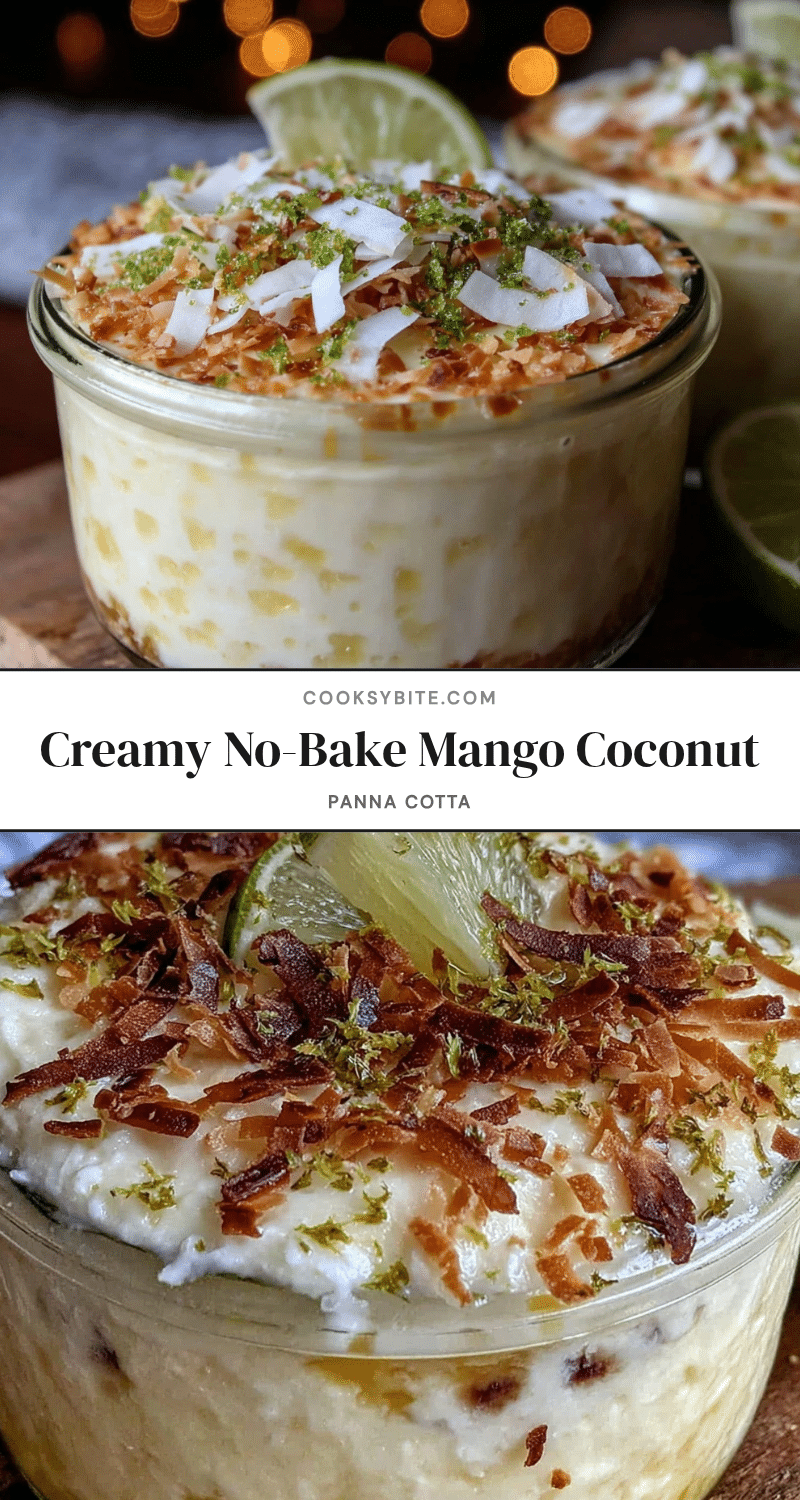
Creamy No-Bake Mango Coconut Panna Cotta
A silky, indulgently creamy no-bake dessert combining tropical mango and rich coconut milk, topped with toasted coconut for a delightful crunch. Perfect for quick, fuss-free entertaining.
- Prep Time: 15 minutes
- Cook Time: 5 minutes
- Total Time: 3 hours 50 minutes
- Yield: 4 to 6 servings 1x
- Category: Dessert
- Cuisine: Tropical
Ingredients
- 1 can (13.5 oz / 400 ml) full-fat coconut milk
- 1 cup (240 ml) heavy cream
- 1/4 cup (50 g) granulated sugar
- 1 tablespoon unflavored gelatin powder
- 3 tablespoons cold water
- 1 teaspoon vanilla extract
- 2 cups (300 g) fresh ripe mango, chopped
- 1/2 cup (40 g) toasted shredded coconut
- 1 teaspoon lime zest (optional)
Instructions
- Sprinkle 1 tablespoon of gelatin powder over 3 tablespoons of cold water in a small bowl. Let it sit for 5-10 minutes until it blooms and becomes spongy.
- In a medium saucepan, combine 1 can (400 ml) full-fat coconut milk, 1 cup (240 ml) heavy cream, and 1/4 cup (50 g) granulated sugar. Warm over medium heat, stirring occasionally, until the sugar dissolves and the mixture is hot but not boiling (about 5 minutes).
- Remove the saucepan from heat. Add the bloomed gelatin and 1 teaspoon vanilla extract to the hot cream mixture. Whisk gently until the gelatin completely dissolves. If needed, return to very low heat but do not boil.
- Pour half of the panna cotta base evenly into 4 to 6 glasses or ramekins. Place them in the fridge to chill for about 30 minutes, or until set but still slightly jiggly.
- While the panna cotta sets, blend 2 cups (300 g) chopped fresh mango until smooth. If desired, add 1 teaspoon lime zest for brightness.
- Pour the mango puree over the set panna cotta layer in each glass. Return to the fridge for another 2 hours to fully set.
- Just before serving, toast 1/2 cup (40 g) shredded coconut in a dry skillet over medium heat, stirring frequently until golden and fragrant (about 3-5 minutes). Watch closely to avoid burning.
- Sprinkle the toasted coconut on top of each panna cotta. Optionally, garnish with a thin slice of fresh mango or a small mint leaf.
Notes
Bloom gelatin in cold water before adding to hot mixture to avoid clumps. Do not boil after adding gelatin. Toast coconut carefully over medium heat to avoid burning. For dairy-free option, substitute heavy cream with coconut cream or almond milk, but texture may soften slightly. Use ripe but not overripe mango for best flavor and texture. Chilling overnight improves flavor and texture. Panna cotta does not freeze well.
Nutrition
- Serving Size: 1 glass or ramekin
- Calories: 275
- Sugar: 15
- Sodium: 30
- Fat: 22
- Saturated Fat: 19
- Carbohydrates: 18
- Fiber: 2
- Protein: 3
Keywords: no-bake dessert, mango panna cotta, coconut panna cotta, tropical dessert, easy dessert, gluten-free dessert, creamy dessert