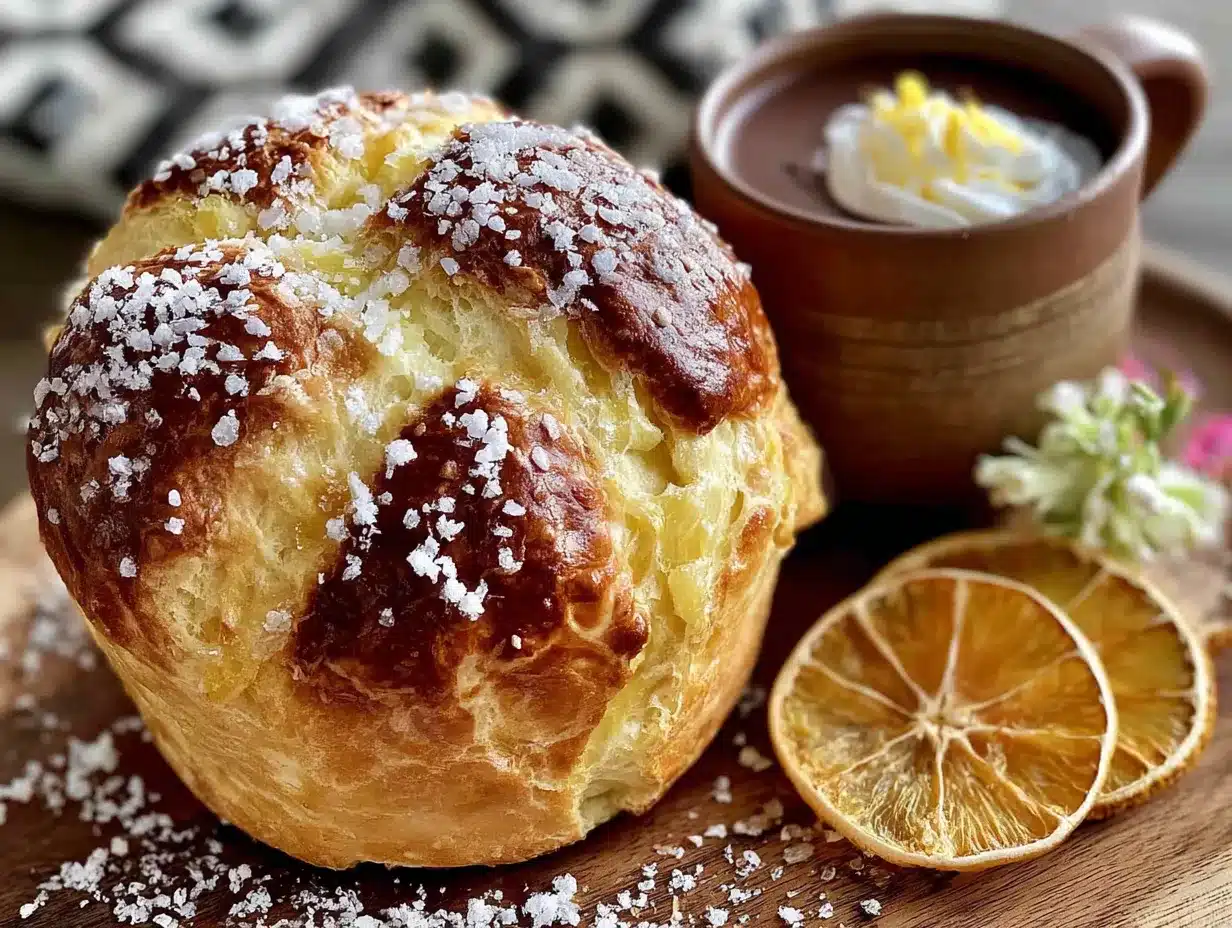
“Wait — you put orange blossom water in the dough? That’s a thing?” My friend Carla stared at me over the rim of her coffee cup, half-skeptical, half-intrigued. It was mid-October, and I had just pulled a tray of golden, sugar-dusted Pan de Muerto out of the oven. The kitchen smelled like a garden in bloom — soft, floral, and sweet, with a hint of warm yeast. That was the moment I realized this wasn’t just another bread recipe. It was the one that made people stop mid-sentence and lean in.
I first made Pan de Muerto years ago, following a traditional recipe that felt more like a history lesson than a baking project. Don’t get me wrong — I loved the ritual. But something was missing. The bread was good, but it didn’t have that little spark, that moment of surprise. So I started experimenting. A splash of orange blossom water here, a sprinkle of orange zest there. Then I stumbled onto the idea of rolling the finished loaf in orange blossom sugar — and honestly, it changed everything. The sugar catches the light, the orange aroma hits you before you even take a bite, and suddenly, this bread feels like a celebration all on its own.
This Best Pan de Muerto with Orange Blossom Sugar is the version I now make every Día de los Muertos. It’s soft, slightly sweet, and perfumed in a way that feels both traditional and totally fresh. I’m not claiming it’s the only way to make it — but it’s the one that made Carla ask for the recipe before she even finished her slice. And that’s the kind of trust I don’t take lightly.
Why You’ll Love This Recipe
Let’s be real — baking bread can feel intimidating. But this Pan de Muerto is different. It’s forgiving, fragrant, and honestly, it makes your whole house smell like a bakery and a flower shop had a beautiful baby. Here’s why this version stands out:
- Soft, Pillowy Texture — The dough is enriched with eggs and butter, giving it that tender, brioche-like crumb that melts in your mouth. No dry, dense bread here.
- That Orange Blossom Magic — The orange blossom water in the dough adds a subtle floral note, but the real star is the orange blossom sugar coating. It adds a delicate crunch and an aromatic sweetness that makes every bite feel special.
- Simple Ingredients, Big Flavor — You don’t need a specialty grocery store for this. Flour, yeast, butter, eggs, sugar, and orange blossom water (which you can find online or at most Middle Eastern markets) are all you need.
- Perfect for Día de los Muertos — or Any Day — While this bread is traditionally made for the Day of the Dead, it’s so good that I’ve started making it for brunch, holiday mornings, and even as a hostess gift. It’s that versatile.
- Crowd-Pleaser, No Question — I’ve served this to kids, grandparents, and friends who “don’t like floral flavors.” Every single person went back for seconds. It’s the kind of bread that makes people close their eyes after the first bite.
What makes this recipe different from the rest? It’s not just about following tradition — it’s about honoring it while making it your own. The orange blossom sugar coating is my signature twist, and it’s the kind of small change that turns a good recipe into a memorable one. This isn’t just bread; it’s a moment.
What Ingredients You Will Need
This recipe uses simple, wholesome ingredients to create something truly special. Most of these are pantry staples, with a few aromatic additions that make all the difference. Here’s what you’ll need:
For the Dough
- All-purpose flour — 4 cups (500g). I prefer King Arthur Flour for consistent results, but any good brand works. Spoon and level your flour for accuracy.
- Active dry yeast — 2 ¼ teaspoons (one packet). Make sure it’s fresh — check the expiration date before you start.
- Granulated sugar — ½ cup (100g). This adds sweetness and helps feed the yeast.
- Salt — 1 teaspoon. Don’t skip it — it balances the sweetness and strengthens the dough.
- Large eggs — 3, room temperature. Cold eggs can shock the yeast and slow down rising.
- Unsalted butter — ½ cup (113g), softened. I use Kerrygold for its rich flavor, but any good butter works.
- Whole milk — ½ cup (120ml), warm (about 110°F). You can use 2% if that’s what you have, but whole milk gives a richer crumb.
- Orange blossom water — 2 tablespoons. This is the star ingredient. Look for it in Middle Eastern markets or online — brands like Cortas or Mymouné are reliable.
- Orange zest — from 1 large orange. Freshly zested, not dried. This adds brightness and depth.
- Vanilla extract — 1 teaspoon. Pure, not imitation, for the best flavor.
For the Orange Blossom Sugar Coating
- Granulated sugar — ½ cup (100g).
- Orange blossom water — 1-2 teaspoons, just enough to dampen the sugar.
- Melted butter — ¼ cup (56g), for brushing the baked bread.
Ingredient Tips & Substitutions
- Orange blossom water is non-negotiable for the signature flavor, but if you can’t find it, you can use 1 tablespoon of orange extract mixed with 1 tablespoon of water. It won’t be quite the same, but it’ll still be delicious.
- For a dairy-free version, swap the butter with vegan butter and use oat milk or almond milk. The texture will be slightly less rich, but it still works beautifully.
- For a gluten-free option, use a 1:1 gluten-free baking flour blend. I’ve tested this with Bob’s Red Mill, and it works — just expect a slightly denser crumb.
- If you can’t find whole milk, you can use ½ cup of warm water mixed with 2 tablespoons of dry milk powder for a similar richness.
Equipment Needed
You don’t need a professional bakery setup for this recipe, but a few key tools make the process smoother. Here’s what I use:
- Stand mixer with dough hook — This is my go-to for kneading enriched doughs. It saves your arms and gives consistent results. If you don’t have one, you can knead by hand — it’ll take about 10-12 minutes of elbow grease.
- Large mixing bowl — Glass or stainless steel works best. I like using a warm bowl to help the dough rise.
- Kitchen scale — Not required, but highly recommended for accurate flour measurements. Baking is a science, and a scale makes it foolproof.
- Baking sheet — A half-sheet pan lined with parchment paper works perfectly.
- Pastry brush — For brushing the melted butter onto the baked bread. A silicone brush is easy to clean and doesn’t shed bristles.
- Plastic wrap or a clean kitchen towel — For covering the dough while it rises.
- Cooling rack — Essential for letting the bread cool evenly so the sugar coating sets properly.
- Small bowl — For mixing the orange blossom sugar.
If you’re new to bread baking, don’t stress about having fancy equipment. A sturdy bowl, a wooden spoon, and your hands are enough to make this bread. I’ve done it both ways, and honestly, the hand-kneaded version has its own charm — it’s more meditative.
Preparation Method
This recipe takes about 3 hours total, including rising time. Most of that is hands-off, so plan accordingly. Here’s how to make the Best Pan de Muerto with Orange Blossom Sugar:
- Activate the yeast — In a small bowl, combine the warm milk (110°F), 1 tablespoon of the sugar, and the active dry yeast. Stir gently and let it sit for 5-10 minutes until it becomes frothy and smells like bread. If it doesn’t foam, your yeast is dead — start over with fresh yeast.
- Mix the dry ingredients — In the bowl of your stand mixer, whisk together the remaining sugar, salt, and flour. Make a well in the center.
- Combine wet ingredients — In a separate bowl, whisk together the eggs, orange blossom water, orange zest, and vanilla extract. Add this mixture and the frothy yeast mixture to the flour well.
- Knead the dough — Using the dough hook, mix on low speed until the dough comes together, about 2 minutes. Then add the softened butter, one tablespoon at a time, mixing on medium-low until each piece is incorporated. Once all the butter is in, knead on medium speed for 8-10 minutes. The dough should be smooth, elastic, and slightly tacky but not sticky. If it’s too wet, add flour one tablespoon at a time; if too dry, add warm milk a teaspoon at a time.
- First rise — Transfer the dough to a lightly greased bowl, cover tightly with plastic wrap, and let it rise in a warm, draft-free spot for 1.5 to 2 hours, or until doubled in size. I like to put it in my oven with the light on — it stays perfectly warm.
- Shape the dough — Punch down the dough gently to release the air. Turn it out onto a lightly floured surface. Cut off about ¼ of the dough and set it aside. Shape the larger piece into a smooth round ball and place it on your prepared baking sheet. Divide the reserved dough into 4 equal pieces. Roll each into a rope about 6 inches long. Arrange two ropes in a cross on top of the round loaf, and use the remaining two to form small round “teardrops” for the top — these represent the bones and skull in the traditional shape.
- Second rise — Cover the shaped loaf loosely with a clean kitchen towel and let it rise for another 45-60 minutes, until puffy and almost doubled. It should feel soft and pillowy when gently pressed.
- Preheat and bake — About 20 minutes before the second rise is done, preheat your oven to 350°F (175°C). Bake the bread for 25-30 minutes, until the top is deep golden brown and the loaf sounds hollow when tapped on the bottom. If the top is browning too quickly, tent it loosely with foil after 15 minutes.
- Make the orange blossom sugar — While the bread bakes, combine the ½ cup of sugar and 1-2 teaspoons of orange blossom water in a small bowl. Use your fingers to rub them together until the sugar feels like wet sand and smells intensely floral. Set aside.
- Finish the bread — As soon as the bread comes out of the oven, brush the entire surface generously with melted butter. Immediately sprinkle the orange blossom sugar all over the bread, pressing it gently with your hands so it sticks. The butter helps the sugar adhere and creates that beautiful, crunchy coating.
- Cool and serve — Transfer the bread to a cooling rack and let it cool completely before slicing — at least 1 hour. This is the hardest part, I know, but the texture sets as it cools.
Pro tip: If the dough feels too sticky during kneading, resist the urge to add too much flour. A slightly tacky dough gives you a softer, fluffier bread. Trust the process — it will come together.
Cooking Tips & Techniques
I’ve made this bread more times than I can count, and I’ve learned a few things the hard way. Here are my best tips for success:
- Temperature matters more than you think. Cold ingredients can kill your yeast or slow down rising. Make sure your eggs and butter are at room temperature, and your milk is warm but not hot — around 110°F is ideal. If you don’t have a thermometer, it should feel like warm bathwater.
- Don’t rush the first rise. This dough is enriched with butter and eggs, which means it takes longer to rise than a lean dough. Be patient. If your kitchen is cold, place the bowl in a slightly warmed oven (turn it on to 200°F for 2 minutes, then turn it off) or near a sunny window.
- Use a scale for flour. I cannot stress this enough. Measuring flour by volume can lead to too much or too little, which affects the texture. A kitchen scale is a game-changer for consistent results.
- Brush the butter while the bread is hot. This is crucial for the sugar coating to stick. If the bread cools too much, the butter won’t soak in, and the sugar will just fall off. Work quickly!
- Make the orange blossom sugar fresh. It loses its intensity over time, so make it right before you use it. The smell alone will make you want to eat the bread immediately.
- If you over-knead the dough, don’t panic. I’ve done it, and the bread still turned out fine — just a bit denser. If the dough starts to feel tight and resistant, stop kneading and let it rest for 10 minutes before shaping.
One of my biggest failures? I once forgot to add the orange blossom water to the dough. The bread was still good, but it lacked that magical floral note. Now I always set the bottle right next to my mixing bowl so I can’t miss it.
Variations & Adaptations
This recipe is a beautiful base for experimentation. Here are some ways to make it your own:
- Chocolate Orange Blossom Pan de Muerto — Add ¼ cup of cocoa powder to the flour mixture and reduce the flour by ¼ cup. The chocolate and orange blossom combination is absolutely divine — think Terry’s Chocolate Orange, but in bread form.
- Vegan Version — Replace the butter with vegan butter, use flax eggs (1 tablespoon ground flaxseed + 3 tablespoons water per egg), and swap the milk for oat milk. The texture will be a bit less rich, but it’s still soft and delicious. I’ve tested this for a friend’s vegan Día de los Muertos party, and it was a hit.
- Spiced Orange Blossom Sugar — Add ½ teaspoon of ground cinnamon and a pinch of ground cloves to the orange blossom sugar. This adds a warm, cozy note that’s perfect for fall.
- Fill It — After the first rise, flatten the dough into a disc, spread a layer of dulce de leche or guava paste in the center, then shape into a ball and proceed. The filling adds a surprise burst of sweetness when you slice into it.
- Gluten-Free Adaptation — Use a 1:1 gluten-free flour blend and add 1 teaspoon of xanthan gum if your blend doesn’t already include it. The dough will be stickier, so use wet hands to shape it. The texture is slightly more cake-like but still delicious.
My personal favorite variation? The chocolate one. I made it last year for a friend’s birthday, and she said it was the best bread she’d ever had. High praise, and I’m not arguing.
Serving & Storage Suggestions
Pan de Muerto is best served the day it’s made, when the crust is still slightly crunchy from the sugar and the inside is pillowy soft. Here’s how to serve and store it:
- Serving temperature: Room temperature is ideal. If you’ve stored it, let it come to room temperature for about 30 minutes before serving. You can also warm slices in a 300°F oven for 5 minutes to revive the crust.
- Presentation: Place the whole loaf on a wooden board or a colorful platter. Dust with a little extra orange blossom sugar right before serving for that bakery-fresh look. It’s gorgeous on a Día de los Muertos altar alongside marigolds and candles.
- Pairings: This bread is fantastic with a cup of Mexican hot chocolate, café de olla, or a strong espresso. For a brunch spread, serve it with fresh fruit, whipped cream, and a drizzle of honey.
- Storage: Store the bread in an airtight container or wrapped tightly in plastic wrap at room temperature for up to 3 days. Do not refrigerate — it will dry out the bread.
- Freezing: You can freeze the baked, unsugared bread for up to 2 months. Wrap it tightly in plastic wrap and then foil. When ready to serve, thaw at room temperature, then reheat in a 350°F oven for 10 minutes. Brush with melted butter and coat with fresh orange blossom sugar right before serving.
The flavors actually deepen after the first day — the orange blossom becomes more subtle and integrated. I actually love the leftovers for breakfast, toasted lightly and spread with butter.
Nutritional Information & Benefits
This is a treat, not a health food, but it does have some redeeming qualities. Here’s the estimated nutritional breakdown per slice (based on 12 slices):
- Calories: ~280
- Fat: 12g
- Carbohydrates: 38g
- Protein: 6g
- Fiber: 1g
- Sugar: 16g
Health highlights: The orange blossom water is known for its calming properties in traditional medicine — it’s often used to aid digestion and reduce anxiety. The eggs provide high-quality protein and choline, which supports brain health. And honestly, the act of making bread from scratch is a form of mindfulness that’s good for the soul.
Dietary considerations: This recipe contains gluten, dairy, and eggs. It can be adapted for vegan and gluten-free diets as noted in the variations section. It’s not low-carb or keto-friendly due to the flour and sugar.
I’m not a nutritionist, and I don’t pretend to be. But I do believe that food made with love and shared with people is good for you in ways that can’t be measured. This bread is about celebration, memory, and connection — and that’s pretty healthy in my book.
Conclusion
This Best Pan de Muerto with Orange Blossom Sugar is more than a recipe — it’s a way to bring a little bit of tradition and a whole lot of flavor into your kitchen. The soft, buttery crumb, the delicate floral aroma, and that crunchy, perfumed sugar coating come together to create something truly memorable. Whether you’re making it for Día de los Muertos, a holiday brunch, or just because you want your house to smell amazing, this bread delivers.
I’ve made this recipe for friends, family, and even a few skeptical strangers, and it never fails to get that moment of quiet appreciation — the kind where someone takes a bite, closes their eyes, and smiles. That’s the magic of good bread, made with intention.
Now I want to hear from you. Have you ever made Pan de Muerto before? What’s your favorite way to flavor it? Drop a comment below and share your twist — I love seeing how this recipe evolves in other kitchens. And if you try this version, tag me in your photos. I can’t wait to see your beautiful, sugar-dusted loaves!
Frequently Asked Questions
Can I use instant yeast instead of active dry yeast?
Yes, you can substitute instant yeast 1:1. Skip the activation step in warm milk — just mix the instant yeast directly with the flour and other dry ingredients. You may need to add an extra tablespoon of warm milk to compensate for the liquid you skipped.
My dough isn’t rising. What went wrong?
This usually happens for one of three reasons: your yeast was expired or killed by hot liquid (over 130°F), your kitchen is too cold, or you added too much salt, which can inhibit yeast activity. Check your yeast’s expiration date, use a thermometer for your milk, and find a warm, draft-free spot for rising.
Can I make this bread ahead of time?
Absolutely. You can make the dough through the first rise, punch it down, wrap it tightly in plastic wrap, and refrigerate it for up to 24 hours. The next day, let it come to room temperature for about 30 minutes, then shape and proceed with the second rise. The cold fermentation actually develops more flavor.
What can I use instead of orange blossom water?
If you can’t find orange blossom water, you can substitute 1 tablespoon of orange extract mixed with 1 tablespoon of water. Alternatively, use 2 tablespoons of freshly squeezed orange juice and add an extra teaspoon of orange zest. The flavor will be different — more citrusy and less floral — but still delicious.
How do I know when the bread is fully baked?
The bread should be deep golden brown on top. The best test is to tap the bottom of the loaf — if it sounds hollow, it’s done. You can also use an instant-read thermometer; the internal temperature should be around 190-200°F. If the top is browning too quickly but the bread isn’t done, tent it loosely with foil.
Pin This Recipe!
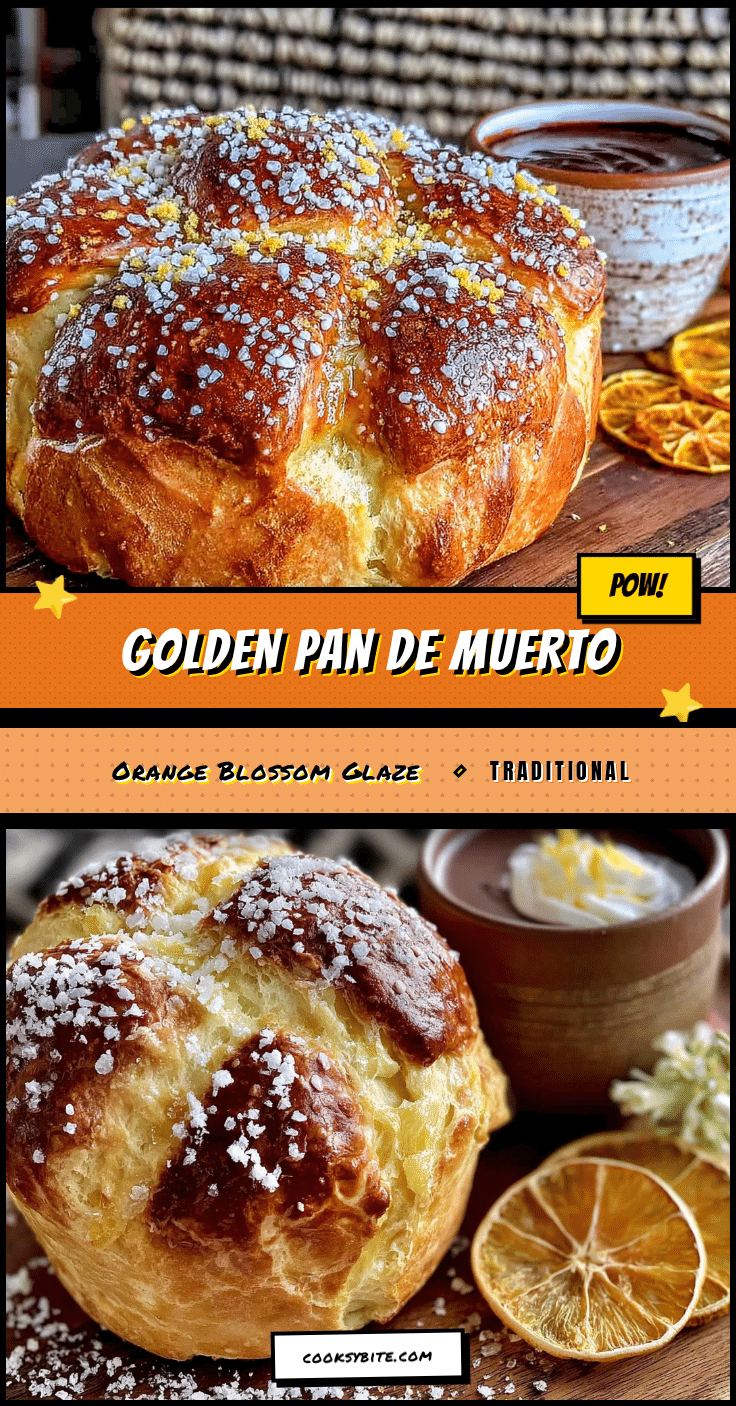
Best Pan de Muerto with Orange Blossom Sugar
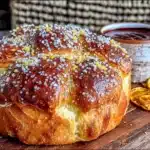
A soft, slightly sweet Mexican bread perfumed with orange blossom water and coated in aromatic orange blossom sugar. This Día de los Muertos classic is forgiving to make and fills your home with a bakery-fresh, floral aroma.
- Prep Time: 30 minutes
- Cook Time: 30 minutes
- Total Time: 3 hours (including rising time)
- Yield: 12 servings 1x
- Category: Bread
- Cuisine: Mexican
Ingredients
- 4 cups (500g) all-purpose flour
- 2 ¼ teaspoons active dry yeast (one packet)
- ½ cup (100g) granulated sugar
- 1 teaspoon salt
- 3 large eggs, room temperature
- ½ cup (113g) unsalted butter, softened
- ½ cup (120ml) whole milk, warm (about 110°F)
- 2 tablespoons orange blossom water
- Zest of 1 large orange
- 1 teaspoon vanilla extract
- ½ cup (100g) granulated sugar (for coating)
- 1–2 teaspoons orange blossom water (for coating)
- ¼ cup (56g) melted butter (for brushing)
Instructions
- Activate the yeast: In a small bowl, combine warm milk (110°F), 1 tablespoon of sugar, and active dry yeast. Stir gently and let sit for 5-10 minutes until frothy.
- Mix dry ingredients: In the bowl of a stand mixer, whisk together remaining sugar, salt, and flour. Make a well in the center.
- Combine wet ingredients: In a separate bowl, whisk together eggs, orange blossom water, orange zest, and vanilla extract. Add this mixture and the frothy yeast to the flour well.
- Knead the dough: Using the dough hook, mix on low speed until dough comes together (about 2 minutes). Add softened butter one tablespoon at a time, mixing on medium-low. Knead on medium speed for 8-10 minutes until smooth, elastic, and slightly tacky.
- First rise: Transfer dough to a lightly greased bowl, cover tightly with plastic wrap, and let rise in a warm, draft-free spot for 1.5 to 2 hours until doubled in size.
- Shape the dough: Punch down dough. Turn onto a lightly floured surface. Cut off about ¼ of the dough and set aside. Shape the larger piece into a smooth round ball and place on a parchment-lined baking sheet. Divide reserved dough into 4 equal pieces. Roll each into a 6-inch rope. Arrange two ropes in a cross on top of the loaf, and form the remaining two into small round ‘teardrops’ for the top.
- Second rise: Cover shaped loaf loosely with a clean kitchen towel and let rise for 45-60 minutes until puffy and almost doubled.
- Preheat and bake: About 20 minutes before second rise is done, preheat oven to 350°F (175°C). Bake for 25-30 minutes until deep golden brown and loaf sounds hollow when tapped on bottom. Tent with foil after 15 minutes if browning too quickly.
- Make orange blossom sugar: While bread bakes, combine ½ cup sugar and 1-2 teaspoons orange blossom water in a small bowl. Rub together with fingers until sugar feels like wet sand and smells intensely floral.
- Finish the bread: As soon as bread comes out of the oven, brush entire surface generously with melted butter. Immediately sprinkle orange blossom sugar all over, pressing gently with hands to adhere.
- Cool and serve: Transfer to a cooling rack and let cool completely before slicing (at least 1 hour).
Notes
Temperature matters: ensure eggs and butter are at room temperature and milk is warm (110°F). Don’t rush the first rise; enriched dough takes longer. Use a scale for flour accuracy. Brush butter while bread is hot so sugar sticks. Make orange blossom sugar fresh just before using. If dough feels sticky during kneading, resist adding too much flour—a slightly tacky dough yields softer bread.
Nutrition
- Serving Size: 1 slice
- Calories: 280
- Sugar: 16
- Sodium: 200
- Fat: 12
- Saturated Fat: 7
- Carbohydrates: 38
- Fiber: 1
- Protein: 6
Keywords: Pan de Muerto, Day of the Dead bread, orange blossom bread, Mexican sweet bread, Día de los Muertos recipe, brioche-like bread, floral bread