I did not trust chocolate ganache on a cookie cake. That sounds dramatic, I know. But hear me out.
For years, I thought ganache was that fussy, overly-rich stuff that belonged on fancy French pastries—not on the sturdy, butter-laced cookie cakes I grew up eating at every school bake sale. Cookie cake was supposed to have a thick layer of buttercream frosting, the kind that leaves a sweet film on your tongue and comes in a rainbow of artificial colors. Ganache felt like an imposter trying to crash the party.
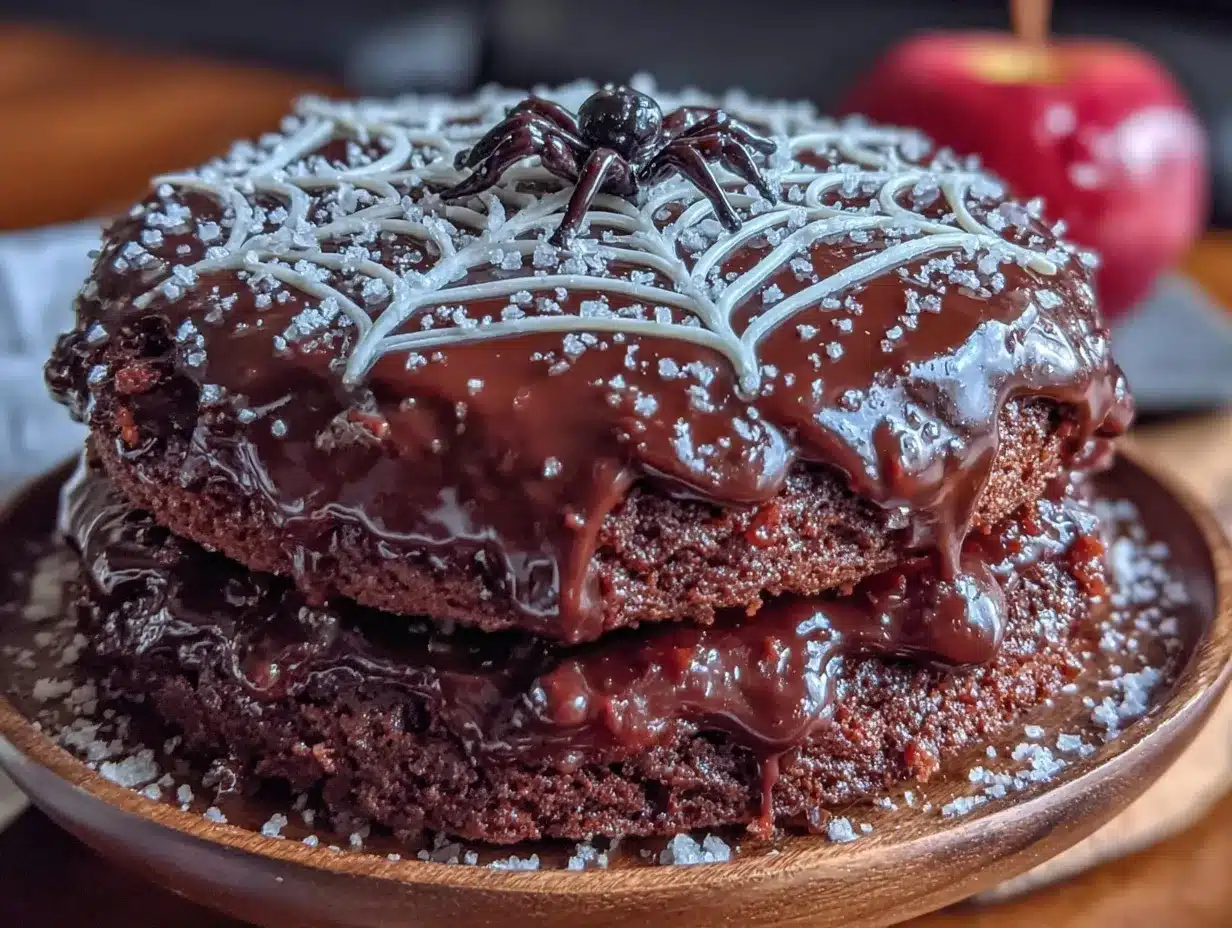
Then came the Halloween party where I ran out of time. The buttercream was too soft (my kitchen was warm), the store was closed, and I had a giant cookie cake staring at me, naked and un-festive. In desperation, I melted some dark chocolate with heavy cream, stirred it until it came together like magic, and poured it over the cookie. I threw on some white chocolate spiderwebs because, honestly, at that point I was just decorating to distract myself from the fact that I’d “ruined” a perfectly good cookie cake.
The first person to take a slice actually paused mid-bite. “What is this topping?” she asked, looking at the slice like she’d discovered something. “It’s not too sweet. It’s… perfect.”
That moment changed everything for me. The ganache wasn’t just a compromise—it was an upgrade. It brought a depth of flavor that balanced the cookie’s sweetness, a silky texture that buttercream could never achieve, and a glossy finish that made the spiderweb design pop like a proper Halloween centerpiece. The cookie cake went from “cute” to “everyone-asked-for-the-recipe” in one party.
Now, every October, this spiderweb cookie cake is the thing my friends text me about. “Are you making the chocolate one this year?” they ask, and I pretend to think about it before saying yes. The truth is, I already bought the chocolate. I always do.
Why You’ll Love This Recipe
This spiderweb Halloween cookie cake is the kind of dessert that makes people stop and stare—then reach for a second slice before they’ve finished the first. Here is why it works so well:
- Stunning Without Stress: The spiderweb design looks like you spent hours piping intricate details, but it comes together in about 10 minutes using a simple piping bag and a toothpick. No steady hand required.
- One Giant Cookie, Zero Fuss: No rolling, no cutting, no decorating individual cookies. You press the dough into one pan, bake it, and decorate. That is it.
- Ganache Changes Everything: The chocolate ganache is silky, rich, and not cloyingly sweet. It sets to a fudge-like consistency that slices cleanly and pairs perfectly with the soft, buttery cookie base.
- Perfect Halloween Centerpiece: This cake is dramatic enough for a Halloween party but simple enough for a cozy night in. It gets oohs and ahhs every single time.
- Crowd-Pleasing Flavors: The combination of a soft sugar cookie base, dark chocolate ganache, and a white chocolate spiderweb is universally loved. Kids go for the fun design; adults go for the sophisticated flavor.
- Make-Ahead Friendly: You can bake the cookie base a day ahead and add the ganache and decoration the day of your party. It actually tastes better the next day.
I have tested this recipe more times than I care to admit—through sticky summer kitchens, cold winter evenings, and one particularly humid Halloween where I was convinced the ganache would never set. It always delivers. This is not just another Halloween dessert; it is the one that will become your signature.
What Ingredients You Will Need
This recipe uses simple, pantry-friendly ingredients to create something that tastes far more impressive than the sum of its parts. Here is everything you need:
For the Cookie Cake Base
- Unsalted butter, 1 cup (2 sticks), softened to room temperature — I use Kerrygold for its rich flavor, but any good-quality unsalted butter works
- Granulated sugar, 1 cup — adds sweetness and helps create that tender, slightly crisp edge
- Large egg, 1, room temperature — binds the dough and adds structure
- Vanilla extract, 2 teaspoons — pure vanilla makes a noticeable difference; avoid imitation if you can
- All-purpose flour, 2 ½ cups — spoon and level for accuracy; too much flour makes the cookie dense
- Baking powder, 1 teaspoon — gives the cookie a gentle lift without making it cakey
- Salt, ½ teaspoon — balances the sweetness and enhances the chocolate flavor
For the Chocolate Ganache
- Semi-sweet or dark chocolate, 8 ounces, finely chopped — I prefer Ghirardelli or Guittard; avoid chocolate chips if possible, as they contain stabilizers that affect the texture
- Heavy cream, 1 cup — full-fat is essential for a silky, pourable ganache that sets properly
- Unsalted butter, 2 tablespoons, softened — adds shine and a velvety mouthfeel
- Pinch of salt — optional but recommended; it deepens the chocolate flavor
For the Spiderweb Decoration
- White chocolate chips or melting wafers, ½ cup — I use Ghirardelli white chocolate chips for consistent melting
- Coconut oil or vegetable shortening, 1 teaspoon — helps the white chocolate flow smoothly for piping
- Optional decorations: Candy eyes, black sugar sprinkles, or a few gummy spiders for extra Halloween flair
Ingredient Tips: For the best ganache, use a chocolate bar you would actually eat. Cheap chocolate has a waxy texture and lacks depth. If you are dairy-free, substitute the heavy cream with full-fat coconut cream and use a dairy-free butter alternative—the ganache will still set, though it will have a slightly different mouthfeel. For the cookie base, you can substitute 1 cup of all-purpose flour with whole wheat pastry flour for a nuttier flavor, though the texture will be slightly denser.
Equipment Needed
You do not need a professional bakery setup for this recipe. Here is what you will need:
- 9-inch round cake pan or a 9-inch springform pan — a springform makes removal easier, but a regular cake pan lined with parchment works perfectly
- Parchment paper — essential for easy removal; cut a circle for the bottom and strips for the sides
- Stand mixer or hand mixer — for creaming the butter and sugar; a sturdy whisk works if you are up for an arm workout
- Mixing bowls — one large for the dough, one medium for the ganache, one small for the white chocolate
- Saucepan — for heating the heavy cream
- Piping bag or zip-top bag — for the white chocolate spiderweb
- Toothpick or skewer — for dragging the spiderweb design
- Cooling rack — allows the cookie to cool evenly before adding ganache
- Offset spatula — helpful for smoothing the ganache, though a regular spatula works too
If you do not have a piping bag, do not worry. A zip-top bag with a tiny corner snipped off works just as well. I have decorated dozens of these cookie cakes with nothing more than a sandwich bag and a pair of scissors.
Preparation Method
Let me walk you through this step by step. The process is straightforward, but I will share the little tricks I have learned along the way.
- Preheat and Prep: Preheat your oven to 350°F (175°C). Line your 9-inch cake pan with parchment paper—cut a circle for the bottom and a long strip for the sides. Grease the parchment lightly with butter or non-stick spray. This step is non-negotiable if you want the cookie to come out clean.
- Cream the Butter and Sugar: In a large mixing bowl, beat the softened butter and granulated sugar together on medium speed for 3-4 minutes, until the mixture is pale, fluffy, and looks like wet sand. Scrape down the sides and bottom of the bowl once or twice. Do not rush this step—proper creaming is what gives the cookie its tender texture.
- Add the Egg and Vanilla: Add the room-temperature egg and vanilla extract. Beat on medium speed until fully incorporated, about 1 minute. The mixture should look smooth and glossy. If it looks curdled, your butter was too cold or your egg was too cold—let it sit at room temperature for 10 minutes and beat again.
- Combine the Dry Ingredients: In a separate bowl, whisk together the all-purpose flour, baking powder, and salt. This ensures the leavening is evenly distributed so you do not end up with a pocket of baking powder in one bite.
- Mix the Dough: Gradually add the dry ingredients to the wet mixture, mixing on low speed until just combined. Stop as soon as you no longer see streaks of flour. Overmixing develops gluten and makes the cookie tough. The dough should be soft and slightly sticky but hold together when pressed.
- Press Into the Pan: Transfer the dough to your prepared pan. Use your hands or the back of a spoon to press it evenly into the pan. The dough will be thick—that is normal. Aim for an even layer, about ½ inch thick. Wet your fingers slightly if the dough sticks to them.
- Bake the Cookie Base: Bake for 18-22 minutes, or until the edges are lightly golden and the center looks set but still soft. A toothpick inserted in the center should come out with a few moist crumbs, not wet batter. The cookie will continue to bake slightly as it cools. Do not overbake—a dry cookie cake is a sad cookie cake.
- Cool Completely: Let the cookie cool in the pan on a wire rack for 15 minutes, then carefully lift it out using the parchment paper and transfer to the cooling rack. Cool completely before adding the ganache. This takes about 1 hour. If you are in a hurry, pop it in the fridge for 30 minutes, but bring it back to room temperature before adding the ganache.
- Make the Chocolate Ganache: Place the finely chopped chocolate in a heatproof bowl. Heat the heavy cream in a small saucepan over medium heat until it just begins to simmer—small bubbles around the edges, not a rolling boil. Pour the hot cream over the chocolate and let it sit undisturbed for 3 minutes. This allows the chocolate to melt gently.
- Stir the Ganache: Gently stir the chocolate and cream together in small circles, starting from the center and working outward. Do not whisk vigorously—you will incorporate air bubbles. Stir until the mixture is smooth and glossy. Add the softened butter and a pinch of salt, then stir until fully incorporated. The ganache will be thin and pourable at this stage.
- Pour the Ganache: Place the cooled cookie cake on a serving plate or cake stand. Pour the ganache over the center of the cookie. Use an offset spatula or the back of a spoon to gently spread it to the edges, allowing some to drip over the sides for that rustic, dramatic look. Let the ganache set for about 10-15 minutes at room temperature until it is firm but still slightly tacky to the touch.
- Make the Spiderweb Decoration: While the ganache sets, melt the white chocolate chips with 1 teaspoon of coconut oil in a microwave-safe bowl. Heat in 20-second intervals, stirring between each, until smooth. Transfer the melted white chocolate to a piping bag or a small zip-top bag with a tiny corner snipped off.
- Pipe the Spiderweb: Pipe 3-4 concentric circles of white chocolate on top of the set ganache, starting from the center and working outward. Space them about 1 inch apart. Work quickly—the white chocolate will firm up as it cools.
- Drag the Web: Take a toothpick or skewer and gently drag it from the center of the cookie outward through the white chocolate circles, like drawing spokes on a wheel. Then drag from the outer edge back toward the center in between each spoke. This creates the classic spiderweb pattern. Wipe the toothpick clean between each drag for the cleanest lines.
- Set and Serve: Let the decorated cookie cake sit at room temperature for about 30 minutes to allow the white chocolate to set completely. If you are in a hurry, refrigerate for 10-15 minutes, but bring it to room temperature before serving for the best texture.
Cooking Tips & Techniques
After making this spiderweb cookie cake more times than I can count, I have collected a few hard-won lessons. Here are the most important ones:
Don’t Skip the Parchment Paper: I learned this the hard way during a Halloween party where my cookie cake refused to leave the pan. The bottom stuck, the edges crumbled, and I ended up serving what looked like a cookie cake mosaic. Parchment paper is your best friend. Cut a circle for the bottom and a long strip for the sides, and your cookie will slide out like a dream.
Room Temperature Ingredients Matter: Cold butter does not cream properly, and cold egg will seize your butter mixture. Take the butter and egg out of the fridge at least 30 minutes before you start baking. If you forgot, place the egg in a bowl of warm water for 5 minutes and microwave the butter in 5-second bursts until it is soft but not melted.
Watch the Bake Time Closely: Every oven runs differently. My old oven baked this cookie in exactly 19 minutes; my new one takes 22. Start checking at 18 minutes. The edges should be golden, and the center should look set but still soft. A slight jiggle in the center is okay—it will firm up as it cools.
Ganache Temperature is Everything: If you pour the ganache while it is too hot, it will run off the sides and pool on your serving plate. If it is too cool, it will be too thick to spread evenly. The sweet spot is when the ganache is still warm to the touch but not hot—about 90°F (32°C). Let it sit for 5-10 minutes after stirring if it seems too thin.
Work Quickly with the White Chocolate: The white chocolate spiderweb needs to be piped while the ganache is still slightly tacky but not wet. If the ganache is too wet, the white chocolate will bleed into it. If it is too set, the toothpick drag will not create clean lines. Aim for a 10-15 minute rest after pouring the ganache before piping the web.
Clean Your Toothpick: This is the detail that separates a beautiful spiderweb from a muddy mess. Wipe the toothpick clean after each drag. If you do not, the white chocolate will smear into the ganache, and your web will look more like a puddle than a pattern.
Variations & Adaptations
This recipe is wonderfully flexible. Here are a few ways to make it your own:
Gluten-Free Version: Substitute the all-purpose flour with a 1:1 gluten-free baking flour blend that contains xanthan gum. I have used Bob’s Red Mill 1-to-1 Baking Flour with excellent results. The texture will be slightly more tender, but the flavor is just as good.
Dairy-Free Adaptation: Use vegan butter (I like Miyoko’s) and substitute the heavy cream with full-fat coconut cream. For the white chocolate, look for dairy-free white chocolate chips or use a simple powdered sugar glaze instead. The cookie will be a bit less tender, but the ganache sets beautifully with coconut cream.
Peanut Butter Spiderweb: For a flavor twist, add ⅓ cup of creamy peanut butter to the cookie dough along with the butter and sugar. It adds a salty-savory note that pairs beautifully with the chocolate ganache. You can also drizzle melted peanut butter instead of white chocolate for the spiderweb.
Mint Chocolate Version: Add ½ teaspoon of peppermint extract to the cookie dough and ¼ teaspoon to the ganache. The cool mint flavor is a classic pairing with dark chocolate and feels especially festive for the holiday season. Top with crushed candy canes for a winter version of this spiderweb cake.
Extra Spooky Decorations: Once the spiderweb is set, press a few candy eyes into the ganache around the edges of the cookie. You can also dust the edges with black sugar sprinkles or place a few gummy spiders on top for a fun, kid-friendly touch.
Serving & Storage Suggestions
This spiderweb cookie cake is best served at room temperature, when the cookie is soft and the ganache is fudge-like but not hard. If you refrigerate it, let it sit on the counter for 20-30 minutes before serving.
Serving Ideas: Slice the cookie cake like a pizza—into wedges. Each slice should have a nice edge of ganache and a bit of the spiderweb design. Serve it alongside a scoop of vanilla ice cream or a dollop of lightly sweetened whipped cream. The cold creaminess balances the rich chocolate beautifully. A cup of hot coffee or a glass of cold milk is the perfect beverage pairing.
Storage: Store any leftover cookie cake in an airtight container at room temperature for up to 3 days. The cookie will stay soft, and the ganache will remain fudge-like. If your kitchen is warm, refrigerate it to prevent the ganache from becoming too soft. Bring to room temperature before serving.
Freezing Instructions: You can freeze the undecorated cookie base for up to 3 months. Wrap it tightly in plastic wrap, then in aluminum foil. When ready to use, thaw at room temperature, then add the ganache and decoration. The ganache itself freezes well too—store it in an airtight container and reheat gently in the microwave in 10-second bursts, stirring between each.
Flavor Development: This cookie cake actually tastes better the next day. The flavors meld together, and the cookie softens slightly from the ganache. If you are making it for a party, bake the cookie base the day before, add the ganache and spiderweb the morning of, and serve that evening.
Nutritional Information & Benefits
Let is be honest—this is a treat, not a health food. But here is what you should know:
Estimated Nutritional Values (per slice, based on 12 slices):
- Calories: ~380
- Fat: 22g
- Carbohydrates: 44g
- Protein: 4g
- Sugar: 28g
Health Highlights: Dark chocolate (if you use 70% cacao or higher) contains antioxidants called flavonoids, which may support heart health. The butter provides vitamin A, and the egg adds a small amount of protein. The cookie base uses simple, recognizable ingredients without artificial preservatives or stabilizers.
Dietary Considerations: This recipe contains gluten, dairy, and eggs. For a gluten-free version, see the variations section. For a dairy-free version, see the adaptations above. This recipe is not suitable for vegans in its current form, though a vegan version is possible with substitutions.
Allergen Note: Contains wheat, dairy, and eggs. May contain traces of nuts depending on your chocolate choice. Always check labels if serving to someone with severe allergies.
I believe in enjoying treats in moderation. This spiderweb cookie cake is made for celebration—the kind of dessert that brings people together around a table. One slice is enough to satisfy a sweet tooth, and the memory of that first bite is worth every calorie.
Conclusion
This spiderweb Halloween cookie cake has become my most-requested fall recipe, and I understand why now. It is the dessert that looks like you spent hours in the kitchen when really, the magic happens in the details—the glossy ganache, the delicate spiderweb, the way the cookie base stays soft and buttery for days.
What I love most about this recipe is how it brings people together. I have watched friends who “do not bake” make this for their kids’ Halloween parties and feel like rock stars. I have seen it become the centerpiece of costume parties and the highlight of cozy movie nights. It is the kind of recipe that builds confidence in the kitchen because it looks impressive but is genuinely forgiving.
So go ahead—make this for your Halloween gathering, your friend’s costume party, or just for yourself on a chilly October evening. Customize it with your favorite decorations, switch up the flavors, and make it your own. The spiderweb design is forgiving, the ganache is foolproof, and the cookie base is the perfect canvas for your creativity.
I would love to hear how yours turns out. Drop a comment below with your decoration ideas, your favorite variations, or just a photo of your spiderweb creation. And if you are looking for more Halloween-inspired treats, check out our decadent red wine chocolate cake for another show-stopping dessert, or our mini lemon blueberry cheesecakes for a fruity alternative. Happy Halloween, and happy baking!
Frequently Asked Questions
Can I use chocolate chips instead of a chocolate bar for the ganache?
You can, but the texture will be slightly different. Chocolate chips contain stabilizers that prevent them from melting as smoothly as chopped chocolate bars. If you use chips, add an extra tablespoon of heavy cream to compensate. The ganache will still taste great, but it may not be as silky.
How do I prevent the white chocolate spiderweb from bleeding into the ganache?
Let the ganache set for 10-15 minutes at room temperature before piping the white chocolate. The ganache should be firm to the touch but still slightly tacky. If it is too wet, the white chocolate will sink in. If it is too set, the toothpick will not drag cleanly. Room temperature is your friend here.
Can I make this spiderweb cookie cake ahead of time?
Absolutely. Bake the cookie base up to 2 days ahead and store it wrapped tightly at room temperature. Add the ganache and spiderweb decoration the day you plan to serve it. The cookie actually tastes better the next day as the flavors meld together.
My cookie cake turned out too dry. What went wrong?
The most common culprit is overbaking. Start checking at 18 minutes—the edges should be golden, but the center should still look soft and slightly underdone. It will continue to bake as it cools in the pan. Another possibility is overmixing the dough, which develops gluten and makes the cookie tough. Mix only until the flour disappears.
Can I double this recipe for a larger crowd?
Yes! Double all the ingredients and bake in a 12-inch round cake pan or a 9×13-inch rectangular pan. Increase the baking time to 25-30 minutes, checking for doneness at 25 minutes. The spiderweb design works on any shape—just pipe concentric circles and drag outward from the center.
Pin This Recipe!
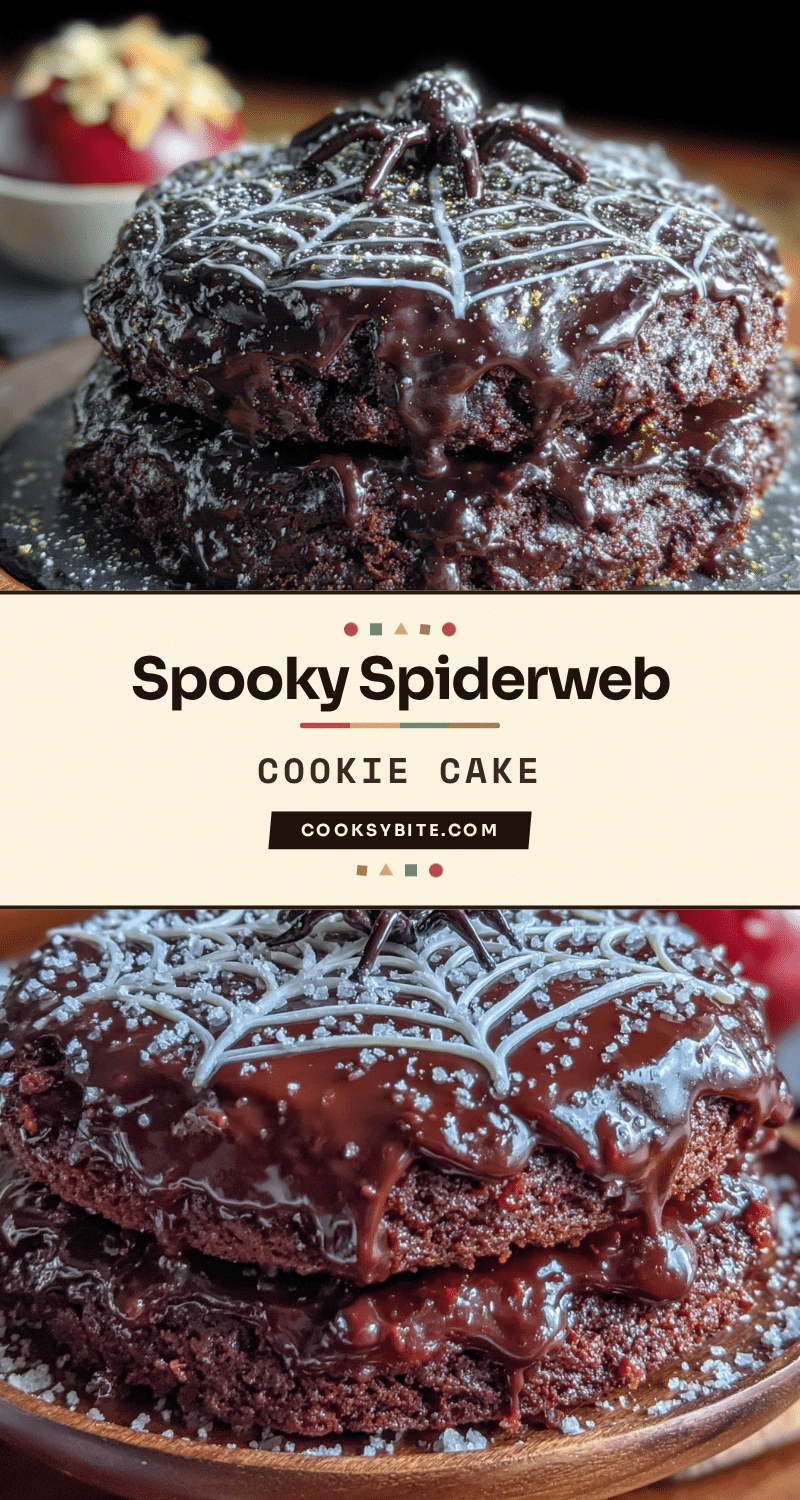
Best Spiderweb Halloween Cookie Cake with Easy Chocolate Ganache

A giant, buttery sugar cookie cake topped with silky dark chocolate ganache and a white chocolate spiderweb design. This show-stopping Halloween dessert is surprisingly easy to make and always gets rave reviews.
- Prep Time: 20 minutes
- Cook Time: 20 minutes
- Total Time: 1 hour 40 minutes (includes cooling and setting time)
- Yield: 12 servings 1x
- Category: Dessert
- Cuisine: American
Ingredients
- 1 cup (2 sticks) unsalted butter, softened
- 1 cup granulated sugar
- 1 large egg, room temperature
- 2 teaspoons vanilla extract
- 2 ½ cups all-purpose flour
- 1 teaspoon baking powder
- ½ teaspoon salt
- 8 ounces semi-sweet or dark chocolate, finely chopped
- 1 cup heavy cream
- 2 tablespoons unsalted butter, softened
- Pinch of salt (optional)
- ½ cup white chocolate chips or melting wafers
- 1 teaspoon coconut oil or vegetable shortening
Instructions
- Preheat oven to 350°F (175°C). Line a 9-inch round cake pan with parchment paper (circle for bottom, strip for sides). Grease lightly.
- In a large bowl, beat softened butter and granulated sugar on medium speed for 3-4 minutes until pale and fluffy.
- Add egg and vanilla extract; beat on medium speed until fully incorporated, about 1 minute.
- In a separate bowl, whisk together flour, baking powder, and salt.
- Gradually add dry ingredients to wet mixture, mixing on low speed until just combined. Dough should be soft and slightly sticky.
- Press dough evenly into prepared pan, about ½ inch thick.
- Bake for 18-22 minutes until edges are lightly golden and center is set but soft. Cool in pan on wire rack for 15 minutes, then transfer to rack to cool completely (about 1 hour).
- Place chopped chocolate in a heatproof bowl. Heat heavy cream in a small saucepan over medium heat until it just simmers. Pour hot cream over chocolate; let sit 3 minutes.
- Gently stir chocolate and cream in small circles until smooth and glossy. Add softened butter and pinch of salt; stir until fully incorporated.
- Place cooled cookie cake on serving plate. Pour ganache over center; spread to edges, allowing some to drip over sides. Let set 10-15 minutes until firm but slightly tacky.
- Melt white chocolate chips with coconut oil in microwave-safe bowl in 20-second intervals, stirring between each, until smooth. Transfer to piping bag or zip-top bag with tiny corner snipped off.
- Pipe 3-4 concentric circles of white chocolate on top of set ganache, starting from center and working outward, spaced about 1 inch apart.
- Using a toothpick or skewer, gently drag from center outward through white chocolate circles (like spokes), then from outer edge back toward center between each spoke. Wipe toothpick clean between each drag.
- Let decorated cookie cake sit at room temperature about 30 minutes for white chocolate to set completely. Serve at room temperature.
Notes
For best results, use room temperature ingredients. Do not overbake the cookie base. Let ganache set slightly before piping the spiderweb. The cookie cake tastes even better the next day.
Nutrition
- Serving Size: 1 slice
- Calories: 380
- Sugar: 28
- Sodium: 180
- Fat: 22
- Saturated Fat: 13
- Carbohydrates: 44
- Fiber: 2
- Protein: 4
Keywords: Halloween cookie cake, spiderweb cookie cake, chocolate ganache cookie cake, Halloween dessert, sugar cookie cake