My friend Jen asked why I couldn’t just throw the salmon and asparagus on the same pan as the potatoes. I started to explain why that wouldn’t work — something about different cooking times and moisture levels. Then I stopped. Honestly, I had no good reason. I’d just always done it the complicated way, with separate pans and careful timing and a whole lot of dirty dishes.
So I tried it her way. And let me tell you, I felt a little silly standing there watching that single sheet pan come out of the oven. The salmon was flaky, the asparagus was tender-crisp, and the garlic butter had melted into everything like it was meant to be there. Jen just raised an eyebrow. She didn’t even say anything. She didn’t have to.
That was three winters ago, on a Tuesday night when the wind was rattling my kitchen windows. I’d been overcomplicating dinner for years, convinced that good food required a sink full of pots. This cozy one-pan garlic butter salmon with asparagus taught me otherwise. It’s the recipe I make on days when I need dinner to feel like a hug, not a chore. Maybe you’ve been there — standing in your kitchen at 6 p.m., tired, hungry, and wondering why you didn’t plan better. This one’s for you.
Why You’ll Love This Recipe
I’ve tested this cozy one-pan garlic butter salmon with asparagus more times than I can count, and every single time I’m surprised by how good it is for how little effort it takes. This isn’t just another salmon recipe — it’s the one I turn to when I need dinner to feel special without actually working hard.
- Quick & Easy : From fridge to table in under 30 minutes. No marinating, no complicated steps, just simple cooking that works.
- Simple Ingredients : Salmon, asparagus, butter, garlic, lemon, and a few pantry staples. You probably have everything except the fish.
- Perfect for Busy Weeknights : One pan means minimal cleanup, which honestly might be my favorite part.
- Crowd-Pleaser : Even people who claim they don’t like salmon ask for seconds. The garlic butter does something magical.
- Unbelievably Delicious : The butter bastes the salmon as it cooks, creating this rich, garlicky glaze that seeps into the asparagus too.
What makes this recipe different is the timing. Most one-pan salmon recipes either overcook the fish or undercook the vegetables. I’ve worked out the exact thickness for the asparagus and the precise oven temperature so everything finishes at the same moment. It’s tested. It’s reliable. And it’s the kind of dinner that makes you close your eyes after the first bite — I mean it.
What Ingredients You Will Need
This recipe relies on simple, high-quality ingredients. The magic happens when good salmon meets butter and garlic, but each component plays an important role. Here’s what you’ll need and why each one matters.
- Salmon fillets (4 fillets, about 6 ounces each) — Look for fillets that are similar in thickness so they cook evenly. I prefer wild-caught when I can find it, but farm-raised works beautifully too. Pat them dry before seasoning for the best golden crust.
- Asparagus (1 bunch, about 1 pound) — Choose spears that are medium thickness. Thin ones cook too fast and thick ones take too long. Snap off the woody ends — they’ll naturally break where the tender part starts.
- Unsalted butter (4 tablespoons) — Salted butter works if that’s what you have, just reduce the added salt slightly. The butter creates the sauce that coats everything.
- Garlic (4 cloves, minced) — Fresh garlic is non-negotiable here. The pre-minced stuff in jars won’t give you the same flavor. Trust me on this one.
- Lemon (1 large lemon) — You’ll use both the juice and thin slices for the top. The acidity cuts through the richness of the butter beautifully.
- Olive oil (2 tablespoons) — A good extra virgin olive oil helps the asparagus roast without drying out and adds a subtle fruity note.
- Paprika (1 teaspoon) — Smoked paprika adds a warm, earthy depth. Regular works too, but smoked is worth seeking out.
- Dried oregano (½ teaspoon) — Optional but lovely. It adds a hint of Mediterranean flavor that pairs well with lemon.
- Salt and black pepper (to taste) — Use flaky sea salt for finishing if you have it. It makes a difference.
- Fresh parsley (optional, for garnish) — A sprinkle of green makes it look restaurant-ready, but it’s purely cosmetic.
I recommend using Kerrygold butter for the richest flavor — it’s my personal favorite for this dish. And if your asparagus looks a little sad at the store, green beans make an excellent substitute in a pinch.
Equipment Needed
You don’t need much for this one, which is honestly the whole point. Here’s what you’ll need to pull this together.
- Large rimmed baking sheet (18×13 inches or similar) — A rimmed sheet is important because the butter and juices will pool slightly. A flat cookie sheet will make a mess.
- Parchment paper or aluminum foil (for easy cleanup) — I use parchment paper because nothing sticks to it. Foil works too, just spray it lightly with cooking spray.
- Small bowl (for mixing the garlic butter) — Any small bowl will do. I use the same one I melt butter in.
- Chef’s knife and cutting board (for trimming asparagus and mincing garlic) — A sharp knife makes the whole process faster and safer.
- Measuring spoons (for spices and oil) — Eyeballing works if you’re experienced, but measuring ensures consistency.
- Fish spatula or thin metal spatula (for serving) — A thin spatula slides under the salmon without breaking it apart. Worth the investment.
If you don’t have a rimmed baking sheet, a 9×13 baking dish works in a pinch — just keep an eye on the cooking time since the sides are higher and heat circulates differently.
Preparation Method
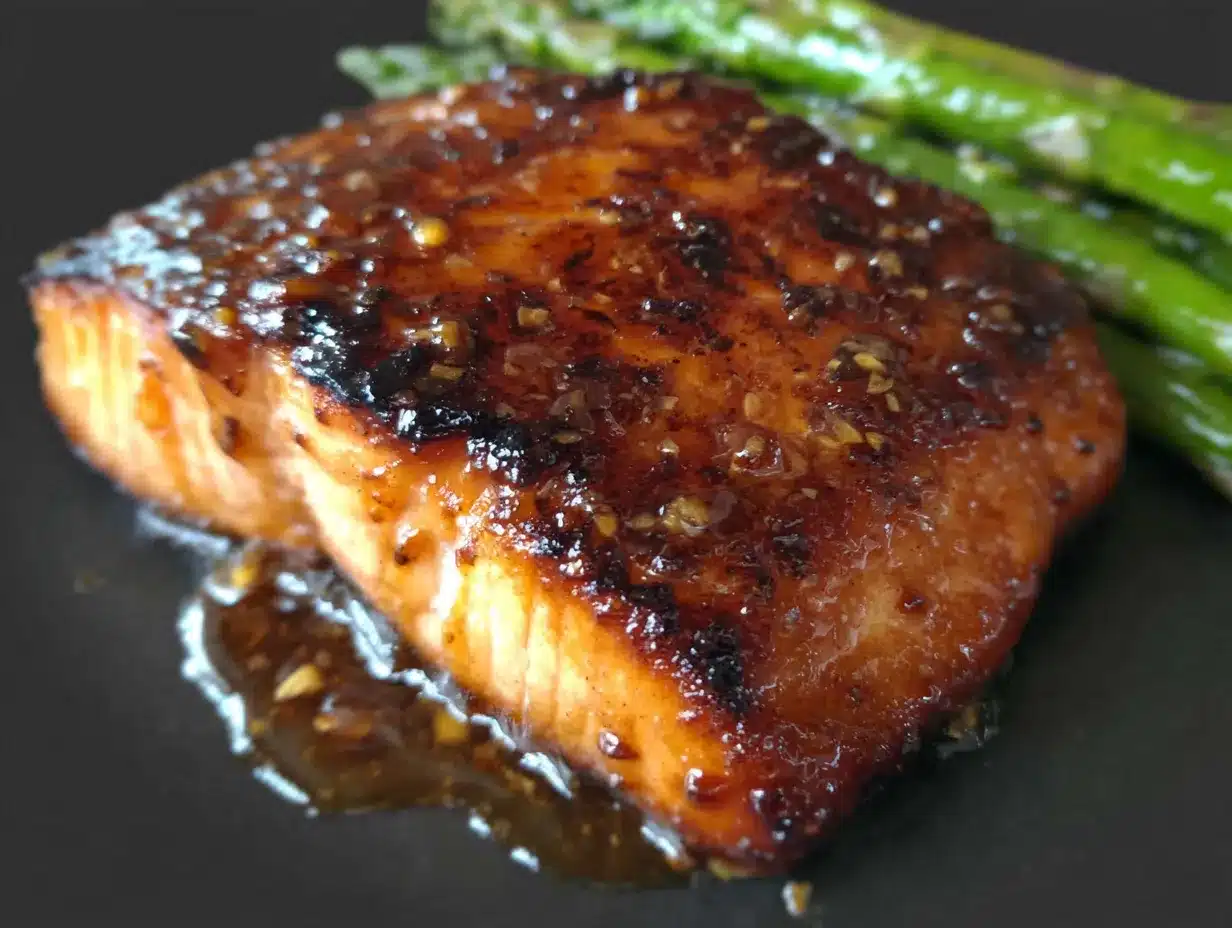
Let me walk you through this step by step. I’ve made this cozy one-pan garlic butter salmon with asparagus enough times to know exactly where things can go wrong, so I’ll point those spots out as we go.
- Preheat your oven to 400°F (200°C). Give it a full 15 minutes to come to temperature. A properly preheated oven is the difference between perfectly cooked salmon and sad, overcooked fish.
- Line your baking sheet with parchment paper. This step is optional but saves you from scrubbing later. If you use foil, crimp the edges slightly to catch any butter that might run.
- Prepare the asparagus. Rinse the spears and snap off the woody ends — about an inch from the bottom. They’ll break naturally where the tough part ends. Pat them dry with a paper towel. Place them on one side of the baking sheet.
- Season the asparagus. Drizzle with 1 tablespoon of olive oil, then sprinkle with salt and pepper. Toss them gently with your hands to coat evenly. Spread them in a single layer — overcrowding leads to steaming instead of roasting.
- Prepare the salmon. Pat each fillet dry with paper towels. This is crucial — wet salmon won’t brown properly. Place the fillets skin-side down on the other side of the baking sheet, leaving a little space between each piece.
- Season the salmon. Drizzle the remaining 1 tablespoon of olive oil over the fillets. Sprinkle with paprika, oregano (if using), salt, and pepper. Rub the seasoning gently into the flesh with your fingers.
- Make the garlic butter. In a small microwave-safe bowl, melt the butter in 20-second intervals until just liquid. Stir in the minced garlic and the juice of half the lemon. The garlic will infuse the butter as it sits.
- Pour the garlic butter over the salmon. Use a spoon to distribute it evenly, letting some run down the sides. Don’t worry if a little ends up on the asparagus — that’s actually a bonus.
- Add lemon slices. Slice the remaining lemon half into thin rounds and place one or two on top of each salmon fillet. This keeps the fish moist and adds bright flavor.
- Bake for 12-15 minutes. At 12 minutes, check the salmon. It should flake easily with a fork and the center should be just slightly translucent — it will continue cooking from residual heat. The asparagus should be tender but still have a little bite.
- Optional broil for color. If you want a slightly golden top on the salmon, switch the oven to broil for the last 1-2 minutes. Watch it carefully — broiling goes from perfect to burnt in seconds.
- Rest for 2 minutes. Let the pan sit on the counter before serving. This allows the juices to redistribute and the butter to settle into a light sauce.
- Garnish and serve. Sprinkle with fresh parsley if you’re using it. Squeeze a little extra lemon juice over everything right before serving.
A quick note: if your salmon fillets are thinner than an inch, start checking at 10 minutes. Thicker fillets might need 16 minutes. Every oven runs a little differently, so trust your eyes and a fork more than the timer.
Cooking Tips & Techniques
I’ve made this cozy one-pan garlic butter salmon with asparagus at least two dozen times, and I’ve learned a few things the hard way. Here are the tips that actually matter.
Dry the salmon thoroughly. This is the number one mistake I see. Wet salmon steams instead of roasts, and you lose that beautiful buttery texture. Pat it dry with paper towels and let it sit uncovered for a few minutes if you have time.
Don’t crowd the pan. If your baking sheet is too small, the asparagus will steam instead of roast. Use a large sheet or split everything between two pans. The vegetables need space for hot air to circulate.
Cut the asparagus uniformly. I once threw a bunch of random-sized spears on the pan and ended up with some that were perfect and others that were limp. Take 30 seconds to sort them by thickness, or cut thicker spears in half lengthwise.
Use room-temperature butter. Cold butter straight from the fridge won’t melt evenly in the oven. Let it sit on the counter for 15 minutes before you start, or microwave it in short bursts until just softened.
Check the salmon early. Salmon continues cooking after it comes out of the oven. If it looks almost done at 12 minutes, take it out. Overcooked salmon is dry and sad, and you’ve come too far for that.
I once forgot to set a timer and ended up with salmon that was closer to jerky than dinner. My cat loved it, but I learned my lesson. Set that timer, friends.
Variations & Adaptations
This recipe is forgiving, which is one of the reasons I love it. Here are a few ways to make it your own.
Low-carb or keto version: This recipe is already naturally low in carbs. Replace the asparagus with broccoli florets or zucchini slices for variety. Both roast beautifully at the same temperature.
Dairy-free adaptation: Swap the butter for a high-quality vegan butter or ghee if you tolerate dairy. Coconut oil works in a pinch but adds a slight coconut flavor that I personally love with the lemon.
Spicy variation: Add ½ teaspoon of red pepper flakes to the garlic butter mixture. The heat cuts through the richness and adds a nice kick without overwhelming the salmon.
Herb crust version: Mix 2 tablespoons of fresh dill or basil with the garlic butter before pouring it over the salmon. Fresh herbs brighten the whole dish and make it feel fancier.
Sheet pan meal extension: Add halved cherry tomatoes or thin wedges of red onion to the pan. They’ll roast alongside the asparagus and add sweetness and color. Just toss them in a little olive oil and salt first.
I tried a version with orange slices instead of lemon last summer on a whim. It was surprisingly good — sweeter and more floral. Not better, just different. Sometimes the best variations come from a happy accident.
Serving & Storage Suggestions
This dish is best served fresh from the oven, but I’ve got tips for both immediate serving and leftovers.
Serving temperature: Serve the salmon warm, right after the 2-minute rest. The butter sauce will be glossy and the asparagus will still have that perfect snap. A squeeze of fresh lemon right before serving brightens everything.
What to serve alongside: This dish is a complete meal on its own, but it pairs beautifully with rice, quinoa, or crusty bread to soak up the garlic butter. A simple green salad with lemon vinaigrette rounds it out nicely. For a cozy winter meal, serve it with roasted potatoes or a warm grain bowl.
Beverage pairings: A crisp white wine like Sauvignon Blanc or Pinot Grigio complements the lemon and garlic. For non-alcoholic options, sparkling water with a lemon wedge or iced green tea works wonderfully.
Storing leftovers: Store leftover salmon and asparagus in an airtight container in the refrigerator for up to 3 days. The asparagus will soften as it sits, but the flavor will still be good. Don’t freeze this dish — the texture of both the fish and vegetables changes too much.
Reheating: The best way to reheat is in a 300°F (150°C) oven for about 8-10 minutes. The microwave works in a pinch but will overcook the salmon. If you’re in a hurry, flake the cold salmon over a salad for an easy lunch the next day.
The leftovers actually make an amazing salmon salad the next day — just flake the cold fish, chop the asparagus, and toss with a little mayo and fresh dill. It’s almost better than the original dinner.
Nutritional Information & Benefits
This cozy one-pan garlic butter salmon with asparagus isn’t just delicious — it’s packed with nutrients that make you feel good about eating it.
Per serving (one fillet with asparagus): approximately 380 calories, 28g protein, 8g carbohydrates, 26g fat, 4g fiber. These values are estimates and will vary based on exact ingredients and portion sizes.
Salmon is rich in omega-3 fatty acids, which support heart and brain health. It’s also an excellent source of high-quality protein and vitamin D. Wild-caught salmon typically has a higher omega-3 content than farm-raised, but both are nutritious choices.
Asparagus is a fantastic source of fiber, folate, and vitamins A, C, and K. It’s also a natural diuretic, which can help reduce bloating. The combination of salmon and asparagus makes this meal both satisfying and nourishing.
Garlic has been used for centuries for its immune-supporting properties. Even a small amount adds both flavor and potential health benefits.
This recipe is naturally gluten-free and low-carb. If you’re watching your sodium, use unsalted butter and go light on the added salt — the natural flavors are strong enough to carry the dish.
FAQs
Can I use frozen salmon for this recipe?
Yes, but thaw it completely in the refrigerator overnight and pat it very dry before cooking. Frozen salmon releases more water as it cooks, so you might need to add an extra minute or two to the cooking time.
What if I don’t have fresh garlic?
Fresh garlic really does make a difference here, but in a pinch, you can use 1 teaspoon of garlic powder mixed into the melted butter. The flavor won’t be as bright, but it will still be tasty.
Can I make this with other vegetables?
Absolutely. Broccoli, green beans, zucchini, or bell peppers all work well. Just cut them to a similar size so they cook evenly. Thicker vegetables like broccoli might need an extra 2-3 minutes in the oven.
How do I know when the salmon is done?
The salmon should flake easily with a fork and the center should be slightly translucent. An instant-read thermometer inserted into the thickest part should read 125°F (52°C) for medium, or 130°F (54°C) for medium-well. The temperature will rise a few degrees as it rests.
Can I prep this ahead of time?
You can season the salmon and trim the asparagus up to a few hours ahead. Keep them refrigerated separately, then assemble and bake when you’re ready. Don’t pour the garlic butter on until right before baking, or it will solidify.
Conclusion
This cozy one-pan garlic butter salmon with asparagus has become my go-to for nights when I need dinner to feel like a small victory. It’s proof that simple ingredients, treated with a little care, can create something genuinely special.
I love that this recipe meets me where I am — tired, hungry, and not in the mood for a sink full of dishes. It delivers every single time, and it’s forgiving enough to handle a little improvisation. Add extra garlic. Swap in whatever vegetables you have. Make it your own.
I’d love to hear how it turns out for you. Did you try a variation? Did your family ask for seconds? Drop a comment below and let me know. And if you’re looking for another easy weeknight win, you might enjoy this creamy garlic parmesan chicken that uses a similar one-pan approach.
Until next time, happy cooking — and don’t forget to set that timer.
Pin This Recipe!
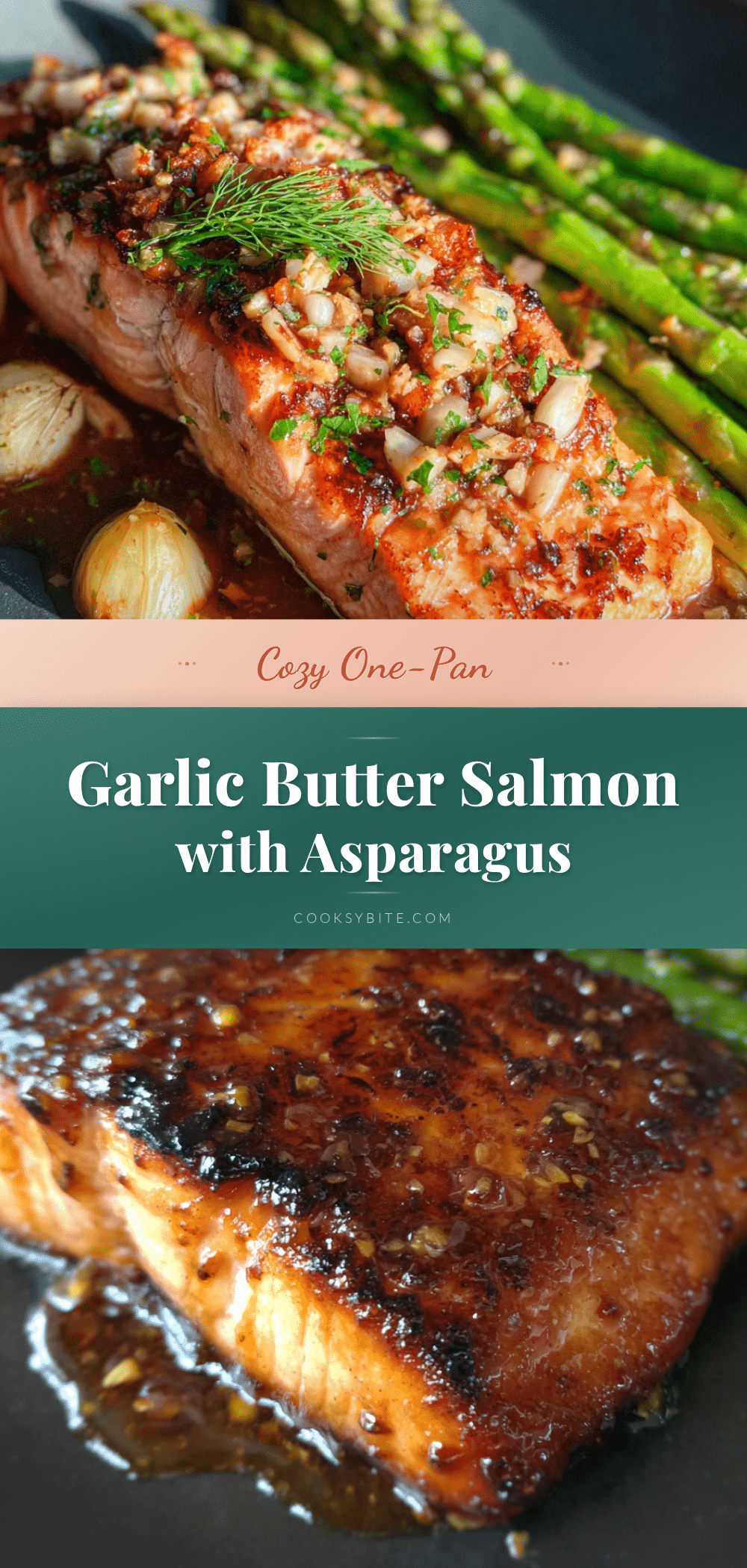
Cozy One-Pan Garlic Butter Salmon with Asparagus – Easy Dinner
A simple, delicious one-pan meal featuring flaky salmon and tender-crisp asparagus in a rich garlic butter sauce. Ready in under 30 minutes with minimal cleanup, perfect for busy weeknights.
- Prep Time: 10 minutes
- Cook Time: 15 minutes
- Total Time: 25 minutes
- Yield: 4 servings 1x
- Category: Main Course
- Cuisine: American
Ingredients
- 4 salmon fillets (about 6 ounces each)
- 1 bunch asparagus (about 1 pound), woody ends snapped off
- 4 tablespoons unsalted butter
- 4 cloves garlic, minced
- 1 large lemon (juice of half, other half sliced into thin rounds)
- 2 tablespoons olive oil
- 1 teaspoon smoked paprika
- ½ teaspoon dried oregano (optional)
- Salt and black pepper to taste
- Fresh parsley for garnish (optional)
Instructions
- Preheat oven to 400°F (200°C). Line a large rimmed baking sheet with parchment paper.
- Place asparagus on one side of the baking sheet. Drizzle with 1 tablespoon olive oil, season with salt and pepper, and toss to coat. Spread in a single layer.
- Pat salmon fillets dry with paper towels. Place skin-side down on the other side of the baking sheet, leaving space between each piece.
- Drizzle remaining 1 tablespoon olive oil over salmon. Sprinkle with paprika, oregano (if using), salt, and pepper. Rub seasoning gently into the flesh.
- In a small microwave-safe bowl, melt butter in 20-second intervals. Stir in minced garlic and juice of half the lemon.
- Pour garlic butter evenly over salmon fillets. Place lemon slices on top of each fillet.
- Bake for 12-15 minutes, until salmon flakes easily with a fork and asparagus is tender-crisp. For a golden top, broil for 1-2 minutes at the end, watching carefully.
- Let rest for 2 minutes. Garnish with fresh parsley and extra lemon juice if desired. Serve warm.
Notes
Pat salmon dry thoroughly for best browning. Check salmon at 10 minutes if fillets are thin. Salmon continues cooking after removal from oven. For dairy-free, use vegan butter or ghee. Leftovers keep in refrigerator up to 3 days; reheat in 300°F oven for 8-10 minutes.
Nutrition
- Serving Size: 1 salmon fillet with
- Calories: 380
- Sugar: 3
- Sodium: 450
- Fat: 26
- Saturated Fat: 10
- Carbohydrates: 8
- Fiber: 4
- Protein: 28
Keywords: one-pan salmon, garlic butter salmon, asparagus salmon, easy weeknight dinner, sheet pan salmon, healthy salmon recipe, low-carb dinner, gluten-free salmon