That sharp, tangy smell of sauerkraut hitting a hot pan—the kind that cuts through everything else in the kitchen and makes your stomach growl before you’ve even decided what’s for dinner—still takes me straight to my aunt’s tiny apartment in Milwaukee. I was maybe twelve, and she was showing me how to brown bratwurst in a cast iron skillet, telling me stories about her grandmother’s kitchen in Frankfurt. I remember thinking it smelled like comfort and argument and something deeply, stubbornly German all at once.
She didn’t fuss over it. She didn’t have a recipe written down. She just knew, by feel, when the sausages had that perfect caramelized crust and when the sauerkraut had softened enough to stop fighting. That night, I ate two bratwursts and a mountain of kraut, chasing it with crusty bread to soak up the juices. It wasn’t fancy. It was honest food, the kind that fills you up without asking for much in return.
This Quick German Bratwurst and Sauerkraut Skillet is my attempt to bottle that same unfussy, deeply satisfying feeling. It’s a one-pan meal that comes together in under thirty minutes, using ingredients you can find at almost any grocery store. And honestly, it tastes like a hug from someone who doesn’t talk much but shows up with dinner.
Why You’ll Love This Recipe
I’ve tested this skillet more times than I care to count, tweaking the heat, the timing, the ratio of kraut to sausage. Here’s what I’ve learned: this recipe works because it doesn’t try to be anything it’s not.
- Quick & Easy: From fridge to table in about 25 minutes. Perfect for those nights when you need dinner on the table yesterday.
- Simple Ingredients: No obscure spices, no specialty store trips. You probably have onion, garlic, and oil in your kitchen right now.
- Perfect for Busy Weeknights: It’s a one-pan wonder that also works for meal prep, game day, or a cozy Sunday supper.
- Crowd-Pleaser: Even picky eaters tend to love the savory, slightly tangy flavor. Kids? They call it “hot dog dinner” and eat it happily.
- Unbelievably Delicious: The bratwurst gets beautifully browned, the sauerkraut caramelizes just a bit, and the whole thing comes together with a richness that feels like you spent way more effort than you actually did.
What makes this version different from the dozens of other skillet recipes out there? It’s the technique of browning the sausages first, then letting the sauerkraut finish cooking in those same browned bits and rendered fat. That little step—deglazing the pan with a splash of beer or broth—turns a simple dish into something with real depth. No shortcuts on flavor, just smarter work.
This isn’t just another German-inspired dinner. It’s the one you’ll come back to when you want something hearty, honest, and fast. The kind of meal that makes you close your eyes after the first bite and remember why simple food is so often the best food.
What Ingredients You Will Need
This recipe relies on a handful of sturdy, flavorful ingredients. Each one plays a specific role, and while substitutions are possible, I’ll tell you where they work best.
- Bratwurst (4 links, about 1 lb total): Fresh or pre-cooked both work. I prefer fresh bratwurst from the butcher counter—they have a better snap and more juice. Johnsonville is my go-to grocery store brand. If using pre-cooked, reduce the initial browning time slightly.
- Sauerkraut (14-16 oz, drained but not rinsed): Look for sauerkraut in a bag or jar, not the canned stuff if you can help it. Bubbies and Frank’s are solid brands. The brine adds essential tang, so don’t rinse it unless you want a milder flavor. Drain off the excess liquid, but keep a little for moisture.
- Yellow Onion (1 medium, thinly sliced): Adds sweetness and texture. Red onion works in a pinch, but yellow or sweet onion is best for that classic flavor.
- Garlic (2 cloves, minced): Fresh garlic is non-negotiable here. The jarred stuff just doesn’t have the same punch.
- Olive Oil or Butter (1 tablespoon): For browning the sausages. Butter adds richness, olive oil is lighter. I use butter when I’m feeling indulgent.
- Beer or Chicken Broth (½ cup): This is the secret to deglazing the pan and adding depth. A light lager or pilsner works beautifully—don’t use a heavy stout or IPA. If you don’t drink beer, chicken broth is a perfect substitute. Low-sodium is best so you can control the salt.
- Caraway Seeds (1 teaspoon, optional): These little seeds are traditional and add an earthy, slightly anise-like flavor that pairs beautifully with sauerkraut. If you don’t have them, the dish still works—just skip it.
- Salt and Black Pepper: To taste. Go easy on the salt at first; bratwurst and sauerkraut both carry plenty of sodium.
- Fresh Parsley (for garnish, optional): Adds a pop of color and freshness. Totally optional, but pretty.
Pro tip from my kitchen: If you can find bratwurst with a natural casing, the snap when you bite into it is next-level. And if you’re feeling adventurous, swap the beer for a dry hard cider—the apple notes are surprisingly good with the kraut.
Equipment Needed
You don’t need a lot of fancy gear for this one. Here’s what gets the job done:
- Large Skillet or Cast Iron Pan (12-inch): Cast iron is ideal for even browning and heat retention. A stainless steel or non-stick skillet works too, just be careful not to overcrowd the pan.
- Sharp Knife and Cutting Board: For slicing the onion and mincing the garlic. A good chef’s knife makes this step a breeze.
- Tongs: For turning the sausages without piercing them. Piercing lets the juices escape—keep them intact for the best texture.
- Wooden Spoon or Spatula: For stirring the sauerkraut and scraping up those browned bits (the fond) from the pan bottom.
- Measuring Cups and Spoons: For the beer/broth and caraway seeds.
Budget-friendly alternative: If you don’t have a cast iron skillet, a deep non-stick pan works fine. Just watch the heat—non-stick doesn’t brown quite as well, so give the sausages an extra minute or two.
Maintenance tip: After using your cast iron skillet, wipe it clean with a paper towel and a little salt to remove any stuck-on bits. Rinse with hot water, dry thoroughly, and rub with a thin layer of oil. It’ll last a lifetime.
Preparation Method
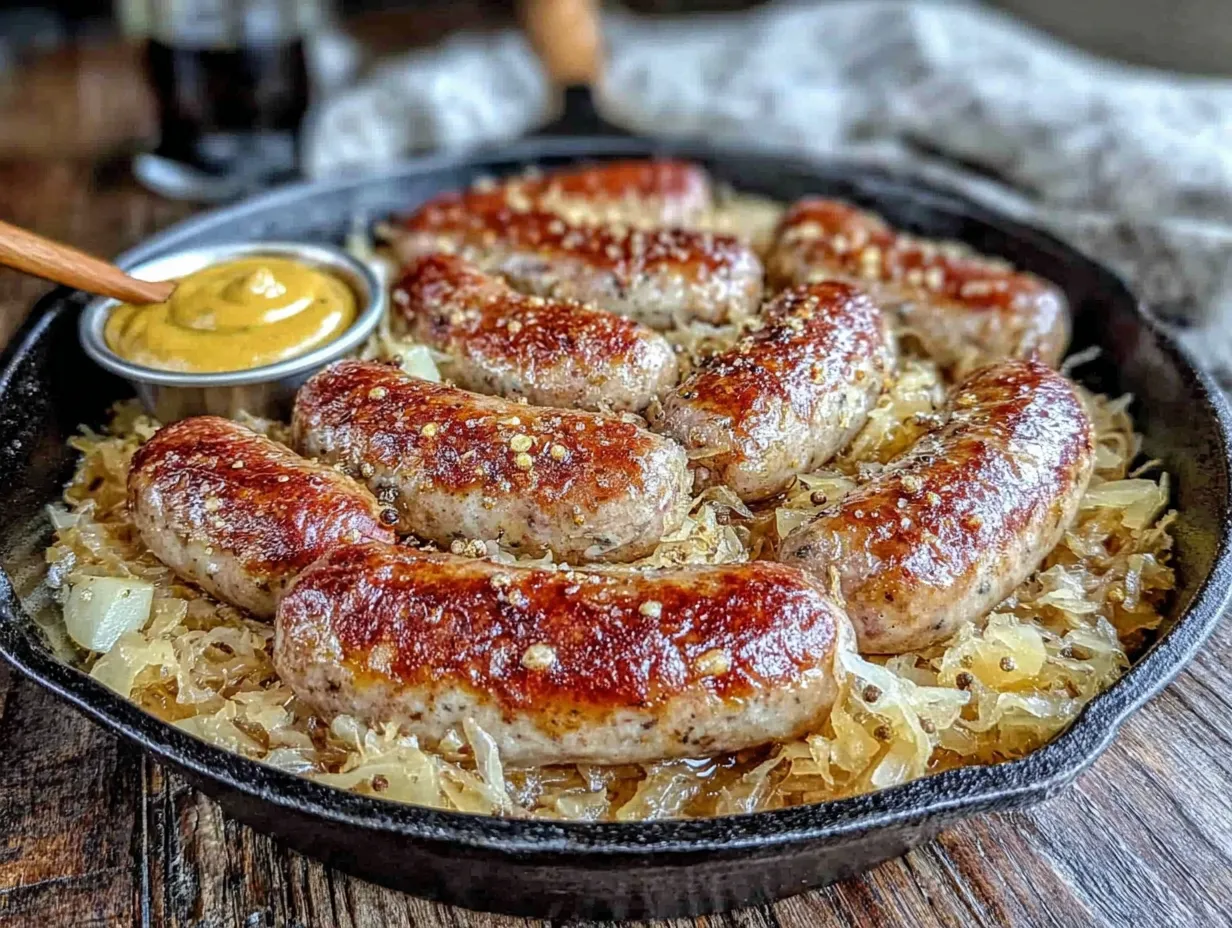
Let’s get cooking. This whole process takes about 25 minutes from start to finish, and I’ll walk you through every step.
- Prep your ingredients first. Slice the onion thinly, mince the garlic, and drain the sauerkraut (reserve about 2 tablespoons of the brine if you want extra tang later). Pat the bratwurst dry with a paper towel—dry sausages brown better.
- Heat your skillet over medium-high heat. Add 1 tablespoon of butter or olive oil. Let it get hot, but not smoking—you should see a little shimmer.
- Brown the bratwurst. Place the sausages in the skillet in a single layer. Don’t crowd them—if your pan is small, cook in batches. Let them sit undisturbed for 3-4 minutes, until the bottom is deeply browned. Use tongs to turn them gently, browning all sides. This should take about 8-10 minutes total. The sausages don’t need to be cooked through yet—just beautifully caramelized on the outside.
- Remove the sausages to a plate and set aside. Don’t wipe out the pan—those browned bits are pure flavor.
- Cook the onion and garlic. Reduce the heat to medium. Add the sliced onion to the pan and cook, stirring occasionally, for 3-4 minutes until softened and starting to brown. Add the minced garlic and cook for 30 seconds more, until fragrant. If the pan looks dry, add a tiny splash of oil.
- Deglaze the pan. Pour in the beer or chicken broth. Use your wooden spoon to scrape up all those browned bits from the bottom of the pan. Let it bubble and reduce for about 1 minute.
- Add the sauerkraut and caraway seeds. Stir in the drained sauerkraut and caraway seeds (if using). Let it cook for 2-3 minutes, stirring occasionally, until the kraut is heated through and has absorbed some of the liquid.
- Return the sausages to the pan. Nestle the browned bratwurst back into the sauerkraut. Spoon a little of the kraut mixture over the top of each sausage. Cover the pan with a lid or foil, reduce the heat to low, and let everything simmer together for 8-10 minutes. This step finishes cooking the sausages and lets the flavors meld.
- Check for doneness. If using fresh bratwurst, the internal temperature should reach 160°F (71°C). Pre-cooked bratwurst just needs to be heated through. The sauerkraut should be tender and slightly caramelized at the edges.
- Serve immediately. Garnish with fresh parsley if you like. I like to serve this with crusty bread, mashed potatoes, or even over egg noodles. A dollop of whole-grain mustard on the side is never a bad idea.
Sensory cue: When you deglaze the pan, you should hear a satisfying sizzle and see the liquid bubble up immediately. That sound means you’re doing it right. The final dish should smell rich, tangy, and deeply savory—like a German pub kitchen.
Cooking Tips & Techniques
I’ve made this skillet more times than I can count, and I’ve definitely made my share of mistakes. Here’s what I’ve learned the hard way so you don’t have to.
- Don’t rush the browning. The single biggest mistake people make is not letting the bratwurst get a deep, dark crust. That caramelized exterior is where all the flavor lives. If you flip them too early or crowd the pan, they’ll steam instead of brown. Patience, my friend.
- Use tongs, not a fork. Piercing the sausages while they cook lets all those delicious juices escape into the pan, leaving you with dry bratwurst. Use tongs to turn them gently.
- Deglaze is not optional. I know it sounds fancy, but it’s just pouring liquid into a hot pan and scraping up the browned bits. That step builds an entire layer of flavor you can’t get any other way. Don’t skip it, even if you’re using water (though beer or broth is better).
- Let it rest (briefly). After the covered simmer, let the skillet sit off the heat for 2-3 minutes before serving. This lets the juices redistribute and the flavors settle. Trust me on this one.
- Timing trick: While the sausages brown, slice your onion and mince your garlic. While the onion cooks, drain your sauerkraut. Multitasking keeps the whole process under 30 minutes.
A personal failure I’ll admit to: The first time I made this, I used a non-stick pan and cranked the heat too high. The sausages burned on the outside before they were even warm in the center. I learned that medium-high is plenty, and a heavy pan (like cast iron) distributes heat much more evenly.
Variations & Adaptations
This recipe is a great base, but it’s also incredibly flexible. Here are some ways I’ve adapted it over the years.
- Dietary Adaptations: For a lower-carb version, skip the bread and serve the bratwurst and sauerkraut on a bed of roasted cabbage or cauliflower rice. For a dairy-free option, use olive oil instead of butter—it works perfectly.
- Flavor Twists: Add a chopped apple (Granny Smith is my favorite) along with the onion for a sweet-tart contrast. Or stir in a tablespoon of Dijon mustard and a splash of apple cider vinegar at the end for extra zing. I’ve also added a pinch of smoked paprika for a subtle smoky note—surprisingly good.
- Different Sausages: Not a bratwurst fan? Swap in smoked kielbasa, Italian sausage (sweet or hot), or even chicken sausage. Each brings its own personality. Just adjust the cooking time based on the sausage type.
- One-Pot Meal Upgrade: After step 8, stir in 2 cups of baby potatoes (halved) or 1 cup of cooked egg noodles. Cover and simmer for another 10 minutes, and you’ve got a complete dinner in one pan.
- Spice It Up: Add a pinch of red pepper flakes with the garlic for a little heat. Or stir in a teaspoon of whole-grain mustard at the end for extra tang.
Personal favorite: I once added a handful of torn kale in the last 5 minutes of cooking. It wilted into the sauerkraut and added a nice earthy note. Not traditional, but delicious.
Serving & Storage Suggestions
This skillet is best served hot, straight from the pan. Here’s how to make the most of it.
- Serving Temperature: Serve immediately while the sausages are hot and the sauerkraut is steamy. I like to plate it with a side of crusty bread for sopping up the juices, or over a bed of mashed potatoes for a heartier meal.
- Complementary Dishes: A simple green salad with a tangy vinaigrette cuts through the richness beautifully. Or serve it with roasted potatoes, German-style potato salad, or even a side of pickled vegetables for extra crunch.
- Storage: Leftovers keep well in an airtight container in the refrigerator for up to 4 days. The flavors actually meld and deepen overnight, so it’s even better the next day.
- Reheating: Reheat in a skillet over medium-low heat with a splash of water or broth to loosen the sauerkraut. Microwave works in a pinch, but the skillet gives you better texture. Avoid high heat, which can dry out the sausages.
- Freezer: This dish freezes surprisingly well. Let it cool completely, then transfer to a freezer-safe container. It keeps for up to 3 months. Thaw overnight in the refrigerator and reheat as above.
Flavor development note: If you’re meal-prepping, make this a day ahead and reheat it. The sauerkraut and sausage marry beautifully overnight, and the caraway seeds have time to mellow into the background. I often double the batch just for leftovers.
Nutritional Information & Benefits
This is hearty comfort food, but it also has some surprising nutritional perks.
- Estimated Nutritional Values (per serving, 1 bratwurst + ½ cup sauerkraut mixture): Calories: 380, Fat: 28g, Saturated Fat: 10g, Cholesterol: 75mg, Sodium: 1100mg, Carbohydrates: 10g, Fiber: 3g, Sugar: 4g, Protein: 20g. (Note: values vary based on specific brands and additions.)
- Health Benefits: Sauerkraut is a fermented food, rich in probiotics that support gut health. It’s also packed with vitamin C and fiber. Bratwurst provides protein and B vitamins, though it’s higher in fat and sodium, so enjoy in moderation.
- Dietary Considerations: This recipe is naturally gluten-free if you use gluten-free bratwurst and broth instead of beer. It’s also low-carb (about 10g net carbs per serving) and fits well into a keto or paleo diet with minor adjustments.
- Potential Allergens: Contains dairy (if using butter) and possible gluten (if using beer). Check your bratwurst labels for fillers or additives if you have sensitivities.
My personal take: I don’t pretend this is a health food. But it’s real food—fermented vegetables, quality protein, and healthy fats—made from scratch. That’s a win in my book.
Conclusion
This Quick German Bratwurst and Sauerkraut Skillet is exactly the kind of dinner I turn to when I want something satisfying without a lot of fuss. It’s fast enough for a Tuesday night, but the flavor tastes like you spent all day in the kitchen. The combination of crispy, juicy bratwurst and tangy, tender sauerkraut is a classic for a reason—it just works.
I love that this recipe leaves room for your own touch. Add a little mustard, throw in some apples, swap the sausage—it’s forgiving and flexible. That’s real home cooking.
So grab a skillet, pour yourself something good to drink, and make this tonight. You’ll wonder why you didn’t try it sooner. And when you do, come back and tell me how it turned out. Did you add something unexpected? Did the kids clean their plates? I want to hear it all. Drop a comment below, share your photos, or tag me on social media—I’m always here for a good food story.
Now go brown those brats. Your dinner is waiting.
Frequently Asked Questions
Can I use pre-cooked bratwurst for this recipe?
Yes, absolutely. Pre-cooked bratwurst just needs to be heated through, so you can reduce the initial browning time to about 5-6 minutes total. The simmering step will finish warming them up nicely.
Do I have to use beer? What’s the best substitute?
No, you don’t have to use beer. Chicken broth is the best substitute and adds plenty of savory flavor. Vegetable broth or even apple cider mixed with a splash of water also work well.
Can I make this in a slow cooker or Instant Pot?
You can adapt it, but the skillet method gives the best browning and texture. For a slow cooker, brown the sausages first, then transfer everything to the slow cooker and cook on low for 4-6 hours. For an Instant Pot, use the sauté function for browning, then pressure cook on high for 5 minutes with a quick release.
How do I keep the bratwurst from drying out?
Don’t pierce the sausages with a fork while browning, and don’t overcook them. The covered simmer in the sauerkraut mixture helps keep them moist. If you’re worried, add an extra splash of broth during the simmer.
Is this recipe spicy?
No, it’s not spicy. The flavor is savory and tangy from the sauerkraut, with a mild sweetness from the onion. If you want heat, add red pepper flakes or serve with a spicy mustard on the side.
PrintEasy German Bratwurst & Sauerkraut Skillet Meal

A quick one-pan meal featuring juicy bratwurst and tangy sauerkraut, ready in under 30 minutes. This unfussy, deeply satisfying dish is perfect for busy weeknights and tastes like a hug from someone who shows up with dinner.
- Prep Time: 10 minutes
- Cook Time: 15 minutes
- Total Time: 25 minutes
- Yield: 4 servings 1x
- Category: Main Course
- Cuisine: German
Ingredients
- 4 bratwurst links (about 1 lb total), fresh or pre-cooked
- 14–16 oz sauerkraut, drained but not rinsed
- 1 medium yellow onion, thinly sliced
- 2 cloves garlic, minced
- 1 tablespoon olive oil or butter
- ½ cup beer or chicken broth
- 1 teaspoon caraway seeds (optional)
- Salt and black pepper to taste
- Fresh parsley for garnish (optional)
Instructions
- Prep your ingredients first. Slice the onion thinly, mince the garlic, and drain the sauerkraut (reserve about 2 tablespoons of the brine if you want extra tang later). Pat the bratwurst dry with a paper towel.
- Heat your skillet over medium-high heat. Add 1 tablespoon of butter or olive oil. Let it get hot, but not smoking.
- Brown the bratwurst. Place the sausages in the skillet in a single layer. Let them sit undisturbed for 3-4 minutes, until the bottom is deeply browned. Use tongs to turn them gently, browning all sides. This should take about 8-10 minutes total.
- Remove the sausages to a plate and set aside. Don’t wipe out the pan.
- Cook the onion and garlic. Reduce the heat to medium. Add the sliced onion to the pan and cook, stirring occasionally, for 3-4 minutes until softened and starting to brown. Add the minced garlic and cook for 30 seconds more, until fragrant.
- Deglaze the pan. Pour in the beer or chicken broth. Use your wooden spoon to scrape up all those browned bits from the bottom of the pan. Let it bubble and reduce for about 1 minute.
- Add the sauerkraut and caraway seeds. Stir in the drained sauerkraut and caraway seeds (if using). Let it cook for 2-3 minutes, stirring occasionally, until the kraut is heated through and has absorbed some of the liquid.
- Return the sausages to the pan. Nestle the browned bratwurst back into the sauerkraut. Spoon a little of the kraut mixture over the top of each sausage. Cover the pan with a lid or foil, reduce the heat to low, and let everything simmer together for 8-10 minutes.
- Check for doneness. If using fresh bratwurst, the internal temperature should reach 160°F (71°C). Pre-cooked bratwurst just needs to be heated through.
- Serve immediately. Garnish with fresh parsley if you like. Serve with crusty bread, mashed potatoes, or over egg noodles.
Notes
Don’t rush the browning of the bratwurst; a deep crust is key for flavor. Use tongs instead of a fork to avoid piercing the sausages. Deglazing the pan is essential for building flavor. Let the skillet rest off the heat for 2-3 minutes before serving. For extra tang, reserve some sauerkraut brine to add later.
Nutrition
- Serving Size: 1 bratwurst + ½ cup
- Calories: 380
- Sugar: 4
- Sodium: 1100
- Fat: 28
- Saturated Fat: 10
- Carbohydrates: 10
- Fiber: 3
- Protein: 20
Keywords: bratwurst, sauerkraut, skillet, German, one-pan, quick dinner, weeknight meal