Let me tell you, the moment I first smelled the delicate scent of toasted sesame oil mingling with freshly grated cauliflower rice, I was hooked. The vibrant colors of crisp cucumber, creamy avocado, and bright orange carrot ribbons nestled atop that light, fluffy “rice” created a feast for the eyes and the senses. Honestly, the first time I crafted these fresh cauliflower rice sushi bowls, it was the kind of moment where you pause, take a deep breath, and just smile because you know you’re onto something truly special. It reminded me of those lazy Sunday afternoons when I was knee-high to a grasshopper, helping my grandma roll sushi with our family crowding the kitchen, laughter echoing around us.
Years ago, I stumbled upon this recipe while trying to recreate a lighter, grain-free version of my favorite sushi without the fuss of rolling or sticky rice. My family couldn’t stop sneaking bites off the bowls before I even finished plating (and I can’t really blame them). This recipe is dangerously easy, packed with pure, nostalgic comfort, yet fresh enough to brighten up your Pinterest cookie board of healthy meal ideas. Perfect for those busy weeknights or when you want a sweet treat that’s both nourishing and fun to assemble. After testing this recipe multiple times in the name of research, of course, it’s become a staple for family gatherings and gifting to friends who crave sushi without the carbs. Trust me, you’re going to want to bookmark this one.
Why You’ll Love This Recipe
Creating fresh cauliflower rice sushi bowls is honestly a game-changer if you’re after a healthy, flavorful meal that doesn’t skimp on satisfaction. From my kitchen to yours, this recipe has been through countless tweaks to get just right, and here’s why it shines:
- Quick & Easy: Ready in under 30 minutes, these bowls are perfect for busy weeknights or last-minute cravings.
- Simple Ingredients: No fancy grocery trips needed; you likely have everything in your kitchen right now.
- Perfect for Any Occasion: Whether it’s a casual lunch, brunch with friends, or a light dinner, these sushi bowls fit the bill.
- Crowd-Pleaser: Kids and adults alike rave about the fresh flavors and fun textures.
- Unbelievably Delicious: The combination of creamy avocado, crunchy veggies, and tangy sauces creates a next-level flavor party.
What makes this recipe different? It’s all about the perfectly balanced cauliflower rice—light and fluffy with just the right hint of sesame and rice vinegar, mimicking the sushi rice experience without the carbs. Plus, mixing in fresh herbs and a dash of wasabi mayo takes it from “just good” to “close your eyes and savor every bite” territory. This is comfort food reimagined—healthier, faster, but with the same soul-soothing satisfaction you expect from your favorite sushi spot. Trust me, it’s perfect for impressing guests with zero stress, or just turning a simple meal into a memorable one.
What Ingredients You Will Need
This recipe uses simple, wholesome ingredients to deliver bold flavor and satisfying texture without the fuss. Most are pantry staples or fresh veggies you can swap easily depending on the season or your taste buds.
- Cauliflower Rice: Fresh cauliflower, grated or pulsed (avoid frozen for best texture)
- Sesame Oil: Toasted variety recommended for that nutty depth
- Rice Vinegar: Adds the classic sushi tang (look for unseasoned)
- Fresh Vegetables:
- Cucumber, thinly sliced or julienned (adds refreshing crunch)
- Carrots, shaved or spiralized (for sweetness and color)
- Avocado, sliced or cubed (for creaminess)
- Edamame, shelled and cooked (protein-packed)
- Protein Options (Choose One or Mix):
- Fresh sushi-grade salmon or tuna, sliced thinly (if raw fish is your thing)
- Cooked shrimp or crab meat (for a seafood twist)
- Firm tofu, pressed and pan-seared (great plant-based option)
- Sauces and Toppings:
- Low-sodium soy sauce or tamari (for gluten-free)
- Wasabi mayo (mix mayo with wasabi paste, adjust to taste)
- Pickled ginger (adds a zingy contrast)
- Sesame seeds, toasted (for crunch and nuttiness)
- Thinly sliced green onions (for fresh bite)
- Fresh cilantro or shiso leaves (optional, adds herbal brightness)
Substitution tips: Use almond flour or finely ground nuts if you want to add texture to the cauliflower base. Swap Greek yogurt for mayo in the wasabi sauce for a lighter twist. In summer, swap cucumber with fresh mango for a sweet burst of flavor. I personally love using Kikkoman tamari for that deep umami without overpowering the fresh veggies.
Equipment Needed
- Food Processor or Box Grater: For turning cauliflower into rice-sized pieces. I’ve tried both, and honestly, the food processor saves time and gives a more even texture.
- Large Mixing Bowl: To toss your cauliflower rice with seasonings and mix-ins.
- Sharp Knife and Cutting Board: Essential for slicing veggies and proteins thinly.
- Non-stick Skillet or Pan: For cooking tofu or shrimp if using.
- Measuring Cups and Spoons: To keep your sauce ratios just right.
If you don’t have a food processor, a fine box grater works just fine but expect a bit more elbow grease. Also, a bamboo sushi rolling mat isn’t needed here—thankfully, no rolling required! If you’re on a budget, these tools are all pretty basic and multitask for other recipes too.
Preparation Method
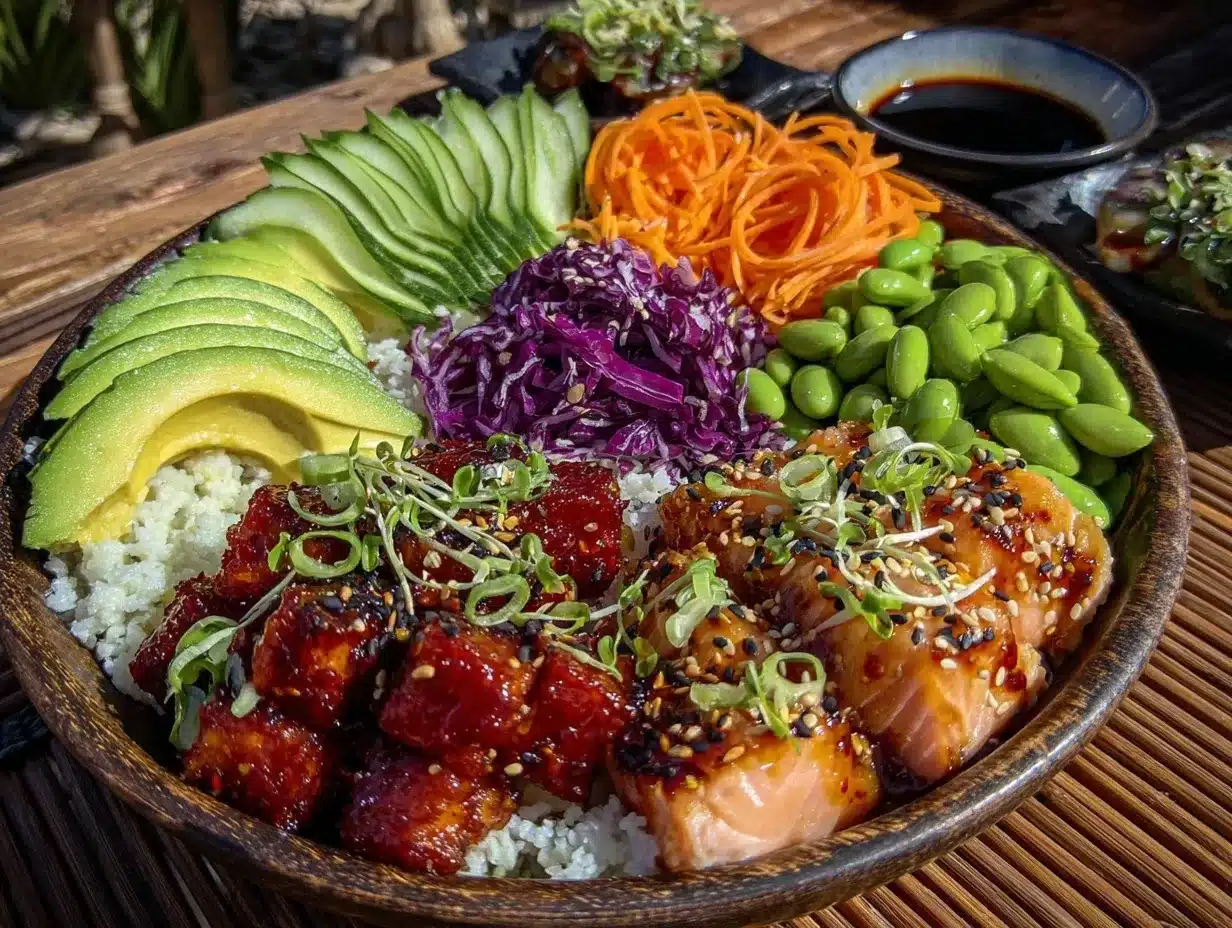
- Prepare the Cauliflower Rice: Wash and dry one medium head of cauliflower. Remove the leaves and core, then pulse in a food processor until it resembles rice grains (about 1-2 cups). If using a box grater, grate the cauliflower florets carefully. Set aside.
- Cook the Cauliflower Rice: Heat 1 tablespoon of toasted sesame oil in a large non-stick skillet over medium heat. Add the cauliflower rice and sauté for about 5-7 minutes, stirring frequently. You want it just tender but not mushy. Sprinkle 1 tablespoon of rice vinegar over it and stir to combine. The rice should be light, fragrant, and slightly glossy. Remove from heat and transfer to a large mixing bowl to cool slightly.
- Prepare the Veggies: While the cauliflower cools, slice 1 medium cucumber thinly, shave 2 medium carrots into ribbons, and slice 1 ripe avocado. Cook 1 cup of shelled edamame according to package instructions.
- Prepare Protein: If using tofu, press and pan-sear until golden (about 3-4 minutes per side). For seafood, slice salmon or tuna thinly or cook shrimp. Set aside.
- Mix the Sauce: In a small bowl, whisk together 3 tablespoons low-sodium soy sauce, 1 tablespoon mayo, and 1 teaspoon wasabi paste for that creamy kick. Adjust wasabi to your heat preference.
- Assemble the Bowls: Divide the cauliflower rice evenly between 4 bowls. Arrange cucumber, carrot, avocado, edamame, and protein atop each bowl in colorful sections. Drizzle with the wasabi mayo and a splash of soy sauce. Garnish with toasted sesame seeds, thinly sliced green onions, and pickled ginger on the side.
- Final Touch: Add fresh cilantro or shiso leaves if you like that herbal punch. Serve immediately for best texture and flavor.
Pro tip: Don’t overcrowd your skillet when cooking cauliflower rice or tofu — keep it in a single layer for even cooking. Also, letting the rice cool slightly before assembling helps keep the fresh veggies crisp.
Cooking Tips & Techniques
Making fresh cauliflower rice sushi bowls that taste just right comes down to a few key tricks. First, don’t skip toasting the sesame oil—it brings out that nutty aroma that makes the rice feel authentic, you know? Be careful not to overcook the cauliflower rice; it should be tender but hold a bit of bite, not soggy mush. I learned this the hard way after one batch turned into a cauliflower porridge (lesson learned!).
When slicing your veggies and protein, aim for thin, uniform pieces. This not only looks prettier but makes every bite balanced. If you’re using raw fish, make sure it’s sushi-grade and fresh from a trusted source. For plant-based versions, pressing tofu removes excess moisture and helps it crisp up nicely.
Timing is everything: start with prepping your cauliflower rice and protein first, then your veggies. That way, everything comes together smoothly without scrambling at the last minute. Multitask by cooking edamame while sautéing your cauliflower rice.
Finally, for that perfect tangy flavor, add the rice vinegar at the end of cooking the rice—it brightens up the whole dish without cooking off the acidity. Trust me, these little details make all the difference in your fresh cauliflower rice sushi bowls.
Variations & Adaptations
One of the best things about this recipe is how easy it is to tweak! Here are a few ways to make it your own:
- Vegan Version: Skip seafood, use crispy pan-fried tofu or tempeh, and swap mayo for vegan mayo or mashed avocado in the wasabi sauce.
- Seasonal Twist: In warmer months, add fresh mango or pineapple chunks for a sweet pop. In fall or winter, roasted sweet potatoes or sautéed mushrooms add cozy warmth.
- Spicy Kick: Add sriracha drizzle or mix chili flakes into the wasabi mayo for a fiery bite that wakes up your taste buds.
- Low FODMAP Adaptation: Use garlic-infused oil instead of sesame oil if sensitive, and swap edamame for green beans or snap peas.
Personally, I’ve tried swapping out cauliflower rice with finely shredded jicama for crunchier texture—the freshness is incredible! Feel free to experiment until you find your favorite combo. The beauty here is flexibility without losing that sushi bowl soul.
Serving & Storage Suggestions
These fresh cauliflower rice sushi bowls are best served immediately while the veggies are crisp and the rice is fluffy. Serve them chilled or at room temperature for a light, refreshing meal. They pair beautifully with a cold glass of green tea, sparkling water with lemon, or even a crisp white wine if you’re feeling fancy.
If you have leftovers, store the components separately in airtight containers in the refrigerator for up to 2 days. Keep the cauliflower rice and veggies apart from the avocado and sauces to avoid sogginess and browning. When ready to eat, gently reheat the cauliflower rice in a microwave or skillet for a minute or two—avoid heating the fresh veggies.
Flavors actually meld nicely if you prep parts ahead, so feel free to prep cauliflower rice and sauces the day before for easy assembly later. Just toss everything together fresh at serving time to keep that bright, vibrant taste.
Nutritional Information & Benefits
Fresh cauliflower rice sushi bowls are a nutrient-packed meal that’s light but filling. Cauliflower is low in calories but high in fiber, vitamin C, and antioxidants, supporting digestion and immune health. The fresh veggies contribute vitamins A and K, while avocado provides heart-healthy fats. Adding edamame or tofu boosts the protein, making it a balanced meal.
These bowls are naturally gluten-free and low-carb, perfect if you’re watching your carb intake or following a paleo or keto lifestyle. Just swap tamari for regular soy sauce to keep it gluten-free. The wasabi mayo adds a bit of fat and flavor without overloading calories.
From a personal wellness perspective, I find this recipe energizes me without weighing me down—perfect for busy days when I want nourishing food that tastes great and keeps me fueled.
Conclusion
Fresh cauliflower rice sushi bowls are a perfect example of how healthy meals can be vibrant, fun, and downright delicious. They come together quickly, use accessible ingredients, and offer endless customization, so you can make them exactly how you like. I love this recipe because it brings a fresh twist to sushi favorites without the fuss or guilt.
Give it a try, tweak it to your taste, and share your adaptations! Trust me, these bowls will become a go-to for brightening up your meal rotation. Drop a comment below—I’d love to hear how you make these bowls your own. Remember, good food is meant to be shared and enjoyed with smiles. Happy cooking!
Frequently Asked Questions about Fresh Cauliflower Rice Sushi Bowls
Can I use frozen cauliflower rice for this recipe?
You can, but fresh cauliflower rice gives the best texture and flavor. If using frozen, thaw and drain excess water thoroughly to avoid sogginess.
How do I make this recipe vegan?
Simply skip the seafood and swap mayo for vegan mayo or mashed avocado. Use tofu or tempeh for protein.
Is cauliflower rice sushi bowl gluten-free?
Yes, as long as you use gluten-free tamari instead of regular soy sauce and check all sauces for gluten.
Can I prepare these bowls ahead of time?
Yes! Store cauliflower rice and veggies separately, then assemble right before serving to keep everything fresh and crisp.
What can I use instead of wasabi mayo?
You can use plain mayo, Greek yogurt mixed with a bit of lemon, or a simple drizzle of soy sauce and sesame oil for different flavor profiles.
Pin This Recipe!
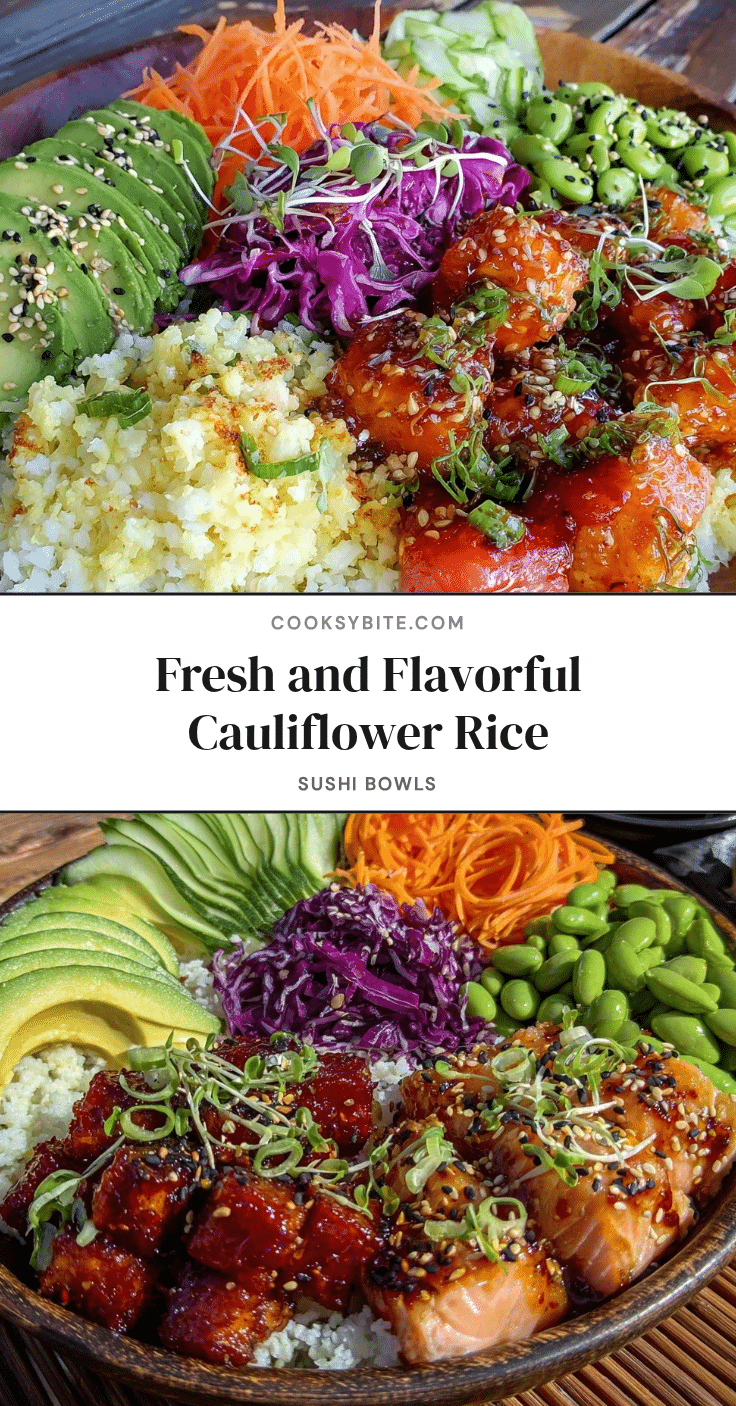
Fresh Cauliflower Rice Sushi Bowls

A quick, healthy, and flavorful sushi bowl made with light and fluffy cauliflower rice, fresh vegetables, and your choice of protein, perfect for a low-carb, gluten-free meal.
- Prep Time: 15 minutes
- Cook Time: 10 minutes
- Total Time: 25 minutes
- Yield: 4 servings 1x
- Category: Main Course
- Cuisine: Fusion, Japanese-inspired
Ingredients
- 1 medium head cauliflower, grated or pulsed into rice-sized pieces
- 1 tablespoon toasted sesame oil
- 1 tablespoon rice vinegar (unseasoned)
- 1 medium cucumber, thinly sliced or julienned
- 2 medium carrots, shaved or spiralized
- 1 ripe avocado, sliced or cubed
- 1 cup shelled edamame, cooked
- Protein options (choose one or mix):
- – Fresh sushi-grade salmon or tuna, thinly sliced
- – Cooked shrimp or crab meat
- – Firm tofu, pressed and pan-seared
- Sauces and toppings:
- 3 tablespoons low-sodium soy sauce or tamari
- 1 tablespoon mayonnaise
- 1 teaspoon wasabi paste
- Pickled ginger
- Toasted sesame seeds
- Thinly sliced green onions
- Fresh cilantro or shiso leaves (optional)
Instructions
- Wash and dry the cauliflower. Remove leaves and core, then pulse in a food processor until it resembles rice grains (about 1-2 cups). Alternatively, grate with a box grater.
- Heat 1 tablespoon toasted sesame oil in a large non-stick skillet over medium heat. Add cauliflower rice and sauté for 5-7 minutes, stirring frequently until tender but not mushy.
- Sprinkle 1 tablespoon rice vinegar over the cauliflower rice and stir to combine. Remove from heat and transfer to a large mixing bowl to cool slightly.
- Slice cucumber thinly, shave carrots into ribbons, slice avocado, and cook edamame according to package instructions.
- Prepare protein: pan-sear tofu until golden (3-4 minutes per side) or slice seafood thinly or cook shrimp. Set aside.
- In a small bowl, whisk together 3 tablespoons low-sodium soy sauce, 1 tablespoon mayo, and 1 teaspoon wasabi paste. Adjust wasabi to taste.
- Divide cauliflower rice evenly among 4 bowls. Arrange cucumber, carrot, avocado, edamame, and protein on top in sections.
- Drizzle with wasabi mayo and a splash of soy sauce. Garnish with toasted sesame seeds, green onions, and pickled ginger.
- Add fresh cilantro or shiso leaves if desired. Serve immediately.
Notes
Do not overcrowd the skillet when cooking cauliflower rice or tofu to ensure even cooking. Let cauliflower rice cool slightly before assembling to keep veggies crisp. Use fresh cauliflower rice for best texture. For vegan version, substitute mayo with vegan mayo or mashed avocado and use tofu or tempeh as protein. Store components separately if making ahead to avoid sogginess.
Nutrition
- Serving Size: 1 bowl (approximatel
- Calories: 280
- Sugar: 6
- Sodium: 550
- Fat: 15
- Saturated Fat: 2
- Carbohydrates: 20
- Fiber: 7
- Protein: 12
Keywords: cauliflower rice, sushi bowl, low carb, gluten free, healthy meal, easy recipe, vegetarian option, seafood, tofu, wasabi mayo