This was supposed to be apple cider donuts. I had the whole plan mapped out in my head—a lazy Sunday afternoon, the kids helping me roll warm donuts in cinnamon sugar, the whole house smelling like a fall festival. But somewhere between the grocery store and my kitchen, the plan fell apart. I grabbed a jug of apple cider that was way too pulpy for donuts, realized my deep-frying thermometer had been missing since last Thanksgiving, and I was already fifteen minutes into nap time—that sacred, ticking clock every parent knows. The donuts weren’t happening. I stood there, staring at a bowl of thick, speckled cider, feeling that familiar pinch of frustration. You know that feeling when a recipe just refuses to cooperate? I almost dumped it all out and grabbed a box of muffin mix from the pantry. But something stopped me—maybe stubbornness, maybe the fact that I’d already measured the flour. So I threw the whole mess into a cake pan instead, crossed my fingers, and hoped for the best. What came out of that oven was nothing like the plan. It was better. The cake was tender, deeply spiced, and kissed with that real apple cider tang. And the brown butter glaze? That was a happy accident too—I got distracted and let the butter go a shade too dark, which turned out to be the best mistake I’ve ever made. Honestly, this cake has become my secret weapon for school bake sales, playdates, and those evenings when everyone needs a little sweetness. It’s the recipe that taught me to stop panicking when things go wrong and just roll with it.
Why You’ll Love This Recipe
Let me tell you why this cake has earned a permanent spot in my weekly rotation. It’s not just good—it’s the kind of cake that makes you close your eyes after the first bite, and then immediately reach for another slice.
- Quick & Easy: From start to finish, this cake comes together in under an hour. Most of that time is hands-off baking, which means you can actually sit down while it’s in the oven.
- Simple Ingredients: No fancy grocery trips needed. You probably have most of these in your pantry right now—flour, sugar, eggs, butter, and a bottle of apple cider.
- Perfect for Family Meals: This cake works for breakfast, snack time, dessert, or even a coffee break. It’s versatile enough for any occasion that calls for comfort.
- Crowd-Pleaser: My kids devour it, their friends ask for seconds, and the adults always sneak an extra piece when they think no one’s watching.
- Unbelievably Delicious: The brown butter glaze is the star here. It adds a nutty, caramel-like depth that plain butter just can’t match. Paired with the apple cider cake, it’s pure magic.
What makes this recipe different from all the other apple cakes out there? It’s the technique. Reducing the apple cider before adding it to the batter concentrates the flavor and removes excess liquid, so you get intense apple taste without a soggy crumb. And the brown butter glaze? It’s not just a drizzle—it’s the finishing touch that ties everything together. This isn’t just another version of apple cake; it’s the best version I’ve ever made, and I’ve made a lot of apple cakes.
This recipe is comfort food reimagined—simpler, faster, but with the same soul-soothing satisfaction that makes you feel like everything’s going to be okay. Perfect for impressing guests without any stress, or turning an ordinary Tuesday into something memorable.
What Ingredients You Will Need
This recipe uses simple, wholesome ingredients to deliver bold flavor and satisfying texture without any fuss. Most of these are pantry staples you probably already have on hand, which makes this cake perfect for spontaneous baking sessions.
For the Apple Cider Cake
- 1 ½ cups apple cider (use fresh, unfiltered cider for the best flavor—I like the local orchard stuff)
- 2 ½ cups all-purpose flour (spooned and leveled—don’t scoop directly from the bag)
- 1 teaspoon baking powder
- 1 teaspoon baking soda
- ½ teaspoon salt
- 2 teaspoons ground cinnamon
- ½ teaspoon ground nutmeg (freshly grated if you have it—it makes a difference)
- ¼ teaspoon ground cloves
- ½ cup unsalted butter, softened (room temperature is key here)
- 1 cup granulated sugar
- ½ cup packed light brown sugar
- 2 large eggs, room temperature
- 1 teaspoon vanilla extract
- ½ cup buttermilk, room temperature (or make your own by adding 1 tablespoon lemon juice to ½ cup milk and letting it sit for 5 minutes)
For the Brown Butter Glaze
- ½ cup unsalted butter (use a good quality brand—I prefer Land O’Lakes for consistency)
- 2 cups powdered sugar, sifted
- 3–4 tablespoons milk or heavy cream (start with 3 and add more if needed)
- 1 teaspoon vanilla extract
- Pinch of salt
Ingredient Tips & Substitutions
For the apple cider, make sure you’re using real cider, not apple juice. Cider has more body and a tangier flavor that really shines in this cake. If you can’t find cider, you can substitute with apple juice that’s been simmered down to concentrate the flavor—just let it cool before using.
For a dairy-free version, swap the butter with a high-quality vegan butter (I like Miyoko’s) and use almond milk with a splash of apple cider vinegar for the buttermilk. The texture will be slightly different, but still delicious.
If you don’t have buttermilk, don’t worry—just add 1 ½ teaspoons of lemon juice or white vinegar to regular milk and let it sit for 5 minutes. It works like a charm every time.
For the brown butter glaze, you can substitute the milk with apple cider for an extra punch of apple flavor. I’ve done this before, and it’s fantastic—just be prepared for a slightly thinner glaze.
Equipment Needed
- 9-inch round cake pan (or a 9×9 square pan—both work great)
- Parchment paper (for easy removal—trust me on this one)
- Medium saucepan (for reducing the cider and browning the butter)
- Large mixing bowl
- Medium mixing bowl
- Whisk
- Electric hand mixer or stand mixer (you can do it by hand, but it takes some elbow grease)
- Rubber spatula
- Cooling rack
- Measuring cups and spoons
- Small whisk or fork (for the glaze)
If you don’t have a hand mixer, a wooden spoon and some patience will work. I’ve made this cake by hand before when my mixer was on the fritz, and it turned out just fine—just make sure your butter is really well softened. For the cake pan, you can also use a 9-inch springform pan if you have one; just check for any leaks before pouring in the batter.
Preparation Method
- Preheat your oven to 350°F (175°C). Grease your 9-inch cake pan and line the bottom with a circle of parchment paper. This extra step ensures your cake comes out cleanly—I learned this the hard way after a few stuck cakes.
- Reduce the apple cider. Pour the 1 ½ cups of apple cider into a medium saucepan and bring it to a boil over medium-high heat. Reduce the heat to medium and let it simmer, stirring occasionally, until it’s reduced to about ⅓ cup. This takes about 12–15 minutes. You’ll know it’s done when it’s thick, syrupy, and smells intensely of apples. Set it aside to cool completely—don’t add hot cider to your butter mixture or you’ll end up with a greasy mess.
- Whisk the dry ingredients. In a medium bowl, whisk together the flour, baking powder, baking soda, salt, cinnamon, nutmeg, and cloves. Make sure everything is evenly distributed. I like to use a whisk for this instead of a spoon—it aerates the flour and prevents clumps.
- Cream the butter and sugars. In a large bowl, beat the softened butter, granulated sugar, and brown sugar together until light and fluffy, about 3–4 minutes with an electric mixer on medium speed. You want it to look pale and almost doubled in volume. Scrape down the sides of the bowl halfway through.
- Add the eggs and vanilla. Add the eggs one at a time, beating well after each addition. Then mix in the vanilla extract. The batter should look smooth and slightly glossy at this point.
- Alternate adding dry ingredients and buttermilk. With the mixer on low speed, add about one-third of the flour mixture, then half of the buttermilk, then another third of flour, the remaining buttermilk, and finally the last of the flour. Mix just until combined after each addition—overmixing will make your cake tough. I speak from experience here; I once overmixed a cake so badly it came out like a hockey puck.
- Fold in the reduced cider. Pour the cooled reduced cider into the batter and fold it in gently with a rubber spatula until just incorporated. The batter will be thick and smell amazing—like liquid autumn.
- Bake the cake. Pour the batter into the prepared pan and smooth the top with a spatula. Bake for 35–40 minutes, or until a toothpick inserted into the center comes out clean or with just a few moist crumbs. The top should be golden brown and the edges should be pulling away from the pan slightly. Let the cake cool in the pan for 10 minutes, then transfer it to a wire rack to cool completely before glazing.
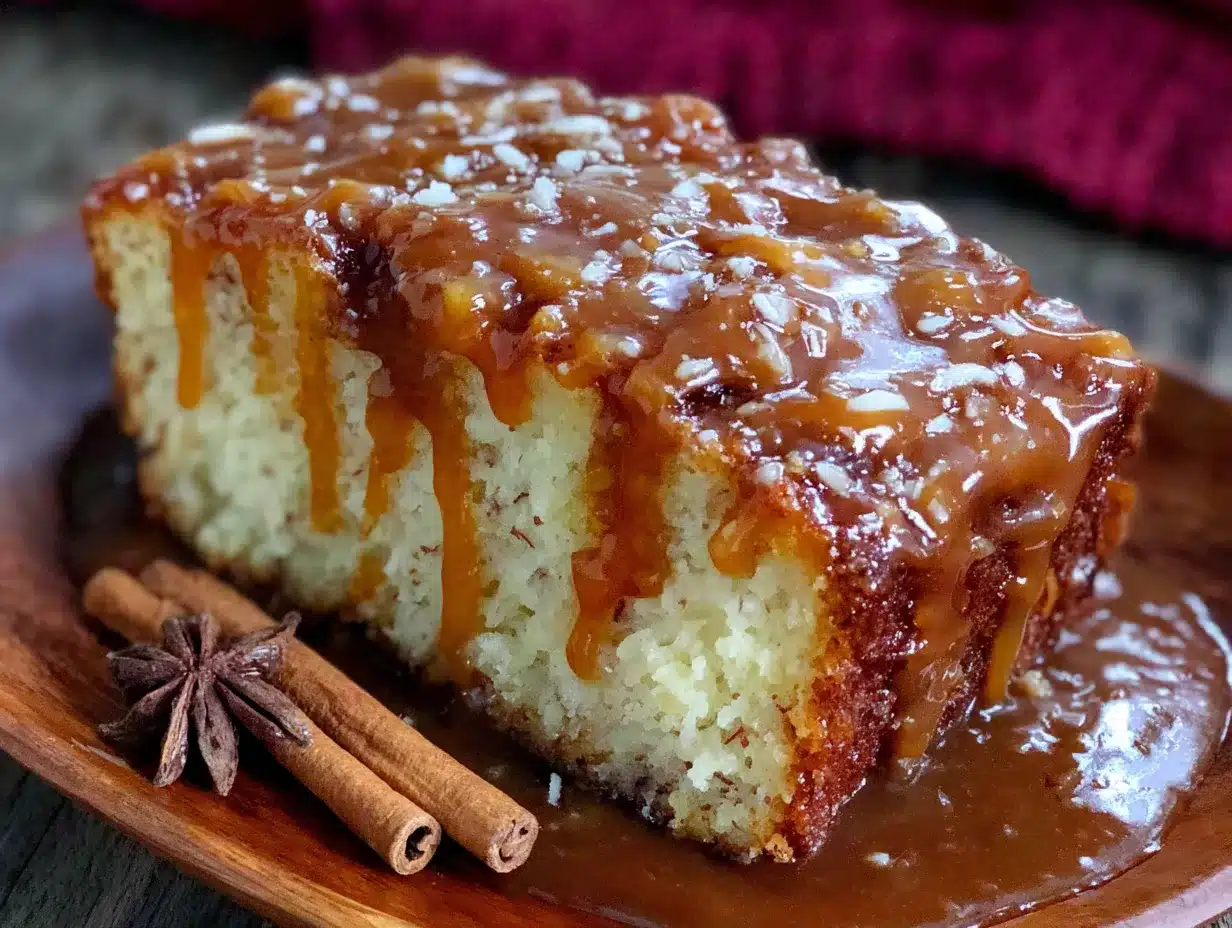
- Make the brown butter glaze. While the cake cools, make the glaze. In a small saucepan, melt the ½ cup of butter over medium heat. Swirl the pan occasionally as the butter melts. It will start to foam and crackle—that’s normal. Keep cooking until the foam subsides and you see brown specks forming at the bottom of the pan. The butter will smell nutty and toasty. This takes about 5–7 minutes. Watch it carefully—brown butter can go from perfect to burnt in seconds. Remove it from the heat immediately and pour it into a heatproof bowl to stop the cooking.
- Finish the glaze. Let the brown butter cool for about 5 minutes, then whisk in the sifted powdered sugar, vanilla extract, and a pinch of salt. Add the milk or cream one tablespoon at a time until you reach a pourable consistency. The glaze should be thick but flow slowly off a spoon.
- Glaze the cake. Once the cake is completely cool, pour the brown butter glaze over the top, letting it drip down the sides. Use a spatula to spread it evenly if needed. Let the glaze set for at least 15 minutes before slicing.
Cooking Tips & Techniques
Let me save you some of the headaches I’ve encountered along the way. First, don’t skip reducing the apple cider. I know it seems like an extra step, but it’s the secret to this cake’s intense apple flavor. If you add full-strength cider, your cake will be soggy and bland—trust me, I tried it once and ended up with a wet, flavorless mess.
When browning butter, use a light-colored saucepan so you can actually see the color change. I’ve burned more batches than I’d like to admit because I was using a dark nonstick pan. Also, keep a close eye on it—brown butter can go from perfect to acrid in about 30 seconds. The sweet spot is when it smells like toasted nuts and has a deep amber color.
For the glaze, if it gets too thick while you’re waiting, just microwave it for 10 seconds and whisk again. If it’s too thin, add a little more powdered sugar. The consistency should be like thick maple syrup—pourable but not runny.
One more thing: make sure your eggs and buttermilk are at room temperature. Cold ingredients can cause the batter to seize up and result in a dense cake. If you forget to take them out ahead of time, just place the eggs in a bowl of warm water for 5 minutes and microwave the buttermilk for 15 seconds.
Variations & Adaptations
- Gluten-Free Version: Substitute the all-purpose flour with a 1:1 gluten-free baking flour blend (I like Bob’s Red Mill). Add 1 teaspoon of xanthan gum if your blend doesn’t already include it. The texture will be slightly more tender, but still delicious.
- Dairy-Free Version: Use vegan butter for both the cake and the glaze. Replace the buttermilk with almond milk mixed with 1 tablespoon of apple cider vinegar. The cake will be a bit less rich, but the apple flavor still shines.
- Apple Cider Donut Muffins: Remember my original plan? It works! Pour the batter into a greased muffin tin and bake at 350°F for 18–20 minutes. Dip the tops in the brown butter glaze and then into cinnamon sugar. My kids go absolutely crazy for these.
- Spiced Apple Cake: Add ½ cup of finely chopped fresh apple (like Honeycrisp or Fuji) to the batter along with ½ cup of chopped walnuts or pecans. This adds texture and makes it even more apple-forward.
- Maple Brown Butter Glaze: Replace 2 tablespoons of the milk in the glaze with pure maple syrup. It adds a lovely woodsy sweetness that pairs beautifully with the apple cider.
Serving & Storage Suggestions
This cake is best served at room temperature, but I won’t judge you if you sneak a slice while it’s still warm—the glaze gets all melty and incredible. For a truly indulgent experience, serve it with a scoop of vanilla ice cream or a dollop of lightly sweetened whipped cream. A sprinkle of flaky sea salt on top of the glaze takes it to another level.
For storage, keep the cake in an airtight container at room temperature for up to 3 days. The glaze will stay glossy and the cake will remain moist—if anything, it gets even better on day two as the flavors meld together. I’ve actually found that this cake tastes more apple-y the next day, so don’t be afraid to make it ahead.
To freeze, wrap the unglazed cake tightly in plastic wrap, then in aluminum foil, and freeze for up to 3 months. When you’re ready to serve, thaw it overnight in the refrigerator, bring it to room temperature, and then glaze it fresh. The glaze doesn’t freeze well, so always make that fresh.
For reheating individual slices, microwave for 15–20 seconds. The glaze will soften and the cake will taste freshly baked. It’s my favorite way to enjoy leftovers with my morning coffee.
Nutritional Information & Benefits
Per slice (based on 10 servings): approximately 380 calories, 18g fat, 52g carbohydrates, 4g protein, 2g fiber, 30g sugar. These are estimates and will vary based on specific ingredients and substitutions.
While this cake is definitely a treat, the apple cider provides a good dose of antioxidants and a touch of vitamin C. The cinnamon and nutmeg add anti-inflammatory properties, and the brown butter, while indulgent, contains healthy fats that help with nutrient absorption. I love that this cake feels special without being overly complicated or loaded with processed ingredients.
For those watching their sugar intake, you can reduce the granulated sugar to ¾ cup and the brown sugar to ⅓ cup—the cake will be less sweet but still delicious, especially with the glaze. The reduced cider adds natural sweetness, so you won’t miss the extra sugar as much as you’d think.
Conclusion
This apple cider cake with brown butter glaze is more than just a recipe—it’s a reminder that some of the best things in life come from happy accidents. What started as a failed attempt at donuts turned into a family favorite that I’ve made more times than I can count. It’s the cake I bring to potlucks, the one my kids request for their birthdays, and the one I make just because it’s Tuesday.
I hope you give this recipe a try and make it your own. Maybe you’ll add more spice, swap the glaze for a cream cheese frosting, or turn it into muffins like I almost did. That’s the beauty of baking—there’s always room for a little improvisation. Let me know in the comments how it turns out for you, and don’t forget to share your own happy accidents. I’d love to hear about them!
Happy baking, friends. And remember—sometimes the best recipes are the ones that start as a complete disaster.
Frequently Asked Questions
Can I use apple juice instead of apple cider?
You can, but the flavor won’t be as rich or tangy. Apple juice is thinner and sweeter, so the reduced version won’t have the same depth. If you’re in a pinch, simmer the apple juice down to about half its original volume to concentrate the flavor.
Why did my brown butter glaze turn out grainy?
This usually happens when the brown butter is too hot when you add the powdered sugar. Let the butter cool for at least 5 minutes before whisking in the sugar. If it’s already grainy, try adding a splash of hot water and whisking vigorously—sometimes that smooths it out.
Can I make this cake ahead of time?
Absolutely! The cake itself can be baked a day ahead and stored at room temperature. Just wait to add the glaze until you’re ready to serve. The glaze is best made fresh, but you can make it a few hours ahead and reheat it gently.
How do I know when the apple cider is reduced enough?
You’re looking for a thick, syrupy consistency—about the texture of maple syrup. It should coat the back of a spoon and measure about ⅓ cup. If you go too far and it gets too thick, just add a tablespoon of water to thin it out.
Can I double this recipe for a larger crowd?
Yes! Double all the ingredients and bake in a 9×13-inch pan. The baking time will increase to about 45–50 minutes. Keep an eye on it and test with a toothpick starting at 40 minutes. You’ll also need to double the glaze recipe—trust me, you’ll want enough to cover that bigger cake generously.
Pin This Recipe!
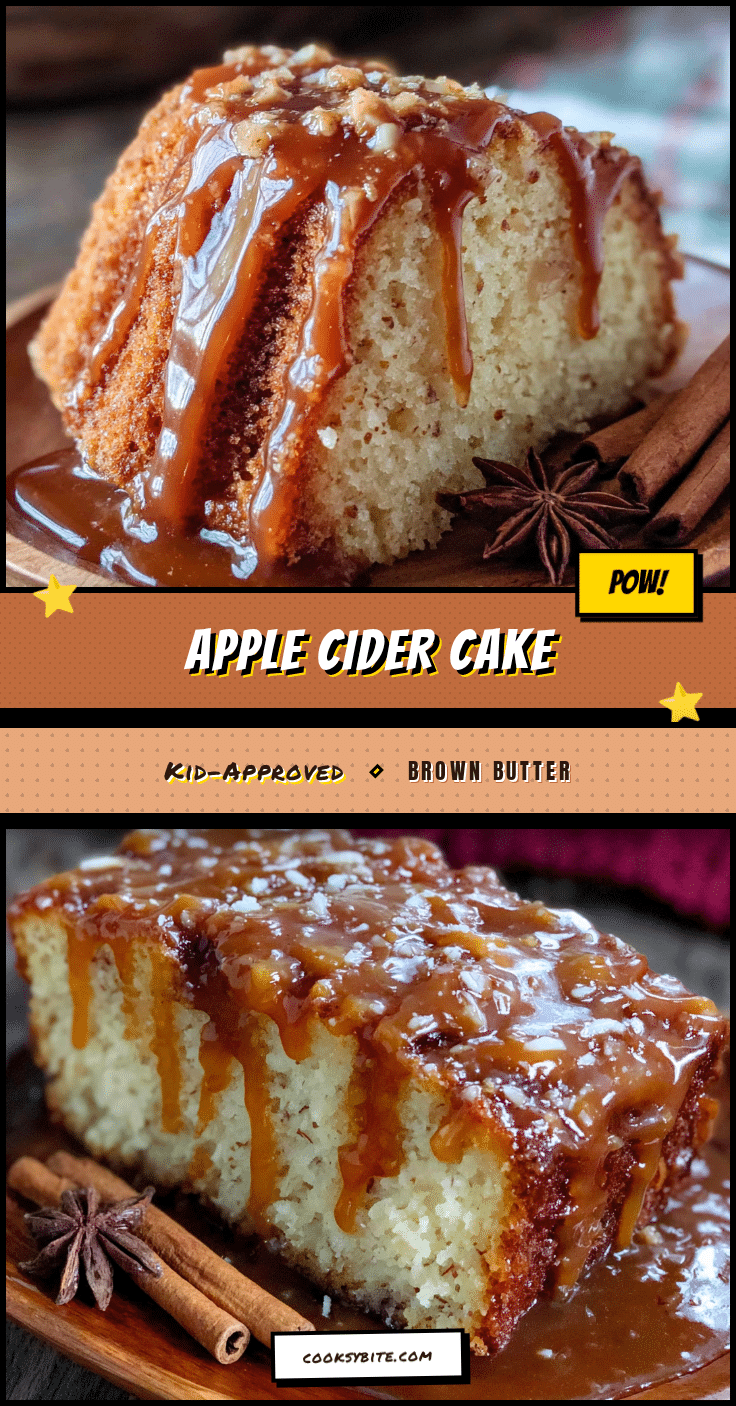
Kid-Approved Apple Cider Cake with Easy Brown Butter Glaze
A tender, spiced apple cider cake topped with a nutty brown butter glaze. This easy recipe turns a happy accident into a family favorite, perfect for any occasion.
- Prep Time: 15 minutes
- Cook Time: 35 minutes
- Total Time: 50 minutes
- Yield: 10 servings 1x
- Category: Dessert
- Cuisine: American
Ingredients
- 1 ½ cups apple cider
- 2 ½ cups all-purpose flour
- 1 teaspoon baking powder
- 1 teaspoon baking soda
- ½ teaspoon salt
- 2 teaspoons ground cinnamon
- ½ teaspoon ground nutmeg
- ¼ teaspoon ground cloves
- ½ cup unsalted butter, softened
- 1 cup granulated sugar
- ½ cup packed light brown sugar
- 2 large eggs, room temperature
- 1 teaspoon vanilla extract
- ½ cup buttermilk, room temperature
- ½ cup unsalted butter (for glaze)
- 2 cups powdered sugar, sifted
- 3–4 tablespoons milk or heavy cream
- 1 teaspoon vanilla extract (for glaze)
- Pinch of salt
Instructions
- Preheat oven to 350°F (175°C). Grease a 9-inch round cake pan and line the bottom with parchment paper.
- Reduce apple cider: In a medium saucepan, bring 1 ½ cups apple cider to a boil over medium-high heat. Reduce heat to medium and simmer, stirring occasionally, until reduced to about ⅓ cup (12–15 minutes). Set aside to cool completely.
- Whisk dry ingredients: In a medium bowl, whisk together flour, baking powder, baking soda, salt, cinnamon, nutmeg, and cloves.
- Cream butter and sugars: In a large bowl, beat softened butter, granulated sugar, and brown sugar until light and fluffy (3–4 minutes).
- Add eggs and vanilla: Add eggs one at a time, beating well after each. Mix in vanilla extract.
- Alternate dry ingredients and buttermilk: With mixer on low, add one-third of flour mixture, then half of buttermilk, another third of flour, remaining buttermilk, and final third of flour. Mix just until combined.
- Fold in reduced cider: Gently fold cooled reduced cider into batter with a rubber spatula until just incorporated.
- Bake: Pour batter into prepared pan and smooth top. Bake 35–40 minutes until a toothpick inserted in center comes out clean. Cool in pan 10 minutes, then transfer to wire rack to cool completely.
- Make brown butter glaze: In a small saucepan, melt ½ cup butter over medium heat. Swirl occasionally until butter foams, then subsides, and brown specks appear (5–7 minutes). Remove from heat and pour into a heatproof bowl.
- Finish glaze: Let brown butter cool 5 minutes. Whisk in sifted powdered sugar, vanilla extract, and pinch of salt. Add milk or cream 1 tablespoon at a time until pourable consistency.
- Glaze cake: Pour glaze over completely cooled cake, letting it drip down sides. Let set at least 15 minutes before slicing.
Notes
Don’t skip reducing the apple cider—it concentrates flavor and prevents a soggy cake. For brown butter, use a light-colored pan to monitor color change. Let eggs and buttermilk come to room temperature for best texture. Glaze can be thinned with extra milk or thickened with more powdered sugar as needed.
Nutrition
- Serving Size: 1 slice
- Calories: 380
- Sugar: 30
- Sodium: 280
- Fat: 18
- Saturated Fat: 11
- Carbohydrates: 52
- Fiber: 2
- Protein: 4
Keywords: apple cider cake, brown butter glaze, fall dessert, easy cake, kid-friendly, apple cake