Sunday dinner at my house used to mean a lot of hustle and a main course that was either dry or stressful. For years, I just accepted that a big roast was something you ordered at a restaurant, not something you pulled off at home without a culinary degree. I had been looking for a way to cook a prime rib that actually delivered that perfect, rosy interior and a deeply flavorful crust without requiring a thermometer every two minutes or a prayer to the kitchen gods. It wasn’t about being fancy. It was about wanting that one meal that made the whole house smell like a special occasion, without the panic.
The turning point came during a particularly cold winter. I was tired of the same old chicken thighs, honestly. I wanted something that felt substantial, an event. I started testing, and I ruined a few expensive roasts along the way (we don’t talk about the Christmas one that turned into shoe leather). But I learned what worked. I learned that a simple, potent paste of garlic, fresh herbs, and good butter does more for a prime rib than any complicated rub ever could. It’s about technique, not tricks. This Perfect Garlic Herb Prime Rib Roast for Sunday Dinner is the result of those trials. It’s the kind of meal that makes everyone pause when you bring it to the table, not because it’s showy, but because it smells like home in the best possible way.
This recipe isn’t just a set of instructions. It’s a promise that you can create that restaurant-quality experience in your own kitchen, with your own hands. No more settling for dry, bland beef on a day that should feel special. This method gives you a crust that crackles, a center that’s butter-soft, and a feeling of genuine accomplishment. It’s the Sunday dinner you’ve been looking for, and it’s simpler than you think.
Why You’ll Love This Recipe
This isn’t just another roast beef recipe. This is the one that will become your go-to for holidays, celebrations, and those quiet Sundays when you want to treat your family to something unforgettable. Here’s what makes it stand out:
- Foolproof Technique for Perfect Doneness: We use a high-heat sear followed by a low-and-slow roast. This method ensures a beautiful brown crust on the outside while the inside stays perfectly pink from edge to edge. No more gray, overcooked meat.
- Bold, Aromatic Flavor: The garlic herb butter is the star. It’s not just a rub; it’s a flavor infusion. Fresh rosemary, thyme, and a mountain of garlic create a crust that’s savory, fragrant, and absolutely addictive.
- Impressive Without the Stress: This recipe looks like you spent all day slaving away, but the active prep time is minimal. Most of the work is done by the oven. You can relax, set the table, and enjoy a glass of wine while it cooks.
- Perfect for a Special Occasion: Whether it’s Easter, Christmas, a birthday, or simply a Sunday dinner you want to make memorable, this prime rib feels like an event. It’s a crowd-pleaser that will have your guests asking for the recipe.
- Leftovers You’ll Crave: Let’s be honest, the leftovers might be the best part. Thinly sliced prime rib makes incredible sandwiches, hearty salads, or a quick and luxurious hash the next day.
I’ve tested this method countless times to make sure it works in a regular home oven with no special equipment. It’s the kind of recipe that builds your confidence in the kitchen. After you make this once, you’ll never be intimidated by a big roast again. It’s comfort food at its finest—rich, satisfying, and made with love.
What Ingredients You Will Need
This recipe uses a short list of high-quality ingredients to create maximum impact. The magic is in the simplicity.
- Prime Rib Roast (4-6 pounds): The star of the show. Look for a roast with good marbling (the white flecks of fat running through the meat). This fat is what keeps the roast moist and flavorful as it cooks. I prefer a bone-in roast for maximum flavor, but a boneless roast will work just as well—just adjust your cooking time slightly. Ask your butcher for a “first cut” or “small end” roast for the most tender results.
- Unsalted Butter (1/2 cup, softened): The base of our flavor paste. Using unsalted butter lets you control the salt level. Make sure it’s truly softened to room temperature so it blends easily with the herbs and garlic.
- Garlic (6-8 cloves, minced): Don’t skimp on the garlic. It mellows and sweetens as it roasts, creating a deep, savory flavor that’s essential. Freshly minced is non-negotiable here—skip the jarred stuff.
- Fresh Rosemary (2 tablespoons, finely chopped): Rosemary and beef are a classic pairing. Its piney, aromatic flavor cuts through the richness of the meat perfectly. Fresh is key; dried rosemary can be too woody and intense.
- Fresh Thyme (1 tablespoon, leaves removed from stems): Thyme adds a subtle, earthy, and slightly lemony note that rounds out the herb profile. It’s the quiet workhorse of this flavor combination.
- Coarse Kosher Salt (2 tablespoons): Salt is crucial for seasoning the meat and helping to develop that beautiful crust. Kosher salt is ideal because its large crystals distribute evenly and are less salty by volume than table salt.
- Freshly Ground Black Pepper (1 tablespoon): Use a generous amount. Freshly ground pepper has a pungency and floral note that pre-ground pepper just can’t match.
- Olive Oil (2 tablespoons): A little oil helps the seasoning stick to the meat and aids in browning during the initial sear.
Ingredient Selection Tips: When choosing your prime rib, look for one that’s bright red in color and has a fresh, clean smell. If you can, buy it a day or two before you plan to cook it. This allows you to dry-brine it in the refrigerator, which is a game-changer for flavor and crust development (I’ll explain this in the tips section!). For the herbs, don’t be afraid to get the whole bunches from the produce section—they’re much more flavorful than the little plastic boxes.
Equipment Needed
You don’t need a professional kitchen to make a perfect prime rib. A few key tools will make the process smooth and successful.
- Roasting Pan with a Rack: A sturdy roasting pan is essential. The rack lifts the roast off the bottom of the pan, allowing hot air to circulate all around it for even cooking. If you don’t have a rack, you can place the roast on top of a few thick carrot and celery stalks to elevate it.
- Instant-Read Meat Thermometer: This is your most important tool. Guessing doneness with a prime rib is a recipe for disaster. An instant-read thermometer gives you an accurate reading in seconds, ensuring you nail that perfect medium-rare every time. I prefer a digital one for its speed and accuracy.
- Chef’s Knife: A sharp, heavy chef’s knife is needed for mincing the garlic and herbs, and later for carving the roast. A dull knife is dangerous and will tear the meat.
- Small Bowl: For mixing your garlic herb butter paste.
- Aluminum Foil: You’ll need this to tent the roast while it rests after cooking. Resting is a critical step that allows the juices to redistribute.
Budget-Friendly Alternatives: If you don’t have a roasting pan, a heavy-duty, rimmed baking sheet will work in a pinch. Just be careful of any juices spilling over. A simple oven-safe wire cooling rack placed inside the baking sheet works perfectly as a substitute for a roasting rack.
Preparation Method
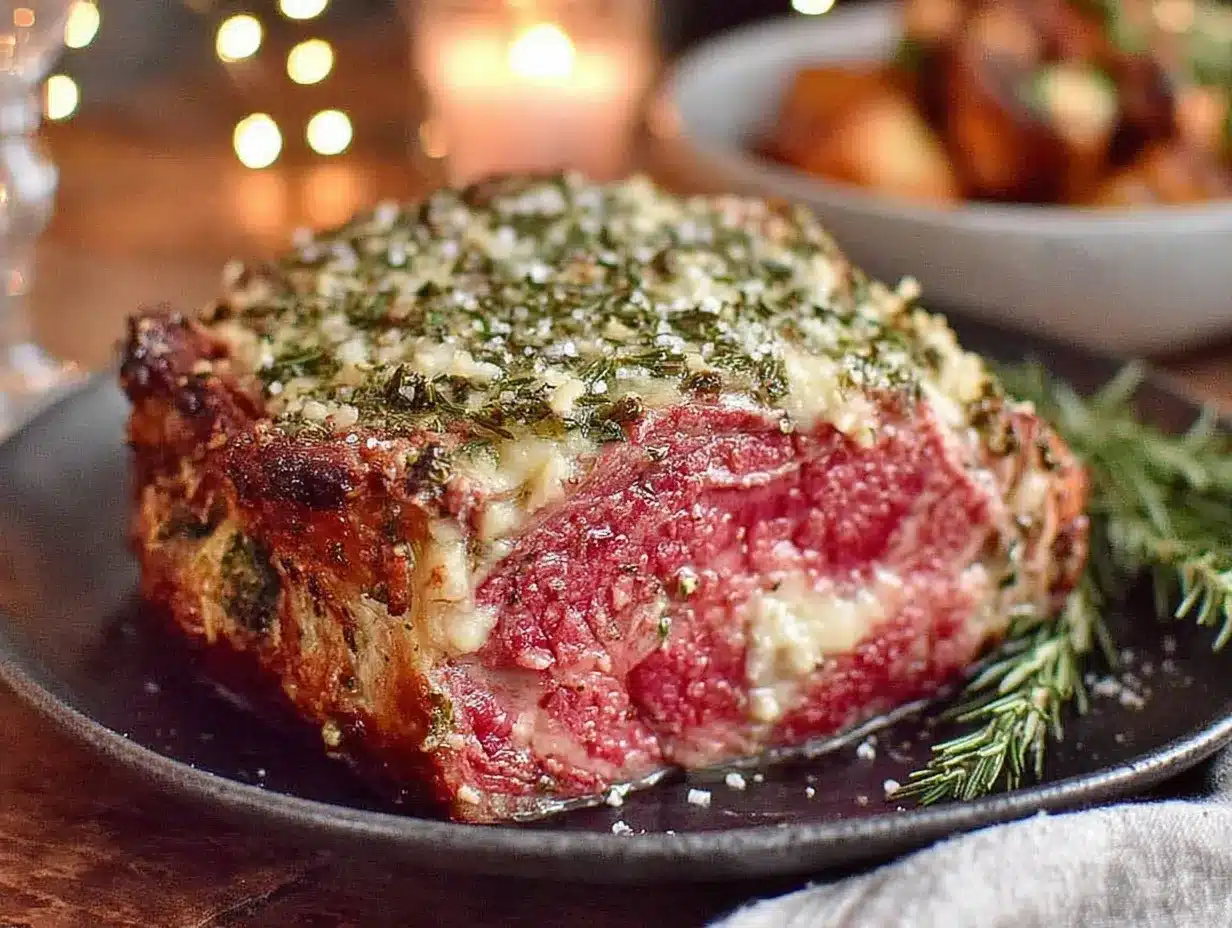
Follow these steps carefully, and you’ll be rewarded with a stunning roast. Patience is key here, especially during the resting phase.
- Prep the Roast (Do This the Night Before for Best Results!): Remove the prime rib from its packaging and pat it completely dry with paper towels. Place it on a wire rack set over a baking sheet. Season generously all over with 1 tablespoon of the kosher salt. This is the dry-brine step. Leave it uncovered in the refrigerator for at least 8 hours, or up to 24 hours. This dries out the surface, which is the secret to an incredible crust.
- Make the Garlic Herb Butter: About 2 hours before you plan to cook, remove the roast from the refrigerator and let it sit on the counter to come to room temperature. While it’s resting, make the paste. In a small bowl, combine the softened butter, minced garlic, chopped rosemary, thyme leaves, remaining 1 tablespoon of kosher salt, and the black pepper. Mix until everything is evenly distributed. It will smell amazing.
- Season the Roast: Once the roast has been at room temperature for about an hour, rub the entire surface with the 2 tablespoons of olive oil. Then, take your garlic herb butter and spread it all over the roast, covering every nook and cranny. Don’t be shy—use it all. This paste is your flavor armor.
- Preheat and Sear: Position a rack in the middle of your oven and preheat it to 450°F (230°C). Place the seasoned roast, fat-side up, on the rack in your roasting pan. Roast at this high temperature for 20 minutes. This high-heat blast creates that beautiful, deep brown crust.
- Lower the Heat and Roast: Without opening the oven door, reduce the oven temperature to 325°F (160°C). Continue to roast until the internal temperature reaches your desired level of doneness. For medium-rare (my strong recommendation), cook until the thermometer reads 120-125°F (49-52°C) when inserted into the thickest part of the meat, away from the bone. This will take roughly 15-20 minutes per pound, but always rely on your thermometer, not the clock. A 5-pound roast will take about 1 hour and 15 minutes to 1 hour and 30 minutes total roasting time after the initial sear.
- Rest the Roast (This is Crucial!): Once the roast hits your target temperature, remove it from the oven. Transfer it to a cutting board and tent it loosely with a large piece of aluminum foil. Let it rest for at least 20-30 minutes. Do not skip this step! The internal temperature will continue to rise by about 5-10 degrees (this is called carryover cooking), and the resting period allows the juices to redistribute throughout the meat. If you cut into it too soon, all those delicious juices will run out onto the cutting board, leaving you with dry meat.
- Carve and Serve: After the rest, remove the foil. If your roast is bone-in, use a sharp knife to cut the bones away from the meat in one large piece. Then, slice the roast against the grain into ½-inch to 1-inch thick slices. The meat should be perfectly pink and incredibly tender. Arrange the slices on a warm platter and spoon any accumulated juices from the cutting board over the top.
Cooking Tips & Techniques
I’ve learned these lessons the hard way so you don’t have to. A few small tweaks can make a massive difference.
- The Dry Brine is Non-Negotiable: I cannot stress this enough. Leaving the salted roast uncovered in the fridge overnight is the single best thing you can do for the crust. The salt draws out moisture, which then evaporates, leaving a dry surface that browns beautifully. It also seasons the meat deep into the center, not just on the outside.
- Trust Your Thermometer, Not the Time: Ovens vary wildly. A meat thermometer is your only reliable friend here. I once cooked a roast for the “recommended” time and it came out well-done. Now, I start checking the temperature about 30 minutes before I think it will be done. Remember, you can always cook it a bit more, but you can’t uncook it.
- Don’t Open the Oven Door (Much): Every time you open the oven door, you lose heat and extend the cooking time. Resist the urge to peek. Only open it when you need to check the temperature with your thermometer.
- Make a Simple Pan Sauce: While the roast is resting, you have a golden opportunity. Place the roasting pan on the stovetop over medium heat. Add a cup of beef broth or red wine and scrape up all the browned bits from the bottom of the pan (this is called deglazing). Let it simmer for a few minutes to reduce slightly. You can swirl in a tablespoon of cold butter at the end for richness. It’s an instant, delicious gravy.
- My Biggest Failure: The first time I made this, I was so excited that I skipped the resting step. I carved it immediately, and a river of juice flooded the cutting board. The meat was dry and disappointing. I was so mad at myself. Learn from my mistake—that 30-minute rest is sacred.
Variations & Adaptations
This recipe is a fantastic base. Feel free to make it your own with these simple adjustments.
- Herb Swap: Not a fan of rosemary? No problem. You can swap it for an equal amount of fresh oregano or marjoram. You can also add a teaspoon of dried herbes de Provence to the butter for a different flavor profile.
- Spicy Crust: Add 1-2 teaspoons of red pepper flakes or a teaspoon of smoked paprika to the garlic herb butter for a subtle kick of heat and smokiness. It adds a wonderful complexity.
- Garlic Lovers’ Version: If you’re like me and believe there’s no such thing as too much garlic, roast a whole head of garlic alongside the prime rib. Squeeze the soft, caramelized cloves out of their skins and mix them into the pan sauce or spread them on slices of the finished meat.
- Dietary Adaptation: This recipe is naturally gluten-free and low-carb. For a dairy-free version, simply substitute the butter with a high-quality vegan butter or a generous amount of olive oil. The flavor will be slightly different but still delicious.
- Leftover Magic: I love turning leftover prime rib into quick and satisfying weeknight meals. Thinly slice it for a classic roast beef sandwich with horseradish cream, or dice it up and add it to a hearty beef and barley soup.
Serving & Storage Suggestions
Presentation and leftovers matter. Here’s how to make the most of your beautiful roast.
Serving: Serve the prime rib immediately after carving and resting. Arrange the slices on a warm platter. The natural star of the show needs little adornment, but a side of creamy horseradish sauce is a classic and perfect complement to the rich beef. For a complete Sunday dinner, pair it with classic sides like creamy mashed potatoes, roasted asparagus, or a simple green salad with a tangy vinaigrette to cut through the richness. A full-bodied red wine, like a Cabernet Sauvignon or a Malbec, is a perfect beverage pairing.
Storage: Store leftover prime rib in an airtight container in the refrigerator for up to 4 days. The flavor actually improves as it sits! To store for longer, you can freeze the cooked, sliced meat. Wrap it tightly in plastic wrap, then place it in a freezer-safe bag or container. It will keep well for up to 3 months.
Reheating: The key to reheating prime rib is to do it gently so you don’t dry it out. The best method is to place the slices in a baking dish with a splash of beef broth, cover with foil, and warm in a 300°F (150°C) oven for about 10-15 minutes. You can also reheat slices in a skillet over medium-low heat with a little butter or broth. Avoid the microwave at all costs—it will turn your beautiful, tender meat into rubber.
Flavor Development: Cold leftover prime rib is a delicacy in itself. The flavors meld and mellow overnight. Thinly sliced cold prime rib is fantastic on a sandwich with arugula and a drizzle of balsamic glaze or piled high on a salad for a luxurious lunch.
Nutritional Information & Benefits
While this is an indulgent dish, it also offers some nutritional benefits when enjoyed as part of a balanced diet.
- Estimated Values (per 6-ounce serving): Approximately 450-550 calories, 35-40g protein, 35-40g fat, 0g carbohydrates. (Note: These are estimates and will vary based on the specific cut of meat and amount of fat consumed.)
- High-Quality Protein: Prime rib is an excellent source of complete protein, which is essential for building and repairing tissues, producing enzymes, and supporting overall health.
- Rich in Iron and B Vitamins: Beef is a fantastic source of heme iron, which is easily absorbed by the body and crucial for preventing anemia. It’s also rich in B vitamins, particularly B12, which supports nerve function and energy production.
- Dietary Considerations: This recipe is naturally gluten-free, low-carb, and keto-friendly. It contains dairy from the butter, but as mentioned, can be made dairy-free.
- Potential Allergens: This recipe contains dairy (butter).
I believe in enjoying food without guilt. A meal like this, shared with loved ones around a table, is good for the soul. It’s a celebration of simple, high-quality ingredients prepared with care.
Conclusion
This Perfect Garlic Herb Prime Rib Roast for Sunday Dinner is more than just a recipe; it’s an experience. It’s the smell that fills your house and draws everyone to the kitchen. It’s the moment you pull that beautifully browned roast from the oven and feel a surge of pride. It’s the quiet satisfaction of slicing into perfectly pink, tender meat and hearing the “oohs” and “ahhs” from your family and friends.
I encourage you to make this recipe your own. Don’t be afraid to adjust the herbs, play with the spices, or serve it with your favorite sides. The technique is the foundation, but your personal touch is what makes it special. For another elegant and impressive dish perfect for a gathering, you might also enjoy our Decadent Red Wine Chocolate Cake with Berries for a show-stopping dessert. And if you’re looking for a fun, festive cocktail to kick off the evening, these Perfect Pink Champagne Jello Shots are always a hit.
Now, go ahead and give it a try. I promise you, the results are worth every minute. I’d love to hear how it turns out for you! Leave a comment below and let me know what you thought, or share a photo of your beautiful roast. Happy cooking!
Frequently Asked Questions (FAQs)
Can I cook a frozen prime rib roast?
It’s not recommended. Cooking a frozen prime rib will result in uneven cooking, with the outside likely overcooking before the center is done. Always thaw your roast completely in the refrigerator for 2-3 days before cooking.
What if I don’t have a meat thermometer?
You really should get one for this recipe, as it’s the only way to guarantee perfect doneness. In a pinch, you can use the “hand test” by comparing the firmness of the meat to the fleshy part of your hand, but it’s not very accurate for a thick roast. A thermometer is a small investment for perfect results every time.
Can I use dried herbs instead of fresh?
While you can, fresh herbs are highly recommended for this recipe. Dried herbs are more concentrated and can be overpowering, and they lack the bright, aromatic quality that fresh herbs bring. If you must substitute, use about 1 teaspoon of dried herbs for every 1 tablespoon of fresh.
My roast is cooked to well-done. Can I fix it?
Unfortunately, you can’t un-cook meat. Once it’s well-done, it’s well-done. However, you can salvage it by slicing it very thinly against the grain and serving it with a generous amount of pan sauce or au jus to add moisture. It will still be flavorful, just not as tender.
How do I make the best au jus from the pan drippings?
After removing the roast, place the roasting pan on the stovetop over medium heat. Add 1-2 cups of low-sodium beef broth and a splash of red wine (optional). Use a wooden spoon to scrape up all the browned bits from the bottom of the pan. Let it simmer for 5-7 minutes until it reduces slightly and the flavors concentrate. Season with salt and pepper to taste. That’s your au jus!
Pin This Recipe!
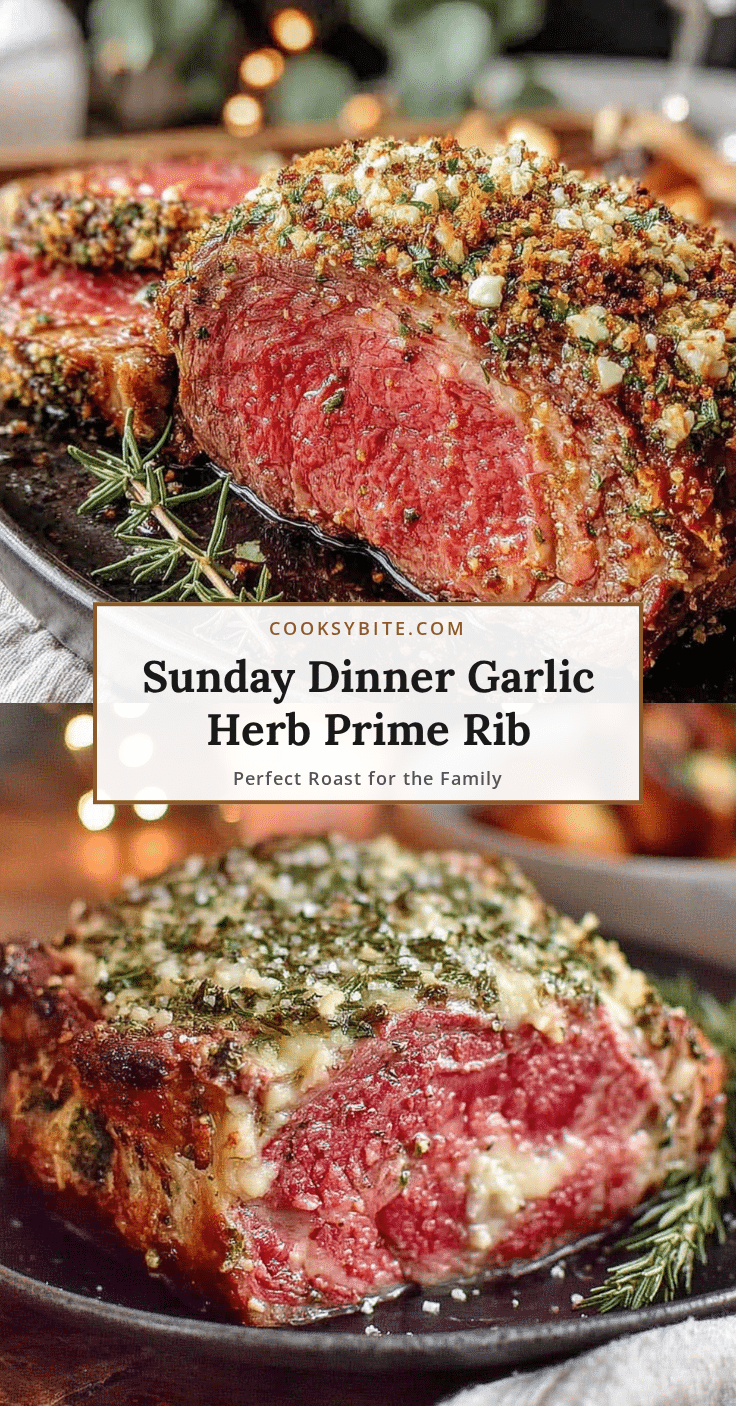
Perfect Garlic Herb Prime Rib Roast Recipe for an Easy Sunday Dinner
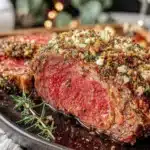
This foolproof prime rib roast delivers a perfectly pink, tender interior with a deeply flavorful garlic herb crust. It’s a restaurant-quality meal made simple for a special Sunday dinner.
- Prep Time: 15 minutes
- Cook Time: 1 hour 30 minutes
- Total Time: 1 hour 45 minutes
- Yield: 8 servings
- Category: Main Course
- Cuisine: American
Ingredients
- Prime Rib Roast (4-6 pounds)
- Unsalted Butter (1/2 cup, softened)
- Garlic (6-8 cloves, minced)
- Fresh Rosemary (2 tablespoons, finely chopped)
- Fresh Thyme (1 tablespoon, leaves removed from stems)
- Coarse Kosher Salt (2 tablespoons)
- Freshly Ground Black Pepper (1 tablespoon)
- Olive Oil (2 tablespoons)
Instructions
- Prep the Roast (Do This the Night Before for Best Results!): Remove the prime rib from its packaging and pat it completely dry with paper towels. Place it on a wire rack set over a baking sheet. Season generously all over with 1 tablespoon of the kosher salt. This is the dry-brine step. Leave it uncovered in the refrigerator for at least 8 hours, or up to 24 hours.
- Make the Garlic Herb Butter: About 2 hours before you plan to cook, remove the roast from the refrigerator and let it sit on the counter to come to room temperature. While it’s resting, make the paste. In a small bowl, combine the softened butter, minced garlic, chopped rosemary, thyme leaves, remaining 1 tablespoon of kosher salt, and the black pepper. Mix until everything is evenly distributed.
- Season the Roast: Once the roast has been at room temperature for about an hour, rub the entire surface with the 2 tablespoons of olive oil. Then, take your garlic herb butter and spread it all over the roast, covering every nook and cranny.
- Preheat and Sear: Position a rack in the middle of your oven and preheat it to 450°F (230°C). Place the seasoned roast, fat-side up, on the rack in your roasting pan. Roast at this high temperature for 20 minutes.
- Lower the Heat and Roast: Without opening the oven door, reduce the oven temperature to 325°F (160°C). Continue to roast until the internal temperature reaches your desired level of doneness. For medium-rare, cook until the thermometer reads 120-125°F (49-52°C) when inserted into the thickest part of the meat, away from the bone. This will take roughly 15-20 minutes per pound.
- Rest the Roast (This is Crucial!): Once the roast hits your target temperature, remove it from the oven. Transfer it to a cutting board and tent it loosely with a large piece of aluminum foil. Let it rest for at least 20-30 minutes.
- Carve and Serve: After the rest, remove the foil. If your roast is bone-in, use a sharp knife to cut the bones away from the meat in one large piece. Then, slice the roast against the grain into ½-inch to 1-inch thick slices. Arrange the slices on a warm platter and spoon any accumulated juices from the cutting board over the top.
Notes
Dry-brine the roast overnight for the best crust. Trust your meat thermometer over cooking time. Let the roast rest for at least 20-30 minutes before carving. For a dairy-free version, substitute butter with vegan butter or olive oil.
Nutrition
- Serving Size: 6 ounces
- Calories: 500
- Sodium: 800
- Fat: 38
- Saturated Fat: 16
- Protein: 38
Keywords: prime rib, garlic herb prime rib, Sunday dinner, roast beef, holiday roast, beef roast, prime rib recipe