Let me tell you, the scent of a ribeye steak slowly roasting in the oven, followed by that irresistible sizzle as it hits a scorching hot pan, is enough to make anyone’s mouth water. The moment that crust starts to caramelize, you know you’re onto something special. The first time I tried the perfect reverse sear ribeye steak, it was like discovering a secret that transformed my steak nights forever.
I remember it clearly: years ago, when I was knee-high to a grasshopper, my grandpa would grill steaks over an open flame, and while those were good, this method brings out a whole new level of flavor and juiciness. I was instantly hooked—the kind of moment where you pause, take a deep breath, and just smile because you know you’re onto something truly special.
My family couldn’t stop sneaking bites off the cutting board while it rested (and honestly, I can’t blame them). This perfect reverse sear ribeye steak with its juicy, caramelized crust quickly became a staple for family gatherings and cozy dinners. Honestly, it’s dangerously easy to make and delivers pure, nostalgic comfort—perfect for impressing guests or treating yourself on a weekend.
You know what? This recipe is perfect for everything from casual weeknight dinners to special occasions where you want that steakhouse quality without the fuss. After testing it multiple times (in the name of research, of course), I’m confident you’re going to want to bookmark this one.
Why You’ll Love This Recipe
Cooking the perfect reverse sear ribeye steak isn’t just about throwing a steak on the grill; it’s about patience, technique, and some serious flavor payoff. Here’s why this recipe stands out:
- Quick & Easy: While it might seem fancy, it comes together in under an hour—perfect for last-minute cravings or weekend indulgence.
- Simple Ingredients: No need for exotic spices or sauces, just quality ribeye, salt, pepper, and a few pantry staples.
- Perfect for Any Occasion: Whether it’s a romantic dinner or a weekend treat, this steak hits the mark.
- Crowd-Pleaser: I’ve never met a steak lover who didn’t rave about the juicy, tender inside and perfectly caramelized crust.
- Unbelievably Delicious: The reverse sear method locks in juices, giving you a tender steak with that mouthwatering crust you crave.
This recipe is different because it gently cooks the steak at low temperature first, allowing even cooking edge to edge, then finishes with a high-heat sear that creates a crust bursting with flavor. It’s not just another steak recipe—it’s the best version you’ll make at home without a fancy grill.
Honestly, after the first bite, you’ll close your eyes and savor the juiciness and the crunch of that caramelized crust. It’s comfort food that respects the meat, making it feel like a warm hug on a plate.
What Ingredients You Will Need
This recipe uses simple, wholesome ingredients to deliver bold flavor and a satisfying texture without the fuss. Most of these are pantry staples, making it easy to whip up anytime.
- Ribeye Steak: 1 thick-cut ribeye (about 1.5 to 2 inches thick, roughly 16-20 oz / 450-570 g). Look for well-marbled beef for juicy results.
- Kosher Salt: Coarse salt works best to draw out moisture and create that crust.
- Freshly Ground Black Pepper: For that sharp, spicy kick.
- Neutral Oil (like canola or vegetable): 1-2 tablespoons for searing (high smoke point oils prevent burning).
- Unsalted Butter: 2 tablespoons, added at the end for richness and flavor.
- Garlic: 2 cloves, smashed (optional, but it adds a wonderful aroma).
- Fresh Herbs: A few sprigs of thyme or rosemary for basting (optional).
Pro tip: I recommend using a good-quality ribeye from your butcher or trusted brand like “Certified Angus Beef” for best texture and flavor. If you want to experiment, try a boneless strip steak, but keep in mind ribeye’s marbling makes a difference.
Substitution note: If you’re avoiding butter, swap it with olive oil or vegan butter alternatives. For seasoning, feel free to add smoked paprika or a pinch of cayenne for a twist.
Equipment Needed
- Oven-safe Wire Rack and Baking Sheet: For even cooking during the low-temperature roast. Makes a big difference in airflow and heat distribution.
- Heavy Skillet: A cast iron skillet is ideal for that intense sear and caramelization, but a stainless steel pan will work too.
- Instant-read Meat Thermometer: A must-have to nail the perfect doneness without guessing.
- Tongs: For flipping the steak without piercing it, which keeps juices inside.
- Optional: Basting spoon for spooning butter and herbs over the steak during searing.
Personally, I swear by my Lodge cast iron skillet—it holds heat like a champ and gives that perfect crust every time. If you don’t have one, a budget-friendly alternative is a heavy-bottomed stainless steel pan. Also, keeping your thermometer calibrated helps avoid any steak disasters.
Preparation Method
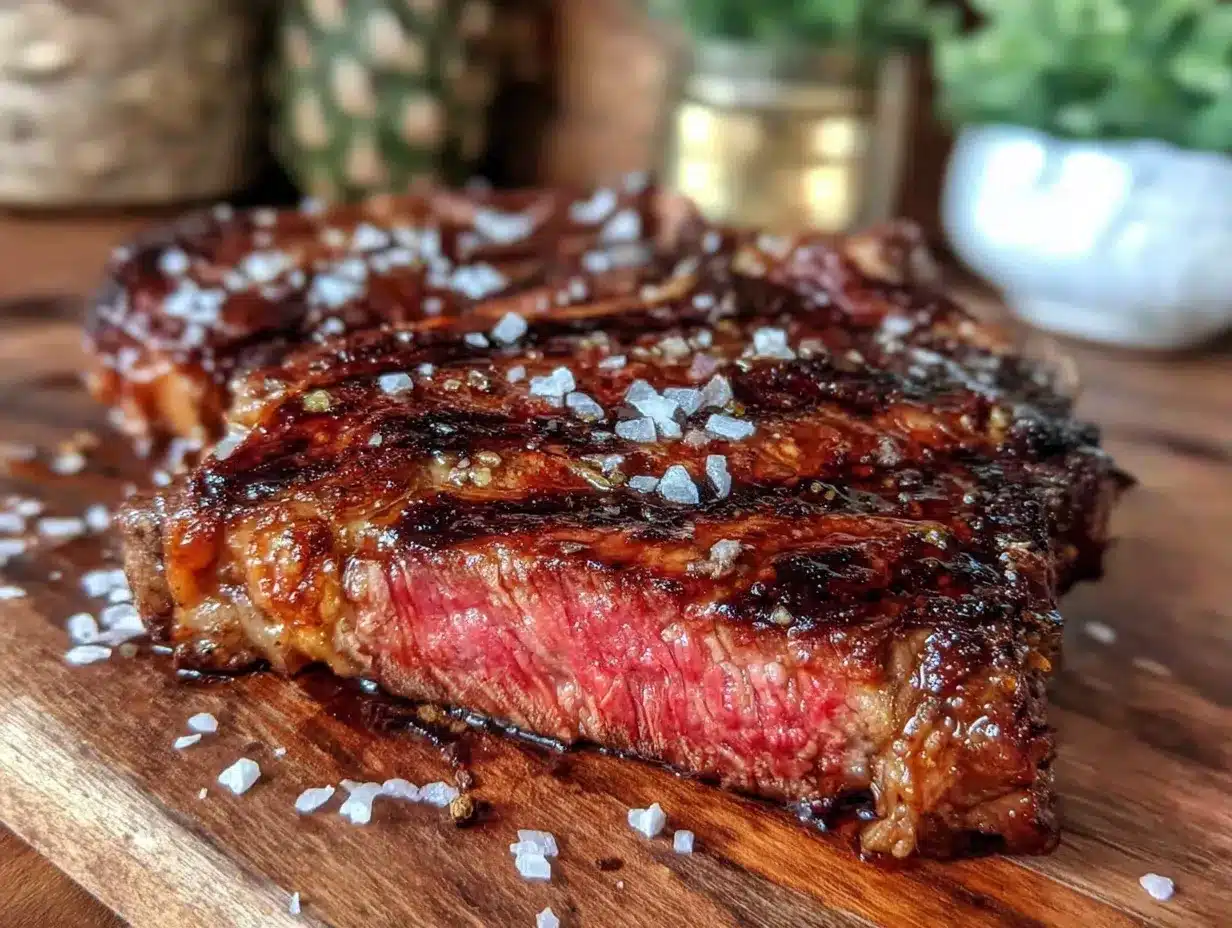
- Bring the Steak to Room Temperature (about 30-45 minutes): Pat your ribeye dry with paper towels (this helps the crust later). Season generously on all sides with kosher salt and freshly ground black pepper. Don’t be shy—this seasoning is key. Let it sit uncovered on a wire rack to air-dry slightly.
- Preheat Your Oven to 250°F (120°C): Place your steak on a wire rack over a baking sheet. This setup lets the hot air circulate evenly around the meat.
- Slow Roast the Steak: Pop the steak in the oven and roast until the internal temperature reaches about 110°F (43°C) for rare, 120°F (49°C) for medium-rare, or 130°F (54°C) for medium. This usually takes 30-45 minutes depending on thickness. Use your instant-read thermometer to check—you want it just shy of your target doneness since the searing will finish the cooking.
- Heat Your Skillet Over High Heat: While the steak rests for 5-10 minutes after the roast, add neutral oil to the pan and wait until it’s shimmering and almost smoking.
- Sear the Steak: Place the steak in the hot skillet. Sear for about 1-2 minutes per side, until a deep, caramelized crust forms. Add butter, garlic, and herbs to the pan. Tilt the pan slightly and spoon the melted butter over the steak continuously for about 1 minute—this basting adds flavor and richness.
- Rest Again: Remove the steak and let it rest on a cutting board for 5-10 minutes. This allows the juices to redistribute so every bite is juicy and tender.
- Slice and Serve: Cut against the grain into thick slices and enjoy that juicy, caramelized crust with every bite!
Quick tip: Make sure your pan is hot enough before searing—if it’s not smoking, wait a bit longer. Also, resist the urge to poke or press the steak during searing; let the crust form undisturbed.
Cooking Tips & Techniques
Honestly, the reverse sear method is a game-changer, but it takes a little patience and some know-how.
- Don’t Skip the Resting: Both after the oven and after searing. It’s tempting to dig in right away, but resting keeps the juices locked inside.
- Use a Thermometer: Cooking steak to the right temperature is tricky without one. I’ve burned more steaks than I care to admit before getting this right.
- Dry Your Steak Thoroughly: Moisture is the enemy of crust. If the steak is wet, it steams rather than sears.
- Patience in Searing: Don’t move the steak around too much. Let it develop that beautiful crust by leaving it undisturbed.
- Butter Basting Is a Game-Changer: Adds richness and helps brown the steak evenly. Toss in some smashed garlic and herbs for extra flavor.
One lesson I learned the hard way was rushing the oven step. Low and slow is the name of the game here—too hot, and you lose that even cooking. Also, multitasking helps: prep your sides or sauces while the steak roasts to make the whole dinner feel seamless.
Variations & Adaptations
While the classic perfect reverse sear ribeye steak is hard to beat, I’ve played around with a few variations that might tickle your fancy.
- Herb-Crusted: Mix salt and pepper with finely chopped rosemary, thyme, and garlic powder before seasoning the steak.
- Spicy Kick: Add smoked paprika and a pinch of cayenne pepper to the seasoning for a smoky heat.
- Butter Substitutes: Use ghee or duck fat for basting if you want richer, deeper flavors.
- Cooking Method Swap: If you don’t have an oven, try sous vide to cook the steak gently before searing for that same juicy tenderness.
- Allergen-Friendly: Swap butter for coconut oil or avocado oil if dairy is a concern.
Once, I added a coffee rub to the seasoning blend before the oven step—it gave the steak a subtle earthiness that blew my mind. Don’t be afraid to experiment a bit based on your taste!
Serving & Storage Suggestions
Serve your perfect reverse sear ribeye steak warm, sliced thick with the caramelized crust front and center. It pairs beautifully with simple sides like roasted vegetables, garlic mashed potatoes, or a fresh arugula salad tossed with lemon vinaigrette.
For drinks, a bold red wine like a Cabernet Sauvignon or Malbec complements the steak’s richness perfectly. If you prefer beer, a dark stout or porter is a great match.
Leftovers? Wrap the steak tightly in foil or place in an airtight container and refrigerate for up to 3 days. To reheat, gently warm in a low oven (around 250°F / 120°C) for 10-15 minutes, then quickly sear in a hot pan to refresh the crust.
Keep in mind, the flavors actually deepen after resting overnight, so leftovers can be even better the next day—just don’t overcook when reheating!
Nutritional Information & Benefits
A 6-ounce (170 g) ribeye steak provides around 450-500 calories, with approximately 40 grams of protein and 35 grams of fat. The marbling delivers healthy monounsaturated fats, which are good for heart health when enjoyed in moderation.
Ribeye is rich in iron, zinc, and B vitamins, fueling your energy and aiding muscle repair. Just keep an eye on portion sizes if you’re watching saturated fat intake.
This recipe itself is naturally gluten-free and low in carbs, making it a solid choice for paleo or keto diets. Just skip any bread or heavy sauces on the side if you’re keeping it low-carb.
Conclusion
The perfect reverse sear ribeye steak recipe with juicy caramelized crust is truly worth every minute of your time. It’s a simple method that produces steakhouse-quality results at home—juicy, tender inside with a crust that’s pure magic.
Feel free to tweak the seasoning or add your favorite herbs to make it your own. I love this recipe because it turns any meal into something memorable without needing fancy equipment or complicated steps.
If you try this recipe, I’d love to hear how it went—drop a comment below or share your adaptations! Here’s to many delicious steak nights ahead, filled with that perfect caramelized crust and juicy center you’re going to crave.
FAQs
What is the reverse sear method?
The reverse sear involves cooking the steak slowly at a low temperature first, then finishing it with a high-heat sear to create a caramelized crust. This ensures even cooking and maximum juiciness.
How do I know when my steak is done?
The best way is to use an instant-read thermometer. For medium-rare, aim for about 130°F (54°C) after searing. The steak will continue to cook slightly while resting.
Can I use a different cut of steak?
Yes! Ribeye works best for its marbling, but you can try strip steak or filet mignon. Just adjust cooking times based on thickness and fat content.
What if I don’t have a cast iron skillet?
A heavy stainless steel pan works fine for searing—just make sure it can handle high heat and heats evenly.
Can I season the steak ahead of time?
Absolutely! You can salt and pepper the steak up to an hour before cooking. Some even dry-brine overnight in the fridge for deeper flavor and better crust.
Pin This Recipe!
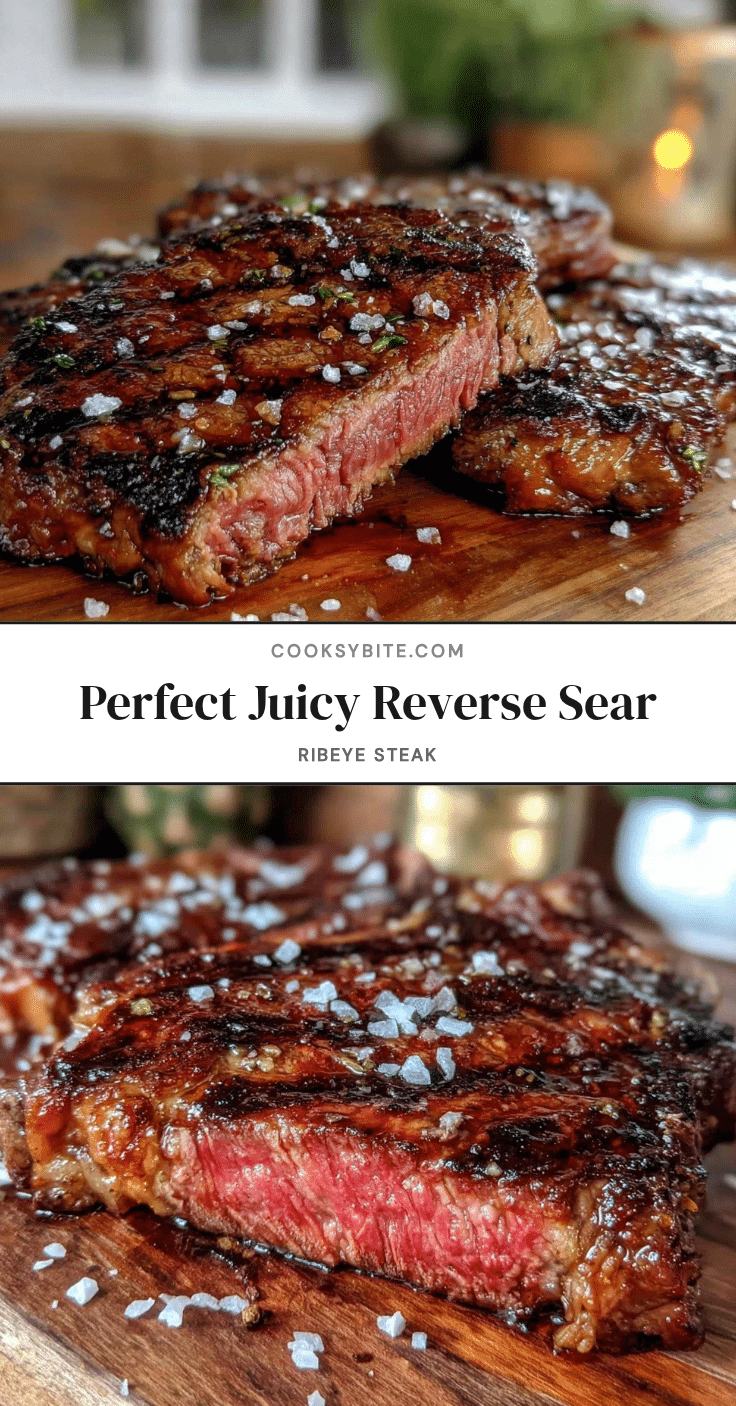
Perfect Reverse Sear Ribeye Steak Recipe with Juicy Caramelized Crust
This recipe delivers a juicy, tender ribeye steak with a perfectly caramelized crust using the reverse sear method, combining slow roasting and high-heat searing for steakhouse-quality results at home.
- Prep Time: 40 minutes
- Cook Time: 45 minutes
- Total Time: 1 hour 25 minutes
- Yield: 1 steak (serves 2) 1x
- Category: Main Course
- Cuisine: American
Ingredients
- 1 thick-cut ribeye steak (1.5 to 2 inches thick, 16–20 oz / 450–570 g)
- Kosher salt, coarse
- Freshly ground black pepper
- 1–2 tablespoons neutral oil (canola or vegetable oil)
- 2 tablespoons unsalted butter
- 2 cloves garlic, smashed (optional)
- A few sprigs of fresh thyme or rosemary (optional)
Instructions
- Bring the steak to room temperature (about 30-45 minutes). Pat dry with paper towels and season generously on all sides with kosher salt and freshly ground black pepper. Let it sit uncovered on a wire rack to air-dry slightly.
- Preheat your oven to 250°F (120°C). Place the steak on a wire rack over a baking sheet to allow even air circulation.
- Slow roast the steak in the oven until the internal temperature reaches about 110°F (43°C) for rare, 120°F (49°C) for medium-rare, or 130°F (54°C) for medium. This usually takes 30-45 minutes depending on thickness. Use an instant-read thermometer to check.
- Remove the steak from the oven and let it rest for 5-10 minutes.
- Heat a heavy skillet (cast iron preferred) over high heat. Add neutral oil and wait until it shimmers and almost smokes.
- Sear the steak for 1-2 minutes per side until a deep caramelized crust forms. Add butter, garlic, and herbs to the pan. Tilt the pan and continuously spoon melted butter over the steak for about 1 minute to baste.
- Remove the steak and let it rest on a cutting board for 5-10 minutes to allow juices to redistribute.
- Slice against the grain into thick slices and serve.
Notes
Use a good-quality ribeye with good marbling for best results. Pat steak dry before seasoning to ensure a good crust. Use a thermometer to avoid overcooking. Rest steak after oven and searing steps to keep juices locked in. Butter basting adds richness and flavor. If avoiding butter, substitute with olive oil or vegan butter. For variations, add smoked paprika, cayenne, or herb crust. Leftovers can be reheated gently in a low oven and refreshed with a quick sear.
Nutrition
- Serving Size: 6 oz (170 g) cooked
- Calories: 475
- Sodium: 600
- Fat: 35
- Saturated Fat: 14
- Protein: 40
Keywords: reverse sear, ribeye steak, steak recipe, caramelized crust, juicy steak, cast iron skillet, oven roasting, steakhouse quality